
I recently attended a lecture by Sir Gordon Conway, the gist of which I hope to reflect on and share soon- its all about ‘sustainable intensification’ of food growing as the way forward to tackle global hunger…fascinating projects and innovations from around the world point the way. Here’s an article that captures the approach.

 Professor Sir Gordon Conway and Katy Wilson highlight the need for innovative solutions to food insecurity
Article originally appeared on The Economist Insights
With global population expected to reach 9.6 billion by 2050 the world faces unprecedented demands on its resources – not least water, biodiversity and land. Add to this the likely impact of climate change, and the challenge of feeding a world where some 870 million people are already chronically hungry appears a difficult one.
Governments, NGOs, academia and the private sector are searching for long-term sustainable solutions to global food insecurity and future resource scarcity. One solution, first proposed by Jules Pretty in the 1990s, and backed by the Montpellier Panel, a high-level group of European and African experts in the fields of agriculture, trade, policy, and global development, is sustainable intensification. At its heart sustainable intensification is about producing more food, more efficiently.
Achieving global…
View original post 640 more words

 Cornus is a genus of about 30- 60 species of woody trees and shrubs, commonly known as dogwoods. Most are deciduous, but a few are more like herbaceous perennials (subshrubs) and some are evergreen. Cornus is the latin word for ‘horn’ referring to the hardness of the wood.


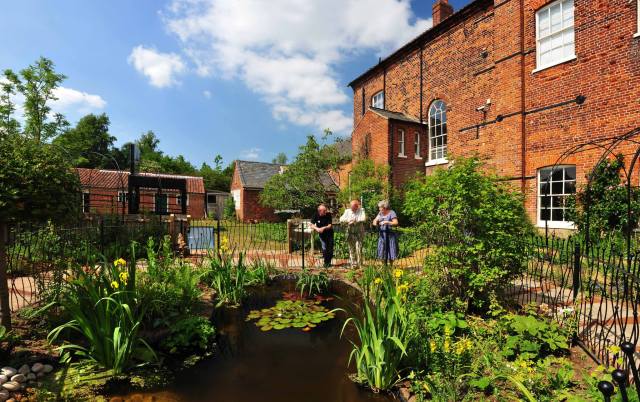 Here’s a video featuring some of the gardening volunteers (including yours truly) and the gardens at Gressenhall Farm and Workhouse Museum, Norfolk. The next couple of months will be quiet in the gardens, but we’re recruiting now for anyone who can spare some time and expertise (basic gardening skills plus) to help maintain and evelop this wonderful resource!


 Here’s the final article by one of the participants in a ‘Grow Your Own Food’ course I ran recently in Foulsham, Norfolk. I’m planning to run another course starting in February (Tuesday mornings for 6 weeks) as well as another one focused on helping participants use design to reshape their own gardens (Monday evenings at Reepham, Norfolk). More details can be found at


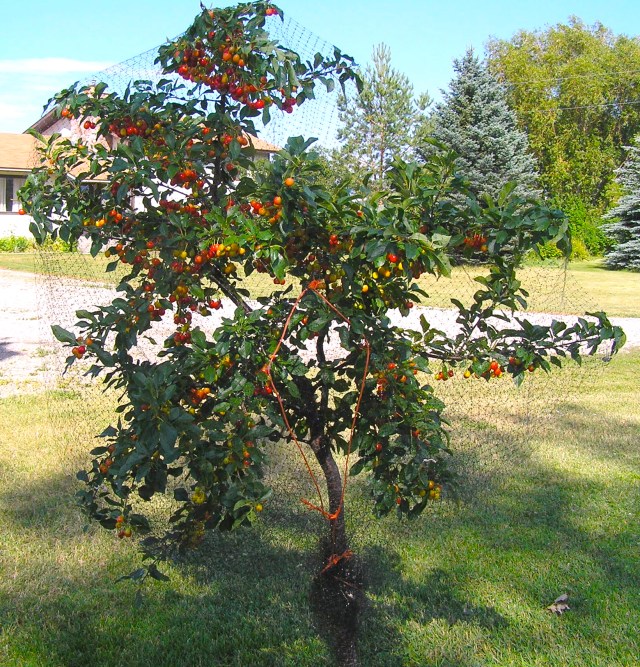


 So it’s coming up to Christmas and those traditional displays of greenery in the house like Mistletoe, Ivy and of course Holly are being assembled as I write. But someone in Cumbria has a problem. George Alloway in Cockermouth asks:






 Old School Garden