Archive for October, 2013


PicPost: Devil May Care

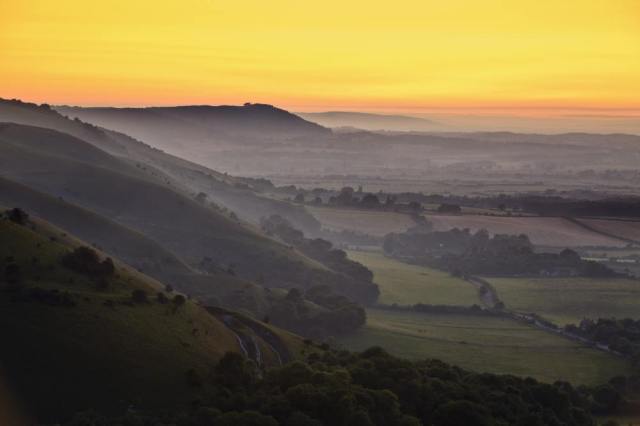
Devil’s Dyke, West Sussex by John Miller and NT images

The term “devil-may-care” (also sometimes as phrase “devil may care”) is used as an adjective. Used to describe an attitude or person, it has two meanings:

(1) cheerfully irresponsible — carefree, happy-go-lucky;
or
(2) marked by a carefree unconventionality — rakish or reckless in manner.

Old School Gardener


It’s great to be in someone’s ‘top ten’ gardening blogs! Thanks Sophie 🙂

Sophie Hudson's avatarThe Forget-me-Not Cultivation Blog

I always say if you want to learn something, that can be especially tricky to ask (because usually you’re not sure what it is you’re asking), head to the internet.

Where as books can be very detailed, and in some cases terribly technical, the internet can be just the place to find simple answers that you can actually then put into practice within your own garden.

Whether it’s what shrub to prune this month, or why those leaves on your favourite plant look particularly brown you can usually find someone else has already had the same problems.

It’s the one area I find help, advice and guidance for things I’m not really sure about asking someone face to face.  It usually comes in the form of social media but something that works even better are blogs.

Today I thought I’d share with you ten blogs I refer to time and…

View original post 167 more words

IMG_6850Very much a garden for the plant enthusiast, I think, particularly if you’re into sub tropical ferns and sun loving agaves. When we visited in mid August the three valleys that make up this garden were bathed in warm sunshine and there was the sound of children’s laughter from the Maze and play spots. The valleys tip out into the Helford river where the hamlet of Durgan (now a series of holiday lets run by the National Trust), looks across the wide, slow running estuary that leads to Falmouth a little further up stream.

There’s also much of interest here for those that love inspiring landscapes, featuring variations in foliage shape, size and tint coupled with the different masses and forms of the many exotic trees and shrubs. This is a well crafted garden that makes the most of its situation, with breathtaking valley-side paths that give glimpses of interesting trees, features and of course that maze.

Despite being busy when we visited, the garden’s enclosed volume seemed to capture sound and, rather like a cathedral, gave back softened echoes that settle the soul.

Glendurgan Garden was laid out by Alfred Fox in the 1820s and 1830s, with the famous Cherry Laurel Maze being created in 1833. In 1962 Glendurgan Garden was given to the National Trust by Cuthbert and Philip Fox. Key features are the giant rhubarb plants in the jungle-like lower valley and spiky arid plants basking in the sunny upper slopes. There’s also a seat made out of an upturend boat, several tulip-trees and ponds. I gather that the Trust have introduced some colour into the gardens, where spaces naturally fall between the more major planting, but this is principally of spring and early summer wild flowers, long gone by the time of our visit. We must return at another season…

Further Information: National Trust Website

Old School Gardener

If you’ve enjoyed reading this post and others on this blog, why not comment and join others by signing up for automatic updates via email (see side bar, above right ) or through an RSS feed (see top of page)?

Claire Colvine's avatarLove Outdoor Play

A major new feature length documentary film Project Wild Thing has been launched today and will be showing at Picturehouse and independent cinemas across the country. This inspirational film, directed by and starring David Bond (Erasing David) and produced by Ashley Jones (Green Lions), takes a witty, touching and frank look at the complex issue of why our kids have lost touch with nature, why they don’t have their independence outdoors and what happened to playing out…

The film is backed by the Wild Network, founded by a diverse group who are dedicated to working together to get children back in touch with nature and outdoor play. Founding members of the network include: Play England, Play Scotland, Play Wales, National Trust, RSPB, NHS Sustainable Development Unit, AMV BBDO, Green Lions and Swarm.

“Funny, alarming and uplifting, this film will change your…

View original post 119 more words

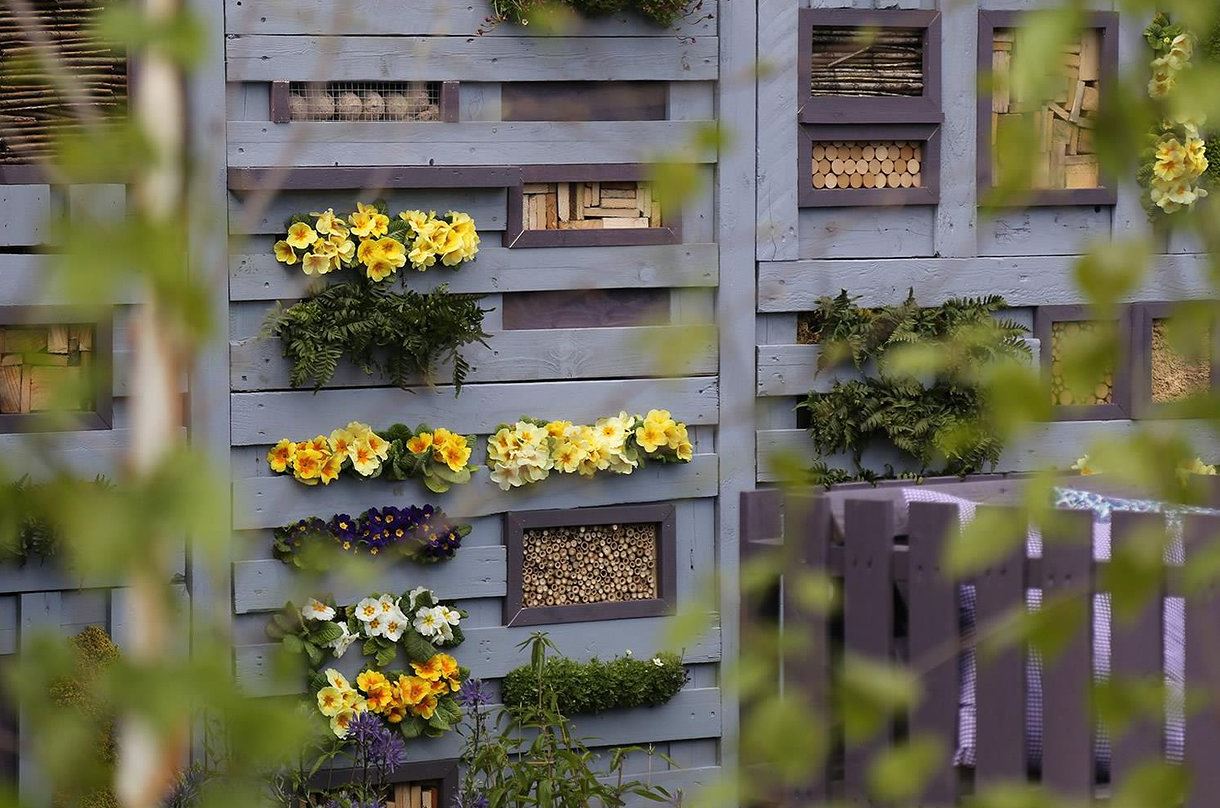
Gold Medal Recycled Gardenupcycle by victoria wadeA beautiful show garden made from pallets and other recycled materials by Victoria Wade.

Old School Gardener

PicPost: Growing Together

Anything to add?

Brigid Jackson's avatararistonorganic

There are a few wonderful gardeners where I live. One such gardener is Maxi Burger. Maxi took over this verge a few years ago and has turned it into something we can be proud of. Her hard work is evident, with the wonderful display that greets residents and passers-by.

View original post

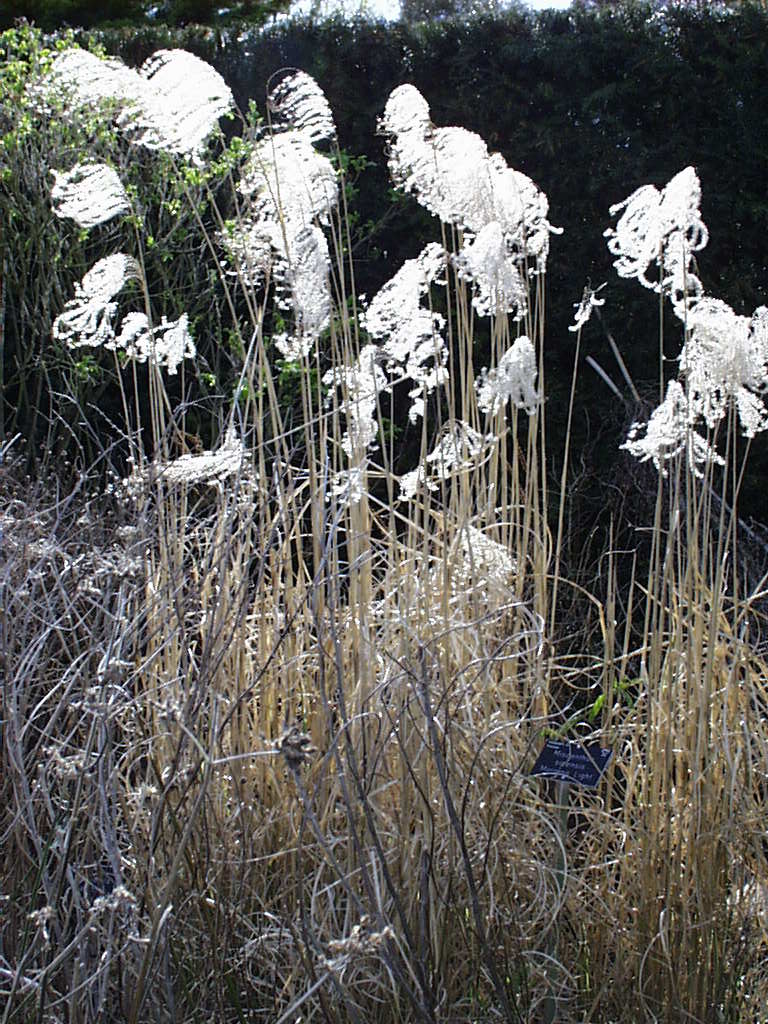
Dried flowers and stems of Miscanthus sinensis 'Morning Light' providing interest at RHS Garden Hyde Hall in March

Dried flowers and stems of Miscanthus sinensis ‘Morning Light’ providing March  interest at RHS Garden Hyde Hall

My previous post set out the background to the growth in popularity of grasses as border plants. I’ve come to appreciate their simple beauty and the way they can add a different dimension to the traditional herbaceous and mixed border and at the moment some of them are looking great in Old school Garden, especially as the low autumn sun catches their golden stems and heads.

So what are the ways you can use grasses to best effect in your garden?

They contribute in a number of ways – texture, light, colour and as structural elements in your overall garden framework (and some sound lovely as the breeze finds its way through them or their seed heads are rattled like mini maracas). Here are some thoughts gleaned (no pun intended) from the very useful book, ‘Grasses’ by Roger Grounds.

Texture

Most grass stems and leaves provide strong vertical or curved lines and are best used in contrast:

  • With other perennial broad – leaved plants (often most effective if seen from a distance),

  • With strong vertical lines like clipped Yew or the corners of buildings (where the grass has a curved or arching stem),

  • More subtle, unusual combinations (e.g. with Ferns),

  • Contrasting the ‘fuzzy’ flower heads of many grasses with those plants that have a more linear or defined form e.g. Digitalis, Lythrum, Achillea, Phlomis russelliana, Echinops and Allium giganteum

  • With other grasses that have different leaf form; e.g. the narrow leaves of Miscanthus sinensis ‘Gracillimus’ with the broad bold leaves of Arundo donax, or the wide, short leaves of Panicum alopecuroides.

  • At the front of borders to act as ‘veils’ through which other plants or a more distant landscape can be revealed.

Annual  grasses- complete their growth cycle in one growing season. Hardy varieties can withstand frost and most can be sown in autumn to over winter in the ground and germinate in spring. Tender grasses need to be sown once all risk of frost has passed. Many of these are perennial in frost-free climates.

Light

  • Position grasses to catch the sun, preferably against a dark backdrop to ‘light up’ the wider garden.

  • Use grasses to take advantage of the different tonal values of light as it changes from season to season and at different times of the day – especially the more mellow light of autumn and also early and late in the day as these are the times when the richest colours are revealed. I’ve positioned some Stipa gigantea (‘Golden Oat Grass’) to catch the low sun of late summer and autumn, and close to the house where we can see the full

  • Associate grasses with seasonal changes in perennials and foliage; e.g. in spring the foliage of grasses is more prominent so think about using bold coloured grass leaves as foils for spring flower colour- the yellow of Bowle’s Golden Grass with the blues of Bluebells for instance.

Cool season grasses- these start into growth in autumn, grow through the winter and flower in spring or early summer. Best planted among winter or spring- flowering perennials. Plants grown for their foliage, or among spring and early summer bulbs. Most then become dormant/semi dormant and so can be planted where summer flowers or other grasses can grow up to conceal their faded foliage. They can be divided or transplanted in spring or autumn.

Colour

  • Use the ‘washed out’ or subtle colours of grasses as a counterpoint to the richer colours in surrounding plants.

  • Grasses with coloured leaves can be used to reinforce a particular colour theme- reds with reds, blues with blues etc. As they last longer than many of the flowers around them, grasses help to maintain continuity in colour themed borders. Blues from grasses such as the varieties of Panicum virgatum, reds from Imperata cylindrica ‘Rubra’ (Japanese Blood Grass) and the yellow of Hakone grass (Hakonechloa macra ‘Aureola’). Yellow is the dominant colour of many grasses’ flower panicles, especially as they fade and the seed heads ripen to shades of amber, straw and gold.

Massing, grouping and markers

  • Grasses look best when grown in groups of three or more- though few gardens have the scope for mass planting. They can also be effective as specimens. Grasses planted as masses or groups should be spaced closer together than in smaller groups.

  • Many low growing grasses make excellent ground cover, and this can be an effective way of massing them in smaller gardens.

  • Taller grasses, or those with strong colouring can act as successful specimens or ‘markers’ in a garden, either planted by themselves or as accents in a border. Clumps of grasses can have a similar impact if planted to contrast with other surrounding grasses or plants.

  • More subtle ways of creating a focus include using grasses with distinctive flower or foliage forms; e.g. Calamagrostis brachytrica with its elongated ovoid flower panicles.

  • A repetition of specimen grasses in a strict rhythm along a border – especially if placed towards the middle of front of it – will impel the eye along its full length. A similar effect, but with less impact, can be achieved with taller grasses placed at the back of the border; e.g. Stipa gigantea.

Warm season grasses- these do not start into growth until late spring or early summer, so they are best planted among other perennials or shrubs that flower from midsummer to autumn. They can be left standing through winter to provide interest- especially when they are covered with raindrops, dew or frost. They should be transplanted or divided in early spring, once they have started into growth.

Seasons and sitings

  • Think about the ‘plant partners’ to go with your grasses, and use the key features of both to complement each other at different times of the year. For example combine a range of strong flower forms which use the structure of grasses to greatest effect; Umbellifers like Anthriscus; Spires like Veronicastrum virginicum; Ball-like or pincushion flowers like Echinops  and Knautia macedonica; loosely structured heads like Astilbe; daisy-like flowers such as Rudbeckia. If possible go for those with the longest flowering period.

  • Use grasses in special sites; e.g. as part of a meadow; as a larger scale ‘prairie’ planting or border; in woodland or shade; at the water’s edge.

Sedges, Rushes and Cat tails – though they generally look like grasses, these plants have taken a different evolutionary path and so vary in leaf and flower details, and also their growing needs. Sedges are large family of diverse plants, mostly from the cool temperate regions, enjoying cooler and damper conditions than most of the true grasses. Rushes are a smaller family with few garden-worthy plants though the woodrushes are often decorative as well as useful, for example as ground cover. Cat tails (or reedmaces or bullrushes)are a single genus family with aquatic or marginal plants that have conspicuous flower heads.

Source: ‘Grasses’ by Roger Grounds (RHS and Quadrille Publishing)

Linked article: Design my Garden: Grasses- first the background…

Further information: Garden design with grasses

Old School Gardener

If you’ve enjoyed reading this post and others on this blog, why not comment and join others by signing up for automatic updates via email (see side bar, above right ) or through an RSS feed (see top of page)?

Tim Gill's avatarRethinking Childhood

iPhone banTechnology has an ever greater role in children’s lives, and its effects are the focus of ever more heated debate. It is easy for advocates of nature, outdoor play and everyday childhood freedoms to think that screens and gadgets are our enemy. But the truth is that things are a little more complicated than that.

View original post 1,398 more words

shinealightproject's avatarShine A Light

*The Shine a Light Project has been a collaborative effort involving many different departments across the museum service. To reflect this we are publishing some blogs written by contributors to the project from outside of the core team based at the superstore. This week’s blog is written by Helen Renton, Assistant Curator at Strangers Hall, and explains the origin of the Bolingbroke collection (a large proportion of the furniture removed from the 24 crates are objects that form part of the Bolingbroke collection).

The Bolingbroke Collection

By Helen Renton

Strangers’ Hall was for centuries the home of wealthy merchants and mayors of Norwich. The oldest part of the building dates from the early fourteenth century, and the house was extended and embellished by a succession of occupants. In the 1790s it was purchased by local Roman Catholic priests and served as their presbytery until 1880.

By the end of…

View original post 232 more words

Finding Nature

Nature Connectedness Research Blog by Prof. Miles Richardson

Norfolk Green Care Network

Connecting People with Nature

Discover WordPress

A daily selection of the best content published on WordPress, collected for you by humans who love to read.

Susan Rushton

Celebrating gardens, photography and a creative life

Unlocking Landscapes

Writing, photography and more by Daniel Greenwood

Alphabet Ravine

Lydia Rae Bush Poetry

TIME GENTS

Australian Pub Project, Established 2013

Vanha Talo Suomi

The Journey from Finnish Rintamamiestalo to Arboretum & Gardens

Marigolds and Gin

Because even in chaos, there’s always gin and a good story …

Bits & Tidbits

RANDOM BITS & MORE TIDBITS

Rambling in the Garden

.....and nurturing my soul

The Interpretation Game

Cultural Heritage and the Digital Economy

pbmGarden

Sense of place, purpose, rejuvenation and joy

SISSINGHURST GARDEN

Notes from the Gardeners...

Deep Green Permaculture

Connecting People to Nature, Empowering People to Live Sustainably

BloominBootiful

A girl and her garden :)