Archive for August, 2013


PicPost: Veg order

Here are a few more pallet projects for the garden/outside. Once again I’m amazed at the ingenuity and skill of the people who make these wonderful objects.

This slideshow requires JavaScript.

All images from 1001 pallets

Old School Gardener

PicPost: Bottle scoop

from Growveg

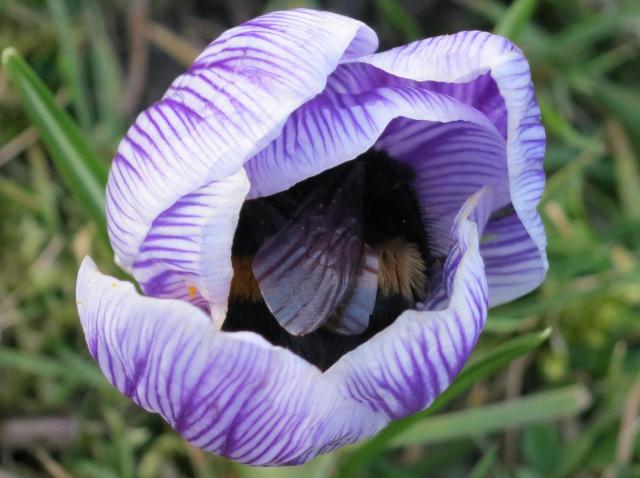
Picpost: Red wood

Image

Water Lily Beetle- image from Donsgarden.com

Today’s GQT comes from Adele Inwood from the lsle of Wight:

‘I have a new pool in my garden and I want to know how to deal with the main pests and diseases of pool plants please.’

Adele, the worst pest of pool plants is the Water Lily beetle- it’s larvae are like small slugs, dark on top and pale underneath. They feed on the leaves of water lilies.

The small brown beetles hibernate in the hollow stems of other aquatic plants, which should therefore be cut down in the autumn and burnt. You can control the larvae by laying a double thickness of newspaper over all the foliage from the first appearance of the pest (indicated by holes chewed through the foliage). If this is done in the evening and the papers removed in the morning, and the process is repeated at weekly intervals for at least four weeks, you should find that the beetle larvae will have been eaten by other water life.

Remove the worst damaged leaves. This method of control is also good for the reddish-black aphids which can seriously damage the leaves. Hosing off the aphids and beetles is also effective – but be careful not to add too much new water to the pool.

You might also see a thick green scum appearing on the surface of the pool. If the pool hasn’t been filled for a matter of only a few days or weeks, remove the worst of the scum with a fine mesh net. The scum – really an algae – appears after you change the water, before it settles down again. The presence of foliage on the surface will help to speed up the process by preventing light from getting to all of the water, stopping the formation of the algal ‘bloom’. So perhaps look at trying to cover more of your water surface with plants – about a third coverage is a good target.

Pond algae can be reduced by increasing leaf cover on the water surface

Pond algae can be reduced by increasing leaf cover on the water surface

Further information:

Water Lily Pests

Old School Gardener

If you’ve enjoyed reading this post and others on this blog, why not comment and join others by signing up for automatic updates via email (see side bar, above right ) or through an RSS feed (see top of page)?

PicPost: Bee friendly

IMG_6314Whilst visiting friends recently, we were fortunate to be given a guided tour of an historic garden and house in the course of renovation.

Copped Hall, close to Epping in Essex, is a substantial Georgian mansion which I remember visiting about 30 years ago.

At that time I can remember the house being a gutted shell, having no roof and pigs being kept in what remained of the ground floor!

There has been a grand house here since Norman times, with the current building dating from the middle of the 18th century. It has a fascinating history, culminating in the near destruction of the latest house by fire in 1917. Since then, various attempts have been made to redevelop the site, but local opposition has fought these off. The outcome was the formation of a charitable trust which raised funds to purchase the site with the aims of:

  • preventing development of the buildings or in their vicinity
  • raising further funds to carry out sympathetic restoration of the buildings and grounds
  • educating the public on the site and it’s social and natural history.

An active ‘Friends’ group supports the trust, including a small band of gardening volunteers, 2 of whom (Marion & John), kindly showed us around. The house itself has been made wind and weatherproof and some progress has been made in reinstating the interior structure. As anything portable and of value was stripped out of the buildings and grounds in the 1950’s, much of what remains are functional, structural features such as the brick piers supporting former stone steps and stairs. These tumbled down ruins are interesting in themselves, and with the still significant columns of clipped Yew give a gothic, romantic ruin feel to what was once a grand, formal, elevated approach to the house along with parterres and clipped hedges and bushes.

This space gives way to a wooded walk to the walled garden. There are some open archaelogical excavations in these grounds, adding further interest, and some more recent large scale landscaping projects in areas on the site of what was once the Tudor Manor house. Originally built in 1740, the 4 acre walled garden (one of the largest in Britain), is clothed on the approach to its outer wall with a glorious herbaceous border. Several metres deep, with excellent variation in height, this border also features large groupings of plants providing a strong structure and rhythm through their repetition, along the full 100 metres or so of its length.

Inside, a series of original Boulton and Paul glasshouses- most in urgent need of renovation, contain a fascinating collection of fruit and flowers, including vines and peaches now open to the elements as the former covering of glass has fallen away.

The scale of the renovation task, especially here, is enormous, but the small band of volunteers is making steady progress, though could perhaps do with an overall ‘Conservation Plan’ to help to channel their efforts and encourage others along. We wish them well, and but for the distance from home, would offer to help them!

Copped Hall is open to the public one day a month and guided tours are available – see the weblink below for more information.

Further information:

Copped Hall Trust

Old School Gardener

If you’ve enjoyed reading this post and others on this blog, why not comment and join others by signing up for automatic updates via email (see side bar, above right ) or through an RSS feed (see top of page)?

PicPost: Carrot caress

Osteospermum ecklonis

Osteospermum ecklonis

Osteospermum is a genus of some 70 species of annuals, perennials and evergreen sub shlrubs from mountainous, forest edge or grassland habitats in southern Africa and the Arabian peninsula. It has several common names: African Daisy, South African Daisy, Cape Daisy and Blue-eyed Daisy.

They are mostly tender or half-hardy, but a few are reliably hardy, and hybrids are being produced from these which are also hardy. In frost – prone areas the more tender types can be treated as annuals.
Osteospermum have three features that commend them to the gardener:

  1. A very long flowering season
  2. They are evergreen
  3. They make excellent ground cover

Their daisy-like flower heads have ray florets of pink, white or yellow- with a wider range of shades available in the cultivars and often with contrasting, darker disc florets.

800px-Daisy1web

Osteospermum Daisyweb

Osteospermums are relatively new to most gardeners, and were almost unheard of 25 years ago. They have risen in popularity in the last decade as they have become more commercially available. Osteospermums have now become very popular as summer bedding plants, either to put in the border or in pots. The prostrate varieties can be used in hanging baskets. Osteospermums require full sun for the flowers to fully open, although while half-closed it is possible to appreciate the different colours on the underneath of the petals. Some old favourites such as ‘Whirligig’ and ‘Pink Whirls’ have spoon shaped petals. There are also stunning variegated leaf varieties available such as ‘Giles Gilbey’ and ‘Silver Sparkler’.

As well as preferring a warm and sunny position they like rich, well drained soil- a sunny bank is ideal. They also  tolerate poor soil, salt or drought well. Modern cultivars flower continuously when watered and fertilised well, and dead-heading to prevent self seeding is not necessary, because they do not set seed easily, Deadheading will improve and prolong flowering, however. They make good cut flowers. If planted in a container, soil should be prevented from drying out completely. If they do, the plants will go into “sleep mode” and survive the period of drought, but they will abort their flower buds and not easily come back into flower. Moreover, roots are relatively susceptible to rotting if watered too profusely after the dry period. Regrettably, like most daisy- like flowers, they are highly allergenic. They are prone to downy mildew in wet areas.

O. 'Lemon Symphony'

O. ‘Lemon Symphony’

Sources and further information:

Osteospermum.com

Wikipedia

RHS plant selector

BBC- O. jucundum

Old School Gardener

If you’ve enjoyed reading this post and others on this blog, why not comment and join others by signing up for automatic updates via email (see side bar, above right ) or through an RSS feed (see top of page)?

PicPost: Seed Scare

Finding Nature

Nature Connectedness Research Blog by Prof. Miles Richardson

Norfolk Green Care Network

Connecting People with Nature

Discover WordPress

A daily selection of the best content published on WordPress, collected for you by humans who love to read.

Susan Rushton

Celebrating gardens, photography and a creative life

Unlocking Landscapes

Writing, photography and more by Daniel Greenwood

Alphabet Ravine

Lydia Rae Bush Poetry

TIME GENTS

Australian Pub Project, Established 2013

Vanha Talo Suomi

The Journey from Finnish Rintamamiestalo to Arboretum & Gardens

Marigolds and Gin

Because even in chaos, there’s always gin and a good story …

Bits & Tidbits

RANDOM BITS & MORE TIDBITS

Rambling in the Garden

.....and nurturing my soul

The Interpretation Game

Cultural Heritage and the Digital Economy

pbmGarden

Sense of place, purpose, rejuvenation and joy

SISSINGHURST GARDEN

Notes from the Gardeners...

Deep Green Permaculture

Connecting People to Nature, Empowering People to Live Sustainably

BloominBootiful

A girl and her garden :)