Archive for July, 2013


clematis ground coverAn interesting question this week, from a Trevor Arzan of Nether Wallop:

‘Some of the stems on my Clematis have fallen down and are growing along the ground, where they seem to be doing quite well. Can this or any other climber be used as ground cover?’

Clematis make very good ground cover plants as do the yellow-veined honeysuckle (Lonicera japonica ‘Aureo -reticulata’) and the climbing hydrangea (Hydrangea petiolaris). Many roses, especially ramblers, can also be used in this way.

So turn what you might use as climbers into creepers!

And climbers are also useful for covering ugly tree stumps. The less vigourous ivies are ideal for this job. Choose one of the varieties of common ivy (Hedera helix) with prettily marked leaves, such as ‘Glacier’ in grey and white, ‘Buttercup’ with young leaves entirely yellow, or ‘Adam’ with white-margined green leaves. I’ve used this approach ona tallish Cherry Tree stump in Old School Garden and the ivies can even look attractive climbing up living tree trunks. And I’ve also used ivy as ground cover with mixed results- if ground elder is present it’s a devil to get this out without completely destroying the ivy, still Ivy is pretty tough and will re-establish.

It’s also worth trying ‘Dutchman’s Pipe’ (Aristolochia macrophylla), with enormous leaves and yellow and purple pipe-shaped flowers. Schizophragma hydrangeoides, with it hydrangea-like  flowers in creamy white, does very well on old stumps and is self clinging.

ivy cherry tree

Ivy growing up from ground cover to girdle the trunk of a cherry tree in Old School Garden

Old School Gardener

If you’ve enjoyed reading this post and others on this blog, why not comment and join others by signing up for automatic updates via email (see side bar, above right ) or through an RSS feed (see top of page)?


deltagardener's avatarThat Bloomin' Garden

Have I ever told you how much stuff we have? Both hubby and I are collectors of stuff for the garden but you know how it is, we have good intentions but not always enough time. Well, three homes later and now we are finally using some found items. I bought two old gates for $5 each years ago and thought I was getting a horrible deal. That is until I went to a vintage sale and saw a gate sell for $70, cough, cough. Yes, you have that right. Funky old junk is in and the rustier the better.

rusty gate


So I went out in our secret junk area and dragged out one gate. I leaned it against my vegetable garden and there was a new trellis. Hubby saw that I had propped it up with bricks so he knew that wasn’t safe. He fashioned some clamps and screwed…

View original post 219 more words

Preserving Kids

via Oakmeadow

PicPost: Pest Control

Hmm..think I could do with one of these. My ‘real’ cat doesn’t seem to be doing enough to keep the rabbits, pigeons and other pests at bay!

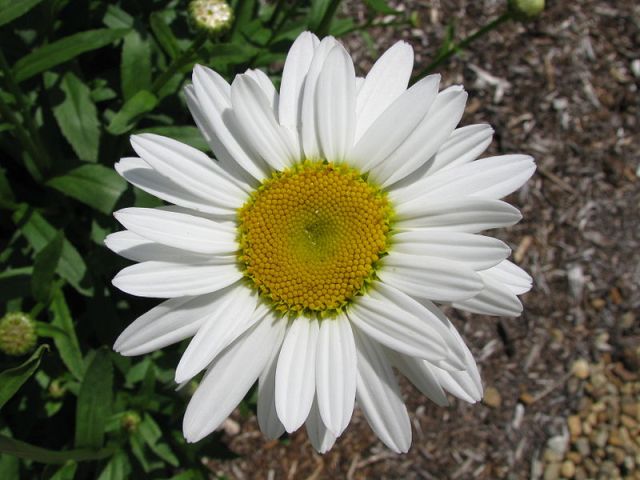
Leucanthemum x superbum 'Becky'

Leucanthemum x superbum ‘Becky’

Other wise known as ‘Shasta Daisies’ Leucanthemum is a genus of around 70 flowering plants (annuals and perennials) from the sunflower family (Asteraceae).

It occurs naturally in Europe, Northern Africa and the temperate regions of Asia. Many species have been introduced into America, Australia and New Zealand. It was previously classified as a chrysanthemum and the most important group of perennial Leucanthemum- the group x superbum is still known by some as Chrysanthemum maximum. They were split from the genus Chrysanthemum, because they are not aromatic and their leaves lack grayish-white hairs. L. vulgare is the ‘Ox Eye Daisy’.

The superbum group (the Shasta Daisy proper) consists of robust, easy going plants which grow well in sun or half shade in any good soil – but in heavy clay they have a reputation for not surviving. Growing to a height of between 0.5 and 1 metre tall, they are lax plants and so some form of support is usually required. Gardener Richard Barrett says,

‘If you find they grow too tall in your border and require too much staking, then dig them up each winter and replant them insitu. This has the side effect of keeping the foliage and flowers to a compact size, this method works well for other robust herbaceous plants.’

They reappear every spring with fresh dark green leaves before flowering with the typical daisy configuration of long elegant petals around a yellow eye. Their foliage is handsome, but can be attacked by slugs as the planst break ground kin spring – this tends to result in no regrowth, so protection is important.

Making a great display in your borders from June to September during which time it is good at attracting butterflies and bees, flowers are solitary and can be either single or double, and with simple petals or frilly, feather-like structures. Flowers of Leucanthemum are excellent for cutting and are favoured by flower arrangers.

L. 'Sonnenschein'

L. ‘Sonnenschein’

L. 'Goldrush'

L. ‘Goldrush’

Although other species in the genus have yellow flowers, the flowers of these hybrids had been exclusively white with yellow discs (tending to be paler in double-flowered types). However, the cultivar ‘Sonnenschein’ has yellow buds that open to cream flowers and there are other yellow cultivars available. New varieties include several with more petals to give a ruffled effect and a striking golden yellow version. Most will re-bloom happily if cut back after flowering. Leucanthemum combine well with Phlox in August. White flowered varieties make an excellent contrast to the blue of Salvia nemorosa ‘Ostfriesland’ whilst the strong yellows are great to accompany Gaillardia aristata ‘Goblin’.

Leucanthemum x superbum 'Snowcap'

Leucanthemum x superbum ‘Snowcap’

Old School Gardener

If you’ve enjoyed reading this post and others on this blog, why not comment and join others by signing up for automatic updates via email (see side bar, above right ) or through an RSS feed (see top of page)?

Water management- Peruvian style

‘Great article discussing how Peru’s ancient cultures manipulated their water supplies in ingenious ways in order to survive in each of their many microclimates’ via Growveg

Pallet sizes – a handy guide for all you diy enthusiasts!

Pallet Types Pallet Size in  with Size Pallets

cover cropMy previous articles on green manure have covered the why, what, where and when –  this final article deals with how to use them to best effect.

Processing your green manure so that the ground can be used again begins around 3 – 4 weeks before you want to make use of the plot for another crop or plant, or alternatively when the green manure approaches maturity – whichever comes first.

There are various ways in which to process the green manure:

  • Dig it in – simply turn the plants back into the soil, using a sharp spade, chopping up clumps as you go. Aim to bury the plants no more than 15cms deep on heavy soils, or 18cms on lighter ground. grazing Rye and perennial green manures can be tough to dig in if they have grown well – to make it easier cut down the foliage first and leave it to wilt and possibly dig the plot twice with a gap of a week or two between each dig.
  • Leave it to the frost – if you sow a frost tender green manure in late summer you can leave this to be killed by the first frost, and the remains can be left on the soil as a cover over winter.
  • Hoeing – annual green manures, like mustard and buckwheat, can be hoed off, leaving the top growth in place or added to a compost heap. You can plant through the green mature foliage or cultivate it further to create a seed bed.
  • Mulching – a light excluding mulch can be used to kill off the green manure – black plastic or large sheets of cardboard held down by straw or bricks etc. Annual green manures will die off in a few weeks whilst perennials and grazing rye will take a bit longer – but you can always plant through the mulch.

No Dig = no green manure?

You may garden using the ‘no dig’ method. If so, you migth feel that grazing rye, even though it is an excellent soil improver, should be avoided. However, you can cut down the rye, spread it with well-rotted manure if required and then plant a crop of ‘no dig’ potatoes on the surface. these can then be covered with a mulch of hay or straw (around 10cm deep) adding more of this as they grow, and topping off with layer of grass mowings before the potato foliage meets across the rows.

Too tough to dig in?

If you forget to deal with your green manure in time and it becomes tough and woody, don’t worry. Just cut off the tops and put them on the compost heap, then dig in the roots or cover with a thick mulch.

Timing is everything…

If you dig in young annual green manures during the summer they will decompose rapidly, leaving you able to plant up the area within a few days of digging in. Tougher plants, like grazing rye, need to be dug in a few weeks in advance of when you need the ground again, especially in spring when decomposition is slower. If you’re aiming to create a fine seed bed after your green manure remember to leave the ground for a longer period than if you are simply planting into the ground. And avoid using green manures where you plan to sow small seeds such as carrots, parsnips and spinach as some green manures have a chemical which inhibits germination.

I hope that these articles on ‘Green Gold’ have been useful, and that you’ll be using green manures in your garden. I’m certainly planning to build on my early experiences last year with sowing more green manures over the coming winter.
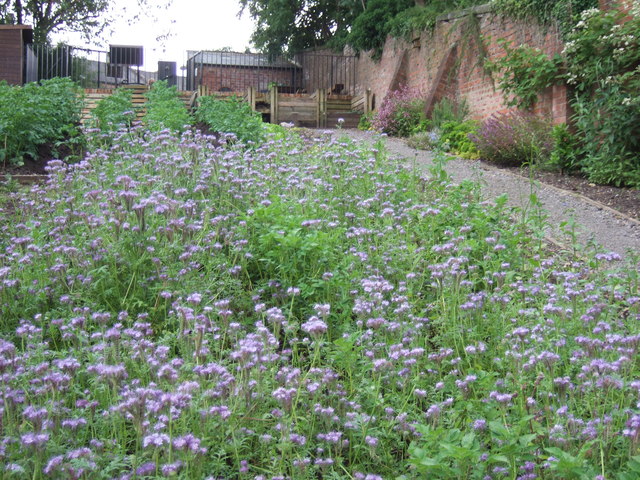
Phacelia in flower

Phacelia in flower

Source: ‘Green Manures’- Garden Organic Guide. September 2010

Other articles in this series:

Green Gold: 12 plants for soil improvement

Green Gold- 7 reasons to use green manures

Green Gold: Where and when to use Green Manures

Old School Gardener

If you’ve enjoyed reading this post and others on this blog, why not comment and join others by signing up for automatic updates via email (see side bar, above right ) or through an RSS feed (see top of page)?

PicPost: Lawnedered

greenbenchramblings's avatargreenbenchramblings

Back to Broughton Grange and we can go through the piece of garden architecture, the stumpery arch and find that it becomes a whole garden growing around stumps on the other side. Old stumps were beautifully planted with varieties of Hostas, Ferns and Alchemilla.

2013 06 26_1375 2013 06 26_13772013 06 26_1376

Beautifully curved paths presented us with rich choices. Each path led to interesting specimen trees. Of course I had to start by following the route to the chestnuts, their deep salmon coloured towers of flowers covered even these young trees.

2013 06 26_13792013 06 26_13782013 06 26_13812013 06 26_1380

Cut through the arboretum were straight avenues each featuring a different variety of tree, such as chestnut and lime. This was a an effective contrast to the sinuous paths wriggling through the meadows growing under the young trees throughout the arboretum. These avenues gave long views to the Oxfordshire countryside beyond the boundaries of the garden and parkland.

2013 06 26_1382

2013 06 26_13712013 06 26_1379

So if you like good garden design…

View original post 39 more words

Finding Nature

Nature Connectedness Research Blog by Prof. Miles Richardson

Norfolk Green Care Network

Connecting People with Nature

Discover WordPress

A daily selection of the best content published on WordPress, collected for you by humans who love to read.

Susan Rushton

Celebrating gardens, photography and a creative life

Unlocking Landscapes

Writing, photography and more by Daniel Greenwood

Alphabet Ravine

Lydia Rae Bush Poetry

TIME GENTS

Australian Pub Project, Established 2013

Vanha Talo Suomi

The Journey from Finnish Rintamamiestalo to Arboretum & Gardens

Marigolds and Gin

Because even in chaos, there’s always gin and a good story …

Bits & Tidbits

RANDOM BITS & MORE TIDBITS

Rambling in the Garden

.....and nurturing my soul

The Interpretation Game

Cultural Heritage and the Digital Economy

pbmGarden

Sense of place, purpose, rejuvenation and joy

SISSINGHURST GARDEN

Notes from the Gardeners...

Deep Green Permaculture

Connecting People to Nature, Empowering People to Live Sustainably

BloominBootiful

A girl and her garden :)