Archive for June, 2013


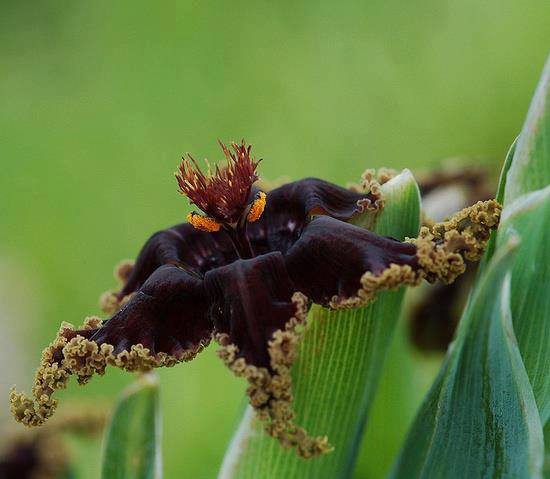
Picpost: Frilled to be here

ChrysanthemumsI’ve received a question from a Nottinghamshire gardener about different kinds of cutting. Mr. R.Hood asks:

‘What is the difference between softwood and greenwood cuttings? I’ve read that chrysanthemums are propagated from greenwood.’

Well, Mr. Hood, the difference comes down to something quite smallsoftwood cuttings are taken from the first flush of new growth in spring, whereas greenwood cuttings are taken slightly later, when the wood at the base of the cutting is a little firmer – these cuttings do not root quite as quickly.  Greenwood cuttings are easier to handle than softwood, and they are less prone to wilting. Therefore, greenwood cuttings should be used to propagate plants that root readily, like Delphiniums, Pelargoniums and indeed Chrysanthemums. Chrysanthemum cuttings could not be easier and for every mother or grandmother plant, you can produce at least 10 of a new generation. For an easy guide on how look at this article.

Softwood cutting

Softwood cutting

And while we’re talking about propagating new plants from cuttings how about evergreen plants?

Cuttings from these plants are usually taken from ‘ripe or semi ripe wood’ (i.e. when stems are firmer and buds have developed) in early summer and autumn and rooted  in a cold frame. They can be anything from 50 -150cm long, depending on the size of the plant, and preferably with a ‘heel’ of older wood where the cutting stem has been pulled away from the main stem. You then strip off the lower leaves, and if there is no heel, make a wound about 13mm long at the base of the cutting. Apply a hormone rooting powder to the base of the cutting (just a light dusting) and insert the cutting to half their length in soil – you can probably put a number around the edge and in the centre of a pot. To help reduce water loss from the remaining leaf/leaves, cut these in half.

Semi ripe cutting

Semi ripe cutting

The pot should then be placed in a cold frame (you can also root the cuttings directly into the soil in a cold frame , but make sure it has been forked over and manured/composted a week or two beforehand).  Water them well and close the frame completely. Inspect and water them regularly and harden them off during the summer to prepare them for planting out the following autumn.

You can create your own 'mini cold frame' by using plastic covers or bags over pot-planted cuttings

You can create your own ‘mini cold frame’ by using plastic covers or bags over pot-planted cuttings

Another technique, if you don’t have a cold frame, is to put a plastic cover, or bag secured with an elastic band over the top of the pot – this helps to prevent the cuttings drying out, by maintaining a naturally humid atmosphere. These effectively become ‘mini cold frames’ themselves.

It seems you can grow some evergreen cuttings by placing them into a cut potato! - this one is Wisteria.

It seems you can grow shrub cuttings by placing them into a cut potato! – this one is Wisteria, see the link for further info

Further information:

Softwood and Greenwood cuttings – RHS

Semi ripe cuttings- RHS

Propagating shrubs in a potato

Old School Gardener

If you’ve enjoyed reading this post and others on this blog, why not comment and join others by signing up for automatic updates via email (see side bar, above right ) or through an RSS feed (see top of page)?

Tim Gill's avatarRethinking Childhood

Today I took a phone call from a television news channel asking me to comment on this Youtube video.

The clip is not for the faint-hearted. It shows 22-year-old James Kingston climbing up a tower crane in Southampton, then hanging by one hand off one of the crane’s bars, with a 250 foot drop beneath him. The reporter wanted me to condemn Kingston’s actions as likely to encourage copycat behaviour and put children at risk. The call made me think: what is going on when children or young people carry out acts of extreme danger, and how should we respond?

View original post 895 more words

PicPost: Globe Theatre

My mother – in – law is currently on a two week visit to us. A keen gardener (she was until a year ago Chair of the Tavistock Ladies Gardening club), she is not as mobile as she once was (she celebrated her 83rd birthday last week). However, she still enjoys looking at gardens so this is a great excuse (as if I needed one) to get out and about to see some interesting local gardens. The weather has also been kind so we’ve been to a few places that I haven’t been before, or haven’t seen for a good number of  years. Two of them are in Norwich, our local cathedral city, and they are fine examples of gardens developed for very different reasons; the one out of  the passion of a Victorian entrepreneur, the other based on a medieval religious garden.

The Plantation Garden

The Garden in 1897

In 1856, a prosperous upholsterer and cabinet maker living in Norwich, took a long lease on an industrial site just outside the old City walls. His name was Henry Trevor, and for the next forty years, he spent considerable sums of money and much effort transforming a chalk quarry into a magical garden.

Henry Trevor

In many ways, Henry Trevor’s garden was typical of Victorian taste and technology. He built a fountain, terraces with balustrades, rockworks, a Palm House, and a rustic bridge. He planted elaborate carpet beds, woodlands and shrubberies. He designed serpentine paths to conduct the visitor along circular routes, and he built and heated several greenhouses with boilers and hot water pipes.

Henry Trevor, however, was also a man of strong personal tastes. His “Gothic” fountain is unique, and he displayed great enterprise in using the fancy bricks from a local manufacturer to create medieval style walls, ruins and follies. Within less than 3 acres, he established a gentleman’s residence and garden that reflected in miniature the grand country houses of the Victorian period. Visitors were frequently welcomed in the garden by Henry Trevor, for he was always ready to allow his garden to be used for charitable causes.

The Garden in Victorian times- the Palm House no longer exists.

After the 1939-45 war, the garden was virtually abandoned. Fortunately, much of the structure has survived, and is gradually being restored by the The Plantation Garden Preservation Trust. The first task of its members was to clear a forest of sycamores and a blanket of ivy to reveal what had become hidden during the past 40 years. Since then, they have restored the flowerbeds, fountain, balustrading, Italian terrace, rustic bridge and in 2007, the Gothic alcove.

Trevor’s original passion has been matched by this band of volunteers and our visit, on a beautifully sunny afternoon, showed considerable progress in the restoration programme since my last visit some years ago. I was particularly impressed with the enormous amount of work done to stabilise, weed – proof and replant the steeply sloping sides of the garden, which remain topped off with a range of majestic Beech and other trees.

The Bishop’s Garden

Our second visit, on one of it’s open days in aid of local charities, was to the Bishop’s Garden, a four acre green oasis in the centre of Norwich, sitting in the shadow of the Gothic cathedral.

There has been a garden of sorts since around 1100 AD when Bishop de Losinga began to build the cathedral and palace. From the existing garden one can still marvel at the original detailing of Norman stonework on the North Transept of the cathedral which is only visible from the Bishop’s Garden.

In the early 14th century, Bishop John Salmon greatly increased the size of the garden by compulsory purchase of additional land. The general form of the garden was laid down at least 300 years ago. The lower end was cultivated and separated by a wall running straight across the garden. The colossal Old Bishops Palace which still stands was completed in around 1860. In 1959 a major change took place when a new Bishops House built and the Old Palace came to be used by Norwich School. The garden was reduced from 6 and half acres down to the present 4 acres. Records show that in the 1940s up to 15 gardeners were employed reducing to 9 in the 1950’s and today the garden is looked after by 1 fulltime and 1 part time gardener, plus a team of volunteers.

The garden has a range of features typical of many grand gardens developed over the last hundred plus years – large herbaceous borders (which have a persistent ground elder problem and are to be successively dug up and weeds systematically removed in the coming couple of years), a small woodland walk and box – edged rose beds. There is a long shade border with Hostas, Meconopsis and tree ferns, all but the latter looking splendid on our visit. There is also a large wild grass labyrinth, very popular with children (I walked it and contemplated my life as I went…). This is of a size where it can be easily mown using a ride on mower, the gardener told me that he cuts it all down in the autumn and then the path edges are left for the various wild flowers and other species to grow up over the growing season.

There are also extensive shrubberies containing many rare and unusual plants, among these being a Hebe planted from a sprig taken from Queen Victoria’s wedding bouquet in 1840. There is an organic kitchen garden and  ‘bambooserie’. The garden continues to evolve with new plants and features being introduced year by year. The Bishop’s Garden has developed links with Easton College, helping horticulture students gain valuable experience.

Though busy on our visit, including delightful music from a local Youth Orchestra and Choir, one can imagine the garden creating a peaceful mood – one where a succession of Norwich Bishops, stretching back 1000 years, paused to reflect, pray and secure spiritual renewal.

Sources and Links:

The Plantation Garden

The Bishop’s Garden

Old School Gardener

If you’ve enjoyed reading this post and others on this blog, why not comment and join others by signing up for automatic updates via email (see side bar, above right ) or through an RSS feed (see top of page)?

PicPost: Snow blossom

From: http://www.iLandscape.com.au

jasmine-bush OK, I know that Jasmine is technically a shrub or climber and not strictly a ‘perennial’ but it is a perennial plant like all shrubs, so perhaps you’ll allow me some license on a letter of the alphabet that is decidely low on choice of ‘proper perennials’!

Jasmine (Jasminum) is a genus in the olive family (Oleaceae). It contains around 200 species native to tropical and warm temperate regions. Jasmines are widely cultivated for the characteristic fragrance of their flowers. They can be either deciduous or evergreen, and can be erect, spreading, or climbing in habit. The flowers are typically around 2.5 cm (0.98 in) in diameter, are white or yellow in colour, although in rare instances they can be slightly reddish. The flowers are borne in clusters with a minimum of three flowers, though they can also be solitary on the ends of branchlets. Each flower has about four to nine petals. They are usually very fragrant. The berry fruits of jasmines turn black when ripe.  Of the 200 species, only one is native to Europe, but a number of jasmine species have become naturalized in the Mediterranean area. For example, the so-called Spanish jasmine or Catalonian jasmine (Jasminum grandiflorum) was originally from Iran and south western Asia, and is now naturalized in Spain and Portugal.

Widely cultivated for its flowers, jasmine is enjoyed in the garden, as a house plant, and as cut flowers. The flowers are worn by women in their hair in southern and southeast Asia. The delicate jasmine flower opens only at night and may be plucked in the morning when the tiny petals are tightly closed, then stored in a cool place until night. The petals begin to open between six and eight in the evening, as the temperature lowers.

Symbolically, Jasmine was used to mark the Tunisian revolution of 2011 and the pro democracy protests in China of the same year. Damascus in Syria is called the ‘City of Jasmine’ and in Thailand, jasmine flowers are used as a symbol of motherhood.  Several countries have Jasmine as their national flower. ‘Jasmine’ is also a girls name in some countries.

There are many cultivars of Jasmine – for summer and winter. Jasminum officinale (summer jasmine) is perfect for a sunny, sheltered spot in mild regions of the UK. Trachelospermum jasminoides, also known as ‘Confederate’ or ‘Star Jasmine’ is a sweet-smelling vine with small white flowers. It grows quickly up walls, trellises, fences, and even thrives as ground cover, but It is especially well-suited to be grown indoors.

Trachelospermum jasminoides

Trachelospermum jasminoides

The cheery yellow flowers of Jasminum nudiflorum (winter jasmine) will brighten up even partially shaded and cold sites at a time when little else is in flower. A popular and reliable shrub, introduced from China in 1844, and widely grown as a wall shrub, it can be allowed to scramble freely over a low wall or up a bank, or trained up a vertical framework. Unlike many other jasmines, winter jasmine does not twine, so will need tying-in if grown vertically. The stems are bright green and give an evergreen impression, even in winter when the tiny bright yellow blooms appear, weatherproof in all but the coldest snaps. Regular pruning keeps bushes under control and prevents bare patches from appearing. The Royal Horticultural Society has given it the Award of Garden Merit (AGM).


All jasmines need a fertile, well-drained soil in full or partial sun. Summer jasmine needs a sheltered spot, full sun and a south- or south west-facing aspect. Winter jasmine is more tolerant of partial shade and a south east or north west aspect. North and north east aspects are best avoided. Frost hardy species are fine in an unheated conservatory or a cold greenhouse kept frost-free with a small heater. Tender species may require a minimum night temperature of 13-15ºC (55-59ºF). Jasmines make lovely container specimens. Ensure you use a container with good drainage holes, cover the holes with crocks or grit, and fill with John Innes No 2 compost. Leave space at the top for watering, and place the pot in bright but filtered light.

Jasmine plant care is not difficult but does require vigilance.Well worth it to have that wonderful evening fragrance in the summer or some brightness in the dark winter months!


Sources and further information:

Wikipedia

Beginners guide to Jasmine

Royal Horticultural Society – growing Jasmine

How to grow Jasmine

Pruning Star Jasmine

Growing Jasmine indoors

Trachelospermum – RHS

Old School Gardener

If you’ve enjoyed reading this post and others on this blog, why not comment and join others by signing up for automatic updates via email (see side bar, above right ) or through an RSS feed (see top of page)?

Tamara Jare's avatarMy Botanical Garden

ImageImageImage

Bufo bufo is part of a species complex, a group of closely related species which cannot be clearly demarcated.[1] Several modern species are believed to form an ancient group of related taxa from preglacial times. These are the spiny toad (Bufo spinosus), the Caucasian toad (Bufo verrucosissimus) and the Japanese common toad (Bufo japonicus). The European common toad (Bufo bufo) seems to have arisen more recently.[6] It is believed that the range of the ancestral form extended into Asia but that isolation between an eastern and western type occurred as a result of greater aridity and desertification in the Middle East during the Middle Miocene.[12]The exact taxonomic relationships between these species remains unclear.

Mr. Toad Esq. is one of the main characters in the children’s novel The Wind in the Willows, byKenneth Grahame

from:http://en.wikipedia.org/wiki/Common_toad


View original post

PicPost: Royal Oak

‘Here’s the Royal Oak at Boscobel House, where Charles II reportedly hid from Cromwell’s troops – we wonder what life would be like now if he had been captured?’
Pic via English Heritage

My earlier articles about projects using pallets seem to have been a big hit – they’ve certainly had a lot of visitors. I’ve been working on my own project with local school children to create vertical planters and these are due to be finished off next week, so I’ll do a piece on that project and the lessons I’ve learned. I’m still collecting examples of novel recycled uses of old wooden things and so here are a few more pictures of some other interesting ideas. If you have any ideas or examples of your own, please send me some pictures!

This amazing shed is made out of old fruit trays. you can see that they're from the 'Royal Fruit Farm' at Sandringham, Norfolk! (For those who don't know, Sandringham is one of the grand residences of the Brtish Royal family - about 30 miles away from  Old School Garden and a lovely landscape with some beautiful trees.

This amazing shed is made out of old fruit trays. you can see that they’re from the ‘Royal Fruit Farm’ at Sandringham, Norfolk! (For those who don’t know, Sandringham is one of the grand residences of the British Royal family – about 30 miles away from Old School Garden and a lovely landscape with some beautiful trees)

pallet decking

Here’s a super example of the ways in which pallets can be reused and how they can be finished off to look like an up market product. These pallets have been taken apart, reassembled and sanded off to give a smooth surface. Laid like giant decking tiles they create a pleasing, practical terrace. Note that it uses quite thick planks, an important consideration if the floor is to bear body weight!

vertical planter adam haden

My previous articles on pallet projects can be seen here:

Pallet Power

Pallet Power- the sequel

Raised beds on the cheap

Old School Gardener

If you’ve enjoyed reading this post and others on this blog, why not comment and join others by signing up for automatic updates via email (see side bar, above right ) or through an RSS feed (see top of page)?

Finding Nature

Nature Connectedness Research Blog by Prof. Miles Richardson

Norfolk Green Care Network

Connecting People with Nature

Discover WordPress

A daily selection of the best content published on WordPress, collected for you by humans who love to read.

Susan Rushton

Celebrating gardens, photography and a creative life

Unlocking Landscapes

Writing, photography and more by Daniel Greenwood

Alphabet Ravine

Lydia Rae Bush Poetry

TIME GENTS

Australian Pub Project, Established 2013

Vanha Talo Suomi

The Journey from Finnish Rintamamiestalo to Arboretum & Gardens

Marigolds and Gin

Because even in chaos, there’s always gin and a good story …

Bits & Tidbits

RANDOM BITS & MORE TIDBITS

Rambling in the Garden

.....and nurturing my soul

The Interpretation Game

Cultural Heritage and the Digital Economy

pbmGarden

Sense of place, purpose, rejuvenation and joy

SISSINGHURST GARDEN

Notes from the Gardeners...

Deep Green Permaculture

Connecting People to Nature, Empowering People to Live Sustainably

BloominBootiful

A girl and her garden :)