Archive for May, 2013


PicPost: Crying for attention

Share the ‘Love Outdoor Play’ animation

Swainswick Explorers

Hamdi Khalif - Play England's avatarLove Outdoor Play

130510. Zoe Slade - Empty Classroom Day posterGuest post by Zoë Slade.

On Friday 5 July 2013 schools all over the country will be learning outside for Empty Classroom Day.

Empty Classroom Day is a day to celebrate all the learning that takes place outside the classroom and to encourage even more outdoor learning. The day was created by schools and organisations at London Sustainable Schools Forum and the idea is simple: One class, outdoors, for one lesson on one day.

Last year, despite the rain, over one hundred schools took part with activities ranging from planting wildflowers, bug hunting and pond-dipping to inspiring class visits to the great outdoors. The first Empty Classroom Day was a success showing that learning outside can be fun, memorable and healthy. This year lots of schools have signed up to say that one class will be learning outside for one lesson on Friday 5 July, some schools are doing even…

View original post 252 more words

HowardJones's avatarOuse Washes: The Heart of the Fens

Heritage Lottery FundA couple of weeks ago saw the launch of a remarkable new book about the history of the Fens.

Ian Rotherham, the author of ‘The Lost Fens’ is a writer, broadcaster and Professor of environmental geography and reader in tourism and environmental change at Sheffield Hallam University.

Lost_Fens-300x300
The Lost fens, by Ian Rotherham. Source: http://www.environmentalhistories.net/?p=697
Ian_Rotherham_web2_0
Ian Rotherham

The Lost Fens is about the history of the cultural landscape of the Fen area. It tells the story of the most dramatic ecological destruction in our history. Around 8,000 sq km of wetland present in the 1600s was almost entirely obliterated by 1900. The book draws together the story of a lost ecology, of changing landscapes, lost people, lost cultures and ways of life, and lost wildlife.

The story of these lost Fens is, in Rotherham’s words “the greatest single ecological catastrophe that ever occurred in England”.

Indeed, so thoroughly…

View original post 169 more words

I’ve just returned from a session of the ‘Gardening Club’ at my local primary school – 7 children of varying ages. What a little preparation and enthusiastic kids can achieve! We:

  • Painted up the pallet planters we’re making for a floral display at the school (we’re planting up hanging baskets next week for sale at the Summer Fair on 19th May) – more on this project in due course…
  • Set up a wormery outside the school kitchen – I bought some worms from a local angling shop and with the day’s fruit peel and other kitchen waste on a bed of leaf mould we set the little critters to work and talked with the School cook about how to keep the process going…
  • Sowed some Squash and Lavender seeds one of the children had brought in – they’re already excited at how tall their sowings of trailing Nasturtiums have grown in two weeks…
  • Had a brief run down on the composting process in the wormery and set them a challenge of finding out some ‘compost facts’ for next week, as well as discussing who’ll be available to help me sell the hanging baskets, make paper pots with children visitors and advise people on food growing and composting at the Summer Fair…

Phew – need  a little sleep….

Old School Gardener

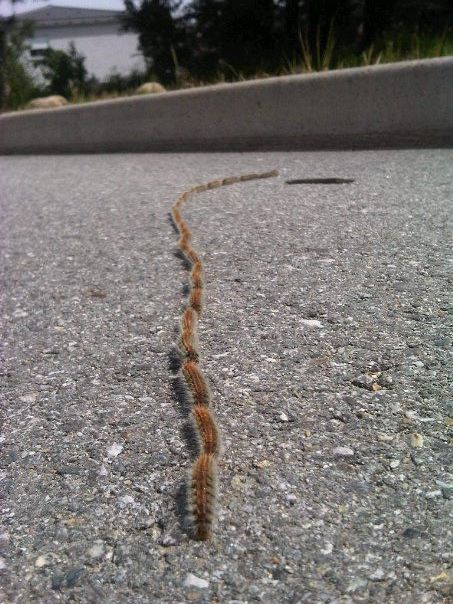
PicPost: Caterpillar Track

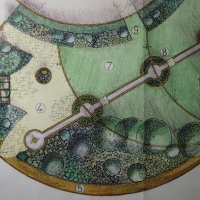
In this latest article about different garden styles I turn my attention to Country Gardens, trying to capture their essence in a few words and images.

Country Gardens are usually fairly large (in some senses they can be seen as a larger version of the Cottage Garden). They tend to follow a pattern of straight-line formality or other clear geometrical shape near to the house, with increasing informality as you move further away, where the garden becomes more and more integrated with the surrounding countryside. Likewise, planting tends to be more formal near the house (possibly featuring topiarised shrubs), but becomes more naturalistic towards the edges. Other key features of Country Gardens are:

  • Luxuriant planting

  • Large pools and/or streams

  • Views into the surrounding landscape, sometimes ‘framed’ by boundaries or planting

  • Sweeping lawns

  • Hedging and other screens that might divide up the garden into different areas

  • Natural materials, especially as the garden moves away from the house

  • Garden structures, furniture or specimen plants that act as eye catchers/ focal points

Let me know what you think makes a Country style garden, and if you have some pictures I’d love to see them!

Other posts in the series:

Modernist Gardens

Formal Gardens

Mediterranean Gardens

Cottage gardens

Old School Gardener

If you’ve enjoyed reading this post and others on this blog, why not comment and join others by signing up for automatic updates via email (see side bar, above right ) or through an RSS feed (see top of page)?

PicPost: Tanked up

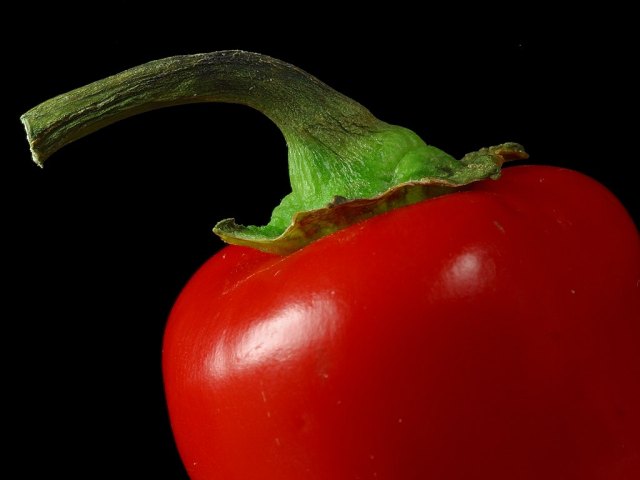
Public domain image, royalty free stock photo from www.public-domain-image.comFollowing my first ‘Gardeners’ Question Time’ post last week, I’m pleased to say that I’ve had a question from a Mrs.Trellis of North Wales, who asks,

‘Is it possible to grow peppers and aubergines outdoors in the UK?’

Well, Mrs. Trellis, even though global warming is raising the overall average temperature in the UK, this is very gradual and is unlikely to make it possible for you to grow these exotics outside where you live – unless of course you have a very sheltered, sunny and warm spot (in a courtyard perhaps). However, even there in North Wales its unlikely to  be warm enough, long enough during the summer. Having said that, you could of course have a scorching summer and I’ll be proved wrong!

If you do want to have a go and have a greenhouse and/or cold frame you could try to start the plants off inside with seed sowing in late February or early March with some added heat from a propagator (minimum 21 degrees C). Then pot them up into small pots and gradually harden them off, first in an unheated greenhouse, then perhaps a cold frame. Then, ‘if the weather is with you’ plant them out/pot them on into larger pots once all risk of frost has passed – I guess that might be well into June for you? If you are planting into open ground then it’s advisable to give some temporary protection in the form of a cloche or fleece covering for a couple of weeks into June.

Once they are growing well, pinch out the growing tips of both peppers and aubergines when they reach about 37 cms high, to make them grow bushy. And you might also need to stake and support them if they get top-heavy with foliage and fruit.

Aubergines have great health benefits

Aubergines have great health benefits

To give you some ability to respond to the weather, if you grow the plants in containers you can bring them into the greenhouse/inside if the temperatures don’t reach the sorts of levels they need (they will grow only slowly at about 12 degrees C for peppers and 16-18 degrees C for Aubergines – but ideally they both need it hotter). However, if there is a lack of sunshine you can’t do much about that – unless you invest in some expensive lighting perhaps! Also, Aubergines don’t do well in humid conditions – they need heat and well-drained soil to thrive. So, that moist North Wales climate might also be a problem!

For those living further south/east in the UK, where the climate is perhaps more likely to be both warmer and drier, outdoor peppers and aubergines are a real possibility, especially in a greenhouse – but again they need consistent heat, sun and shelter to do really well outside.

Chilli peppers have their own hotness rating scale

Chilli peppers have their own hotness rating scale

Oh, and by the way, yes, both peppers and aubergines are fruit (botanically speaking) though we tend to refer to them as vegetables in the kitchen! If you have any experiences or tips on growing peppers or aubergines outside I’d love to hear from you!

Further information:

Growing aubergines

Aubergine recipes and the health benefits

Growing sweet peppers

Growing Chilli peppers

Pepper recipes

Old School Gardener

If you’ve enjoyed reading this post and others on this blog, why not comment and also join some other people and sign up for automatic updates via email (see side bar, above right ) or through an RSS feed (see top of page)?

Finding Nature

Nature Connectedness Research Blog by Prof. Miles Richardson

Norfolk Green Care Network

Connecting People with Nature

Discover WordPress

A daily selection of the best content published on WordPress, collected for you by humans who love to read.

Susan Rushton

Celebrating gardens, photography and a creative life

Unlocking Landscapes

Writing, photography and more by Daniel Greenwood

Alphabet Ravine

Lydia Rae Bush Poetry

TIME GENTS

Australian Pub Project, Established 2013

Vanha Talo Suomi

The Journey from Finnish Rintamamiestalo to Arboretum & Gardens

Marigolds and Gin

Because even in chaos, there’s always gin and a good story …

Bits & Tidbits

RANDOM BITS & MORE TIDBITS

Rambling in the Garden

.....and nurturing my soul

The Interpretation Game

Cultural Heritage and the Digital Economy

pbmGarden

Sense of place, purpose, rejuvenation and joy

SISSINGHURST GARDEN

Notes from the Gardeners...

Deep Green Permaculture

Connecting People to Nature, Empowering People to Live Sustainably

BloominBootiful

A girl and her garden :)