Archive for May, 2013


PicPost: Essence of Chelsea

Picture by Gail Cuthbert

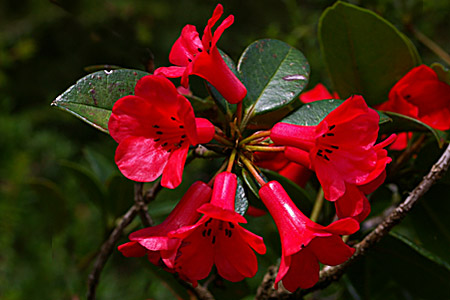
Rhododendron viriosum - picture by Brian Walters

Rhododendron viriosum – picture by Brian Walters

Just about now many of the heritage gardens of Britain are coming alive with Rhododendron colour. Rhododendron is named from the ancient Greek words for  “rose” (rhódon)  and “tree” (déndron). It is a genus of over 1000 species of woody plants in the heath family, and are either evergreen or deciduous. Most species have showy flowers. Rhododendrons are extensively hybridized in cultivation, and natural hybrids often occur in areas where species ranges overlap.They were introduced to the UK in the late 18th century from the Himalayas and China.

There are over 28,000 cultivars of Rhododendron in the International Rhododendron Registry held by the Royal Horticultural Society. Most have been bred for their flowers, but a few are of garden interest because of ornamental leaves and some have ornamental bark or stems. Recent genetic investigations have caused an ongoing realignment of species and groups within the genus. Horticulturally, rhododendrons may be divided into the following groups:

  • Evergreen rhododendrons: the main category

  • Vireya (Malesian) rhododendrons: these are tender shrubs

  • Azaleas (a section of generally small-sized, small-leaved and small-flowered shrubs), further divided into deciduous and evergreen hybrids. They are distinguished from “true” rhododendrons by having only five anthers per flower.

  • Azaleodendrons – semi-evergreen hybrids between deciduous azaleas and rhododendrons

Rhododendron luteum

Rhododendron luteum

Species names include:

R. arborescens = tree like

R. augustini = after Dr. Augustine Henry, famous 19th /20th century irish plantsman.,

R. balsamiaeflora = balsam-flowered, the double flowered florist’s balsam.

R. campanulatum = bell – shaped flowers

R. campylocarpum = bearing bent fruits

R. cinnarbarinum = cinnabar red

R. decorum = shapely or becoming

R. fastigiatum = fastigiate or erect branches taperign to a point

R. flavum = yellow (also known as R. luteum)

R. impeditum = twiggy branches

R. laponicum = of lapland

R. molle = soft or velvety, refering to the leaves

R. myrtilloides = myrtle – like

R. nudiflorum = naked flowered, i.e coming before the leaves

R. ponticum = Pontic, a  region of the Black Sea

R. rhodora = old generic name signifying rosy-red

R. russatum = reddened- the foliage

R. sutchense = from Szechuan

R.vaseyi = discovered by Mr. G.R. Vasey, 19th century botanist

R. viscosum = sticky or viscous

R. yunnanense = of Yunnan, southern China

Rhododendron ponticum

Rhododendron ponticum

The rhododendron is the national flower of Nepal, where the flowers are considered edible and enjoyed for their sour taste. The pickled flower can last for months and the flower juice is also marketed. The flower, fresh or dried, is added to fish curry in the belief that it will soften the bones!

Some species of rhododendron are poisonous to grazing animals because of a toxin in their pollen and nectar. Rhododendron is extremely toxic to horses, with some animals dying within a few hours of ingesting the plant.

People have been known to become ill from eating honey made by bees feeding on rhododendron and azalea flowers. Xenophon described the odd behavior of Greek soldiers after having consumed honey in a village surrounded by Rhododendron ponticum during the ‘March of the Ten Thousand’ in 401 BC.Pompey’s soldiers reportedly suffered lethal casualties following the consumption of honey made from Rhododendron deliberately left behind by Pontic forces in 67 BC. Later, it was recognized that honey resulting from these plants has a slightly hallucinogenic and laxative effect., the suspect rhododendrons being R. ponticum and R. luteum (also known as R. flavum). Eleven similar cases have been documented in Turkey during the 1980s. The effects of R. ponticum was mentioned in the 2009 film Sherlock Holmes as a proposed way to arrange a fake execution.

Rhododendron 'Lemon Dream'

Rhododendron ‘Lemon Dream’

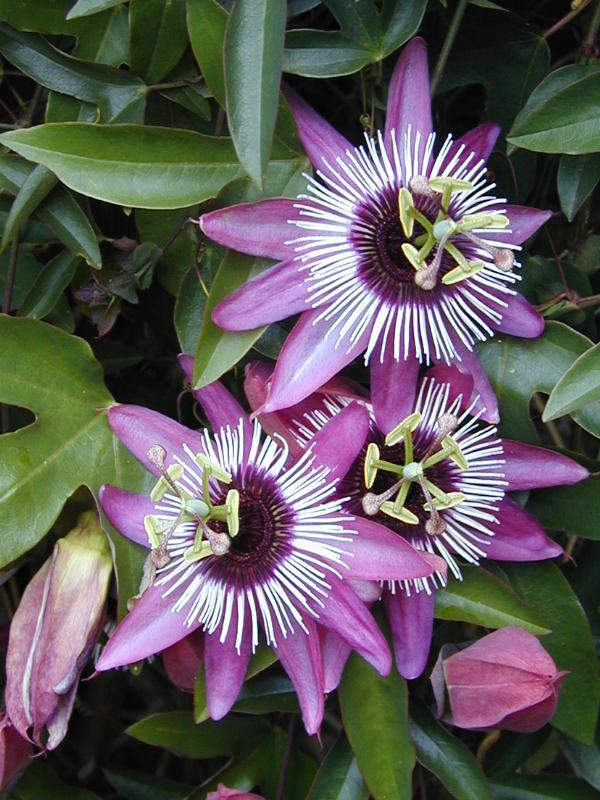
Rhododendrons are grown for their spectacular flowers, usually borne in spring. Some also have young leaves and stems covered in a striking dense woolly covering (indumentum) and some – the deciduous rhododendrons or azaleas – have good autumn colour. Some species (e.g. Rhododendron ponticum in Ireland and the United Kingdom) are invasive plants, spreading in woodland areas replacing the natural understory. R. ponticum is difficult to eradicate, as its roots can make new shoots.

Sources and further information:

Wikipedia

BBC video of Rhododendrons in the Himalayas

RHS- growing Rhododendrons

Royal Botanic Garden, Edinburgh – Rhododendron collection

Quizzicals: answers to the two clues given in Plantax 10…

  • Evader of women – Ladies Slipper
  • Oriental busybody – Japanese Medlar

..and 2 more cryptic clues to the names of plants, fruit or veg…

  • Where policemen spend their holidays
  • Feline relative

(thanks to Les Palmer, answers in the next Plantax!)

Old School Gardener

If you’ve enjoyed reading this post and others on this blog, why not comment and join others by signing up for automatic updates via email (see side bar, above right ) or through an RSS feed (see top of page)?

Tim Gill's avatarRethinking Childhood

Have you ever looked at a piece of derelict land in your area and thought “that could make a nice spot for a park” – and then felt your spirit fall as it sits boarded up for years, or worse still, gets turned into a temporary car park? Manchester resident Sam Easterby-Smith has, and has decided to do something about it. He has created Parkstarter: a crowd-funded, pop-up park creation scheme. And he wants to try it out in his home city.

View original post 378 more words

PicPost: Playful

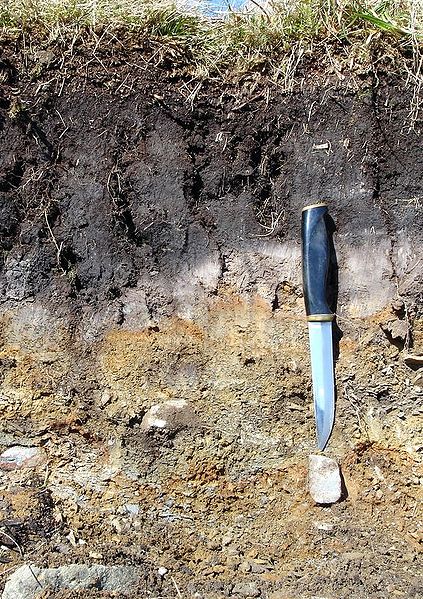
A profile of a typical 'podzol' showing the grey layer of leached out minerals below the dark top level of soil
A profile of a typical ‘podzol’ showing the grey layer of leached out minerals below the dark top level of soil

This week, ‘Gardener’s Question Time’ features soil. A Mr. T. Breck asks:

‘What is a soil pan? I think I may have one in my sandy soil here in south west Norfolk, as my plants don’t seem to be growing very well. Can I do anything to get rid of this?’

Well Mr. Breck, it does sound as though you may have a soil pan. This occurs when certain soil minerals are washed down through the soil by rain lodging some way below the surface. It does often happen in sandy soil containing a high proportion of iron. Over a period of time the minerals weld together to form a hard layer impervious to water. This layer restricts the downward spread of plant roots, so that poor growth results. In former heathland or coniferous forest areas (which is broadly speaking what much of south west Norfolk used to be) these soils may be termed ‘podzols’.

A similar situation can happen if a rotary cultivator is used regularly and its tines  are set at the same depth on each occasion – the action of the tiller blades causes soil compaction at that depth. You can avoid creating this pan by varying the depth of the rotivation.

To remove a pan it’s a case of digging deep and using a pick or fork to break up the welded layer of minerals and incorporating as much organic material (leaf mould, compost, manure) with the replaced topsoil.

More difficult hardpans may be further improved through the action of both adjusting the soil pH with lime if the soil is acidic, and with the addition of gypsum. This combination can help loosen clay particles bound into a hardpan by the actions of hard salts such as iron, calcium carbonate and sodium, by promoting their mobility. It is likely that mechanical removal of the soil pan and some changes to the soil structure as suggested above will be the most successful strategy, rather than relying on just one approach.

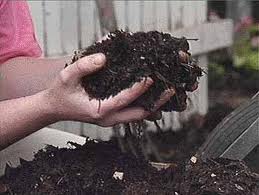
Adding home made compost or other organic matter to your soil will improve its structure and nutrient levels

Adding home made compost or other organic matter to your soil will improve its structure and nutrient levels

Whilst we are talking about soil it is perhaps worth just noting what soil actually is. It is made up of many different ingredients including varying proportions of clay, silt and sand. A soil containing a high proportion of clay is considered to be heavy and, whilst rich in nutrients, is often difficult to cultivate, especially when wet. Sandy soils, on the other hand, are light and easy to work, even after rain.

The soil here in the Old School Garden is a sandy loam and is a joy to cultivate, though I do have to add organic material to improve its moisture retention and nutrient levels. So, decomposing plant remains (or other organic material) is another important ingredient of soil as are air and water. Microbes by the million are also present and these and other organisms like earth worms are doing the job of breaking organic material down and  processing this into soil.

Links:

Improving soil by adding organic matter

The importance of organic matter

Compost – 10 things you wanted to know, but were afraid to ask…

Old School Gardener

If you’ve enjoyed reading this post and others on this blog, why not comment and also join some other people and sign up for automatic updates via email (see side bar, above right ) or through an RSS feed (see top of page)?

Picpost: Ruffles

Turtle dove, hedgehog, harbour seal, early bumblebee, small tortoiseshell butterfly, natterjack toad (c) NaturePL / Photoshot / RSPB / Butterfly Conservation

Picture: BBC

A major report on the ‘State of Nature’ in the UK is launched today by Sir David Attenborough. It makes grim reading. 25 of the nation’s top nature bodies have got together and reviewed a wide range of information on how different species have fared over the last decades. They’ve found that 60% of the species studied are in ‘long term decline’ and, perhaps even more worrying, 1 in 10 are on the ‘endangered’ list. Once common critters like hedgehogs are now in serious danger – they have declined by around a third since 2000.

The report, hailed as a ‘wake up call’ to conservation policy and practice in the UK, says that current approaches are not halting these declines. The data – collected by dedicated volunteer enthusiasts through many surveys – are impressive, but they only cover 5% of the UK’s estimated 59,000 native species.

One of the report authors, Dr Mark Eaton of the RSPB, said: “These declines are happening across all countries and UK Overseas Territories, habitats and species groups, although it is probably greatest amongst insects, such as our moths, butterflies and beetles. Other once common species like the kittiwakes, Scottish wildcat and arable wildflowers are vanishing before our eyes”.

The elusive Corncrake is one of the bird species which the report cites as a positive example of what can be achieved by conservation projects. In Scotland, schemes which support changes in the timing and methods of mowing hay and silage during the breeding season are said to have secured a three-fold increase in the number of singing males.

The ‘State of Nature’ report offers clues to the fate of the UK’s 59,000 species. Some of the species seeing the largest falls in numbers are turtle doves, water voles, red squirrels and hedgehogs.The reasons for the decline are said to be “many and varied” but include rising temperatures and habitat degradation through development or agricultural practices such as pesticide use. Species requiring specific habitats have fared particularly poorly compared to the ‘generalists’ who are able to adapt to the country’s changing environment more easily.

“This report shows that our species are in trouble, with many declining at a worrying rate,”

said Sir David Attenborough. He commented in a radio interview today –  ‘There is no single answer – what we have to do varies from species to species.” He points to the many expert organisations that can advise on how to provide or encourage habitat creation; e.g. the Wildlife Trusts network plus a number of specialist bodies for particular species.

Whilst small-scale action to create or conserve habitats – by gardeners for example – can help, the scale and continuing trend of decline is bound to raise questions about Government policy on biodiversity and the case for even more large-scale action to create/recreate/ conserve habitats. ‘Rewilding’ is the term applied to large-scale conservation aimed at restoring and protecting core wilderness areas, connecting these areas, and protecting or reintroducing key species. Such projects may require ecological restoration, particularly to restore connectivity between protected but fragmented areas, and reintroduction of predators. It is a conservation method based on “cores, corridors, and carnivores.”

Links:

BBC report on ‘State of Nature’

Rewilding Europe

Rewilding our children – article by George Monbiot

Other relevant articles:

Four Seasons in One Day (1): Climate change and the garden

The Lost Fens

Moths- unsung victim of climate change and habitat loss

Mistle Thrush missing…Big Garden Watch this weekend

Winners and losers in latest butterfly survey- 7 tips for gardeners

Old School Gardener

If you’ve enjoyed reading this post and others on this blog, why not comment and also join some other people and sign up for automatic updates via email (see side bar, above right ) or through an RSS feed (see top of page)?


Met Office Press Office's avatarOfficial blog of the Met Office news team

A research paper published in Nature Geoscience (Otto et al, 2013) led to a fair amount of media coverage yesterday, including articles in the Guardian, BBC and an opinion piece by Matt Ridley in The Times (this article is behind a pay wall).

The research paper looked at a ‘best estimate’ of the warming expected when the concentration of carbon in the atmosphere is doubled over pre-industrial levels (known as the Transient Climate Response).

Alexander Otto, Research Fellow in Climate Decisions at the Environmental Change Institute, University of Oxford, was the lead author of the research.

He has written an article discussing the science and the implications of the research which can be seen on the Research News pages on our website.

Here is a short extract from Alexander Otto’s article :

“We published a paper in Nature Geoscience on Sunday giving a new best-estimate of 1.3°C for the…

View original post 239 more words

Finding Nature

Nature Connectedness Research Blog by Prof. Miles Richardson

Norfolk Green Care Network

Connecting People with Nature

Discover WordPress

A daily selection of the best content published on WordPress, collected for you by humans who love to read.

Susan Rushton

Celebrating gardens, photography and a creative life

Unlocking Landscapes

Writing, photography and more by Daniel Greenwood

Alphabet Ravine

Lydia Rae Bush Poetry

TIME GENTS

Australian Pub Project, Established 2013

Vanha Talo Suomi

The Journey from Finnish Rintamamiestalo to Arboretum & Gardens

Marigolds and Gin

Because even in chaos, there’s always gin and a good story …

Bits & Tidbits

RANDOM BITS & MORE TIDBITS

Rambling in the Garden

.....and nurturing my soul

The Interpretation Game

Cultural Heritage and the Digital Economy

pbmGarden

Sense of place, purpose, rejuvenation and joy

SISSINGHURST GARDEN

Notes from the Gardeners...

Deep Green Permaculture

Connecting People to Nature, Empowering People to Live Sustainably

BloominBootiful

A girl and her garden :)