Archive for April, 2013


PicPost: Fairy Ladder

From: Growveg

sethsnap's avatarsethsnap

Spring is alive and well here in the Buckeye state.  Signs of nature’s renewal remind us that we too can change and once again glow.  Just as nature cycles on a yearly basis, we consistently change and evolve.  Bad habits can be shed like trees in autumn and be replaced with beautiful buds in early spring. New thoughts can be planted and nurtured until they grow into magnificent and vibrant flowers.  This process is not an easy one but can be softened and aided just like April rains when you surround yourself with  helpful and nurturing people.  On your next walk or dive, be reminded when you see a beautiful new bud or a vibrant wildflower, that you too can burst from your ugly habits and be transformed into a radiant symbol of hope.

View original post

The sun looked as though it might break through the low cloud, so we (that’s my wife Deborah and me), put the top down on the car and hoped (we’ve come not to expect any particular weather here in Norfolk, UK). Alas, the temperature hovered around 7 C all day, but it didn’t spoil our outing to Cambridgeshire and north Essex. Just over an hour’s drive away lies Anglesey Abbey, former home of Lord Fairhaven and now a National Trust – run house and garden.

I’ve featured the garden already on this blog under a ‘Picpost’ but didn’t really do it justice. So you can see a few more pics of it in the gallery below. We had a pleasant stroll along the Winter Garden walk with its fiery colours and varied textures, though it was noticeable how many evergreens showed evidence of ‘leaf scorch’ by the recent cold easterly winds – the Garrya elliptica was looking especially sorry for itself. At the end of this walk sits the old Lode Water Mill, where flour is still ground and sold to visitors – fortunately we arrived and ascended the steep wooden staircases just before a coach load of german youngsters (several of the boys must have been 6’6″ plus).

Winding our way along the old mill stream we found the House (as the name suggests some of the older parts were once an Abbey) and donning our paper over – shoes to protect floors and carpets, we meandered around this house full of eclectic decor and collections of this and that – including many things ‘rescued’ from other ancestral homes by Lord Fairhaven during the early 20th century. He certainly had a love of Windsor Castle as there is one and a bit large gallery rooms full of different paintings of the place from a number of centurires and angles. I was particularly impressed with the display of some of Lord Fairhaven’s clothes and especially his shoes which looked as new (and some would probably be back in fashion today). He had so many pairs, for different occasions, that they were hardly ever worn – so much for the idea that it’s just women who hoard footwear!

To be honest, this probably wasn’t the best time to visit Anglesey Abbey for the gardens – the display of Snowdrops is famous but was well over, and the late spring has resulted in only a few bulbs being out, most notably the wonderful purply- blue of Scylla in the woodland end of the Winter Walk as well as some Daffodils. The Dahlia beds of course were looking bare and the Roses will not be out for a good couple of months yet (assuming they catch up). Still, there is a lot of interest here, including the more formal landscape garden with its evergreen hedges and statuary and some lovely areas of woodland. We concluded part one of our day with a wholesome lunch of jacket potatoes and salad in the well-appointed restaurant on site. The sun had not broken through, but we didn’t mind – Saffron Walden and the promise of afternoon tea (and Saffron cakes?) beckoned…. return to read part 2 of our special day tomorrow!

Old School Gardener

If you’ve enjoyed reading this post and others on this blog, why not comment and join others by signing up for automatic updates via email (see side bar, above right ) or through an RSS feed (see top of page)?

Grow food not lawns

‘Lasagna/e gardening is a no-dig, no-till organic gardening method that results in rich, fluffy soil with very little work from the gardener. The name “lasagna gardening” has nothing to do with what you’ll be growing in this garden. It refers to the method of building the garden, which is, essentially, adding layers of organic materials that will “cook down” over time, resulting in rich, fluffy soil that will help your plants thrive. Also known as “sheet composting,” lasagna gardening is great for the environment, because you’re using your yard and kitchen waste and essentially composting it in place to make a new garden.

Lasagna GardenNo Digging Required

One of the best things about lasagna gardening is how easy it is. You don’t have to remove existing sod and weeds. You don’t have to double dig. In fact, you don’t have to work the soil at all. The first layer of your lasagna garden consists of either brown corrugated cardboard or three layers of newspaper laid directly on top of the grass or weeds in the area you’ve selected for your garden. Wet this layer down to keep everything in place and start the decomposition process. The grass or weeds will break down fairly quickly because they will be smothered by the newspaper or cardboard, as well as by the materials you’re going to layer on top of them. This layer also provides a dark, moist area to attract earthworms that will loosen up the soil as they tunnel through it….’

Sources and further information:

How to make a lasagna garden

Lasagna gardening- the basics

Lasagna gardening.com – book and blog

Lasagna gardening- step by step guide

No dig vegetable garden

Lasagna gardening made simple

Vegetable Gardening

Old School Gardener

If you’ve enjoyed reading this post and others on this blog, why not comment and join others by signing up for automatic updates via email (see side bar, above right ) or through an RSS feed (see top of page)?

Tamara Jare's avatarMy Botanical Garden

Allium ursinum L. in Germany – surprisingly low genetic variability (Herden, T., Neuffer, B. and Friesen, N. (2012), Allium ursinum L. in Germany – surprisingly low genetic variability. Feddes Repert., 123: 81–95. doi: 10.1002/fedr.201200019 ) is an interesting article about biogeography of Allium ursinum ,stating:

“Sequences of the nuclear internal transcribed spacer ITS, and the external transcribed spacer ETS, as well as the plastidic trn L-rpl 32 and the trn L-trn F spacer regions were compared. No variation was detected within the species. Even sequences of populations from Belfast, Ireland did not differ from populations of Germany”

What does it mean?Basically that Allium ursinum plants from the following old illustrations are probably genetically almost identical as the plants being sold on Ljubljana grocery market today!Have a look!

Image


File:Britishentomologyvolume2Plate366.jpg

 An illustration from British Entomology by John Curtis. Coleoptera: Adimonia 4-maculata Phyllobrotica quadrimaculata (Orange-and-black Galeruca).The plant is Allium ursinum (Ramsons) 1840, from:

View original post 43 more words

PicPost: Guerilla Gardening

Source : Ten most awesome guerilla gardens from around the world

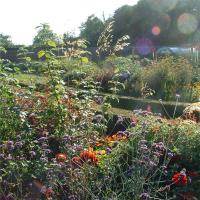
This is the first of a series trying to capture the essence of different garden styles. ‘Style Counsel’ will be a series of snippets – just a few words and images. I’d love to hear your comments on these and please add your own thoughts on what makes up these different styles – and if you have some pictures to add that’s even better. So, what is a Cottage Garden?

Cottage gardens have layouts that are simple and often geometric, though many have a more sinuous layout with twists and turns, especially as the garden moves further away from the cottage /house, where more natural, wilder planting can prevail.

Key characteristics include:

  • Profuse planting featuring many herbaceous perennials such as Delphinium, Stocks, Hollyhock, Lupin, ‘signature’ annuals such as Sweet Peas and Marigolds and a few evergreen shrubs for winter interest and structure
  • Rustic furniture made out of rough timber
  • ‘Roses round the door’, and on arbours or other structures
  • Weathered paths often made from old bricks or rammed earth with simple, if any, edging tiles or boards
  • Vegetables, fruit and herbs often mixed in with the flowers

cottage garden 1 cottage garden 2 cottage garden 3

Old School Gardener

If you’ve enjoyed reading this post and others on this blog, why not comment and join others by signing up for automatic updates via email (see side bar, above right ) or through an RSS feed (see top of page)?

Making a summer shower

Link to instructions on how to use empty milk bottles to create watering devices that are gentle on the plants and good for children to use (as opposed to hosing everyone in the class or straining with /getting feet wet with watering cans….)

Finding Nature

Nature Connectedness Research Blog by Prof. Miles Richardson

Norfolk Green Care Network

Connecting People with Nature

Discover WordPress

A daily selection of the best content published on WordPress, collected for you by humans who love to read.

Susan Rushton

Celebrating gardens, photography and a creative life

Unlocking Landscapes

Writing, photography and more by Daniel Greenwood

Alphabet Ravine

Lydia Rae Bush Poetry

TIME GENTS

Australian Pub Project, Established 2013

Vanha Talo Suomi

The Journey from Finnish Rintamamiestalo to Arboretum & Gardens

Marigolds and Gin

Because even in chaos, there’s always gin and a good story …

Bits & Tidbits

RANDOM BITS & MORE TIDBITS

Rambling in the Garden

.....and nurturing my soul

The Interpretation Game

Cultural Heritage and the Digital Economy

pbmGarden

Sense of place, purpose, rejuvenation and joy

SISSINGHURST GARDEN

Notes from the Gardeners...

Deep Green Permaculture

Connecting People to Nature, Empowering People to Live Sustainably

BloominBootiful

A girl and her garden :)