Archive for February, 2013


Winter Grasses

Oxford Botanic Garden  ‘was founded in 1621 with a mission “To promote the furtherance of learning and to glorify nature”. In the almost 400 years since then, although many people and plants have been involved in the history of the Garden we continue to educate as many people as possible about the importance of plants, to help conserve plants around the world and to support teaching and research at the University and beyond.

Visit inspiring herbaceous borders, glasshouses that take you around the World or simply relax in the oldest Botanic Garden in Britain. The Botanic Garden is the most compact, yet diverse collection of plants in the World right in the heart of the city centre and is open throughout the year for you to visit and enjoy.’

Source: Oxford Botanic Garden Website

Old School Gardener

Echeveria- overwintering in Old School Garden Greenhouse

Echeveria- overwintering in Old School Garden Greenhouse

To Walter Degrasse:-

Dear Walter,

It’s been a while since we were in touch, and as it’s windy and wet outside, I thought I’d drop you a line about what’s been going on in ‘my gardening life’. I hope all is well with you and your beautiful garden. It seems ages since I was in my garden for any time to get a sweat up, but it’s that time of year when the pace of things is rather slow, very much focused on ‘basic maintenance jobs’, I suppose. Anyway I’ve used the time in other ways, not least getting my blog up and running, which I’m pleased to say I’m enjoying and also the new relationships it’s bringing with gardening fans around the world!

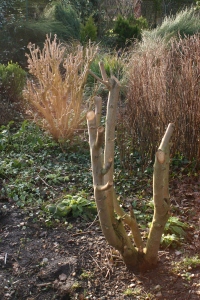
More practically, I’ve more or less finished my pruning jobs, those new Felco secateurs I had for Christmas are a real joy to use! I’ve got one more Buddleja to do and I’ll need to get the ladders out to do my Fremontodendron, which, on a south-facing wall, has romped away – I think last year’s wet weather gave it a surge of growth, so it’s now over 5 metres tall! The Dogwoods have all been laid low so hopefully we’ll get a good flush of new stems in the summer that give us that wonderful ‘winter glow’. I’ve done my annual cut back of the Eucalyptus to encourage large, colourful new leaves – it always looks forlorn after this major hack back (photo enclosed), but is such a swift grower.

Eucalyptus & Buddleja - pruned

Eucalyptus & Buddleja – pruned

I’ve also been tilling over the beds in the kitchen garden. Did you read my blog post about planning the crops here? It has a layout of what I’m intending to grow and where, trying to rotate crops as best I can in a complex border layout and thinking about succession crops too. You may remember that I put on a layer of leaf mould over most of them (as well as the fruit trees) in the autumn as well as digging in some green manure I grew towards the end of last season – we’ll see if this latter experiment has any marked effect on the crops to come.

I’ve been lightly turning over the topsoil and incorporating the remains of the leaf mould etc., in preparation for some of my friend Rob’s horse manure, which I’m able to collect from his paddock about 2 miles way. It really is lovely stuff, so I’ll use it to mulch my roses, clematis, shrubs, fruit trees and bushes etc. as well as putting a good load down for the potatoes and some of the other vegetables.

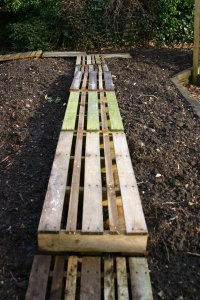
New boardwalk made of old wooden pallets

New boardwalk made of old wooden pallets

You know how poor my carrots were last year – the rotten weather didn’t help, I know, but I think that the bed I grew them in is still a little heavy (in contrast to the rest of the soil) and they don’t respond well to this and over – rich soil (I mistakenly put manure on the area a short time before the new season began). This encourages them to fork, whereas by keeping the soil relatively under – fed early on you apparently encourage them to grow straight and true as they seek out the nutrients further down – at least that’s what I heard Bob Flowerdew say on ‘Gardeners’ Question Time’ last week! Oh, and you remember I’d been collecting a load of old pallets? I’ve finally got round to making good use of them. They cut up nicely into sturdy 500mm – wide board walks which I’ve lain over the top border – this means that I have two manageable – width beds and don’t have to walk on the soil between them.

I’ve also been clearing out a side bed which was becoming choked with a Lilac that was suckering all over the place. This border is a bit on the edge of the kitchen garden and is not ideal for food growing, so I think that I might use it for flowers to attract insects etc. I’ve a good supply of Marigold seeds from last season, so they can go in there.

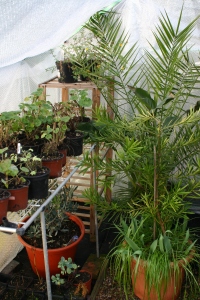
Over-wintering plants in the Old School Garden greenhouse

Over-wintering plants in the Old School Garden greenhouse

The greenhouse seems to be working well at over wintering my pelargoniums and ‘exotics’ and the pots of broad beans and sweet peas I put out a week or two ago are starting to push new growth through. I’ve sown some other seeds in my propagators – just some brightly – coloured Cosmos, Iceland Poppies and Leeks – these seem to be doing well, and hopefully I can pot them up shortly. I’m also chitting two varieties of early potato. You know how much I love ‘Charlotte’, the waxy ‘second early’ and alongside this I’m growing ‘Pentland Javelin’.

It looks like the weather is going to be a bit warmer in the coming week – in fact as I’m writing the rain has stopped and the sun is out! Hopefully I can get out tomorrow and catch up with a few more jobs that need doing – for example putting some pesticide on a couple of Hosta- filled containers to eradicate Vine Weevil (didn’t quite manage to get rid of these last year through a soil change), spraying my dwarf Peach tree with Bordeaux Mixture to help prevent ‘Peach leaf curl’, replanting the many Nerine bulbs I dug up recently from the kitchen garden and getting some more seeds into the propagators.

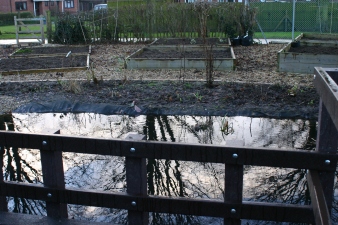
The primary school garden from the new pond dipping platform

The primary school garden from the new pond dipping platform

On the broader front my work with Norfolk ‘Mastergardener’ seems to be picking up once more. I’m helping the local Primary school with their School Garden, as you know. I’m shortly going off to meet with their garden coordinator to discuss plans for the coming year. I’ve offered to go into school one day per week to work with different classes and I’m looking forward to helping them get the most out of the garden, which is now starting to look really good. You may recall that we (staff, parents and children) managed to get a new wildlife pond installed over the summer and I also installed a pond dipping platform for them (made from recycled plastic), so the children will have this new resource for nature study in the coming months.

Yesterday I visited a new food grower I’m supporting for Norfolk Mastergardener. She lives in the next village and has recently moved to a large house with a super plot. I was impressed with the 2 polytunnels she has as well as a fenced off, structured vege growing area. She’s a keen animal lover and has this enormous pig (which her granddaughter rides like a pony!) as well as chickens, ducks, cats, dogs etc! The pond has a large number of enormous Carp in it too.

Any way, she’s a beginner when it comes to gardening and wants me to advise her about food growing for her large family. I’ve suggested she looks at the range of seeds she’s bought (as well as inherited from the previous house owners) and does a rough plan of what she wants to grow and where this might go in her plot. I’ll then talk this through with her and some of the basics about manuring and preparing the soil, sowing seeds, potting up etc. I’ve suggested that she keeps things simple this year and just goes for one crop in each area, rather than think about succession planting, until she sees the amount  of time she’ll need to put in and what her garden will generate in terms of food. We’ll see how it goes, but it’s a wonderful setting and with the polytunnels (one plastic – covered, one netted) she has some great growing areas to play with.

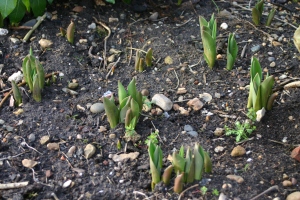
Tulips starting to show themselves in Old School Garden

Tulips starting to show themselves in Old School Garden

Well, I see the time has ticked on and I must be out to my meeting at the School. I’ll drop you another line in a week or two to let you know how I’m getting on, and hopefully we’ll also stay in touch via my blog or by email? By the way I’d welcome any comments or suggestions you might have about the blog, as I’m still finding my way!

Very best wishes from

Old School Garden

If you’ve enjoyed reading this post and others on this blog, why not comment and join others by signing up for automatic updates via email (see side bar, above right ) or through an RSS feed (see top of page)?

sethsnap's avatarsethsnap

Halls Creek Wood preserve is a beautiful but somewhat creepy place.  The preserve is meant to be rustic and undeveloped.  Living in neat suburbia, I am accustomed to everything being in order and well manicured.  Perhaps this is why, being in a place like this, makes me feel like something mystical is nearby.  Regardless, the beauty of the land, coupled with the tinge of the unknown, makes this a fun place to explore.

Visit my store.

View original post

PIC00056

The Lost Gardens of Heligan  (meaning ‘willow tree garden’ in cornish), near Mevagissey, Cornwall  are one of the most popular botanical gardens in the UK. The garden is typical of the nineteenth century Gardanesque style, with areas of different character and in different design styles.

The gardens were created by members of the Cornish Tremayne family, over a period from the mid-18th century up to the beginning of the 20th century, and still form part of the family’s estate. The gardens were neglected after the 1st World War, and restored only in the 1990s, a restoration that was the subject of several popular television programmes and books.

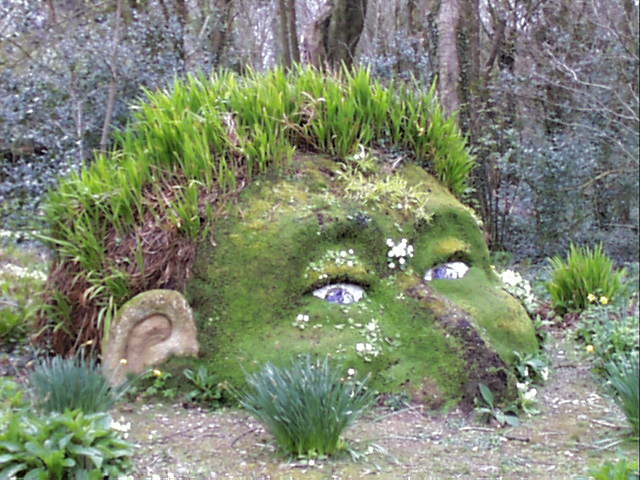
The gardens now boast a fabulous collection of aged and colossal rhododendrons and camellias, a series of lakes fed by a ram pump over a hundred years old, highly productive flower and vegetable gardens, an Italian garden, and a stunning wild area filled with primaeval-looking sub-tropical tree ferns called “The Jungle”. The gardens also have Europe’s only remaining pineapple pit, warmed by rotting manure, and two figures made from rocks and plants known as the Mud Maid and the Giant’s Head (see pic).

Source: Wikipedia

Old School Gardener

gressenhallfw's avatarGressenhall Farm and Workhouse

I arrived at Gressenhall knowing very little about farming. I was vaguely interested in history and I knew I wanted to have a smallholding when I was older. However the industrious commercial farms had no attraction to me. When the opportunity arose to come to Gressenhall I jumped at the chance and from the first day that I saw the advert I dreamt of getting the job and the things that I would learn on the farm.

Ploughing with Trojan and Bowler with Ransomes Plough

Since I have been here I have really enjoyed working the horses and learning about Victorian agriculture and the agricultural revolution. Aside from this I have been attending college one day per week in order to achieve my level 2 NVQ in mixed agriculture. This has given me a sound footing in agricultural knowledge that I can apply here on the farm as well as in future work. Before I came to Gressenhall…

View original post 332 more words

tree climbingIn the previous post I set out some of the ‘natural’ ingredients of designed  ‘play landscapes’. What can parents do to increase the natural play opportunities for their children? Here are ten tips – why not try to use them over the half term holidays?

1. Ask yourself, how can your children have the same exciting opportunities to play naturally as you did? Remember your own childhood memories of playing in natural places: damming, running, climbing, digging, building, splashing, dreaming, chatting and watching are just some of the great natural play memories adults have.

2. Allow children the time and space to discover natural play opportunities for themselves. Natural spaces are the ultimate play environments and children instinctively seek out and discover ways in which to interact with and use nature. Children who have direct, playful experiences of nature are most likely to develop caring attitudes and behaviours in later life.

3. Find out where the nearest natural spaces are to you. Children need everyday nature. This includes free access to parks, gardens, city farms, village greens, hedgerows and rough ground within easy reach of their homes, as well as visits to woodlands, beaches and open grassland further afield.

den

Den building

4. Provide old clothes and outdoor gear. This will help children play naturally in all weathers. Getting muddy, wet or sweaty and coming home with snagged or grass stained clothing is just part of playing outdoors. Opportunities to play with nature, through climbing trees, exploring the world of animals, building dens or making mud pies, are fun and help children to cultivate an awareness of and respect for nature.

Natural play areas need to be managed and sometimes benefit from man-made add ons

Most natural play areas need to be managed and sometimes benefit from man-made add ons

5. Encourage children to play out and inspire them with the magic of natural spaces. Sensitive adults can support and enthuse children by sharing the sense of wonder of the natural world and jointly uncovering its mysteries and surprises. Stories, costumes, treasure trails and quests can gently kindle the flames of children’s imaginations when playing in natural settings. Outdoor natural spaces allow children to be spontaneous and create and explore their own imaginary worlds.
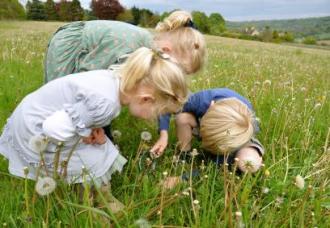
picture- Emma Bradshaw

Exploring nature- picture: Emma Bradshaw

6. Help children take risks in play, like climbing trees. Children need and want to take risks through play. Playing in natural settings allows children to find ways of challenging themselves and taking risks that fit them as individuals. Be open and transparent about what is involved in natural play activities so that children playing outdoors can experience the fun and excitement of stretching and testing themselves.

7. Find your nearest adventure playground. If parents and children prefer to play with adults around, adventure playgrounds usually have some natural areas. In some areas there may be play workers or park keepers who encourage children to play in natural spaces. Ask you local council what supervised play opportunities are provided locally.

Simple pleasures- a nest created from cut grass, gravel and cotton wool

Simple pleasures- a nest created from sticks, cut grass, gravel and cotton wool..

8. Look out for opportunities for free natural supplies. Children love to move things around and rearrange their play spaces. Natural resources, like tree and hedge trimmings make great den-building materials. Good play spaces can be made by adding natural elements into children’s outdoor playgrounds, such as trees and plants, earth, rocks, logs, water and natural moveable objects.

9. Stick up for children’s right to play naturally outdoors.Children need advocates who can help them find natural places to play. Encourage children to play naturally in your area, call on your local authority to provide accessible wild spaces for children to play in, and support your local play centre to run environmental play sessions in outdoor settings. Possibly lobby for ‘play landscapes’ that include a mixture of ‘off the shelf’ play equipment and custom-built structures and natural play features.

10. Experience it yourself! The best way for adults to prepare and plan for successful natural play is to experience it! Think about natural play activities you would like today’s children doing, and then have a go for yourself.
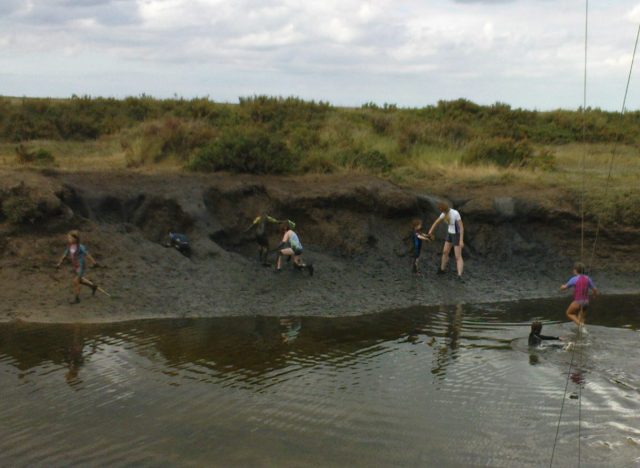
Water play- Wells next the Sea, Norfolk

Water (and mud) play- Wells next the Sea, Norfolk

Source: after ‘Wild about Play’- Martin Maudsley

Other information:

Love Outdoor play

Nature on the Map

Places for play exhibition

The Forestry Commission and play

Natural play – Londonplay

Playwork Partnerships

The Child in Nature

Outdoor Experiences and Healthier brains

Natural play philosophy and approach

Old School Gardener

If you’ve enjoyed reading this post and others on this blog, why not comment and also join some other people and sign up for automatic updates via email (see side bar, above right ) or through an RSS feed (see top of page)?

sethsnap's avatarsethsnap

A few days ago when the weather was fine, Todd and I wandered over to Halls Creek Wood Preserve.  It’s located about five miles from our house, not too far from the city of Morrow.  The park covers 238 acres and has two miles of trail.  Halls Creek and the Little Miami River meet in the preserve and offer beautiful water views.  We saw several interesting trees and enjoyed the art show that they had prepared for us.  While we didn’t see any of the parks animal inhabitants, we caught glimpses of their presence.  Over the next few articles, I’ll share with you the beautiful sights and sounds of the Preserve.  So, put your hiking boots on, grab your jacket and come away with us.

Visit my store.

View original post

Brigid Jackson's avatararistonorganic

raised beds - allotmentsHere we have Stacy Pearson and Tony in their allotment garden of old, showing off their raised beds.

There are many reasons why you should grow your vegetables in raised beds.

ADVANTAGES OF RAISED BED GARDENING

  • Better drainage

Growing plants in raised beds is a logical choice for gardeners with heavy, poorly drained soils. Raised beds permit plant roots to develop in soil held above water-logged or compacted zones. This provides a more optimum soil environment for root growth. As beds are built up, compost or other forms of organic matter may be incorporated, further improving soil structure, drainage and nutrient-holding capacity.

  • Higher yields

Better root growth from improved soils leads to higher yields for food crops and lusher growth of ornamental plantings. Also, intensive planting in raised beds means more plants can be grown in a smaller area than with conventional row-cropping techniques. No space is wasted between rows.

View original post 100 more words

greenbenchramblings's avatargreenbenchramblings

Echinaceas are one of those plants that I cannot resist taking a photo of, whether they are in bud, in full flower, gradually dying, or in their seed head stage. I photograph them in every season whatever the weather. But first a look into my sketchpad.

DSC_0001nj

And here is a gallery of some of my attempts. I try to capture their various shapes, colours, textures and catch their every mood.

The photos were taken throughout the seasons from summer to winter and I hope illustrate their changing shapes and colours.

I have at last got a link to my Flickr photostream so if you want to see what is on there so far please click on link in right margin of my posts.

View original post

Want to find out more about snowdrops? see my post about them under ‘Plantax’

Finding Nature

Nature Connectedness Research Blog by Prof. Miles Richardson

Norfolk Green Care Network

Connecting People with Nature

Discover WordPress

A daily selection of the best content published on WordPress, collected for you by humans who love to read.

Susan Rushton

Celebrating gardens, photography and a creative life

Unlocking Landscapes

Writing, photography and more by Daniel Greenwood

Alphabet Ravine

Lydia Rae Bush Poetry

TIME GENTS

Australian Pub Project, Established 2013

Vanha Talo Suomi

The Journey from Finnish Rintamamiestalo to Arboretum & Gardens

Marigolds and Gin

Because even in chaos, there’s always gin and a good story …

Bits & Tidbits

RANDOM BITS & MORE TIDBITS

Rambling in the Garden

.....and nurturing my soul

The Interpretation Game

Cultural Heritage and the Digital Economy

pbmGarden

Sense of place, purpose, rejuvenation and joy

SISSINGHURST GARDEN

Notes from the Gardeners...

Deep Green Permaculture

Connecting People to Nature, Empowering People to Live Sustainably

BloominBootiful

A girl and her garden :)