Latest Entries »

This is a garden I have been reading about and admiring in photographs for several years and I have enjoyed watching it develop. Imagine our surprise when we were on a mid-week break in September and discovered that we were staying in a hotel not too far from the Sussex Prairie Garden. We couldn’t miss […]

via Sussex Prairie Garden – a prairie garden in Sussex — greenbenchramblings

Trees and shrubs are important for all forms of native wildlife, including birds, mammals and insects. They will add another dimension to your organic growing area – providing leaves and fruits as a rich larder; habitat for nesting; shade and shelter, plus height for safety. A mature oak tree will support over 280 different insects. See Beneficial Insects..

Where possible, the organic grower plants trees or hedges, along with flowers, shrubs and water, to provide a valuable and diverse ecosystem.

Many of our native creatures are also predators of garden pests. Did you know that a ground beetle eats slugs? And a family of blue tits can eat 100,000 aphids a year? Natural pest control is an essential aspect of organic gardening.

Trees don’t have to be huge. The following list provides ideas for trees for small and large gardens. Some can be grown as a hedge. Hedges supply housing for over 30 species of British birds. A mixed hedge will also provide a variety of nectar producing plants, supporting bees and other pollinators.

Key

N = native

O = non-native

D = deciduous

E = evergreen

Extreme conditions tolerated: W = wet, Dr = dry

Specific soil type: Cl = clay, C= chalk

Common alder, Alnus glutinosa. Full height 22m (70 ft), suitable for hedge.
Can provide a home and food to at least 90 insect species. Small woody cone-like fruit is important food for birds such as goldfinch, siskin and redpoll
N, D, W, Cl

Ash, Fraxinus excelsior. Eventual height 40m (130 ft)
Flowers provide nectar for insects, the seeds or ‘keys’ are food for birds and small mammals. Over 41 associated insect species.
N, D, C

Quaking Aspen, Populus tremula. Eventual height 20m (65ft)
Aspen colonises new ground and is quick to grow. The leaves move in a magical way, immortalized in the poem ‘Lady of Shallot’- ‘willows whiten, aspens quiver, little breezes dusk and shiver’. Over 90 associated insect species.
N, D

Nuthatch feeding in tree

Beech, Fagus sylvaticus. Eventual height 36m (120 ft), suitable for hedge.
Richly coloured autumn leaves and beech nuts, or ‘masts’, provide food for many birds such as tits, chaffinches, nuthatches, as well as squirrels and mice throughout the winter. Over 64 associated insect species.
N, D, C

Wild Cherry,Prunus avium. Eventual height 9-12m (30-40 ft)
Bright red fruit are popular for birds and mammals in early summer. Scented white flowers are attractive to bees and flies in the spring.
N, D

Bird Cherry, Prunus padus. Eventual height 6-9m, (20-30ft)
Beautiful white to pale pink blossom fill the air with almond fragrance in the spring. Attractive to bees and flies. Bitter black/red fruit, are eaten by birds. Common along streams and watery areas in North of England and Scotland.
N, D, W

Cotoneaster, Cotoneaster frigidus. Eventual height 9m (30ft), suitable for hedge.
Sweet scented flowers are borne early summer, popular with many insects, followed by a mass of scarlet berries in the autumn. These are much loved by birds including the waxwing and pheasant. C.horizontalis is very popular with bees in the spring.
O, D

Crabapple, Malus sylvestris. Eventual height 9m (30ft)
Pretty pink or white flowers in the spring, followed by small bitter fruit in the autumn. Many mammals such as foxes and badgers, as well as birds, enjoy the fruit. Over 90 associated insect species.
N, D

Buckthorn, Rhamnus Eventual height 5m (16ft), suitable for hedge.
The small yellow flowers of the Purging Buckthorn in spring provide food for the brimstone butterfly, whose caterpillars also feed on the leaves. Black berries in the autumn are borne on the female plant and are enjoyed by birds and small mammals.
N, D,C

Hawthorn, Crataegus monogyna. Eventual height: 8m (26ft), suitable for hedge.
A small tree or shrub. Heavily scented white flowers in early spring are much loved by bees and other insects.The bright red berries, called ‘haws’ are a favourite food in winter for many birds including fieldfares and redwings. Leaves are food for the brimstone moth and oak eggar moth. As a hedge, it is a fast growing and sturdy plant, and can be ‘laid’. 149 associated insect species. The midland hawthorn, Crataegus oxycanthoides, is more tolerant of shade and heavy clay soil.
N, D

Hazel,Corylus avellana. Eventual height 6m (20ft ), suitable for hedge.
Classed as a tree or shrub, regular coppicing will keep the tree quite short. Nuts and leaves provide a great deal of food for birds and mammals, including the now rare dormouse.
N, D, W, C

Holly, Ilex aquifolium. Eventual height 20m (65ft), suitable for hedge. The small, pale green scented flowers attract butterflies, bees and other insects, in late spring/early summer. Long-lasting red berries are important winter food for many birds including the thrush and small mammals. Spiny, glossy leaves are eaten by caterpillars of the holly blue butterfly. It is important to have both a female and a male tree for the development of berries.
N, E

Hornbeam,Carpinus betulus. Eventual height 24m (80ft) , suitable for hedge.
Dead leaves remain overwinter when grown as a hedge, rather than leaving a bare framework. Seeds are important food source for squirrels and birds.
N, D

Small-leaved Lime,Tilia cordata. Eventual height 22m (70ft), suitable for hedge.
This can be grown as a hedge, with sweet smelling flowers that are highly attractive to bees early summer. Host to 31 insect species. Commonly found in limestone regions in England and Wales.
N, D

English Oak, Quercus robur. Eventual height 35m (115ft ) , suitable for hedge.
Can provide home for more than 284 species of associated insects. Although lofty at full height, this tree can be pollarded, or coppiced, and can also be ‘laid’ to make a hedge. Long lived.
N, D

Rowan,Sorbus aucuparia. Eventual height 12m (40 ft)
Sweet smelling flowers in the spring attract many insects. Orange berries in the autumn are an important food source for many birds and small mammals such as hedgehogs. Over 28 associated insect species. Can survive in exposed situations.
N, D, W

Silver birch, Betula pendula. Eventual height 15m (50 ft)
A beautiful tree, with silvery-white bark. Suitable for small gardens. Older trees play host to bracket fungi and birds such as woodpeckers. Supports 229 associated insect species. Seeds popular with over-wintering birds and small mammals.
N, D

White willow, Salix alba. Eventual height 18m (60 ft), suitable for hedge.
Flourishes beside water; useful in reducing soil erosion. Over 200 associated insect species.
N, D, W

Source: Garden Organic

A new podcast series from the National Trust unravels Europe’s influence on our nation through the ages revealing the continental roots that lie buried in locations from Neolithic Avebury ring to modernist Hampstead. Over ten weeks starting on 24 October, award-winning historian and broadcaster, Bettany Hughes, will explore National Trust sites and uncover their cosmopolitan […]

via Bettany Hughes’s ‘Ten Places, Europe & Us’ — National Trust Press Office

Rose- picture by Massimiliano Faro

Rose- picture by Massimiliano Faro

We love showing Lisbon to our friends. It is a joy to stroll through streets where so much history was written, admiring the old architecture, visiting interesting shops, stopping by beautiful cafés for coffee and pastries. So, when VoiceMap invited us to record a voice-guided walking tour of Lisbon, we didn’t hesitate. VoiceMap is a new company […]

via Our walking tour of Lisbon! — Salt of Portugal

wp_20161023_15_51_29_proIt was Wednesday again this week at Blickling. ‘Lucky you turned up’ said a fellow volunteer, you’re the 14th person here today!
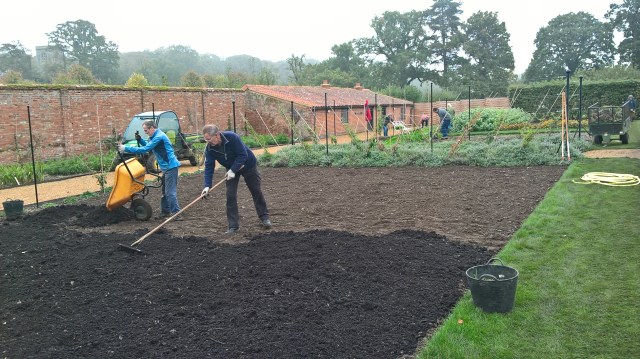
This must have been the largest volunteer group I’d participated in since joining Blickling. And as the day progressed it made the Walled Garden (where we were all working) reminiscent of a Victorian Kitchen Garden; where once droves of gardeners were busily doing things most days of the year.

The team at work...

The team at work…

It started off as a rather misty murky, autumnal morning, but we were soon set to work and warmed up. Project manager Mike is off with a bad back at present so we were ably directed by gardeners Jane and Rebecca. If you’re reading this Mike, I wish you a speedy recovery; I can sympathise as I had acute sciatica for a year many moons ago.

A few volunteers were set to washing pumpkins ready for an event the following day. I gather this will include drawing faces on the pumpkins, as ‘Health and Safety’ concerns now prevent the Trust helping youngsters and others carve out faces in traditional style (I was tempted to mutter under my breath ‘even worse than banning conkers at school’!!).

The majority of us were in ‘formation hoeing’ mode to begin with as we cleared the remaining weeds and spent foliage from the pumpkin patches and then barrowed in a considerable amount of locally produced compost as a winter mulch. As we progressed from one area to another the results looked very neat and tidy, as I think the dark, damp compost provides a satisfying finish to a bare bed. I lost count of the number of barrow loads I shifted, but my arms, by lunchtime, were at least two inches longer…

After lunch we continued with the same process, pausing to chat to the many visitors on this half term weekday, which was as pleasant as ever. Many commented favourably on the gardens, and especially the Dahlia border, which continues to look marvellous in the low autumn sunshine..it just shows how mild it’s been recently. The final bit of hoeing drew most of the male volunteers together for one final push… ‘five men went to hoe’.The quality of the banter went up a notch as we hoed alongside each other (it looked a little like a ‘hoeing derby’ at one point as we raced each other across the plot).

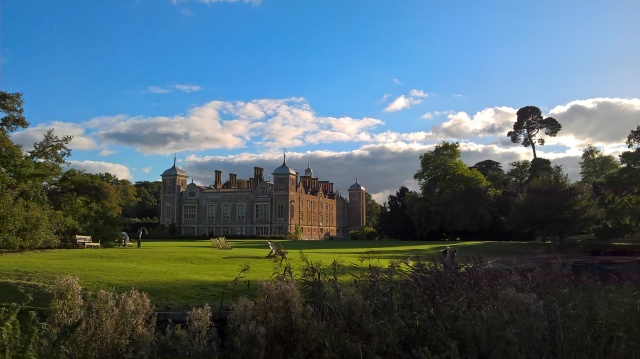
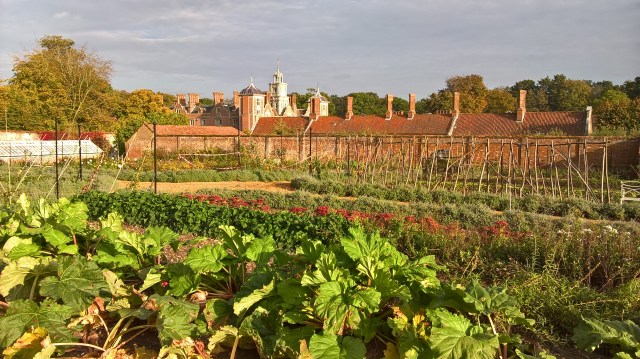
wp_20161026_14_35_07_proBy the end of the afternoon the sun was shining brightly and the garden looked wonderful bathed in this light, which created a glowing sea of backlit foliage, especially the lime green lettuces. In fact the whole place shone.
wp_20161026_15_27_36_proFurther Information:

Blickling Hall website

Blickling Hall Facebook page

A 360 degree tour of Blickling Hall

Old School Gardener

As Stourhead in Wiltshire begins to witness the first signs of autumn colour appearing across the garden and wider estate, Alan Power, Stourhead’s head gardener, gears up to tell Radio 4’s PM about the changing landscape. “This world-famous garden is starting to show signs of autumn’s arrival with golden, orange and red hues beginning to […]

via Autumn colour arrives at Stourhead — National Trust Press Office

We welcomed record numbers of visitors last year, our membership is growing, and our income also increased. As a result, we are spending more money than ever before on funding our conservation work. As a charity, we don’t make money for its own sake, but use it to look after the 300 historic houses, 250,000 […]

via Trust spends record levels on conservation as visitor numbers and memberships hit new high — National Trust Press Office

Originally published in The Telegraph on 05 October 2016. By GORDON CONWAY When recently appointed Environment Secretary Andrea Leadsom suggested that young Britons could take over post-Brexit fruit-picking and farm labour, her comments were met with derision. Speaking at a Conservative Party conference fringe event in Birmingham, she said she hoped that more young people […]

via Andrea Leadsom is right – we need to get more young people into farming — One Billion Hungry: Can We Feed the World?

To Walter de Grasse

wp_20161028_09_44_58_proDear Walter,

I heard the other day that the Met Office is saying that the growing season here has been extended by a month, due to global warming. Certainly, as I walked around Felmingham and North Walsham the other morning it was amazing to see how few trees are anywhere near bare of leaves, and there’s still so much green around!

I guess that I’m feeling as though I’m in a false sense of security, as it doesn’t seem at all urgent that I get on with planting bulbs and the perennials I’ve been nurturing in pots, sowing Broad Beans and onion sets or transplanting tender plants into the greenhouse. Of course I’m probably going to fall prey to a sharp frost anytime now and I’ll be shocked into the reality that it’s winter..well, it will be soon, as the clocks go back an hour tonight.

I look back and once more think about all that hasn’t been done in Old School Garden this month. Still I suppose a few important jobs have been ticked off- like putting in a new fence post and mending and creocoting the fence, gate posts and garden gate, cutting the grass and gathering leaves, putting out the first lot of bird food, weeding around the leeks and continuing to gather produce, especially apples and carrots. I’ve also cleared the front border (just below where we had the paint removed from the house flintwork) , levelled the edging, started to top up the soil and will eventually plant out a row of English Lavenders I’ve been growing on in pots, together with some Scabious grown from seed and some bulbs for spring colour. This will eventually be a Lavender hedge which should grow go well on this south-facing (if part shaded) wall.

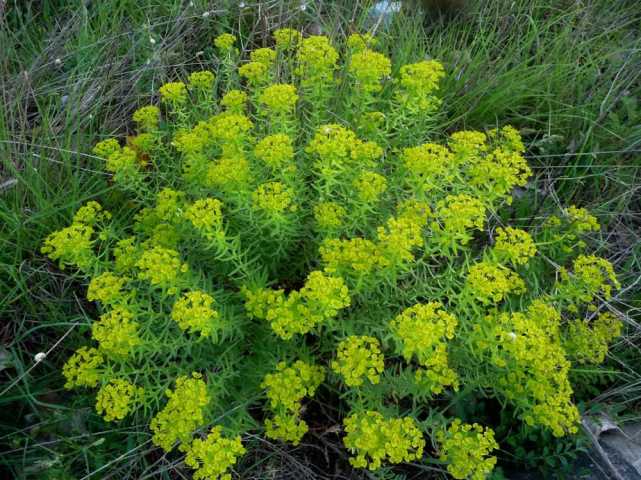
I’ve also had a plant exchange with my friend Mandy; she’s given me some Veronicastrum virginicum ‘Fascination’ and Euphorbia seguieriana. The former is a hardy perennial with pale lilac flower spikes that become ‘fasciated’ (the stems and flower spikes flatten and twist into strange shapes) and so are rather curious to look at. I love Veronicastrum and look forward to growing this- perhaps alongside the two tall pale yellow Scabious I’ve grown from seed this year and which are also ready to plant out.

Image result for images veronicastrum fascination

Veronicastrum virginicum ‘Fascination’

Image result for images Euphorbia seguieriana

Euphorbia seguieriana

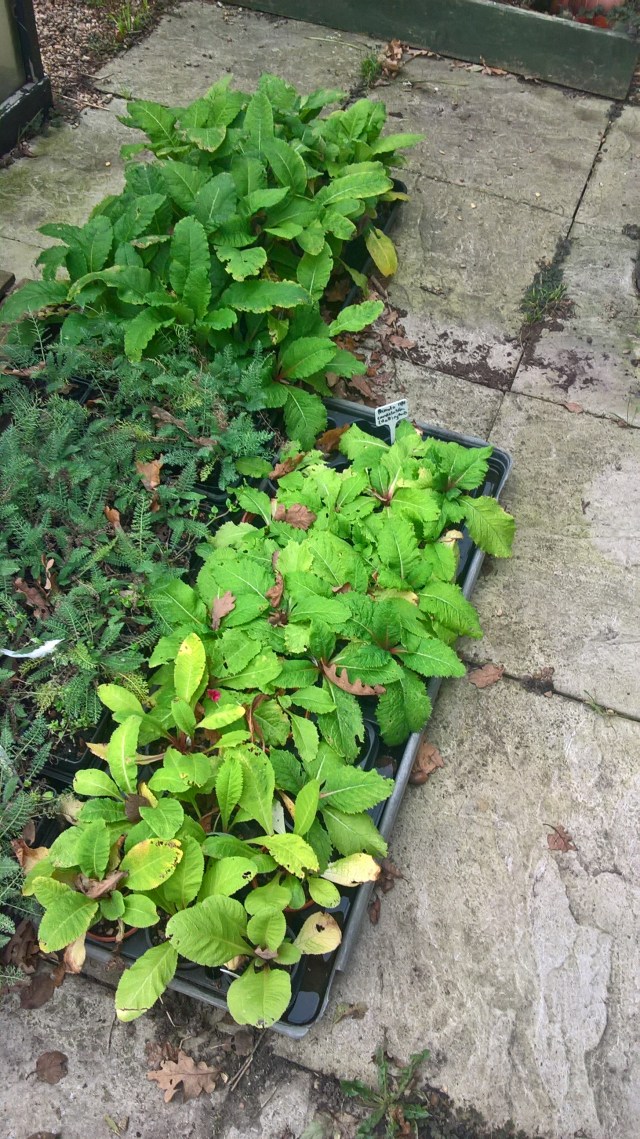
I gave Mandy a few Candelabra Primulas (also grown from seed) in return. I have rather a lot of these and have been thinking about where to put them; apart from around the pond garden that is, where they were initially intended to go. I think I’ll try a few in the triangular raised beds we have next to the terrace, perhaps mixed in with the Achillea nobilis ‘Neilreichii’ I’ve grown on from runners harvested at Blickling along with some more spring bulbs. I also think I’ll try some in the ‘plant theatre’ in the courtyard garden, in advance of the pelargoniums that normally make for the summer show.

Candelabra Primulas and Achillea ready to plant out

Candelabra Primulas and Achillea ready to plant out

As you may have seen I’ve been active on other fronts gardening-wise. A spent the first of what I hope will be regular sessions at the local high School Allotment Project, where the enthusiastic Mr. Willer is getting great results from the garden and pupils. I’m also drawing up a design for the ‘The Grow Organisation’ near Norwich, which is providing gardening and food growing opportunities for people with various needs, including some with mental health issues. This is exciting, the first bit of garden design I’ve done for a while! finally, the ‘Friends of Haveringland Parish Church’  have just about completed the first stage of turning over the churchyard to a managed conservation area with mown paths, easy access to still-tended graves and to provide a wildlife haven that’s also somewhere beautiful for humans to sit and reflect.

Haveringland Parish Churchyard- after its latest mow and ‘rake off’

Finally, my regular (well, pretty irregular recently) sessions at Blickling continue and apart from the practical gardening work I’ve begun to research the information for the new Tree Trail I’m designing there. this is throwing up some fascinating information; e.g. did you know that the ‘Monkey Puzzle’ Tree (Araucaria araucana, beloved of Victorian gardens) gets its common name from a chance remark made back in 1850?  Sir Willaim Molesworth, the proud owner of a young specimen at Pencarrow garden near Bodmin, Cornwall, was showing it to a group of friends, when one of them (the noted barrister Charles Austin), remarked, “It would puzzle a monkey to climb that”. As the species had no existing popular name, first “monkey puzzler”, then “monkey puzzle” stuck!

Image result for araucaria monkey puzzle tree

Araucaria araucana- the ‘Monkey Puzzle’ tree

Though I haven’t yet had another go at that shredder, it has at least been a month of some progress in Old School Garden and beyond. I must quicken the pace to make sure all those late autumn/early winter jobs are completed soon, before the weather finally breaks..or will it be early autumn well into November?

Old School Gardener

Finding Nature

Nature Connectedness Research Blog by Prof. Miles Richardson

Norfolk Green Care Network

Connecting People with Nature

Discover WordPress

A daily selection of the best content published on WordPress, collected for you by humans who love to read.

Susan Rushton

Celebrating gardens, photography and a creative life

Unlocking Landscapes

Writing, photography and more by Daniel Greenwood

Alphabet Ravine

Lydia Rae Bush Poetry

TIME GENTS

Australian Pub Project, Established 2013

Vanha Talo Suomi

The Journey from Finnish Rintamamiestalo to Arboretum & Gardens

Marigolds and Gin

Because even in chaos, there’s always gin and a good story …

Bits & Tidbits

RANDOM BITS & MORE TIDBITS

Rambling in the Garden

.....and nurturing my soul

The Interpretation Game

Cultural Heritage and the Digital Economy

pbmGarden

Sense of place, purpose, rejuvenation and joy

SISSINGHURST GARDEN

Notes from the Gardeners...

Deep Green Permaculture

Connecting People to Nature, Empowering People to Live Sustainably

BloominBootiful

A girl and her garden :)