
Latest Entries »


Nurture the Nature in your Garden

A link to information about the latest ‘citizen survey’ of wildlife in our gardens, which begins today.
‘Britain’s biggest public-led investigation into the health of native wildlife has begun, with the launch of the national Garden Wildlife Health project
A partnership between the Zoological Society of London (ZSL), the British Trust for Ornithology (BTO), Froglife and the Royal Society for the Protection of Birds (RSPB), Garden Wildlife Health is the first collaborative citizen science project of its kind, relying on data provided from garden-owners across the nation….’
Old School Gardener
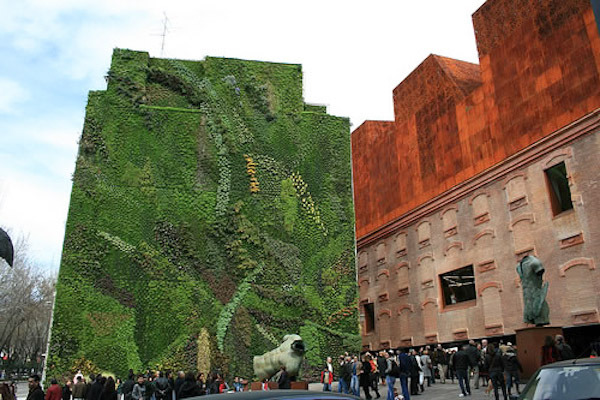

A community growing area in Geneva, Switzerland, where individual plot holders trade food crops….
Old School Gardener

- Just thinking about a new phase in my life…

No, you didn’t misread the title, and no it isn’t a spelling mistake! I find myself ‘celebrating’ my 60th year today, and with a ‘pension event’ happening linked to some of my earlier working life, it has given me pause for thought.
Over the last 12 years I’ve been self-employed. As the years have wound round and some employed friends have entered that state of ‘early retirement’, I’ve been ranting against the usual view of ‘retirement’, or perhaps that should read MY expectations of what that word brings. I have the slippers, a new TV, comfortable chairs, sound and nicely located house and good sized garden. I’m reasonably healthy, have an income to get by, a loving wife (herself ending full time employment in a few months) and a cat that is talkative to the point of being annoying (almost like having small children around once more).
I’m also, as you might have noticed, into gardening, so I have something to keep me busy during the day (along with household chores, the odd trip out etc.) It could be easy to just let life happen to me and for the days to be pleasant, much the same (but with a bit of variety due to weather etc.) and little to bother me (though I do find I’m getting more frequent attacks of intolerance against various aspects of ‘the world today’, but am thankfully not yet a Daily Mail reader).
Over the past year as 60 approached, I’ve started to form an idea of what I want this new phase of my life to be. And I suppose that’s the most significant part of this reflection- I’m thinking of a new phase of my life, one which is active (health permitting), inspiring, interesting and involves continuing to contribute to life outside my own four walls (both of house and garden).
In short refiring rather than retiring.
Today I begin a part of this new phase, helping the first of three groups of students at a local High School to grow food.
I hope this post hasn’t been too self indulgent.
Old School Gardener
P.S. I’ll tell you more of my new school gardening experiences in the coming months.


Each year we always need to earn a bit of seed money for the school garden. Why not plant a gift for Mother’s Day and have a mini plant sale the week before the special day?

Start by planning ahead. Check out local thrift shops for bone china tea cups without the saucers. What I have found is many thrift shops throw teacups that are missing their saucers into the trash. If you ask, they may even wish to donate the tea cups to your school garden. What a great way to recycle something that would have been otherwise thrown out.
You could also collect old tea pots. These are all very beautiful planted up with flowers. The trick to planting tea cups is using the right plants. I like to plant Violas for this project. They are small flowers with a small root system and fit perfectly into most…
View original post 318 more words
Here’s my latest trawl of interesting projects to enhance your garden. Most are from 1001 Pallets and a few from The Container Gardening Alliance.
Furniture…

A log lounger..

Baby chair from pallets…

Swinging bench from pallets..
Planting spaces…

A greenhouse from old windows…

A planter ladder….

An ‘A’ frame planter with old plastixc bottles, and cartons as containers..

‘Rustic raised beds’ !!

An experimental pallet garden..

Give plants a hand..

Drawers for plants…

Raised planter for my aching back…
and a few more unusual items….

A mobile bar – stools stowed underneath..

Old shutters used for decorative screening/fencing

Canadian rustic retreat..

Pallet Meeting Point..

Tool rack from pallets by Kylee Baumie at mylittleacre.com

Pallet bug hotel..
Old School Gardener

 A recent Montpellier Panel Briefing Paper, Innovation for Sustainable Intensification in Africa, highlights the need for change in the way we innovate and do research if we are to increase food production while protecting natural resources (in other words sustainable intensification). Added to this need for change is the increasing focus of donors and civil society to measure success as the level of impact. International aid has come under criticism for failing to ensure long-term impact of research investments.
In a new report by Joanna Kane-Potaka of the International Crops Research Institute for the Semi-Arid Tropics (ICRISAT) entitled The Story Behind the Success, 10 case studies are presented, which exemplify how research for development (R4D) can be translated into real results and uptake by people on the ground. Some broad lessons from the case studies were the need for monitoring and evaluation to feed back into the uptake…
View original post 702 more words
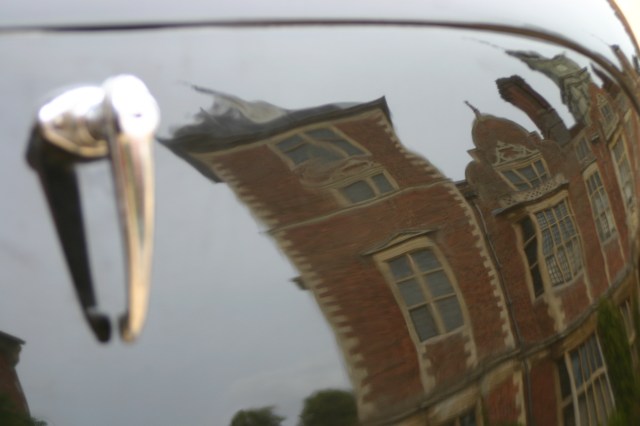 I frequently visit this wonderful Jacobean Mansion and more particularly it’s gardens and parkland. After all it is just 7 miles from home. A walk around the park after a Christmas Day ‘brunch’ has become something of a family institution, often complete with festive headwear!

I try to visit the gardens at different times of the year as they offer something for every season, and back in September I was keen to experience the late summer colour festival of its herbaceous and other plantings. At this time of year it’s mix of formal and informal styles is most evident.


Coincidentally, there was a splendid event going on to celebrate the role of the Hall in the Second World War, including people dressed in military uniforms and plenty of vehicles and ‘kit’ from the time. This is my photo record of my most recent visit along with a very good summary of the gardens’ history and features from Wikipedia:
‘A house and garden existed at Blickling before the estate was purchased by the Boleyn family in the 1450s, but no records survive to give an indication of their appearance. After Sir Henry Hobart acquired the estate in 1616, he remodelled the gardens to include ponds, wilderness and a parterre. A garden mount– an artificial hill in Blickling’s flat landscape, was made to provide views of the new garden. With the accession of Sir John Hobart (later the 1st Earl of Buckingham) in 1698 the garden was expanded to add a new wilderness and the temple was constructed.
In the latter half of the 18th century John Hobart, 2nd Earl of Buckingham, embarked on works that would radically change the appearance of the gardens. All traces of formality were removed, and naturally arranged clumps of trees were planted to create a landscape garden. By the 1780s an orangery had been built to overwinter tender citrus trees. Following the 2nd Earl’s death in 1793, his youngest daughter Caroline, Lady Suffield, employed landscape gardener Humphry Repton and his son John Adey Repton to advise on garden matters. John Adey Repton would go on to provide designs for many garden features. 


The estate was inherited by nine-year-old William Schomberg Robert Kerr, 8th Marquess of Lothian in 1840. He later re-introduced the formality and colour schemes of the parterre. After his death at the age of 38, responsibility for the gardens rested with Lady Lothian and her head gardener Mr Lyon. Philip Henry Kerr, 11th Marquis of Lothian, inherited the estate in 1930. After disparaging comments in a publication of Country Life, Lothian engaged socialite gardener Norah Lindsay to remodel the gardens. In the parterre she replaced the jumble of minuscule flower beds with four large square beds planted with a mixture of herbaceous plants in graduated and harmonious colours. Other improvements included removal of a line of conifers in the Temple walk, which were replaced with plantings of azaleas.
The garden today
The garden at Blickling covers 55 acres (22 ha) and contains formal and informal gardens, Grade II listed buildings and structures, woodland, specimen trees, Victorian garden ornaments, topiary, the kitchen garden .. and 18th century yew hedges.
The lawns which frame the main approach to the hall are bounded by yew hedges which were first recorded by William Freeman of Hamels in 1745. Surrounding the hall on three sides is the dry Moat. The plantings in the moist, sheltered conditions of the moat were considerably revised by Lindsay who introduced hosta, species of hydrangea, buddleja and rosemary. 


To the rear of the hall is the noted Parterre garden which is located on the east lawn. Originally created as a Victorian sunken garden it was remodelled by Lindsay in the early 1930s. Set around an 18th-century listed stone fountain, she divided the garden into four large, colourful herbaceous beds surrounded by L shaped borders stocked with roses and catmint with an acorn shaped yew marking each corner. 


In the terraces above the parterre there are plantings of peony, seasonal beds and the Double Borders created in 2006, contain a wide variety of perennials, shrubs and grasses with colours ranging from hot to cool. Close by, are the White and Black Borders which were established in 2009, together with a collection of eleagnus. 


The western side of the garden features the lawned Acre which is fringed by a spreading oriental plane tree. Outdoor sports such as croquet are played here in the summer months. Further highlights are a collection of magnolia underplanted with autumn cyclamen, the shell fountain and the kitchen garden. To the north of the parterre is the Wilderness garden which is bisected by radial grassed avenues flanked with turkey oak, lime and beech trees and naturalised bulbs. The wilderness hides a Secret Garden with a summerhouse, scented plants and a central sundial. 


Nearby is the listed 18th century orangery which houses a collection of citrus trees. Adjacent, to the building is the steep sided Dell which is home to many woodland plants including a selection of hellebore and foxglove. In 2009, an area of woodland was cleared close to the orangery to create a new garden. Stocked with a wide range of woodland plants including camellia and varieties of mahonia. Opened in 2010, it will be known as the Orangery Garden.
The Grade II listed Temple is approached by the Temple walk which is lined with azalea planted by Lindsay in her original 1930s design. Scattered throughout the garden are many garden ornaments including thirty pieces supplied to Lady Lothian in 1877 by Austin & Seeley of Euston Road, London.
Future projects include the creation of a philadelphus and rose garden. Both of which will be located in the Wilderness and open to the public in the near future .’ (Note – these have now been established and are open to the public- see pics below). 






 Old School Garden