

Drosera plants, more commonly known as Sundews, often grow in soil that lacks nitrogen. Sundews get their nutrients from bugs lured in by the succulent droplets landing from the plant’s leaves.
Drosera plants, more commonly known as Sundews, often grow in soil that lacks nitrogen. Sundews get their nutrients from bugs lured in by the succulent droplets landing from the plant’s leaves.

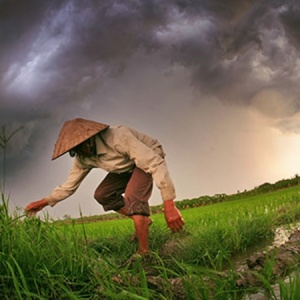 With the recent release of the IPCC Fifth Assessment Report, climate change has been a familiar topic in the news and media. More recently new publications have explicitly linked climate change to food security and they show that there is much to be done by governments, big business and the public sector, if our food and agricultural systems are to be resilient to predicted changes in the climate.
A new report by the Chicago Council on Global Affairs, Advancing Global Food Security in the Face of Weather Volatility and Climate Change, which builds on the IPCC report, explains how climate change will undermine efforts to tackle hunger, limiting food production and putting food supplies at risk. Higher temperatures, changes in rainfall patterns and more frequent and severe natural disasters could reduce food production growth by 2% each decade for the rest of this century. But, the report…
View original post 1,413 more words


One of the lovely things about being a Heritage Gardening Trainee is the fact that we are able to garden in so many different heritage settings. Even within the walls of Gressenhall there are different focuses for each gardening area.
My focus has primarily been on the Dyer’s Garden and the Farmhouse garden. It has been a joy to get to know the volunteers who have spent many years in some cases caring for the different areas. Carol and Jenny who look after the Dyer’s Garden are extremely knowledgeable about the whole process of dying, from which plants to grow for which colour, through to the processes of dying fabric. Carol loaned me a fascinating book about the history of wool industry in Norfolk and how dying yarn and silk was a highly valued skill.
 Dyer’s Garden at Gressenhall FW
Starting the traineeship in winter was a good time to…
View original post 276 more words

There are plenty of things that make the Churchill Gardens Estate in Westminster a bit special. In 2000 the Civic Trust voted it the outstanding building scheme of the last forty years. When it was built it was the largest urban area to be built to the plans of a single firm of architects. But let’s begin with its founding inspiration.
 ‘Luxury flats, Pimlico’. The caption and image are taken from a Picture Post article of 1955
Churchill Gardens – the Pimlico Housing Scheme as it was originally designated – was the only major project within the visionary Abercrombie Plan for the post-war reconstruction of London to be completed. Its scale – a 30 acre site, 1661 homes, 36 blocks, a population of some 5000 – and its design gives some indication of the ambition of post-war hopes.
 Aerial view, 1960s
Charles Latham, then leader of the London County Council…
View original post 1,572 more words

The glorious Passion Flower
‘I’ve a problem with two of my climbers. I have a Passion Flower growing over my front door which grows very vigourously, but produces no flowers or fruit. Likewise I bought a Wisteria a good few years ago and it did not grow for a long time. I fed it and recently it has begun to grow, but still has not flowered. Can you help please?’


If you’ve enjoyed reading this post and others on this blog, why not comment and also join some other people and sign up for automatic updates via email (see side bar, above right ) or through an RSS feed (see top of page)?
Nigel Boldero aka 'Old School Gardener'
 | Nigel Boldero on Fighting to Reduce Climate Cha… |
 | Anonymous on Fighting to Reduce Climate Cha… |
| Anonymous on PicPost: Carrot, my foot! |
| 18 Surprising Hydran… on Plantax 16: Hydrangea the wate… | |
| Nigel Boldero on Poppyland: A Victorian romance… |
| Anonymous on Poppyland: A Victorian romance… |
| Anonymous on Plants to die for… |
 | Isabella Childress on PicPost: Forest, but not as we… |
 | Happiness Factor on Is child-friendly planning a l… |
 | zidane on Top Tip: On a Pedestal- make m… |





Nature Connectedness Research Blog by Prof. Miles Richardson
Connecting People with Nature
A daily selection of the best content published on WordPress, collected for you by humans who love to read.
Celebrating gardens, photography and a creative life
Writing, photography and more by Daniel Greenwood
Lydia Rae Bush Poetry
Australian Pub Project, Established 2013
The Journey from Finnish Rintamamiestalo to Arboretum & Gardens
Because even in chaos, there’s always gin and a good story …
RANDOM BITS & MORE TIDBITS
.....and nurturing my soul
Cultural Heritage and the Digital Economy
Sense of place, purpose, rejuvenation and joy
Notes from the Gardeners...
Connecting People to Nature, Empowering People to Live Sustainably
A girl and her garden :)


 Old School Garden