Latest Entries »

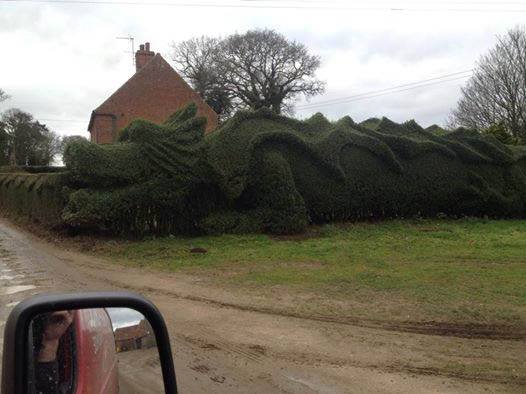
A work of art in East Rudham, Norfolk

Municipal Dreams's avatarMunicipal Dreams

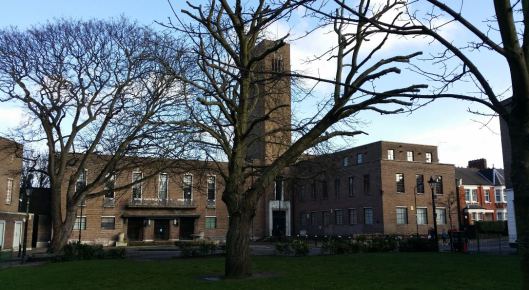
It’s easy to miss the modernist masterpiece of Hornsey Town Hall, completed in 1935, as you fight your way through the yummy mummies and baby buggies of Crouch End but take time to admire it.  It’s been described as ‘the quintessential English modern public building of the decade’. (1)  And look to the buildings to left and right and through the clutter of contemporary commercialism – this was a civic complex intended to enshrine the role of local government at the very centre of local life.

Contemporary

Hornsey’s first local administration had been formed as far back as 1867.  The Hornsey Local Board built its offices in Southwood Lane in Highgate the following year.  At that time, Hornsey was basically a collection of local villages but the coming of the railways would radically transform it.  With seven local rail stations by 1887, Hornsey became a centre of middle-class villadom – the…

View original post 1,925 more words

Joe Constantine's avatarBackyard DIY

A couple of months ago I had the idea of using pallet wood as a cheap lawn edging solution. Lawn edging is something I’d wanted for a while but with around 80m to cover the cost was always prohibitive.

When I first thought of using pallets I tested out some self made stakes along a metre stretch and really liked the results. So, for the last two days I’ve been making hundreds of pallet wood stakes and making my way around the lawn. I think the result is great!

The wood is untreated so it won’t last forever but since pallet wood is free and these stakes are so easy to install I didn’t consider the benefit to be worth the cost and effort of treating it.

View original post

compost bin‘Of composts shall the Muse descend to sing,

Nor soil her heavenly plumes? The sacred Muse

Nought sordid deems, but what is base; nought fair

Unless true Virtue stamp it with her seal.

Then, planter, wouldst thou double thine estate;

Never, ah never, be asham’d to tread

Thy dung heaps, where the refuse of thy mills,

With all the ashes, all thy coppers yield,

With weeds, mould, dung, and stale, a compost form,

Of force to fertilise the poorest soil.’

James Grainger 1721-66

moss floor

gressenhall sunflowers in curiosity cornerFathers’ Day at Gressenhall Farm and Workhouse Museum yesterday. Self seeded sunflowers in ‘Curiosity Corner’- a mini garden for under 5’s I designed and built (with help).
Old School Gardener

Picture by Bob Osborn

Picture by Bob Osborn

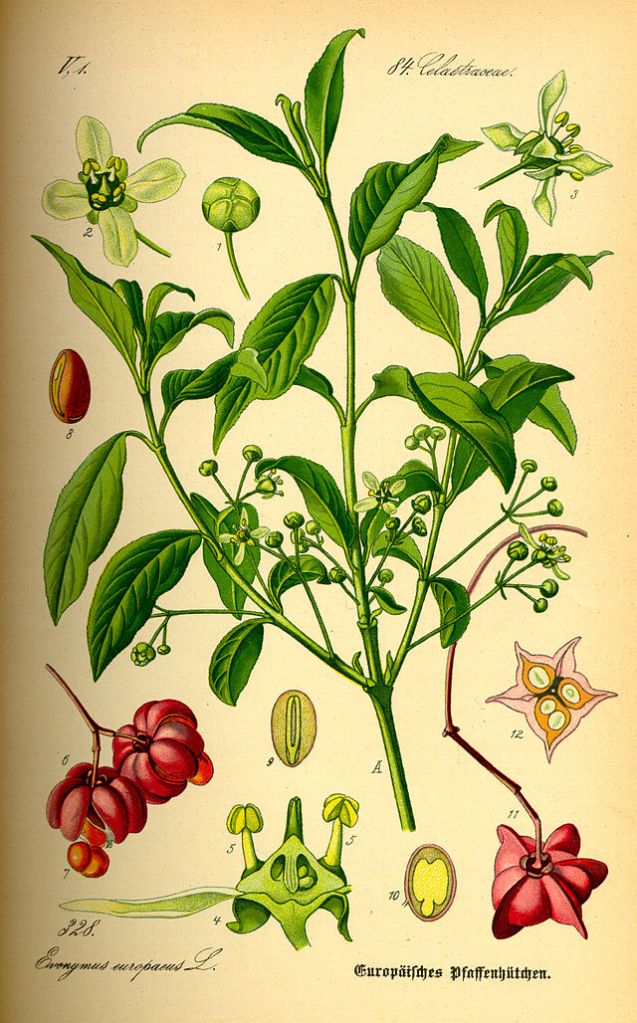
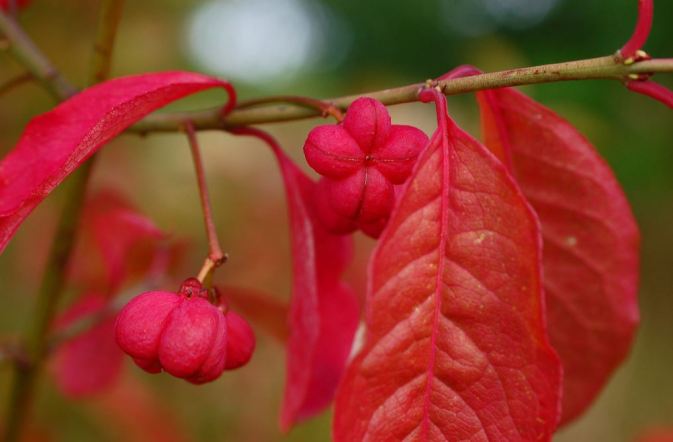
The ‘E’ in my A-Z of garden trees is a star autumn performer and can also be grown as a deciduous shrub. As I write this, my own (shrub) example of Euonymus (the alatus or ‘winged spindle’ species) here in Old School Garden has just lost all of it’s new leaves – possibly a virus or scale attack? Still, I have gathered some seeds from hedgerow examples of europaeus and the small seedlings seem to be doing well, so maybe I shall- in a few years- have a replacement or two!

Common name: ‘Spindle’, ‘European Spindle’, ‘Common Spindle’

Native areas: native to much of Europe, where it inhabits the edges of forest, hedges and gentle slopes, tending to thrive on nutrient-rich, chalky and salt-poor soils. It is a decduous shrub or small tree.

Historical notes: European spindle wood is very hard, and can be cut to a sharp point- it was used in the past for making wool spindles (used to spin the wool into thread).

Features: Euonymus europaeus grows to 3–6 m (10–20 ft) tall, rarely 10 m (33 ft), with a stem up to 20 cm (8 in) in diameter. The leaves are opposite, lanceolate to elliptical, 3-8 cm long and 1-3 cm broad, with a finely serrated edge. Leaves are dark green in summer. Autumn colour ranges from yellow-green to reddish-purple, depending on environmental conditions. Flowers are produced in late spring and are insect-pollinated; they are rather inconspicuous, small, yellowish green and grow in cymes of of 3-8 together. The capsular fruit ripens in autumn, and is red to purple or pink in colour and approximately 1-1.5 cm wide (opening, when ripe, to reveal orange seed cases).

Uses:  Spindle is a popular ornamental in gardens and parks due to its bright pink or purple fruits and attractive autumn colouring, in addition to its resistance to frost and wind. It has been introduced to North America where it has become an invasive species in some areas. Grown as a shrub it is useful for hedging and screens, is relatively low maintenhance and as a tree looks good in ‘Cottage’, informal and wildlife gardens.

The cultivar ‘Red Cascade’ has gained the Royal Horticultural Society’s Award of Garden Merit (AGM).This is a small arching tree (mature height 3-5 metres), and produces an abundance of rosy red fruits which open to reveal vivid orange seed cases. The foliage display in autumn is fantastic with green leaves turning to rich red by November. This variety is one of the best forms for gardens, parks and resticted spaces.

Growing conditions: Grow in well-drained soil in sun or partial shade. propagate by sed or semi-hardwood cuttings. A good choice for even chalky soils, it will thrive in most soils, but avoid waterlogged ground. Prone to caterpillars and vine weevils and may suffer from powdery mildew.

640px-Illustration_Euonymus_europaea0Further information:

Wikipedia

RHS- Euonymus europaeus

Barcham trees directory- ‘Red Cascade’

How to grow Euonymus europaeus ‘Red Cascade’

Old School Gardener

butterfly bouquet via green renaissancevia Green Renaissance

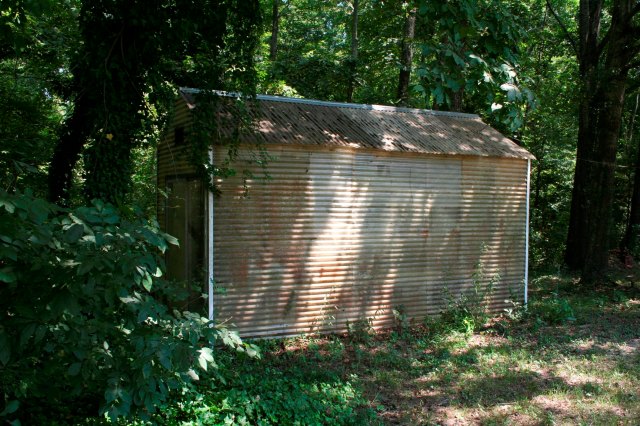
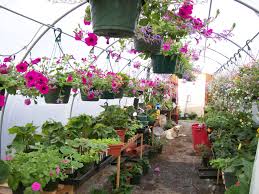
shady greenhouseI’ve previously had a question about acquiring a second greenhouse and what it could be used for. Today’s question is from Tony Sharp of Hertford and also involves a ‘greenhouse gift’. Tony asks:

‘My parents have offered me their old greenhouse, but the only available space for it in my garden is generally shaded. Is it worth the trouble of moving it to my place?’

Tony, it is certainly worth it. The great majority of popular greenhouse and pot plants prefer shady conditions when in the decorative stage- but good light, which does not mean direct sunlight under glass, is essential for them in their early stages of growth. If there is too much gloom, growth will be weak, straggly and pale. If your greenhouse is going to be very shaded, the use of a cold frame or other mini garden frame in a more open, sunny position might provide the right light levels for the early growth stages of some plants.

There are also many plants that revel in considerable shade, apart from the low growers suitable for placing under the staging (more on this below). Examples include:

  • Many ferns for both cool and warm conditions

  • Norfolk island pine (Araucaria excelsa) in its juvenile form

  • The climbers, Chilean bell-flower (Lapageria rosea) and Hoya carnosa- both with attractive flowers

  • Many ivies

  • The Schefflera foliage species

  • Camellias, which flower very well in pots when young

  • Streptocarpus

  • Gloxinias

  • Many of the Gesneria family

  • The ‘forest cacti’ such as Schlumbergera and Rhipsalidopsis

  • The annual Exacum affine, which is sweet-smelling

  • Anthurium crystallinum

  • Various palms

And there are many more possibilities to choose from depending on the temperature that can be maintained in the greenhouse.

I mentioned using the space under the staging in the greenhouse above. If you have a glass-to ground greenhouse the lighting conditions will probably allow this area to be used for a propagator or those plants that like slight shade. If, however there is considerable shade (as you might get with a solid wall greenhouse), only shade lovers can be put there- but once again there are lots of these to consider. Many houseplants like the sort of lighting you get in this area (and may even be raised there); so, too, do tropical  plants and exotic foliage subjects if warmth and humidity is adequate. Good crops of mushrooms can be grown and, if an area is blacked out, it can also be used for blanching and forcing crops such as chicory, rhubarb and sea kale.

You have staging- what can you use the area underneath for?
You have staging- but what can you use the area underneath for?

I’d suggest that you don’t use the under staging area as a store for general garden stuff (eg plant pots and trays) as these and other ‘junk’ can soon turn into places where pests and diseases will be encouraged. However this area can be useful as a store for tools that are used regularly in the greenhouse, as well as containers of seed and potting compost- as long as these can be effectively sealed (I’ve seen a bag of compost left open in a greenhouse and soon become a home for ants!).

Link: 10 Greenhouses you can build yourself

If you have any gardening questions that you think I might help with, then please email me at nbold@btinternet.com

Old School Gardener

If you’ve enjoyed reading this post and others on this blog, why not comment and join others by signing up for automatic updates via email (see side bar, above right ) or through an RSS feed (see top of page)?

It’s been a while since I put together a few examples of recycling innovation in the garden using pallets and other things- there seem to be fewer ‘new ideas’ around these days. Perhaps there are just so many things you can do with a pallet (and other stuff)?! Anyway here is a set of four great ideas that have caught my eye in the last few months.

Old School Gardener

Finding Nature

Nature Connectedness Research Blog by Prof. Miles Richardson

Norfolk Green Care Network

Connecting People with Nature

Discover WordPress

A daily selection of the best content published on WordPress, collected for you by humans who love to read.

Susan Rushton

Celebrating gardens, photography and a creative life

Unlocking Landscapes

Writing, photography and more by Daniel Greenwood

Alphabet Ravine

Lydia Rae Bush Poetry

TIME GENTS

Australian Pub Project, Established 2013

Vanha Talo Suomi

The Journey from Finnish Rintamamiestalo to Arboretum & Gardens

Marigolds and Gin

Because even in chaos, there’s always gin and a good story …

Bits & Tidbits

RANDOM BITS & MORE TIDBITS

Rambling in the Garden

.....and nurturing my soul

The Interpretation Game

Cultural Heritage and the Digital Economy

pbmGarden

Sense of place, purpose, rejuvenation and joy

SISSINGHURST GARDEN

Notes from the Gardeners...

Deep Green Permaculture

Connecting People to Nature, Empowering People to Live Sustainably

BloominBootiful

A girl and her garden :)