
 Summer fruiting raspberries are just about coming to the end here at Old School Garden, but Lee Mason of Whetstone has had a disappointing harvest:
‘I planted some ‘Malling Promise’ raspberry canes back in February. They’ve grown pretty well, but the harvest has been disappointing and the new growth looks to be weak. Would a fertiliser feed help?’
Malling Promise canes (and any other summer fruiting raspberries for that matter), planted in February would have benefitted from cutting down in their first season to 100 mm (4 inches) high canes back in March to encourage strong new root development, as well as new canes for fruiting in the following season. In short, Lee, you’ve ‘got a bit ahead of yourself’! I suggest that you cut down all growth next March. You will lose a season’s cropping, but the sacrifice will be worth it in the long run. Giving the canes a good mulch of organic matter or a general fertiliser like fish, blood and bone should also help, if applied next spring.
Have you been disappointed with the flavour of your raspberries? Sulphate of potash is a good fertiliser to use to enhance raspberry flavour, but only if the raspberry variety you grow has some natural flavour of it’s own. Varieties like Malling Admiral have little natural flavour, whereas Malling Jewel or Malling Promise are better.
Are your raspberries shrivelled up? This might be because you’ve been a little too enthusiastic in digging around the canes! Avoid digging over the ground near the roots, as raspberries are surface rooters and don’t like any cultivation anywhere near the canes. This breaks the roots- which can spread out quite a way- and as a result the plants will be unable to cope with the extra stress at fruiting time. If you restrict your cultivation to the use of a Dutch hoe and follow this up with a good deep mulch of organic matter in the spring this will do wonders for the quality of your fruit.

The first autumn raspberries are starting to appear here at Old School Garden (earlier than normal probably due to the mild winter and spring). It looks like we’ll have a good harvest. With these, the fruit comes on canes produced in the current season, so after fruiting (which can last into October) the old canes need to be cut back, but when is the best time to do this? Well not immediately after harvesting, apart from damaged or broken canes. It’s best to leave the rest until the following spring (early March), when all the remaining canes can be cut down almost to ground level. This ensures that some protection for the newly emerging canes is provided over winter. In July weak growth can be removed so that only the strongest canes are left for fruiting.
With summer fruiting varieties it’s best to cut down the canes that have fruited immediately after harvesting has finished and to select the strongest new canes and tie these into wire supports to protect them over winter. In spring the tops can be cut back by about 6 inches or alternatively these can be looped over and tied into the top wires.
If you’ve enjoyed reading this post and others on this blog, why not comment and join others by signing up for automatic updates via email (see side bar, above right ) or through an RSS feed (see top of page)?
In the week that we celebrate the sixty-sixth anniversary of the National Health Service, it’s appropriate to look another aspect of the hopes for a better and fairer Britain that many believed must emerge from wartime sacrifice and destruction.
 The County of London Plan was commissioned by the London County Council, written by JH Forshaw (Chief Architect to the LCC) and Patrick Abercrombie (the most famous town planner of his day and Professor of Town Planning at University College, London) and published in 1943. It was a bold and comprehensive reimagining of the capital and, though most of its specific proposals were quickly forgotten in the austerity and necessary pragmatism of the post-war years, we should recall its ideals and vision – and perhaps learn from them too.
I can only give a brief taste of the Plan here. It’s a richly illustrated hardback of some 188 folio pages. That…
View original post 1,269 more words

 A Norfolk community designs a show garden for the Hampton Court Flower Show. Click here to get the video.
‘The towering clouds recede; the storm has fled;
The dark and angry sky grows clear again.
The thunder faintly rolls, and slowly dies,
And skylarks twitter gladly as they rise.
Now many a flower hangs low a dripping head,
And here and there a patch of levelled grain
Recalls the violence of the summer storm.
The sun returns, the rain-soaked earth grows warm.
Slow and ungainly by the waterside
A solemn toad plods forth, and small snails glide,
Their shining shells enriched by golden rings.
A dragon-fly with wide and wondrous wings
glows like a jewel there among the reeds,
Above the tangle of the water-weeds.’
John (Jack) Kett
from ‘A Late Lark Singing’ (Minerva press 1997)
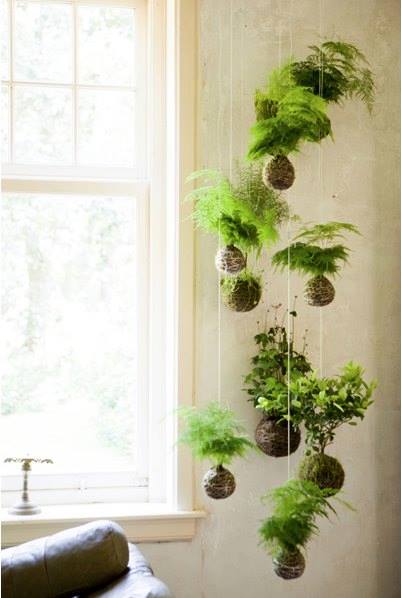
‘…the snail, whose tender horns beign hit,
Shrinks backward in his shelly cave with pain,
And there, all smother’d up, in shade doth sit,
Long after fearing to creep forth again:’William Shakespeare
Nigel Boldero aka 'Old School Gardener'
 | Nigel Boldero on Fighting to Reduce Climate Cha… |
 | Anonymous on Fighting to Reduce Climate Cha… |
| Anonymous on PicPost: Carrot, my foot! |
| 18 Surprising Hydran… on Plantax 16: Hydrangea the wate… | |
| Nigel Boldero on Poppyland: A Victorian romance… |
| Anonymous on Poppyland: A Victorian romance… |
| Anonymous on Plants to die for… |
 | Isabella Childress on PicPost: Forest, but not as we… |
 | Happiness Factor on Is child-friendly planning a l… |
 | zidane on Top Tip: On a Pedestal- make m… |



Nature Connectedness Research Blog by Prof. Miles Richardson
Connecting People with Nature
A daily selection of the best content published on WordPress, collected for you by humans who love to read.
Celebrating gardens, photography and a creative life
Writing, photography and more by Daniel Greenwood
Lydia Rae Bush Poetry
Australian Pub Project, Established 2013
The Journey from Finnish Rintamamiestalo to Arboretum & Gardens
Because even in chaos, there’s always gin and a good story …
RANDOM BITS & MORE TIDBITS
.....and nurturing my soul
Cultural Heritage and the Digital Economy
Sense of place, purpose, rejuvenation and joy
Notes from the Gardeners...
Connecting People to Nature, Empowering People to Live Sustainably
A girl and her garden :)


 Old School Garden