


Opportunities to view the 45 minute film called “Rich soil, rich heritage” all about the district and how it has been shaped by the many different people who have come here over the past 350 years.

Enjoy!
Opportunities to view the 45 minute film called “Rich soil, rich heritage” all about the district and how it has been shaped by the many different people who have come here over the past 350 years.
Enjoy!
Municipal Dreams travels abroad for the first time this week, thanks to this fascinating account by Ben Austwick of pioneering social housing in Amsterdam. A follow-up post will appear next week. You can read Ben’s other writings on art and architecture at his blog: http://doilum.blogspot.co.uk/
The Amsterdam School is a little celebrated offshoot of German Expressionist architecture, active for a short period between 1910 and 1925 but nevertheless defining large areas of the city’s inner suburbs. While its municipal buildings offer little in the way of innovation, the period coincided with an extraordinary boom in early social housing and its communal ideals laid blueprints for the modernist estates of the twentieth century.
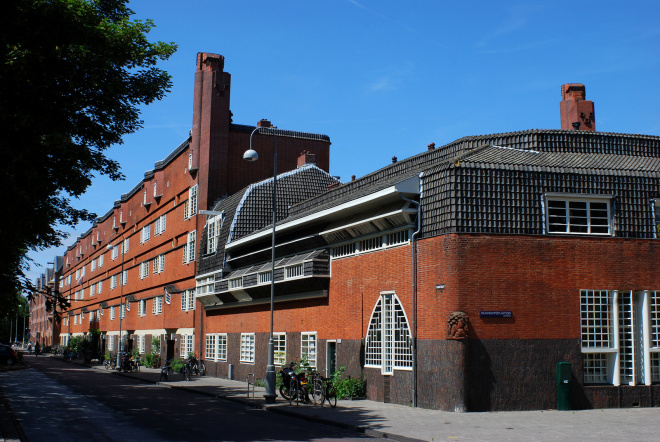 Het Schip © Ben Austwick
Expressionist architecture followed the romantic ideals of the neo-Gothic and even the neo-Medieval, merged with the new shapes and forms of the modern movement. The most famous examples are probably Gaudi’s Barcelona Cathedral and Mendelsohn’s Einstein…
View original post 941 more words
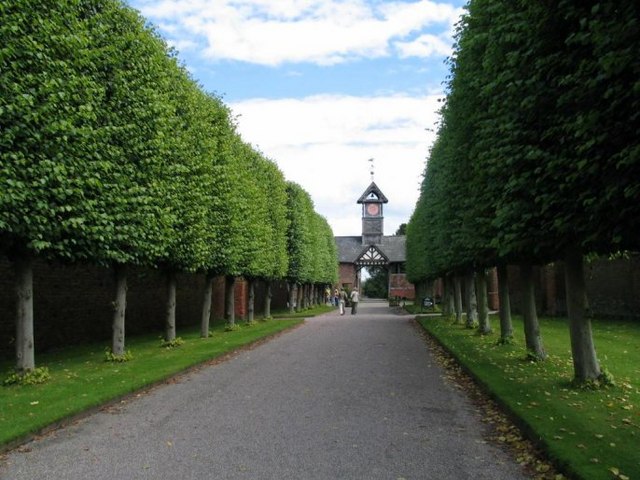
‘I have a row of overgrown lime trees which originally formed a screen and which I want to cut back and pleach. Are limes suitable for this kind of training and what are the details of the method?’
"Walking in a thick pleached alley in mine orchard" - William Shakespeare, 'Much Ado About Nothing'
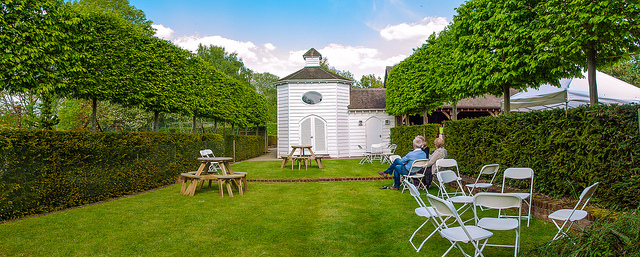
Pleached Trees and an underlying Yew hedge ay Dipley Mill, Hampshire, via
Angus Kirk

Pleaching in process


‘The worst ENEMYES to gardens are Moles, Catts, Earewiggs, Snailes and Mice, and they must be carefully destroyed, or all your labor all the year long is lost.’

 A new report by researchers at the University of Minnesota’s Institute on the Environment, published in Science, shows that an extra 3 billion people in the world need not lead to higher levels of hunger if existing cropland is used more efficiently, additionally reducing agriculture’s environmental impact. The report focused on 17 crops that account for 86% of the world’s crop calories as well as the majority of irrigation and fertilizer use. The hope is that the report can help guide and prioritise donors’ and policy makers’ activities for the greatest benefit.
The report identifies three areas of priority that, with the suggested actions, hold the most potential for meeting global food needs and reducing agriculture’s environmental footprint, a key pillar of sustainable intensification. Geographically the majority of these opportunities occur in China, India, U.S., Brazil, Indonesia, Pakistan and Europe. To summarise we need:
1. To produce more food…
View original post 539 more words

By Stephanie Brittain, Agriculture for Impact
“Poverty eradication is the greatest global challenge facing the world today and an indispensable requirement for sustainable development. We are therefore committed to freeing humanity from poverty and hunger as a matter of urgency”.
This introductory quote from the draft Sustainable Development Goals (SDG’s) highlights that tackling poverty and hunger are still key targets for the SDG’s, the evolution of the Millennium Development Goals (MDG’s). Aims to ‘End Extreme Poverty including Hunger’ and ‘Improve Agriculture Systems and Raise Rural Prosperity’ show that poverty and hunger are intrinsically linked. Indeed, most of the world’s poorest and hungriest are the smallholder farmers that ironically produce 80% of the world’s food. It’s important that the SDG’s meet the needs of these farmers if they are to meet their targets.
So what are the SDG’s going to offer the world that the MDG’s didn’t? Well this time we…
View original post 689 more words
When Geoff and Anne Shaw bought Follers Manor in 2006 it was a mess. The house was virtually uninhabitable and the grounds an eyesore: a jumble of tussock, weeds and builders’ rubble with a large, long-abandoned tennis court as a central feature. 
Today with the house and gardens rejuvenated it is easier to understand why they bought Follers. Invisible from the road, the house sits high above the Cuckmere valley just outside Alfriston in East Sussex.

Below it to the east lies the small village of Litlington with far views of the South Downs National Park beyond. After renovating the house, Geoff and Anne realised that they would need help with the derelict garden and turned to designer, Ian Kitson for inspiration. His brief was simple: a garden that was colourful; that would encourage wildlife and trickiest, a garden that would vie confidently against such an impressive backdrop.

I first…
View original post 909 more words
Nigel Boldero aka 'Old School Gardener'
 | Nigel Boldero on Fighting to Reduce Climate Cha… |
 | Anonymous on Fighting to Reduce Climate Cha… |
| Anonymous on PicPost: Carrot, my foot! |
| 18 Surprising Hydran… on Plantax 16: Hydrangea the wate… | |
| Nigel Boldero on Poppyland: A Victorian romance… |
| Anonymous on Poppyland: A Victorian romance… |
| Anonymous on Plants to die for… |
 | Isabella Childress on PicPost: Forest, but not as we… |
 | Happiness Factor on Is child-friendly planning a l… |
 | zidane on Top Tip: On a Pedestal- make m… |


Nature Connectedness Research Blog by Prof. Miles Richardson
Connecting People with Nature
A daily selection of the best content published on WordPress, collected for you by humans who love to read.
Celebrating gardens, photography and a creative life
Writing, photography and more by Daniel Greenwood
Lydia Rae Bush Poetry
Australian Pub Project, Established 2013
The Journey from Finnish Rintamamiestalo to Arboretum & Gardens
Because even in chaos, there’s always gin and a good story …
RANDOM BITS & MORE TIDBITS
.....and nurturing my soul
Cultural Heritage and the Digital Economy
Sense of place, purpose, rejuvenation and joy
Notes from the Gardeners...
Connecting People to Nature, Empowering People to Live Sustainably
A girl and her garden :)


 Old School Garden