Latest Entries »

shinealightproject's avatarShine A Light

By Wayne Holland

A few weeks ago we were happy to report that our finely carved oak statue Samson had left Norfolk Collections Centre to undergo conservation work. This blog charts the 357 year history of Samson.

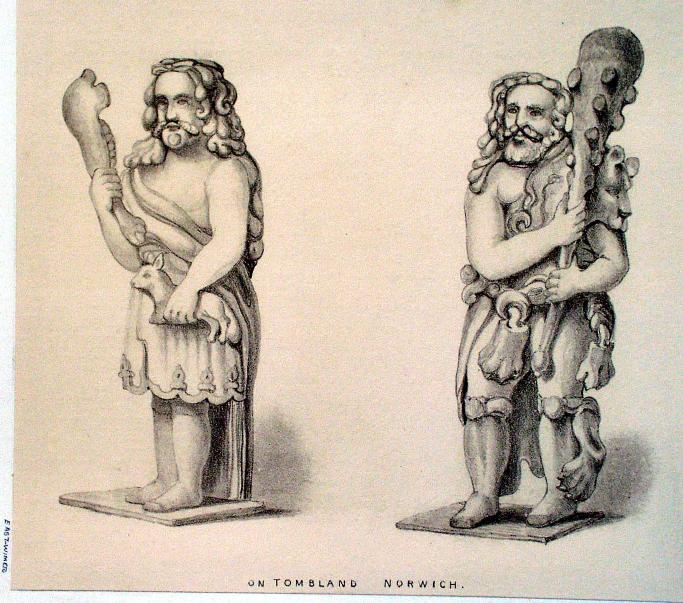
Two of Norwich’s most famous characters are these two oak carved statues of Samson and Hercules.

Image 9 Samson (left) is holding a small fox in his left hand and the jawbone of an ass in his right held up to his shoulder, he has a moustache and long flowing hair. Hercules (right) is standing holding a large club to his right shoulder, he has a moustache and long flowing hair.

The older of the two, Samson, is 357 years old! For the first time in his life he has left Norfolk, for the bright lights of London to undergo conservation work.

Find out more from our conservation department blog

For most of their lives…

View original post 1,125 more words

canwefeedtheworld's avatarOne Billion Hungry: Can We Feed the World?

ID-10027716On the 19th July after 7 days of discussions, the UN General Assembly’s Open Working Group (OWG) on Sustainable Development Goals (SDGs) agreed an outcome document containing 17 proposed Sustainable Development Goals and 169 targets. The OWG, which comprises of 30 representatives from the five UN regional groups nominated by UN Member States, and the commitment to create the SDGs came out of the UN Conference on Sustainable Development held in Rio de Janeiro in June 2012. The OWG’s primary responsibility has been to create the proposed SDGs and this proposal will be submitted to the UN General Assembly for consideration at its 68th session on the 24th September 2014.

Taking place at the UN headquarters in New York, OWG 13, chaired by Macharia Kamau of Kenya and Csaba Kőrösi of Hungary, was extended by a day due to overnight negotiations. In particular discussions around the issues…

View original post 874 more words

Jardin's avatarJardin

I’ve seen several Shakespearean productions en plein air, but there is no doubt that the most fitting is “A Midsummer Night’s Dream”, with its star-crossed lovers wandering in woodlands inhabited by fairies. So the sylvan setting of Ardgillan Castle, north of Dublin, seems to me a wondrous setting for the play on Friday 1st August.

Ardgillan Castle Ardgillan Castle

This battlemented C18th country house, with its acres of parkland stretching down to the sea, is magical in its own right, with views along the east coast north of Dublin as far as the Mourne Mountains.
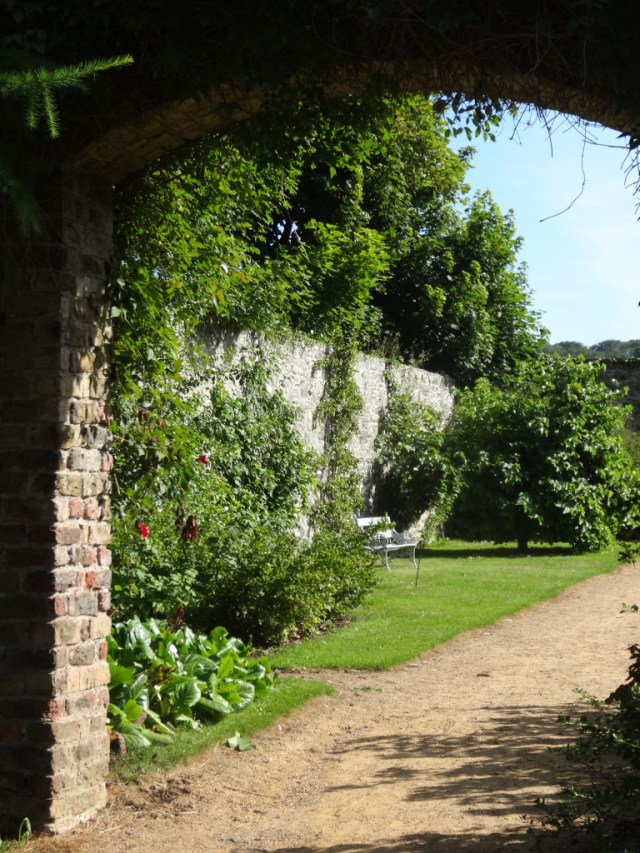
The walled garden Ardgillan Castle, Co Dublin The walled garden Ardgillan Castle, Co Dublin

The setting is the Walled Garden – a Victorian styled kitchen garden, with arched gateways and high stone walls, clothed in old roses. Today the walled garden is subdivided into five compartments:

The Ornamental garden with a wide range of semi-tender plants and a pretty rockery with lots of colour…

View original post 143 more words

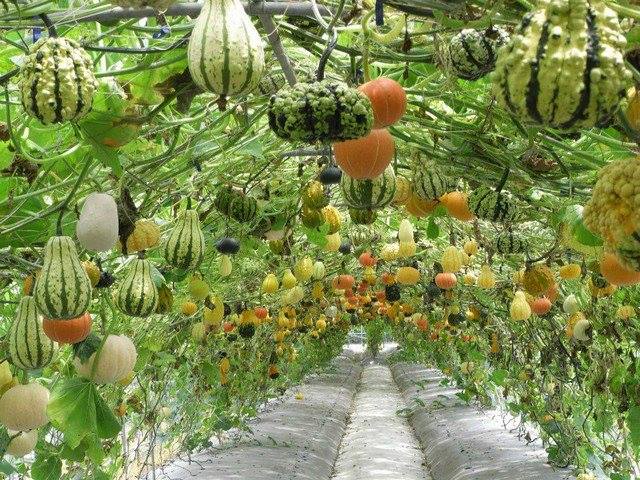
gourd heavens

Old School Gardener

Contemplation/ garden of Gethsemane- by Jenny Meehan
Contemplation/ Garden of Gethsemane by Jenny Meehan

‘..Gardening has always been regarded as a peculiarly English activity: indeed, it has assumed a key role in English identity. There are two main reasons for this..first…the weather….But there are also cultural reasons why gardening became the favoured activity of the English….English Gardens were seen as having curative powers for the English malady of melancholy….English people, unlike their continental counterparts, for whom it was a place for parade and social intercourse, went into the garden for a very different purpose- contemplation. I believe it was the Reformation which gave Englishmen their green fingers. In Catholic countries meditation took place in churches, monasteries and nunneries. In England the setting for contemplation became the garden….’

Sir Roy Strong: ‘Visions of England’ (Random House, 2011)

Old School Gardener

headliners

Old School Gardener

Hamamelis_flowersOK, a bit of a stretch with this entrant, as Hamamelis is more often a shrub rather than a tree, but there don’t seem to be any garden trees with a botanical name beginning with ‘H’ (go on, prove me wrong)!

Common name: ‘Witch – Hazel’ and occasionally for the North American species, ‘Winterbloom’

Native areas: A native of North America (3 species- ovalis, virginiana and vernalis) Japan (japonica) and China (mollis).

Historical notes: The name ‘Witch’ in witch-hazel has its origins in the middle english word ‘wiche’, from the Old English ‘wice’, meaning “pliant” or “bendable”. “Witch hazel” was used in England as a synonym for Wych Elm (Ulmus glabra) American colonists seem to have simply extended the familiar name to the new shrub they found in their new home. The use of the twigs as divining rods, just as hazel twigs were used in England, may also have influenced the “witch” part of the name. The plant-hunter Charles Maries collected Hamamelis mollis for Veitch Nurseries from China  in 1879. It languished in nursery rows for years until it was noticed, propagated and put on the market in 1902.

Hamamelis in Colonial Park Arboretum and Gardens

Features: The witch-hazels are deciduous shrubs or (rarely) small trees growing to 3–8 metres tall, rarely to 12 metres tall. The leaves are alternately arranged, oval, with a smooth or wavy margin. The genus name, Hamamelis, means “together with fruit”, referring to the simultaneous occurrence of flowers with the maturing fruit from the previous year. H. virginiana blooms in September-November while the other species bloom from January-March. Each flower has four slender strap-shaped petals 1–2 centimetres long, pale to dark yellow, orange, or red. The fruit is a two-part capsule 1 centimetre long.

Uses:  Witch Hazels are popular ornamental shrubs, grown for their clusters of rich yellow to orange-red flowers which begin to expand in the autumn as or slightly before the leaves fall, and continue throughout the winter. Hamamelis virginiana is rarely seen in the nursery trade except for woodland/wildlife restoration projects and native plant enthusiasts. Much more common is H. mollis, which has bright red flowers that bloom in late winter instead of the yellow blossoms of H. virginiana which tend to be lost among the plant’s autumnal foliage. Numerous cultivars have been selected for use as garden shrubs, many of them derived from the hybrid H. x intermedia ‘Rehder’ (H. japonica × H. mollis). Jelena and Robert de Belder of Arboretum Kalmthout, selecting for red cultivars, found three: the first, with bronze flowers, was named ‘Jelena’; the next, with red flowers, was named ‘Diane’ (the name of their daughter); the last, with deep red flowers, was called ‘Livia’ (the name of their granddaughter). The cultivar ‘Arnold Promise’ (mature height 3- 5 metres) is recognised as one of the best yellow-flowering Witch – Hazels, with magnificent yellow flowers that contrast with the red inners, which sometimes last as long as two months without fading.

This slideshow requires JavaScript.

Growing conditions: An open, sunny position is best, as plants become straggly in shade, although they do tolerate partial shade. Avoid exposed and windy positions. Young witch hazels can be damaged by hard frosts, so avoid frost pockets, or be prepared to protect plants with a couple of layers of horticultural fleece in their first few years if there is a hard winter or late spring frost. Witch hazels need free-draining soil conditions with an adequate supply of moisture. A light soil with plenty of added organic matter, such as well-rotted manure or compost, is best. They will tolerate heavy or clay soils if they are improved by digging in organic matter and by ensuring good drainage. Acid to neutral soil pH is preferred (pH 4.5-6.5). Witch hazels may tolerate deep soils over chalk, with plenty of added organic matter. If they become chlorotic (yellow) because of the high pH, then treatment with a chelated (sequestrated) iron fertiliser, ideally one that also contains manganese, can help. They are unlikely to tolerate shallow chalky soils.

Hamamelis virginiana

Further information:

Wikipedia- Witch – Hazel

RHS- Hamamelis

Barcham trees directory- Hamamelis x intermedia ‘Arnold Promise’

7 plants for Winter Wonder

Old School Gardener

Finding Nature

Nature Connectedness Research Blog by Prof. Miles Richardson

Norfolk Green Care Network

Connecting People with Nature

Discover WordPress

A daily selection of the best content published on WordPress, collected for you by humans who love to read.

Susan Rushton

Celebrating gardens, photography and a creative life

Unlocking Landscapes

Writing, photography and more by Daniel Greenwood

Alphabet Ravine

Lydia Rae Bush Poetry

TIME GENTS

Australian Pub Project, Established 2013

Vanha Talo Suomi

The Journey from Finnish Rintamamiestalo to Arboretum & Gardens

Marigolds and Gin

Because even in chaos, there’s always gin and a good story …

Bits & Tidbits

RANDOM BITS & MORE TIDBITS

Rambling in the Garden

.....and nurturing my soul

The Interpretation Game

Cultural Heritage and the Digital Economy

pbmGarden

Sense of place, purpose, rejuvenation and joy

SISSINGHURST GARDEN

Notes from the Gardeners...

Deep Green Permaculture

Connecting People to Nature, Empowering People to Live Sustainably

BloominBootiful

A girl and her garden :)