Latest Entries »

To start 2015 here is a selection of outdoor recycling projects involving reuse of pallets and other materials. Inspired?

Source: 1001 Pallets

Old School Gardener

Blue-flowers-path‘With flowers, as with all other departments of the garden, you first decide what kind you want to grow and then whittle it down to what kind you can grow in the space. When you have further gone through the list and reduced it to what you can afford to grow and then eliminated the ones which you know from bitter experience will refuse to grow you have saved yourself a very great deal of labour indeed.’

Ethelind Fearon 1952

powerscourtgolfclub's avatarPowerscourt Garden Pavilion

One of the first things to think of when planning your garden is the skeleton or structure.  First, think about the feel you want for your garden whether tropical, contemporary, cottage, wildlife friendly,  or formal. Next, here are a few more things to consider before getting to the garden centre and filling up that trolley.

Here are some basics we need to remember when purchasing plants:

The size of the garden and the plants. The plants need to be in proportion to one another and the surrounding space. A large tree in a small garden does not work while a small tree will be lost in a large space. Various sized plants provide the brain with more information adding interest.
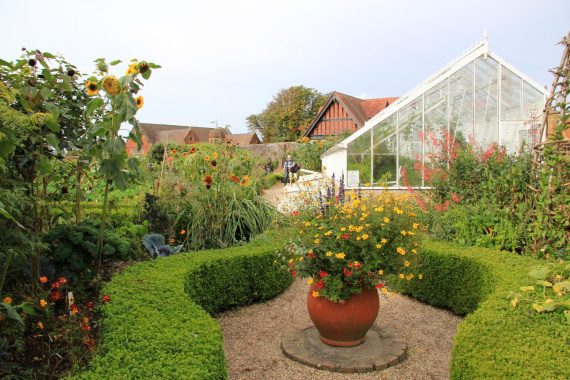
Garden Design

Image Credit

Keep in mind evergreen plants keep colour and wildlife in your garden throughout the year. It’s necessary to note which plants are evergreen so there is a balance during the…

View original post 252 more words
Steve Schwartzman's avatarPortraits of Wildflowers

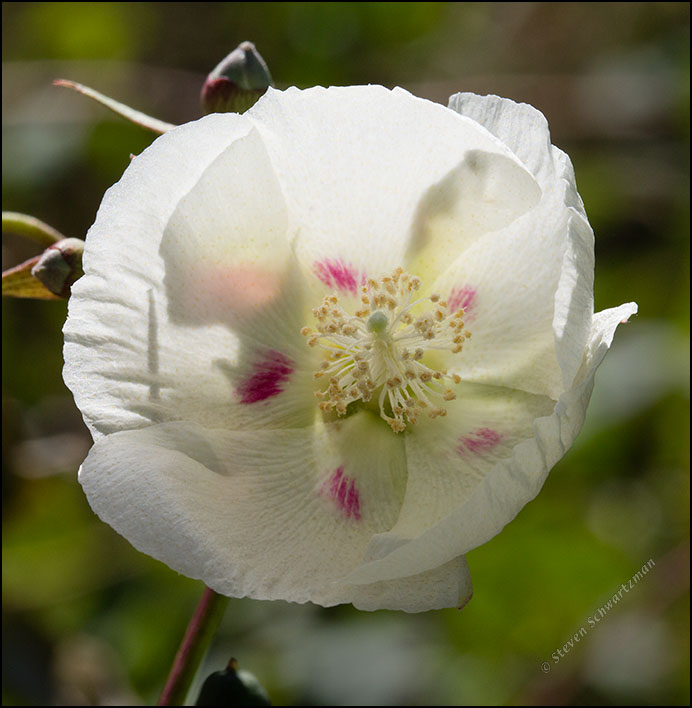
Desert Cotton Flower 2535

On October 1, 2014, one of the native plants I saw during a couple of hours at the botanical garden in Tucson named Tohono Chul was Gossypium thurberi, a bush in the mallow family that people call desert cotton or wild cotton.

To learn some interesting things about the human use of cotton, which has been going on for thousands of years in various parts of the world, you can check out the relevant Wikipedia article.

© 2015 Steven Schwartzman
View original post

M.

Malus is a genus of about 30–55 species of small deciduous trees, including the domesticated orchard apple (M. domestica) and varieties of crab apple (including the ‘wild apple’, M. sylvestris). This profile focuses in particular on the crab apples. 

Common name:  Non domestic orchard apples are generally known as crabapples, crab apples, crabs, or wild apples.

Native areas: The genus is native to the temperate zone of the Northern Hemisphere.

Historical notes: In the past, M. sylvestris was thought to be an important ancestor of the cultivated orchard apples (M. domestica), but these have now been shown to have been originally derived from the central Asian species M. sieversii. However, another recent DNA analysis showed that M. sylvestris has contributed to the ancestry of modern M. domestica very significantly.

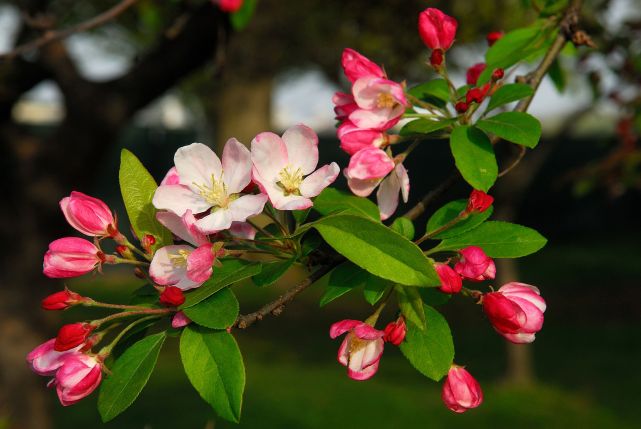
Features: Domestic orchard apple trees are typically 4–12 metres tall at maturity, with a dense, twiggy crown. The leaves are 3–10 cm long, alternate, simple, with a serrated margin. The flowers are borne in corymbs, and have five petals, which may be white, pink or red, usually with red stamens that produce copious pollen. Domestic apple trees are large if grown from seed, but small if grafted onto roots (rootstock). There are more than 7,500 known cultivars of domestic apples, resulting in a range of desired characteristics. Crab apples tend to be smaller than domestic apple trees at around 5 – 7 metres tall, with a rounded profile.

Uses:  Crab apples make ideal specimen trees for small gardens. They are popular as compact ornamental trees, providing blossom in Spring and colourful fruit in Autumn. The fruits often persist throughout Winter. Numerous hybrid cultivars have been selected, of which ‘John Downie’, Evereste’ and ‘Red Sentinel’ have gained The Royal Horticultural Society’s ‘Award of Garden Merit’ (AGM):

Malus sylvestrisarguably, one of the UK’s prettiest native trees, a small crab apple (or ‘wild apple’) with profuse white flowers, tinged pink in bud, and with good yellow autumn colour. Yellow/ green and occasionally red flushed fruit are a bird’s favourite in the autumn. Ideal for native mixed plantings or shelter belts that provide great low cover for wildlife.

Malus floribundathe ‘Japanese Crab’ is most elegant, with early white/pale blush flowers from crimson buds. However, it is prone to apple scab after flowering, resulting in a rather threadbare crown. Because of this it has tended to be superceded by more disease resistant clones such as ‘Rudolph’ and ‘Evereste’.

Malus ‘Evereste’ – introduced in the early 1980’s this rounded tree has profuse flowers that are red in bud before turning white. The small fruit look like miniature ‘Gala’ and are held on until they are taken by birds after Christmas. The orange-yellow autumn foliage also holds well.


 M. ‘John Downie’ – raised in 1875, this is thought by many to be the best fruiting crab. with an irregular oval crown it makes a splendid tree for a small space. White flowers are followed by relatively large, conical-shaped orange-red fruits, which have a food flavour if required for preserves or jelly.

M. x robusta ‘Red Sentinel’– in cultivation since 1959, this profusely fruiting crab is a favourite for gardeners who are looking for winter colour. In some years the clusters of dark red fruits are so numerous that the branches can weigh too heavily so that the crown loses its shape. I have one growing in Old School Garden; it is great alongside other winter interest such as red and orange- stemmed Cornus, and its fruits are useful in Christmas decorations such as front door wreaths. In spring, the red leaves contrast well with its white flowers.

M. x zumi ‘Golden Hornet’ – this well-known crab has been in cultivation for over 60 years and is highly regarded for its profuse display of yellow, marble-sized fruits, which are retained for many weeks. These are preceded by white blossom; a very good ‘all rounder’.

M. ‘Rudolph’ – A Canadian crab developed in the 1950’s, this medium size tree is rather columnar when young, but becomes rounder with maturity. It has leaves which gradually turn from copper-red to bronze-green and rose- pink flowers, which give way to numerous elongated fruits. Autumn leaf colour is clear yellow and it is resistant to scab; a tree which packs a lot of plusses into a small package!

Growing conditions:  Grow Crab apples in moderately fertile soil, though many will thrive on most soils and some are better suited to heavier soils, such as M. sylvestris. They will tolerate partial shade.

Further information:

Wikipedia- Malus

RHS- Malus sylvestris

RHS- Malus ‘Evereste’

RHS- Malus x robusta ‘Red Sentinel’

RHS- Malus x zumi ‘Golden Hornet’

Barcham Trees Directory- Malus ‘Rudolph’

Choosing a Crab apple- Daily Telegraph

Old School Gardener

FB_20141207_22_52_53_Saved_Picture

deltagardener's avatarThat Bloomin' Garden

Its time to plan garden classes

As I sit here from my office the rain is constant and my yard is looking like a lake in some areas. It’s a good day to do some spring planning. Last year I taught some garden classes and really enjoyed sharing my passion for gardening. Today I am planning more classes for other venues as the need is so great. The younger generation is eager to learn and last year they came to hear all about vegetables, herbs and seeds. I saw a few sparks of interest in growing flowers so I will be taking the leap and giving some classes not only in design but how to grow flowers. Yes, I know for most of us growing flowers is easy but with communities densifying gardens have changed. They are definitely smaller areas to plant and our young people may only have a small patio. They want plants that…

View original post 325 more words

gardeninacity's avatargardeninacity

I just didn’t get to spend enough time at the Huntington Library. We were probably there for only three to four hours total. The place is HUGE.

One of the massive buildings on the grounds of the Huntington Library. One of the massive buildings on the grounds of the Huntington Library.

Most of our time we spent at the Desert Garden. However, the grounds have 12 distinct gardens spread over 120 acres.
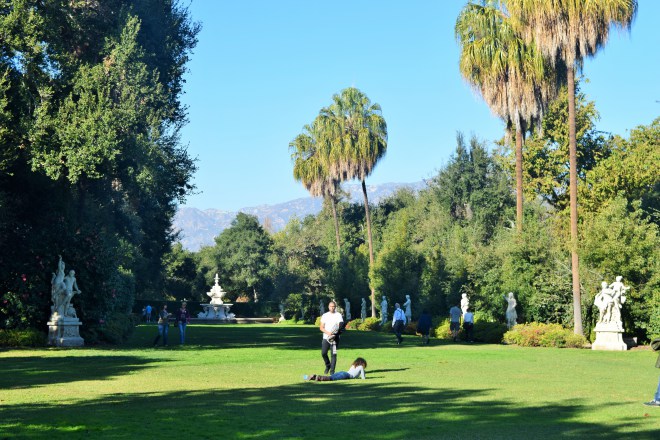
Versailles comes to Pasadena. Versailles comes to Pasadena.

Not everything was fabulous. This scene with the grassy sward and the statues seems very out of place, like an imitation Versailles. Plus, how much water does it take to keep this lawn so green, and isn’t there a drought in California? I do like the distant view of the mountains, though.

Sasanqua Camellias Sasanqua Camellias

There were a few nice Sasanqua Camellias in bloom. However, I had been hoping for masses of blooming Camellias. And aren’t some Camellias supposed to be fragrant? None of these were.
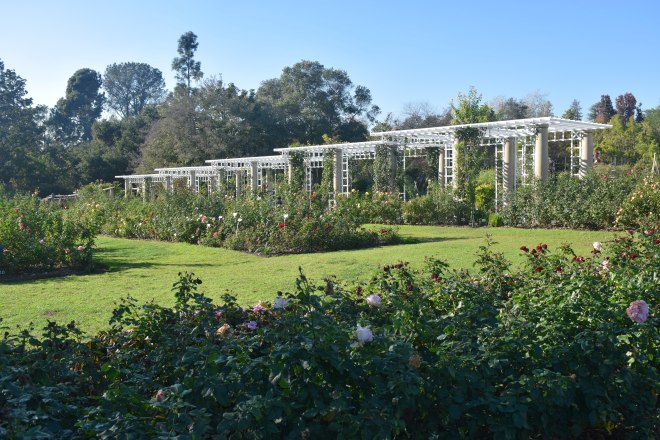
Rose Garden Rose…

View original post 214 more words

WP_20150107_11_25_59_ProIt’s early January and a perfect time to think about what you’re going to grow in the coming year, putting this down on paper (especially for food crops) look through your seed collection, and plugging any gaps. With not much to do in the garden at present, this is just what I’ve been up to in the last couple of days.

I’ve done what I usually do- slotted the packs of seeds I’m going to use into a weekly organiser so that I know when to sow them (always being prepared to adjust this if the weather doesn’t quite go to expectations where outdoor sowings are concerned), adding in a few more things where I want to grow more succession crops (e.g. carrots) or widen the range (e.g. squashes).

I’ve also bought some additional asparagus crowns to add to the bed I started last year (only a couple of plants came through their first season). As last year, I’ve been collecting seed from some plants and adding to my collection through purchases, including taking advantage of the RHS Members’ Seed Scheme where I can buy packs of 12 different seeds for just £8.50. I placed my order yesterday and look forward to receiving some interesting ornamentals to add to Old School Garden.

As far as food is concerned I’ve prepared a new plan for the Kitchen Garden and showed both early and follow on crops…kitchen gdn 2015Changes for this year include:

  • Relocating the three large pots of blueberries – I’m planning to partly sink these into the ground in a spot where I can more easily erect a bird proof cage over them and at the same time release some gravelled space next to the Greenhouse and Cold Frame where I can store pots and trays for ‘hardening off’ new plants.

  • Growing more carrots and parsnips in plastic dustbins, as my experiment last year worked quite well and provides some extra growing space when the rest of the garden is pretty well full.

  • I’ve substituted one Blackcurrant bush with a White currant to improve the balance of the fruit we have and bought ten raspberry canes (two varieties of summer fruiting to plug some gaps in the rows and hopefully improve fruiting).

  • I’m also continuing to install plastic hoops (I’ve used plumbing pipe available from DIY stores) over some more beds to enable me to use plastic/ enviromesh/netting to provide a warm micro climate and protection from pests.

Let’s hope for a productive year!

Old School Gardener

Finding Nature

Nature Connectedness Research Blog by Prof. Miles Richardson

Norfolk Green Care Network

Connecting People with Nature

Discover WordPress

A daily selection of the best content published on WordPress, collected for you by humans who love to read.

Susan Rushton

Celebrating gardens, photography and a creative life

Unlocking Landscapes

Writing, photography and more by Daniel Greenwood

Alphabet Ravine

Lydia Rae Bush Poetry

TIME GENTS

Australian Pub Project, Established 2013

Vanha Talo Suomi

The Journey from Finnish Rintamamiestalo to Arboretum & Gardens

Marigolds and Gin

Because even in chaos, there’s always gin and a good story …

Bits & Tidbits

RANDOM BITS & MORE TIDBITS

Rambling in the Garden

.....and nurturing my soul

The Interpretation Game

Cultural Heritage and the Digital Economy

pbmGarden

Sense of place, purpose, rejuvenation and joy

SISSINGHURST GARDEN

Notes from the Gardeners...

Deep Green Permaculture

Connecting People to Nature, Empowering People to Live Sustainably

BloominBootiful

A girl and her garden :)