Latest Entries »

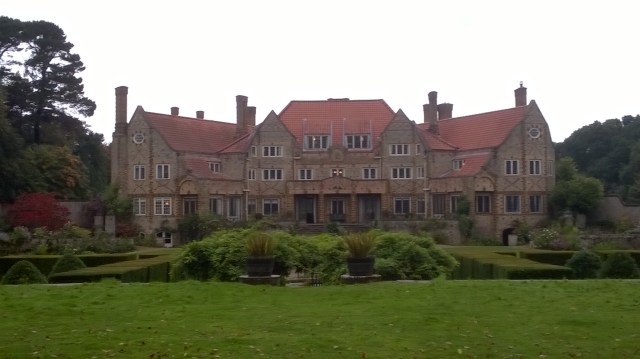
WP_20151007_15_37_25_ProI finally got round to visiting a place I’d wanted to see for some time- Voewood, an arts and crafts masterpiece in north Norfolk.

Taking advantage of the ‘Invitation to View’ scheme we set off on a rather wet and windy day a week or two ago to High Kelling, near Holt.

Our tour of this private house was full of surprises and curiosities. Owned by a rare books and art dealer Simon Finch (who now lives in one of the coach houses) it has been decorated over the years in a very individual style with plenty of personal mementoes and artworks, many hailing from the 1960’s and 70’s. The house with its fourteen bedrooms can be hired out and it also acts as a centre piece for an arts festival.

This slideshow requires JavaScript.

The house was designed (1903-5) by Edward S. Prior. Voewood is perhaps one of the greatest achievements of house design of the Arts and Crafts movement. More than almost any other building of the period the house fulfils the ideals for architecture developed by William Ruskin and William Morris.  In the designing and building of Voewood many of Prior’s philosophical ideas found physical expression.

Its design and construction were characterised by the use of radical planning and forms, innovative technologies, such as the use of reinforced concrete, extensive external decoration, a distinct building philosophy involving craftsmanship and the use of quality local materials and the integration of the building and its interiors with the garden and its surroundings.

The house is based on a butterfly plan. The three storey central portion of the house is flanked by splayed two-storey wings. The plan enabled Prior to maximise views out and to give the best orientation to a range of rooms. He could also relate the external spaces to the internal areas. The area contained within the splay faced the gardens, with the northern of the wings acting as the entrance, with a two storey porch and daylight basement. This wing also contained the library and billiard room at ground floor level. The wing opposite contained the kitchen and service accommodation together with the dining room. The fruit and vegetable garden lay adjacent. The entrance, through oak doors, leads into a six-sided hall up a straight flight of Hoptonwood stone stairs into an octagonal lobby.

Though never lived in by its original owners (there seem to be various theories as to why, including its proximity to a then T.B. hospital), the house was turned into an old people’s home and has also been a hotel. And despite some alterations (e.g. the closing in of two flanking loggias), it has retained most of its original features. I was especially impressed by the construction which used concrete formwork on a (then) extensive scale, resulting in nicely rounded corners to walls and window openings and some chunky concrete beams which provide an interesting, simple decorative feature to many ceilings. However, I was a little disappointed with the window and other ironmongery which, in contrast to many other houses of this style and period (see, for example my recent post on Goddards, York), was rather plain. Perhaps this is further evidence of the alterations carried out in the 1930’s.

Though visiting on a damp October afternoon when there was not much floral interest to be seen, the gardens still managed to impress. The main layout from the back of the house appears to follow its original stepped, symmetrical design, whereas the former kitchen garden to the side has been skillfully turned over to a rather more ornamental layout, though retaining many good examples of wall-trained fruit.

This slideshow requires JavaScript.

The original gardens were of great renown and highly regarded. Voewood was perhaps Prior’s greatest garden design. Garden making was a preoccupation of his middle period. Terraces extend from the wings of the house and end in steps leading down to the garden level. The garden is also reached from the terrace by a double flight of steps leading to two stone paths, separated by a water feature in the form of a stepped stone tank containing water-lilies, iris and forget-me-not. The central feature of the garden is a large basin. Pergolas with masonry walls lead east and west.

The garden at Voewood (then called Home Place) was admired by Gertrude Jekyll and Sir Lawrence Weaver, who described and illustrated it in their book Gardens for Small Country Houses;

“The stepped scheme at Home Place, Holt, designed by Professor E.S. Prior will be a counsel of perfection to most people”.

Further information: Voewood website

Old School Gardener


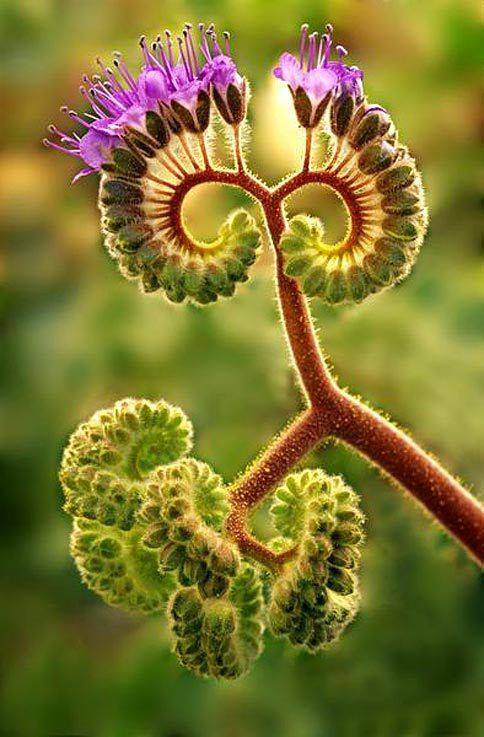
PicPost: Unfurling

phacelia tanacetifolia

phacelia tanacetifolia

pumpkins

WP_20151030_13_49_00_ProOld School Garden – 30th October 2015

Dear Walter,

Well, this month I can say that I’ve just about caught up with the routine jobs that Old School Garden needs at this time of year, though my bigger projects of pond and shed still await some serious attention.

I’ve spread a large pile of leaf mould in the new woodland garden I’m creating and mixed this with the topsoil and ashes from the old bonfire site I’d deposited there a few months ago. The soil is at least starting to deepen and hold some moisture. Into this mix I’ve planted a lot of ground cover and slightly larger perennials from around the garden as well as many spring bulbs – in waves that should hopefully make a bit of an impact next March and April.

The new woodland garden...promise of things to come.

The new woodland garden…promise of things to come.

I’ve also dug over the main kitchen garden beds and added some leaf mould and compost; the latter around the various fruit bushes. It all looks nice and tidy and should help to enrich the soil as well as cover it over the winter. I also finally got around to cleaning up the greenhouse and am about to add its winter insulation before putting in the various tender plants that I try to over winter.

I also plan to buy some bare root summer fruiting raspberries and a redcurrant bush- I’ve decided to reduce further our stock of blackcurrant bushes to one and donate the other to the local Primary School; how we ever dealt with three bushes I don’t know! (the first one went to Gressenhall Museum last year).

The table planter I created this year has also been stocked with a mix of garlic, shallots and broad beans that should get going and give me a chance of early crops next year. And a mix of white and red onions have also been planted out for the same reason.

Leaves, leaves everywhere

Leaves, leaves everywhere

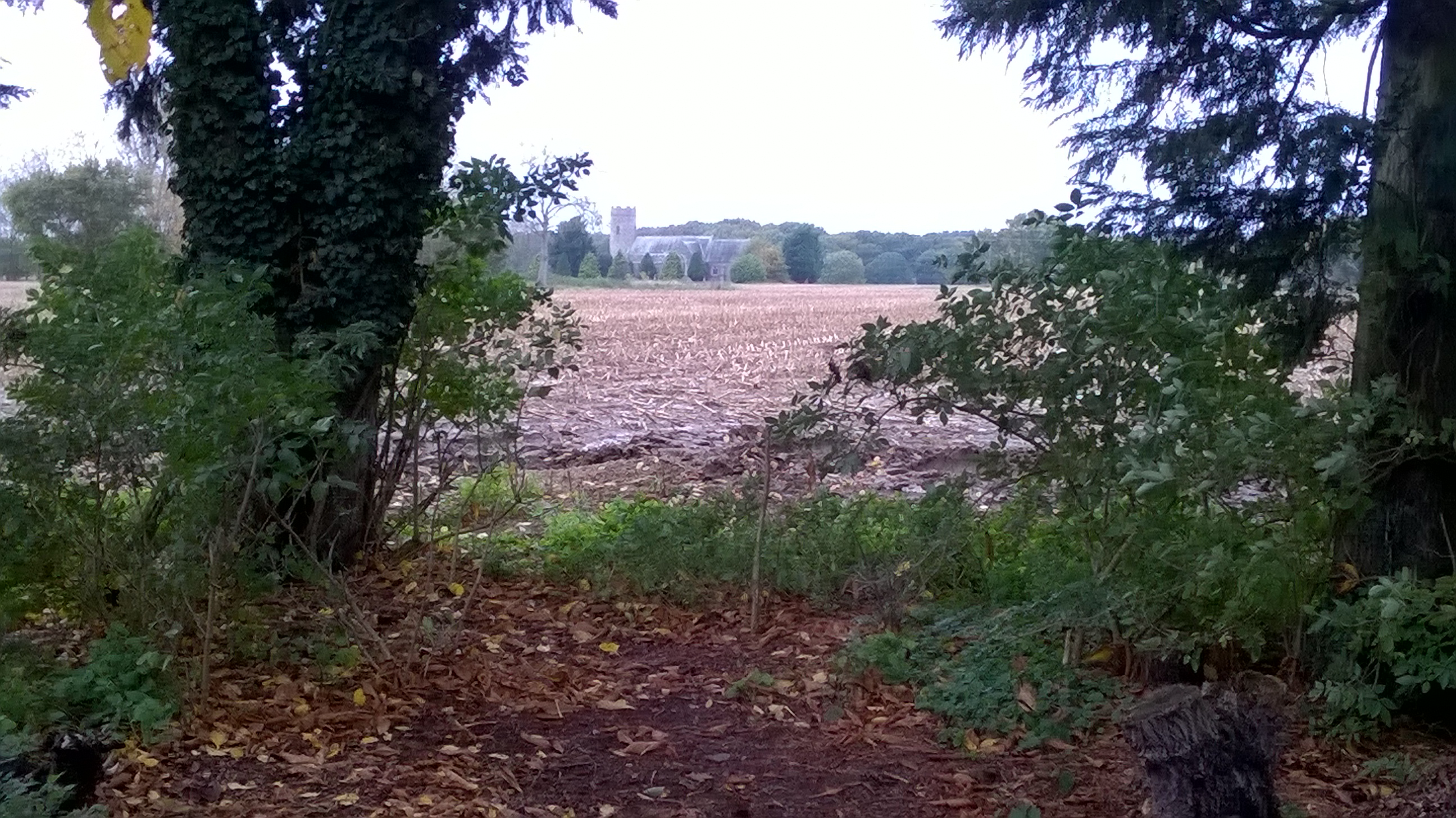
Elsewhere in the garden its been leaf collecting time, and having cleared last year’s leaf mould pile, I’m slightly reorganising the storage areas to accommodate a new supply of firewood (yet to be cut and collected) from our near neighbours. In doing this I’ve opened up a new vista towards the church..maybe a spot for another bench methinks?
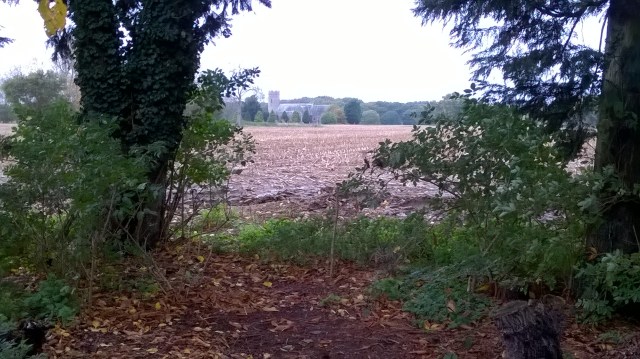
New view...one to take advantage of with a new seat?

New view…one to take advantage of with a new seat?

I had hoped to have shown you some pictures of the beautiful leaves on the Sumachs, but once again a little breeze and they soon disappear! It’s also been a time of hedge cutting and I’m pleased that this big job- with the added task of reshaping the big Laurel hedge in the main garden- has now been completed, as has fence painting. I spent one morning spreading 7.5 tonnes of shingle we had delivered which certainly improves the look of the drive, though in places it’s rather like Sheringham beach!

I recently made start on some plant moving, specifically a large white rose bush that was being crowded out by a vibrant Choisya and Viburnum. This helps to plug a gap in one of the mixed borders. I’ve also been mentally logging which other plants need to be shifted, including a Myrtle (which I’ll leave until early spring) and some other shrubs I’ve earmarked for the new pond garden. The plants I now have for this area – including some purchases earlier in the year – are now making a nice little collection and I can’t wait to finalise my design and get on with the pond and its surrounds.

Some of the plants I've been collecting for the new pond garden

Some of the plants I’ve been collecting for the new pond garden

I also have a big bag of tulips of various kinds as well as some Alliums I want to get into some of the containers we have and some in the borders. A job for next month.

As you’ll read in my other posts I’ve been putting in some sessions at Blickling Hall and also went over to Gressenhall museum last week to plant up some tubs with some drought tolerant perennials; two varieties of Cistus and a compact Buddleja, to be precise, with a few small ivies to add ‘edge interest’.

I gave a talk to a local gardening group the other night on the basics of garden design. This went well and I took the opportunity to plug my new garden design course (‘Your Garden- your Design’) I’m hoping to run at Blickling Hall from February next year.
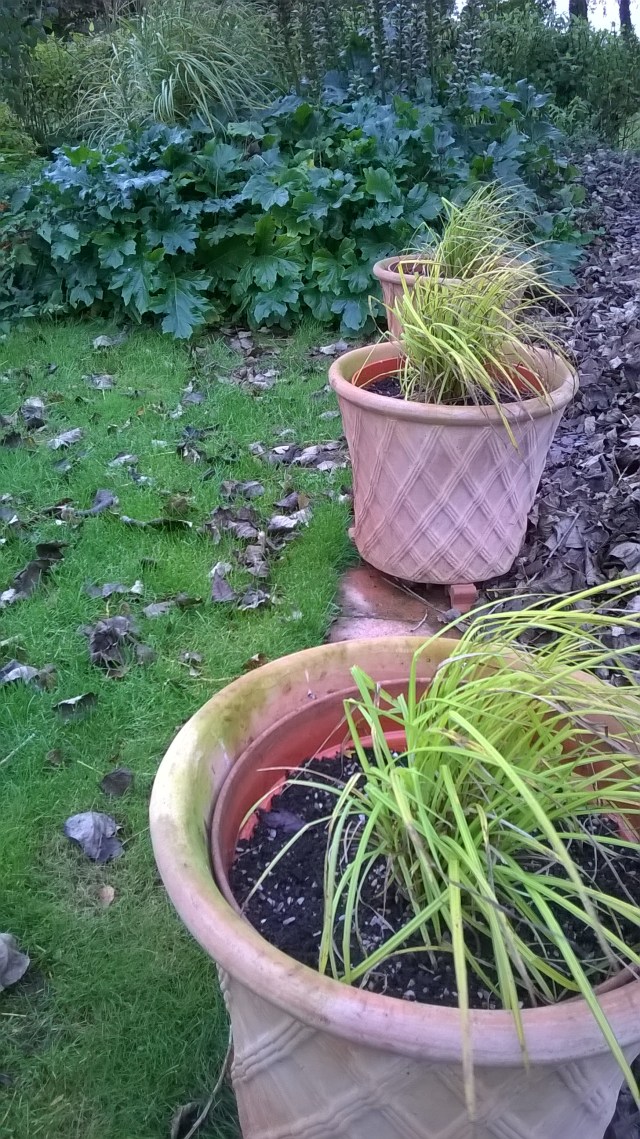
The switchover has begun...the tender plants formerly in these pots are on their way to the greenhouse..to be replaced by Carex elata aureum ('Bowles Golden Grass') and tulips to come..

The switchover has begun…the tender plants formerly in these pots are on their way to the greenhouse..to be replaced by Carex elata aureum (‘Bowles Golden Grass’) and tulips to come..

I do hope you and Lise are in good health as the days shorten and the temperatures drop. No doubt you’re enjoying watching someone else do the autumn tasks now that you’re getting some extra gardening help!

All the best old friend,

Old School Gardener


Purple Ranunculus

Purple Ranunculus

WP_20150907_12_37_56_Pro

Rose hips at Howick, Northumberland

Peter and Ed spreading shredded bark in the new 'Bug Village'

Peter and Ed spreading shredded bark in the new ‘Bug Village’

Apologies for the title, but I couldn’t resist it. I guess a more serious alternative would be ‘weaving and strewing’!

So my latest session at Blickling Hall involved working with fellow volunteer Peter and Gardener Ed on a new project in part of the Dell Garden; this is an area that’s looked a little neglected for some time and it was good to see some work to create something different.

This was a really fun, creative day as we helped Ed work up his idea of creating a ‘Bug Village’ of different insect hotels/habitats (with fun historical references to Blickling’s owners) in a largely shady and overgrown spot.

Ed had already done some clearing of the ground and had in his mind a rough layout. We started by continuing the hazel pea stick fence he’d begun which provides a really effective, simple, permeable barrier through which you can see into different parts of the area. These sticks are harvested every year from the Estate and put to use to support climbers and vegetables of various sorts. Peter hammered in a metal fence post to create holes about 6″ apart and I pushed home the sticks and wove them together.

After this we collected several loads of shredded bark and strew these over the areas where the bug hotels were to go- a mixture of different types of habitat and mixed in with some impressive stumps and enormous slices of chestnut tree felled elsewhere in the estate and, as Ed said ‘no good for firewood’. It was great ‘designing on the hoof’ with Ed and Peter, creating bays and spots where different elements of the layout could be best fitted in.

In particular there is an elevated spot overlooking the rest of the space which would make a wonderful spot for a seat, and Ed had already identified a wonderful piece of timber- a half round slice of Oak, I think, which would make the perfect base for this. We also helped to gather smaller edging logs which further helped to define the space and again filled in around and shrubs trees with more shredded bark.

On the way...

On the way…

It will be great to see how Ed progresses this in the coming weeks and what visitors think of this new feature- created from recycled materials from around the Estate.

 Further Information:

Blickling Hall website

Blickling Hall Facebook page

A 360 degree tour of Blickling Hall

Old School Gardener


Source: Schöck solution combines architecture with horticulture

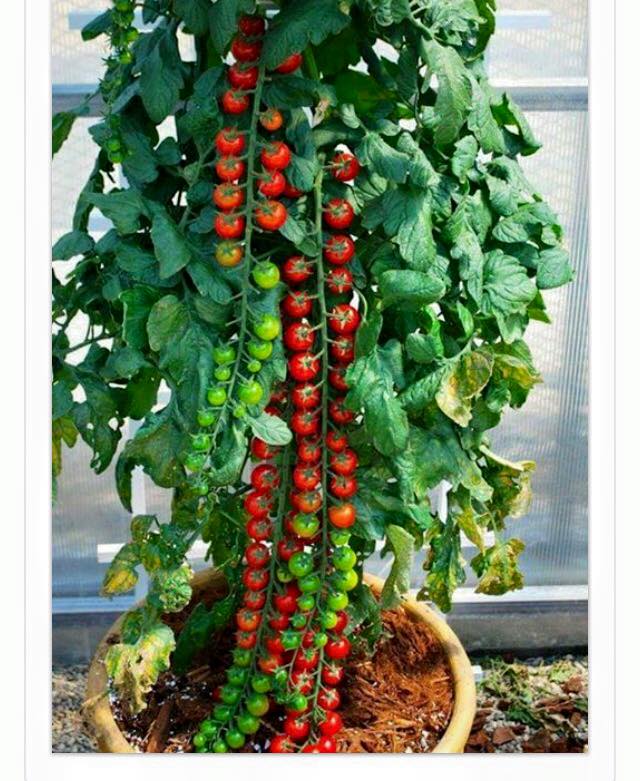
Necklace Cherry Tomatoes

Necklace Cherry Tomatoes

WP_20150911_14_11_48_ProSo, we were on our way home from Northumberland and stopped off for a lunchtime visit to Goddards, a National Trust property on the outskirts of York.

This one time home of Noel Goddard Terry, owner of the famous chocolate-making firm Terry’s of York was designed by architect Walter Brierley in the Arts and Crafts style and is complemented by four acres of gardens, designed by George Dillistone.

The house has selected rooms displayed to give glimpses into the family home and workings of a chocolate factory. You’ve probably heard of (if not eaten) a Terry’s Chocolate Orange (traditional for a British Christmas!), but did you know there was also once a Chocolate Apple?!

This slideshow requires JavaScript.

The garden includes yew-hedged garden rooms, a bowling green, wilderness gardens and plants for every season; it is also an oasis for wildlife.

On our visit we met an enthusiastic Garden Volunteer, whose role was to engage visitors among other things. The gardens were delightful, and obviously a lot of work is going into bringing them back to their Arts and Crafts roots. I particularly loved the classic terrace overlooking the garden, with its wicker chairs ready for a Sunday afternoon doze in the sun. Oh, and we had a lovely lunch in a traditonal style restaurant in the house too.

Further Information: National Trust website

Old School Gardener


Finding Nature

Nature Connectedness Research Blog by Prof. Miles Richardson

Norfolk Green Care Network

Connecting People with Nature

Discover WordPress

A daily selection of the best content published on WordPress, collected for you by humans who love to read.

Susan Rushton

Celebrating gardens, photography and a creative life

Unlocking Landscapes

Writing, photography and more by Daniel Greenwood

Alphabet Ravine

Lydia Rae Bush Poetry

TIME GENTS

Australian Pub Project, Established 2013

Vanha Talo Suomi

The Journey from Finnish Rintamamiestalo to Arboretum & Gardens

Marigolds and Gin

Because even in chaos, there’s always gin and a good story …

Bits & Tidbits

RANDOM BITS & MORE TIDBITS

Rambling in the Garden

.....and nurturing my soul

The Interpretation Game

Cultural Heritage and the Digital Economy

pbmGarden

Sense of place, purpose, rejuvenation and joy

SISSINGHURST GARDEN

Notes from the Gardeners...

Deep Green Permaculture

Connecting People to Nature, Empowering People to Live Sustainably

BloominBootiful

A girl and her garden :)