Latest Entries »

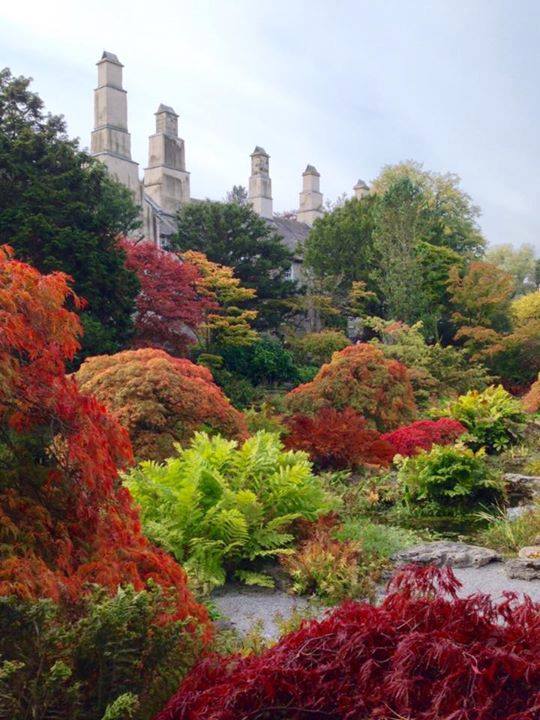
Sizergh Castle, Cumbria- picture via National Trust

Sizergh Castle, Cumbria- picture via National Trust

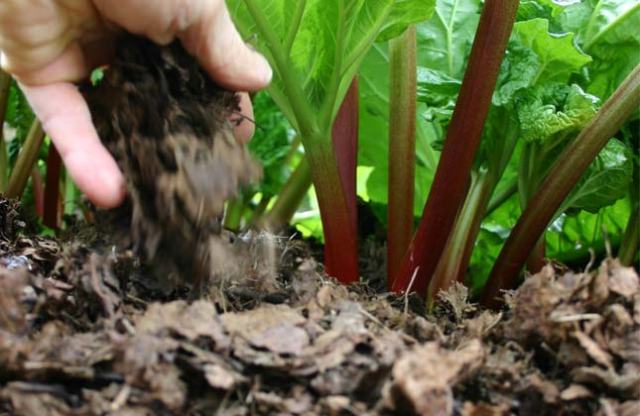
rhs compostMulch- a layer of natural material spread thickly over the soil cuts down the need for watering, reduces weeding and protects and improves the soil. Mulch matting is also available from most nurseries and garden centres and can be an effective way to conserve moisture and prevent weeds.

Six types of loose mulch

  1. Bark chippings- attractive, but expensive (unless you have a supply from your own felled timber or know a friendly tree surgeon who will give you a load for free). Large chunks will last a long time and don’t blow around, though deep wood chips won’t rot quickly. Use chippings that are at least a year old as the early rotting process will ‘rob’ the soil of nitrogen.

  2. Cocoa shells- pricey but has more nutrients than most mulches. They bond together when wet so they won’t blow away.

  3. Garden compost, manure and leaf mould- free, but soon rots away. Can spread weeds unless well broken down. Compost and well-rotted manure add goodness to the soil as well as improving and protecting it, leaf mould acts as a protective layer and improves soil texture, but is less nutritious.

  4. Grass clippings- free, but turns yellow and can introduce weeds. In wet weather, they can become slimy.

  5. Composted bark- attractive, but can blow around and may support wind-borne weed seeds. Does not last as long as chipped bark.

  6. Gravel- attractive, and long -lasting, but does not add organic matter to the soil. Various grades available.

Oh, and straw can also be used around vegetables and of course strawberries (to conserve moisture and protect ground laying fruit), and if you can get hold of it, shredded paper also works!

Shredded paper mulch around dahlias

Shredded paper mulch around dahlias

No-Dig gardening, Sheet Mulching and Hugelkultur

Sheet mulching, No-dig gardens and Hugelkultur have a fair bit in common; basically using organic matter in large quantities to provide a rich growing medium without the need for digging. It depends what school of gardening you’re from as to what your preference is, coupled with your conditions.

No dig gardens rely on adding copious layers of organic material over the soil without digging it, allowing the mulch to break down and form a rich top soil, into which vegetables and fruit can be directly planted. You need lots of organic material.

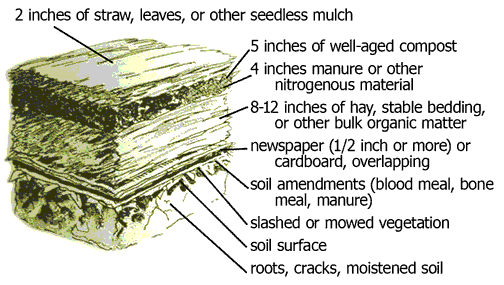
Sheet mulching

Sheet mulching

Sheet mulching (or ‘lasgane gardening’) has a similar premise to no-dig. Smother the undesirable plants, mulch heavily, make a ‘lasagne’ of carbon and compost, and plant lots. A good initial burst of energy brings minimal labour further down the line!

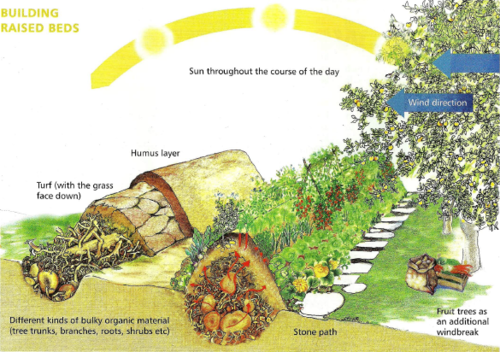
Hugelkultur

Hugelkultur

Hugelkultur (‘hill culture’) are no-dig raised beds with a difference. They hold moisture, build fertility, maximise surface volume and are great spaces for growing fruit, vegetables and herbs.

Effective mulching

Apply at the right time- mulches need to be in place by mid spring when the soil is at its wettest but is no longer cold. There is no point applying a mulch in dry summer conditions because it will stop moisture from getting to the plants and they will require even more watering than usual. Applying compost or well-rotted manure to fruit bushes and trees in the autumn and early spring will give them a boost, and applying leaf mould to bare soil in Autumn can be an effective protective layer to reduce the leaching away of nutrients in the soil during wet winters.

Apply the right thickness- to ensure effective weed control, apply a minimum thickness of loose organic material or gravel of 5cm (ideally 7cm) straight onto the soil surface.

Feed and water plants- add fertiliser before applying a mulch in spring time. Lay a seep hose under mulch matting so that you can supply water easily if needed.

Mulch in rows- when planting vegetables or bedding plants in rows, lays strips of mulch matting along the bed between the plants rather than planting them through the matting.

Problems with Mulches

  • Some mulches can be unsightly or troublesome when scattered by foraging birds

  • All mulches provide refuge for slugs and some types are a refuge for snails

  • If mulches are laid in direct contact with tree stems they can cause it to soften, making it vulnerable to disease

  • A build up of mulch can produce a hard layer, which is difficult for water to penetrate. Avoid this by only replacing mulch when it has rotted away or fork the remaining mulch into the soil
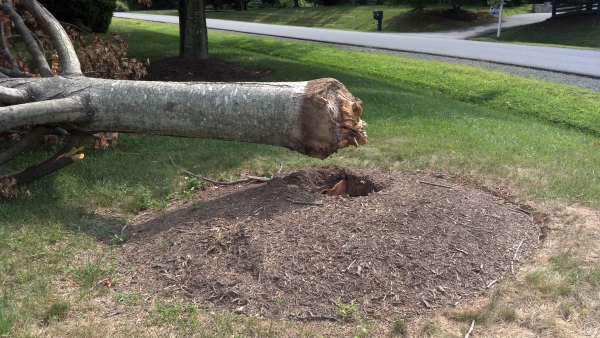
The outcome of piling mulch up around tree stems- 'volcanoes'

The outcome of piling mulch up around tree stems- ‘volcanoes’

Sources and further information:

‘Short Cuts to Great Gardens’- Reader’s Digest 1999

RHS- Mulches and mulching

RHS- Fruit Trees- feeding and mulching

Milkwood blog– S is for Sheet mulching

Permaculture – Hugelkultur

Proper mulching- no mulch volcanoes

Old School Gardener
Blickling Hall, Norfolk

Blickling Hall, Norfolk

What Children Can Learn from a Cardboard Box

Source: What Children Can Learn from a Cardboard Box

Picture by Famartin

Picture by Famartin

 I see its been some months since my last post in this series, so it’s about time I got going and finished the alphabet! The ‘N’ in my garden trees series is Nyssa sylvatica, introduced to the UK 250 years from the U.S. and considered by many to be the finest of that country’s native trees.

Common name: Tupelo, black gum tree, common tupelo tree, cotton gum, pepperidge, sour gum tree

Native areas: Nyssa sylvatica grows in various uplands and in alluvial stream bottoms in eastern north America, as far south as florida and locally in central and southern Mexico Optimum development is made on lower slopes and terraces in the South eastern U.S.

Historical notes: Introduced from America in 1750, Nyssa sylvatica’s genus name (Nyssa) refers to a Greek water nymph; the species epithet sylvatica refers to its woodland habitat. On Martha’s Vineyard in Massachusetts it is called “beetlebung”, perhaps for its use in making the mallet known as a beetle, used for hammering bungs (stoppers) into barrels.

Features: Nyssa are deciduous trees with ovate leaves colouring brilliantly in autumn; inconspicuous flowers are followed by small, dull purple fruits. N. sylvatica is small (generally 15-25 metres tall), slow-growing and with an elegant, broadly conical habit with a maximum spread of 6-10 metres. Ovate leaves to 15cm in length turn brilliant red and yellow in autumn. It has a trunk diameter of around 50–100 centimetres. These trees typically have a straight trunk with the branches extending outward at right angles. The bark is dark grey and flaky when young, but it becomes furrowed with age, resembling alligator hide on very old stems. Though insignificant to look at, its flowers are an important source of honey and its fruits are important to many bird species. Hollow trunks provide nesting or denning opportunities for bees and various mammals. It is the longest living non-clonal flowering plant in Eastern North America, capable of reaching ages of over 650 years.

Uses:  Nyssa sylvatica gained the Royal Horticultural Society’s Award of Garden Merit (AGM) in 2002. It is an architectural tree requiring little or no maintenance. Useful in parks and large gardens, it is often used as a specimen or shade tree. The tree is best when grown in sheltered but not crowded positions, developing a pyramidal shape in youth, and spreading with age. The stem rises to the summit of the tree in one tapering unbroken shaft, the branches come out at right angles to the trunk and either extend horizontally or droop a little, making a long-narrow, cone-like head. The leaves are short-petioled and so have little individual motion, but the branches sway as a whole. The spray is fine and abundant and lies horizontally so that the foliage arrangement is not unlike that of the beech (Fagus). Its often spectacular autumnal colouring, with intense reds to purples, is highly valued in landscape settings.

Growing conditions: Grow in moist, humus-rich, fertile soils with shelter from cold, dry winds. Resents transplanting so grow from small containerised plants. They do not tolerate lime soils.

Autumn colour- picture by Jean pol Grandmont

Autumn colour- picture by Jean pol Grandmont

Further information:

Wikipedia

RHS- Nyssa sylvatica

Barcham trees directory- Nyssa sylvatica

Old School Gardener

Here’s the second  and concluding part of my picture gallery featuring the wonderful textures and artful effects of nature. The pictures were taken mainly at Calgary Bay on the Isle of Mull, Scotland.

This slideshow requires JavaScript.

Old School Gardener

WP_20151029_12_25_49_ProA rather dull, overcast day greeted we garden volunteers on our latest session at Blickling. The team was rather depleted, also, with a few people away on holidays.

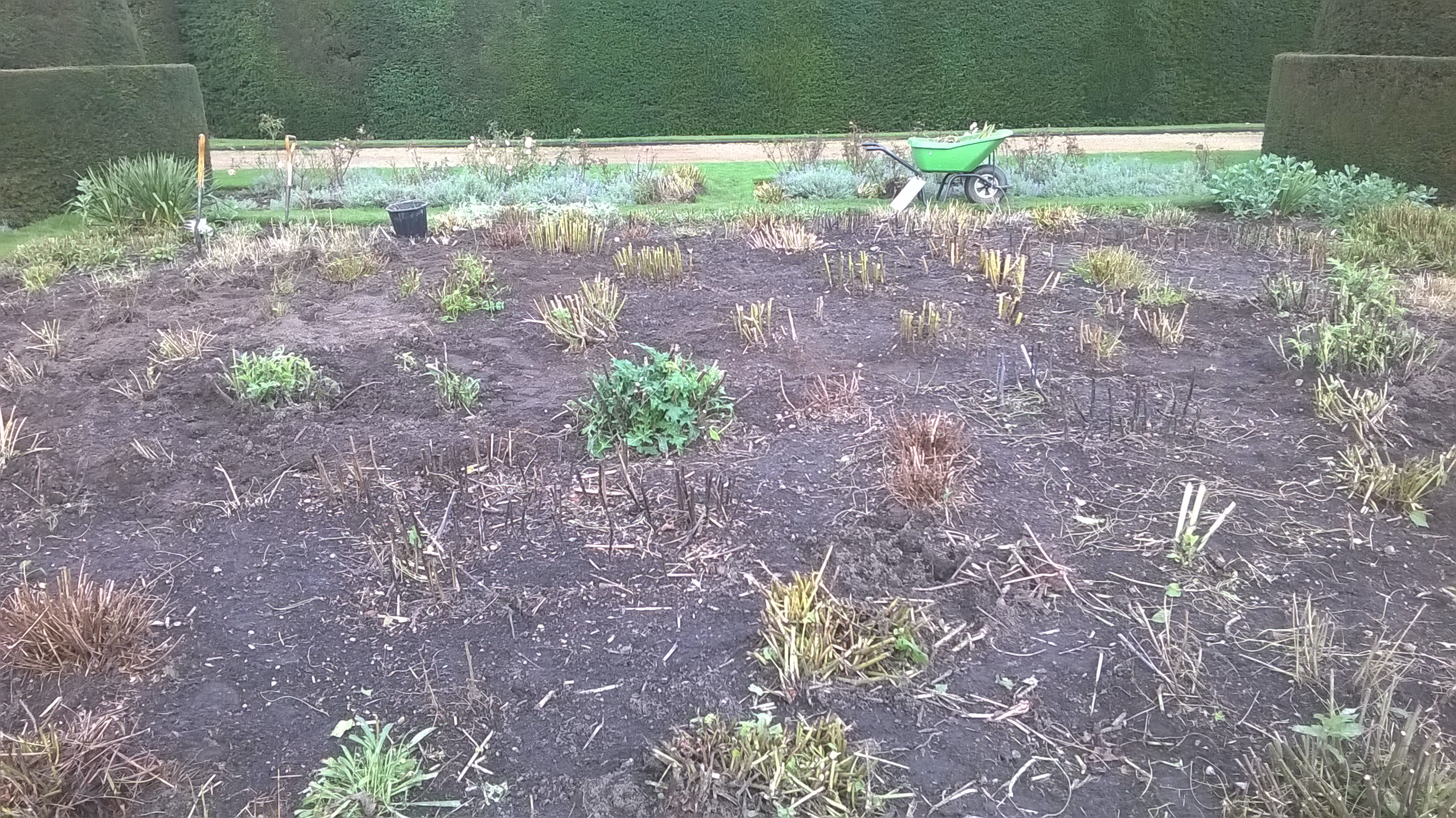
It was to be a day of ‘stalking’- cutting down the stems of the many herbaceous plants in the long border overlooking the parterre. It was also rather busy and noisier than usual; as it’s ‘half term’ here there were lots of families around walking the gardens and enjoying some community education activities in a tent by the lake.

In the morning we continued the cutting and tidying process already begun the day before- we had about 7/8 of the border left. Apart from the occasional entanglement with the floppy stems of climbing roses, it was relatively straightforward; I dived into the borders and focused on cutting, with others doing this and collecting the cuttings and raking over the border to make it look tidy. Once this is finished (the main parterre borders had already had the treatment), the borders will be lightly dug over and then mulched with compost to provide winter cover for the soil and help to feed the plants and improve soil texture. By the end of the session we had virtuially completed the whole border- and produced several truck loads of cuttings which will be shredded and added to the Hall’s large compost heaps.

Towards the end of the morning I took a break and ‘stalked’ two people from the house and collections team who were cleaning the fountain in the middle of the parterre.  They were using toothbrushes, water sprayers and hands to peel away quite a bit of muck, accumulated over a few years. It was interesting to see how the definition of the stonework dramatically improved as they worked their way across its surface. It looks like the basic structure is, in the main, pretty good, but it is also clear that there are some areas in need of repair.

WP_20151029_12_00_58_ProFrom here I ‘stalked’ Assistant Head Gardener, Steve, who was painstakingly digging over one of the four parterre borders; to both split some of the bigger herbaceous plants and at the same time try to remove bindweed which seems to be a long term problem here.

Part One of Steve's Parterre Saga...

Part One of Steve’s Parterre Saga…

Steve was sanguine about the weed returning, but he was spacing out the plants so that it would be relatively easy to get in the border to remove it when it does return.

We talked about the new heating system being installed at Blickling, which you may have heard about. This is based on a water source heat pump which acts rather like a fridge in reverse- a coolant fluid is pumped into a long series of plastic pipes which are sunk into the lake and these are connected to a pump which draws in the warmed fluid and a heat exchanger in the house transfers this to the hot water system. Apparently there’s a gas back up boiler also being put in to cope with especially cold weather. This is set to reduce the £30,000 per annum fuel bill the Trust currently pays out for heating. Here’s a short video clip about the project.

After lunch my final ‘stalk’ was over to the Bug Village I had been working on last week, but was sorry to hear that gardener Ed -whose project this is- had seriously damaged his back trying to lift some of the large pieces of trunk he was installing in the new area- I wish him well soon.

The ‘Bug Village’ is starting to take shape nicely with several up turned stumps put in place and some further woven hazel fencing along with the large chunk that will provide a lovely seat back…in due course.

  Further Information:

Blickling Hall website

Blickling Hall Facebook page

A 360 degree tour of Blickling Hall

Old School Gardener


On the Beach: Sand

On our recent trip to the Hebrides I was taken by the beautiful textures and ‘art works’ that nature can produce; in this case on the beach and featuring some very subtle effects. Here’s the first of a two part gallery of pictures I took, mainly at Calgary Bay on the Isle of Mull.

This slideshow requires JavaScript.

Old School Gardener

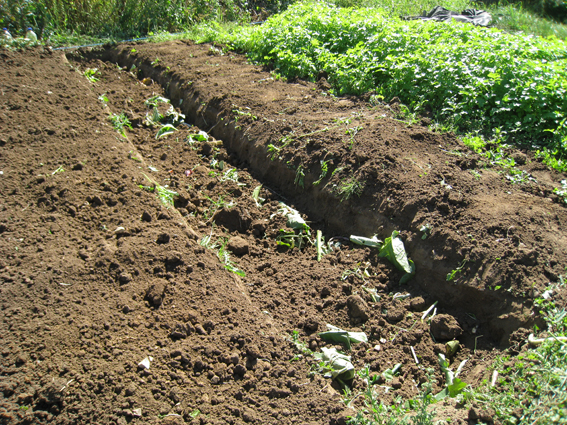
compost-trench-after‘Trench & prepare ground with compost – sow as yet all sorts of greenes.’

John Evelyn 1686 (published 1932)

Old School Gardener

praying angels orchids

praying angels orchids

Finding Nature

Nature Connectedness Research Blog by Prof. Miles Richardson

Norfolk Green Care Network

Connecting People with Nature

Discover WordPress

A daily selection of the best content published on WordPress, collected for you by humans who love to read.

Susan Rushton

Celebrating gardens, photography and a creative life

Unlocking Landscapes

Writing, photography and more by Daniel Greenwood

Alphabet Ravine

Lydia Rae Bush Poetry

TIME GENTS

Australian Pub Project, Established 2013

Vanha Talo Suomi

The Journey from Finnish Rintamamiestalo to Arboretum & Gardens

Marigolds and Gin

Because even in chaos, there’s always gin and a good story …

Bits & Tidbits

RANDOM BITS & MORE TIDBITS

Rambling in the Garden

.....and nurturing my soul

The Interpretation Game

Cultural Heritage and the Digital Economy

pbmGarden

Sense of place, purpose, rejuvenation and joy

SISSINGHURST GARDEN

Notes from the Gardeners...

Deep Green Permaculture

Connecting People to Nature, Empowering People to Live Sustainably

BloominBootiful

A girl and her garden :)