
On my Christmas visit to Portugal I was rather taken by the florists’ displays at the Timeout Market in Lisbon and at the Forum in Almada…


Old School Ga
Old School Ga
 Before starting to lay foundations for a paved area, decide on the position of plants around a terrace or patio and in planting pockets within the space and leave the areas free of foundation material and paving (wooden shuttering can be used for larger areas). Once the works are over, replace the topsoil of the planting areas with John Innes number 3 compost (and grit if you’re putting in things like Thymes). This will ensure a weed free growing medium with the right nutrients so plants establish quickly.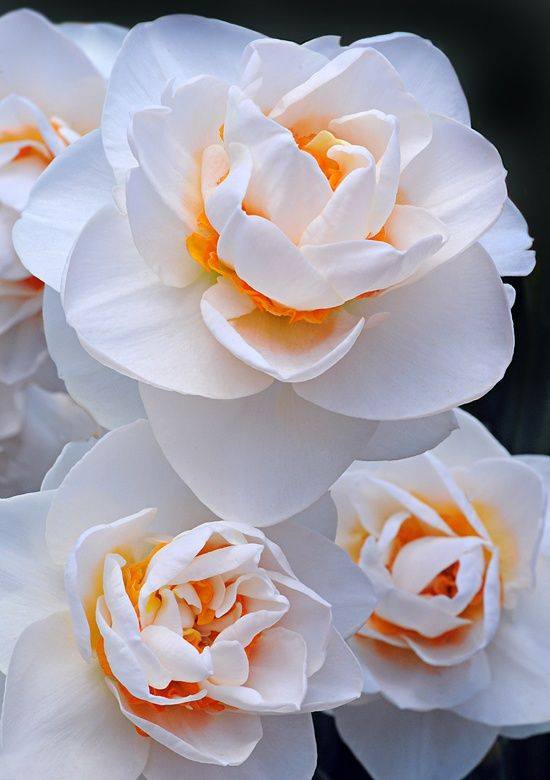
Double Daffodil by Cindy Dyer
 This wonderful tree, native to the U.K., is often associated with Scotland. It certainly suits bird life as the profuse red autumn berries provide a lot of autumnal sustenance. As they are not regular in shape, the parent Rowan can be grown as a multi-stemmed specimen to achieve more uniformity of shape, or alternatively one of it’s clones, such as Sorbus aucuparia ‘Rossica Major’ can be used.


 Uses: Rowans are planted in mountain ranges to fortify landslides and avalanche zones. It is also used as an ornamental plant in parks, gardens, or as an avenue tree. It is well suited to wildlife gardens. Cultivars are vegetatively propagated via cuttings, grafting, or shield budding. Ornamental cultivars include:


Mature S. aucuparia autumn colour

By Alice Marks
 Skimming the eye across the colourful chart of the Sustainable Development Goals (SDGs), it is easy to spot a couple which are intrinsically and directly linked to agriculture, but a closer look reveals that they are in fact all linked to agriculture. A healthy global agricultural sector underpins and supports so many aims of the SDGs that its development will be important for their overall success. As sustainable agriculture is essential for sustainable food systems and livelihoods, here is a breakdown of how agriculture, farming and nutrition fit into the first 7 goals
1. No Poverty
Over 70% of the world’s poorest people live in rural areas, and rely heavily on agriculture for their survival and livelihoods. According to the World Bank, evidence shows that GDP growth generated in agriculture has large benefits for the poor, and is at least twice as effective in reducing poverty…
View original post 958 more words
 Image by Ventrilock from freedigitalphotos.net
As 2016 begins many international development issues are threatening to intensify – the crisis in Syria and the thousands of people now refugees, the growing global power of ISIS, and the World Bank’s recently released flagship report, Global Economic Prospects, which predicts a “perfect storm” of financial turmoil coupled with slowing of growth in emerging markets this year. A recent article named the 10 news stories most likely to dominate the news this year as being:
And while news organisations are looking ahead to the events that will shape the world in 2016, others are focused on how we can prevent and solve some of these global development…
View original post 491 more words
 As the organisation’s website explains, the National Gardens Scheme has a rich and interesting history that is closely connected with nursing in the UK. The origins of today’s sister organisations covering England and Wales, and Scotland go back over a hundred years…
A council member, Miss Elsie Wagg, came up with the idea of raising money for charity through the nation’s obsession with gardening, by asking people to open their gardens to visitors and charging a modest entry fee that would be donated.
 We opened Old School Garden up to the public in 2013 for one day (not as part of the NGS, but with proceeds going to three local good causes), so I know how much hard work, excitement and enjoyment comes from doing that (we might have another go one day…). I’m also an enthusiastic visitor to other gardens, as you’ll have seen from many posts on this blog!
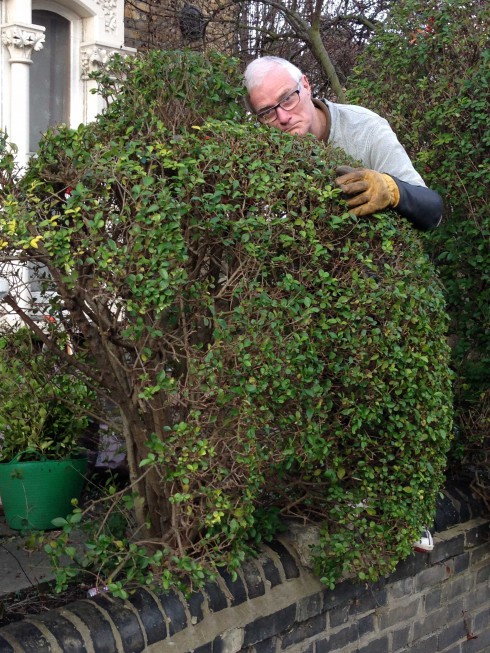 Here’s Tim. Topiary Tim. He’s looking a bit sad. One of our elephants has had to go.
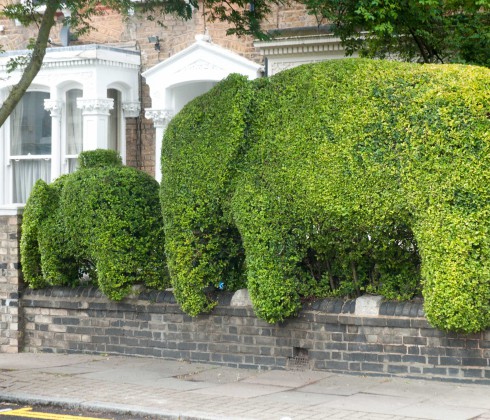 Up until the end of last year, all was looking well in the herd. But then, fairly swiftly, telltale signs of honey fungus were spotted. There was dieback on the trunk and ears of the baby elephant.
At first we were in a state of denial. Maybe somebody had poured some nasty chemicals on the ground or perhaps wandered past with a flame thrower? But who were we kidding. We dug up roots of the wilting/dead trunk and ears, and our worst suspicions were confirmed. White fungus was clearly visible between the bark and wood.
Unfortunately, there is no cure for Honey Fungus. On the RHS website it says, ‘the only effective remedy is to excavate and destroy, by burning or landfill, all of the infected root and stump material. This will destroy the food base…
View original post 276 more words
Nigel Boldero aka 'Old School Gardener'
 | Nigel Boldero on Fighting to Reduce Climate Cha… |
 | Anonymous on Fighting to Reduce Climate Cha… |
| Anonymous on PicPost: Carrot, my foot! |
| 18 Surprising Hydran… on Plantax 16: Hydrangea the wate… | |
| Nigel Boldero on Poppyland: A Victorian romance… |
| Anonymous on Poppyland: A Victorian romance… |
| Anonymous on Plants to die for… |
 | Isabella Childress on PicPost: Forest, but not as we… |
 | Happiness Factor on Is child-friendly planning a l… |
 | zidane on Top Tip: On a Pedestal- make m… |


Nature Connectedness Research Blog by Prof. Miles Richardson
Connecting People with Nature
A daily selection of the best content published on WordPress, collected for you by humans who love to read.
Celebrating gardens, photography and a creative life
Writing, photography and more by Daniel Greenwood
Lydia Rae Bush Poetry
Australian Pub Project, Established 2013
The Journey from Finnish Rintamamiestalo to Arboretum & Gardens
Because even in chaos, there’s always gin and a good story …
RANDOM BITS & MORE TIDBITS
.....and nurturing my soul
Cultural Heritage and the Digital Economy
Sense of place, purpose, rejuvenation and joy
Notes from the Gardeners...
Connecting People to Nature, Empowering People to Live Sustainably
A girl and her garden :)


 Old School Garden