Archive for November, 2014


fall-lawn1Here’s another extract from a book I bought in a charity shop in the summer…..

Besom’s Truism:

No matter how much dust you sweep under the carpet, you still can’t sweep leaves under the lawn.

Laws of Lawn Clearance:

1. Any lawn cleared thoroughly of course grass and moss will reveal an area of mud supporting deep-rooted plantains.

2. Mud patches never need mowing.

3. The cleared lawn reveals that there was no cultivated grass in the first place.

Digital Law:

Flymos like toes.

 lawn cut fun

From : ‘Mrs. Murphy’s Laws of Gardening’ – Faith Hines (Temple House books, 1992)

Old School Gardener


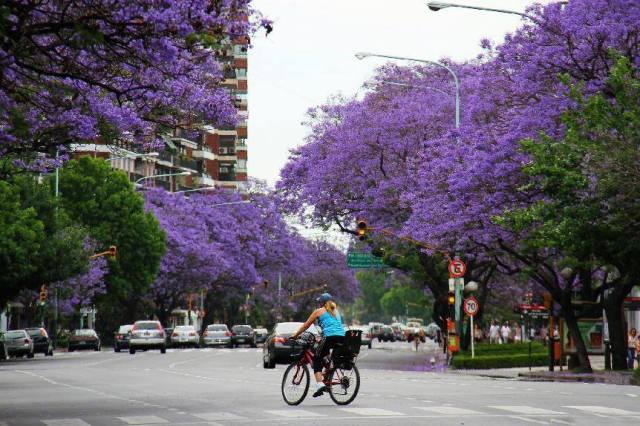
buenos aires journey to work

Jacaranda Trees, Buenos Aires, Argentina

Old School Gardener

Growing Prosperity

canwefeedtheworld's avatarOne Billion Hungry: Can We Feed the World?

The adoption of new innovations such as irrigation systems, drought-resistant hybrid seeds or gaining access to asset-backed micro loans by smallholder farmers is a complicated issue. Nearly 60% of the global population live on less that $4 a day. Of this, 80% live in rural areas and agriculture is the primary source of income for over 80% of this huge rural population.

Adopting suitable innovations could improve the lives of the 2.5 billion people that rely on agriculture for their livelihoods. However, many innovative technologies remain widely inaccessible, typically in remote rural areas where governments and traditional aid has fallen short. In response to this, there has been an upsurge of start-up companies aiming to connect farmers to new innovations. By offering new products, services and markets to smallholder-farmers, farmers can increase their incomes and enjoy an improved quality of life.

Connecting farmers to innovations
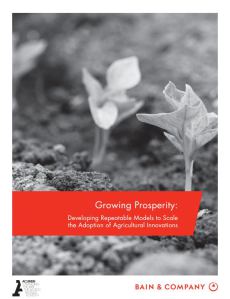
Growing Prosperity coverReleased on the 17th of November, managing…

View original post 860 more words

robertscribbler's avatarrobertscribbler

October 2014 Hottest on Record

(October was again a global temperature record setter. Image source: NASA.)

NASA’s monthly global temperature analysis is in and the results are once again record-making. For according to NASA’s global monitor, world temperatures were 0.76 degrees Celsius above the Earth average for the mid 20th Century.

This high temperature departure ties 2005 for hottest in NASA’s 136 year record. A temperature level that global ice core data points toward being hotter than at any time in the past 400,000 years. A record hot month in a string of record hot months for 2014. A resurgence to record high marks amidst an unprecedented spate of rising temperatures that has lasted now for more than a century running.

Global land ocean temperature index

(Global temperatures have risen by more than 1 degree C above their low mark at the start of the 20th Century. It is a human-driven pace of warming 15-20 times faster than at…

View original post 748 more words

toysHere’s my second extract from the book ‘Noah’s Children’ by Sara Stein. Here she observes how American (probably western) culture has increasingly divorced children from directly finding things they need or are interested in; things that children used to find outside in the natural world:
‘Our culture makes the point that much of what most interests children is not obtainable by them. It’s our cotton balls and cinnamon sticks, not their free-for-the-gathering furry mullein leaves or minty wintergreen. What rolls or smears or makes a noise when it is squeezed is a truck we’ve bought, a set of finger paints, a stuffed animal- not the log or mud or toad that children might obtain for themselves. They can’t even get some berries for their breakfast unless we buy the fruit.’

I’d love to hear your thoughts on this and the wider issues raised…

Old School Gardener

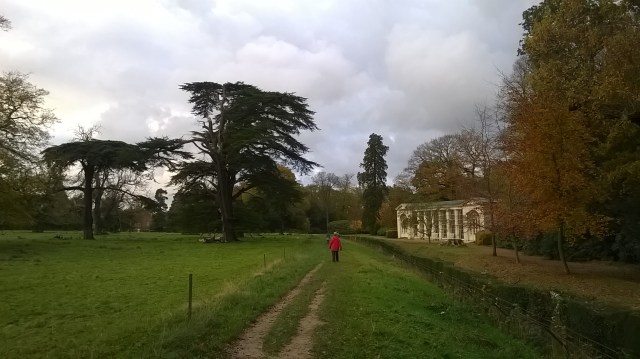
WP_20141117_15_07_28_Pro

Cedars and the Orangery at Blickling Hall, Norfolk this week

Old School Gardener

IMG_0851Our recent visit to Portugal included a longer trip 1 hour north from Lisbon to a fascinating park (it is too big to be called a garden)- in fact it is billed as the biggest oriental park in Europe, stretching to around 35 hectares.

Developed within the Quinta dos Loridos vineyard, the Buddha Eden Peace Park was inspired as recently as 2001, when wealthy Portuguese investor and art patron José Berardo was shocked by the Taliban government’s destruction of the Giant Buddhas in Afghanistan.  In response to the demolition of these masterpieces of the late Gandhara period, Berardo initiated the Buddha Eden in an homage to these cultural and spiritual monuments.

Buddhas, pagodas, terracotta statues and carefully placed sculptures (modern and western) can be found throughout the park. It is estimated that some six thousand tons of marble and granite were used to create this monumental work of art.

This slideshow requires JavaScript.

It is certainly an impressive achievement and one which has been laid out to a monumental scale. There are beautifully framed views and a wide range of interesting features to capture your attention as you wander round the clearly defined pathways. The planting, as you might expect at this scale, is simple and must look dramatic earlier in the season when masses of Agapanthus are in flower.

The central staircase is the focal point of the park, where the reclining golden Buddha, despite its size, creates a sense of calm.

At the central lake, Koi (Japanese carp) fish can be seen, and sculpted dragons rise out of the water.

This slideshow requires JavaScript.

There are seven hundred hand-painted terracotta soldiers, each of them unique copies of those which were buried some 2,200 years ago in China. These looked to be in need of repainting (and in one or two cases more significant repair), but being able to walk among them (they were all well over 6 feet tall) was a strangely unnerving (but enjoyable) experience.

The park is certainly a fantastic visitor experience, though by the end of our visit I was feeling a little ‘over buddhad’ and almost overwhelmed by the monumentality of everything. Perhaps some thought needs to be given to creating some smaller, more human scale spaces which can complement the rest of the Park – and in doing so, perhaps making the experience of this even more intense.

The park seems to be unsure of what it is trying to be, perhaps at a stage of transition from one man’s passionate and bold move to preserve a cultural legacy to something akin to a modern-day theme park- nicely captured by the electric train that ferries visitors unwilling or unable to walk around the site!

Old School Gardener

gressenhallfw's avatarGressenhall Farm and Workhouse

This week’s blog comes from Sophie Towne and explores another exciting object found in the Collections Centre:

You are a refined and well-mannered lady quietly sewing by the fireside contemplating the latest family scandal, but you find your face is turning a rather un-dignified shade of pink because of the heat of the fire. So what do you need? A fire screen of course!

image 12

We have many fire screens within Norfolk Museums Service and several excellent examples live at the Norfolk Museums Collection Centre. These objects are the quintessential showcase piece for domestic history. They are beautiful objects and it’s not hard to imagine the gentle lady of the house reclining in front of the fire with the screen to protect her delicate skin.
These objects are at once practical and decorative. They range from simple wicker screens to sumptuous embroidered spectacles. They sit proudly but quietly in every country…

View original post 238 more words

Municipal Dreams's avatarMunicipal Dreams

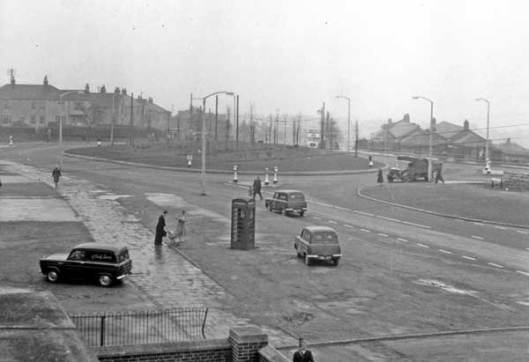
In 1995, after a local school had been destroyed in an arson attack, local MP Roy Hattersley dubbed the Manor Estate ‘the worst estate in Britain’ –quite a comedown for an estate which had once been one of Sheffield’s showpieces.  The truth, as ever, was more complex but the reality of decline on the now troubled estate was undeniable.

Manor - the image shows that the open layout of the estate could be bleak in its exposed setting The Estate in the sixties (?): the image shows that the open layout of the estate could be bleak in its exposed setting

For those that moved to the greenfield estate from the slums in the 1920s and 1930s, it was a very different story: (1)

It were great – corn fields and then there were a farm further over and horses – we used to play with horses and run around fields with horses and there were a brook – we used to go paddling down in the brook

By…

View original post 1,667 more words

Finding Nature

Nature Connectedness Research Blog by Prof. Miles Richardson

Norfolk Green Care Network

Connecting People with Nature

Discover WordPress

A daily selection of the best content published on WordPress, collected for you by humans who love to read.

Susan Rushton

Celebrating gardens, photography and a creative life

Unlocking Landscapes

Writing, photography and more by Daniel Greenwood

Alphabet Ravine

Lydia Rae Bush Poetry

TIME GENTS

Australian Pub Project, Established 2013

Vanha Talo Suomi

The Journey from Finnish Rintamamiestalo to Arboretum & Gardens

Marigolds and Gin

Because even in chaos, there’s always gin and a good story …

Bits & Tidbits

RANDOM BITS & MORE TIDBITS

Rambling in the Garden

.....and nurturing my soul

The Interpretation Game

Cultural Heritage and the Digital Economy

pbmGarden

Sense of place, purpose, rejuvenation and joy

SISSINGHURST GARDEN

Notes from the Gardeners...

Deep Green Permaculture

Connecting People to Nature, Empowering People to Live Sustainably

BloominBootiful

A girl and her garden :)