Archive for June, 2014


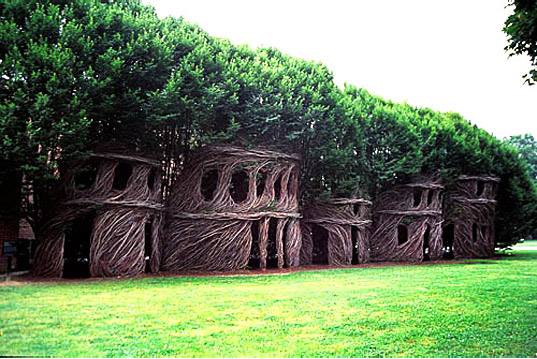
houses from woven  trees green renaissance

Houses woven from trees!

Old School Gardener

Met Office Press Office's avatarOfficial blog of the Met Office news team

There are headlines in the media today which suggest the Met Office is forecasting that this summer will be one of the hottest on record. However, the Met Office hasn’t issued a forecast along these lines.

The news stories are based on information taken from our three month outlook for contingency planners, so let’s take a closer look at that.

What does our three month outlook say?

As we’ve discussed previously, this outlook assesses the level of risk connected to five different scenarios for both temperature and rainfall for the whole season. It’s a bit like the science-equivalent of factoring the odds on a horse race.

However, as with any horse race, it’s always possible that the favourite won’t win – so these probability scenarios have to be used in the right context. This is why they’re useful for planners and businesses who plan ahead based on risk, but…

View original post 409 more words

horse boot (1)‘The mowing was of course done by a stout little pony in leather boots and the soothing hum of the mowing machine was one of the pleasures of summer, instead of the noisy, smelly mowers which one now has to endure.’

Audrey Holland- Hibbert Hortus

horsedrawn_mower_LRG

Old School Gardener

PicPost: Wind Charm

‘Singing Ringing Tree’- when the wind blows

Old School Gardener

IMG_8801You may have read previously that one of my latest projects involves designing, and then helping to install a new border alongside a 200-year-old ‘Crinkle Crankle’ Wall, near Fakenham town centre, Norfolk. I’m not sure about the history of the wall, but it seems to have enclosed a substantial garden for an important house next to the Church (possibly the old Vicarage or Rectory?). There’s certainly evidence of lean-to glasshouses on some (straight) parts of the wall, which are all ‘listed’ as being of historic or architectural interest.

Crinkle Crankle walls have an interesting history, as Wikipedia says:

‘A crinkle crankle wall, also known as a crinkum crankum, serpentine, ribbon or wavy wall, is an unusual type of garden wall.

The crinkle crankle wall economizes on bricks, despite its sinuous configuration, because it can be made just one brick thin. If a wall this thin were to be made in a straight line, without buttresses, it would easily topple over. The alternate convex and concave curves in the wall provide stability and help it to resist lateral forces.

Both crinkle and crankle are defined as something with bends and turns (Webster’s), but the term is also thought to come from Old English meaning zig-zag. The earliest reference to this meaning has been cited in 1598, but it was not until the 18th century that the term began to be applied to wavy walls. At that time these garden walls were usually aligned east-west, so that one side faced south (Dictionary of Architecture and Landscape Architecture by James Stevens Curl) to catch the warming sun and were historically used for growing fruit.

Many crinkle crankle walls are found in the East Anglia area of England where the marshes of the fen country were drained by Dutch engineers starting in the mid-1600s. The walls’ construction is attributed to these engineers who called them slange muur, meaning snaking wall……’

The Fakenham wall (which must be one of the oldest surviving examples in the U.K.), now encloses the Town’s Community Centre, Registry Office and other community buildings and the surrounding site is mainly laid to grass, with some areas of mature trees and more formal borders. Next to the wall is an old asphalt tennis court (no longer in use) and the border immediately in front was covered in weeds (mainly Alkanet- it has a pretty blue flower, but also has tough tap roots and is a real ‘spreader’), as well as a large area of Hemerocallis (Day Lily). Perhaps a legacy from the wall’s days as a backdrop for fruit growing, each ‘bay’ created by the wavy wall has a fruit tree- apple, cherry or fig. These old trees are all looking rather uncared for and one of my first jobs was to cut back the fig which was covering one of the old brick and slate seats that once must have been used to watch the tennis. Here’s what the area looked like at the start of the project….

The clients (the Community Centre and the Gardening in Fakenham Town – GiFT project) have ideas for improving this wider area and perhaps encouraging it as a space for wedding photos, outdoor events etc. The brief was to come up with a planting plan for the border in front of the south -facing wall to better show off its features, use plants that require limited maintenance and which can cope with the poor soil and aspect.

My design involved limited pruning of the other fruit trees, thinning out the large area of Day Lilies and using the thinnings to create a continuous ribbon of these around the base of the wall, and introducing a few shrubs and sub shrubs (Buddleja and Lavender) at key points. These, and a range of herbaceous perennials and grasses were positioned to provide contrasting textures and forms within a broadly colour-themed series of ‘waves’ to pick up the shape of the wall, and taking account of the other strong structural features of the seats and fruit trees.

These waves are alternating combinations of mainly blue and red; blue and yellow and with purple (including purple foliage) to tie these together as a more continuous ribbon through the whole scheme. In addition a selection of different grasses (including Stipa gigantea and Miscanthus sinensis) have been used around each seat to provide a taller, contrasting, soft veil effect with both flowers and foliage to catch the sunlight. I also suggested that old bricks, to harmonise with the wall, could be laid as flooring in front of each seat, softened with ad hoc planting of varieties of Thyme. The first of these seating areas has been used to pilot this and it is hoped that further work will be done to complete the other areas as voluntary help and materials become available.

Children from the local Junior School were involved alongside a handful of volunteers to help me clear the border, prepare the soil and then to plant it up. Here’s how it looked after clearing and planting up…

The final scheme involved planting over 200 plants supplied in the main by Howard Nursery of Wortham, Suffolk and Taverham Nursery Centre, Norfolk. The planting has deliberately been placed closer together than would ultimately be necessary, so as to speed up the ground coverage and so reduce the need for weeding. However, not surprisingly, some roots of the Alkanet remain and have started to sprout once more, so the border will need to be carefully managed to ensure the plants survive and the weeds are removed in its early days.

This week, the children from the Junior School returned to carry out the ‘first weed’ since planting and to draw the wall and look out for insects etc. This marked the formal completion of the project. Here are some pictures of that event…

This slideshow requires JavaScript.

And here’s one of me together with representatives of the main partners: from left to right Rhoda Hincks (Junior School), Janet Holdom (Community Centre) and Pauline Chamberlain (GiFT).

IMG_8926

This has been an interesting and enjoyable project and I look forward to seeing the border in a few months once it has become better established and to seeing progress on the improvements to the wider area. If you’d like to look at pictures and a brief account of the Junior School’s involvement take a look at their blog. 

Old School Gardener

Coach Muller's avatarMy Good Time Stories

Photo Credit:  Joint Staff Public Affairs via CC Flickr Photo Credit: Joint Staff Public Affairs via CC Flickr

I recently read an article written by Kim Willsher on TheGuardian,com in which she told many stories of servicemen that participated in D-Day and World War 2. I thought that it would be a great share with all of you. I hope that you would take the time to remember these people and the things that they experienced during this awful time of war.

————

They stood to attention as straight as their creaking backs would allow and saluted briskly as a lone bugler high up on the old Pegasus Bridge played the Last Post. A minute’s silence followed; the men bowed their heads, dabbed their eyes and remembered the fallen.

Some made one last heroic effort to rise from their wheelchairs, others leaned on sticks or the arms of relatives and friends. Medals glinted in the morning sunshine; rows and…

View original post 1,470 more words

canwefeedtheworld's avatarOne Billion Hungry: Can We Feed the World?

Bn-51-MIcAAa__PYesterday’s World Environment Day, the United Nations’ principal vehicle for encouraging worldwide awareness and action for the environment, focused on tackling climate change. This year’s theme is Raise your voice, not the sea level. First established in 1972, every year on 5th June countries around the world host seminars, events and environmental projects from cleaning up Kosovo to solar electric roofs in Barbados to plastic purges on the beaches of Sri Lanka. And there are the WED challenges.

This year is also the UN International Year of Small Island Developing States (SIDS) and part of the activities of WED were to raise awareness about the challenges SIDS face, their vulnerability to climate change and sea level rise and the urgent need to help protect the islands.

The message of WED is that our individual actions will aggregate into collective action with the power to transform, in this…

View original post 512 more words

kapok tree via green reniassanceKapok Tree via Green Renaissance

Old School Gardener

IMG_8876We paid a visit to an ‘open garden’ under the National Gardens Scheme at the weekend, Oulton Hall, not far from Old School Garden. And we cycled! (about 10 miles in  total).

Home of the Agnew family, originally Oulton Hall was built in the 16th Century, but the present building is Georgian in style and incorporates a yellow brick stable. The house and stable block are surrounded by a garden (or rather gardens) designed by Chelsea medal winner, Clare Agnew.

With a strong overall structure, the gardens are a combination of spaces which together hang together as a delightful country landscape. However, there are several spaces which give a different feel to the place- Mediterranean and more contemporary designs (including ornamental grasses) are well integrated and used to good effect. The journey through the various small courtyards and niches as well as the grander open lawns, wider woodland and lakeside areas was a joy on a sunny Sunday afternoon.

I particularly liked the series of pergolas enclosing an old church font at the centre, overhung with white and lavender Wisteria, creating a quiet, monastic feel (see main picture, above). I also liked the vines trained into ‘parasols’ which, with surrounding features, create a mediterranean atmosphere. There is also a superb, densely planted walk with a seat by a bubbling water feature, illuminated by the sunshine. Certainly a garden where a lot of thought and skill has gone into creating a mix of experiences which aren’t overpowering, with the emphasis on the intimate and restful. Here’s a photo gallery of our visit.

This slideshow requires JavaScript.

And  here’s a selection of some of the flowers in bloom when we visited.

Old School Gardener

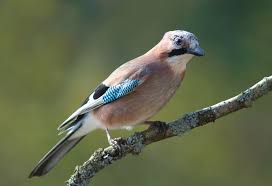
jayA couple of interesting garden observations this week. Having just seen the first signs of slug and snail attack on my newly planted summer bedding (Portulaca) I resorted to the ‘blue sweeties’ to attract and ‘deal’ with the little ….pests.  (Yes, I know I shouldn’t, but I find that they are the most effective way of dealign with mass infestations).

The following morning, a nice ‘crop’ of newly frazzled corpses lay on the beds. I was sitting reading and glancing out of the french doors and saw a Jay land, pick up a snail in it’s beak, and ‘wipe’ it on some soil before flying off with it- and it happened again. An example of a bird that’s learned not to eat slug pellets?

Today, I fixed some supporting timbers to my ‘fruit fence’ (where I’m training a Cherry and a Plum as fans) and a pallet-based reinforcement to the bed the fence sits in (more on this little project in due course), As I was carrying out the summer prune of these two fans, I noticed (a bit late, I know) that the Cherry was covered in black fly. As I expected there were ants (who ‘farm’ the aphids for the sweet juice they suck out of the plant) and ladybirds doing their best to hoover up the infestation. But to my surpise, there were also many solitary bees finding their way into the furled up leaves – I can only guess that they too had discovered the free supply of sucrose!

 Have you seen either of these things in your garden? Do you have an explanation? Do you have any of your own interesting observations?

Old School Gardener

Finding Nature

Nature Connectedness Research Blog by Prof. Miles Richardson

Norfolk Green Care Network

Connecting People with Nature

Discover WordPress

A daily selection of the best content published on WordPress, collected for you by humans who love to read.

Susan Rushton

Celebrating gardens, photography and a creative life

Unlocking Landscapes

Writing, photography and more by Daniel Greenwood

Alphabet Ravine

Lydia Rae Bush Poetry

TIME GENTS

Australian Pub Project, Established 2013

Vanha Talo Suomi

The Journey from Finnish Rintamamiestalo to Arboretum & Gardens

Marigolds and Gin

Because even in chaos, there’s always gin and a good story …

Bits & Tidbits

RANDOM BITS & MORE TIDBITS

Rambling in the Garden

.....and nurturing my soul

The Interpretation Game

Cultural Heritage and the Digital Economy

pbmGarden

Sense of place, purpose, rejuvenation and joy

SISSINGHURST GARDEN

Notes from the Gardeners...

Deep Green Permaculture

Connecting People to Nature, Empowering People to Live Sustainably

BloominBootiful

A girl and her garden :)