Archive for April, 2014


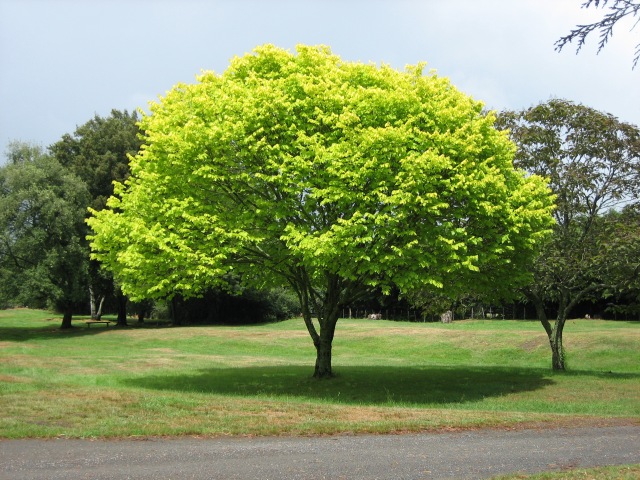
Bright_green_tree_-_WaikatoAs trees tend to be the largest and longest lived plants in the garden, they should be one of, if not THE first item to consider when designing or redesigning your garden.They rank alongside some of the hard landscaping elements (seats, arches, pergolas, arbours etc.) in helping to provide the ‘bones’ or structural framework of a garden i.e. the structure by which we navigate ourselves around the plot both visually and in terms of guiding our movement. Shrubs (especially evergreens), provide a similar service and should be thought about in conjunction with whether, where and what sorts of trees to include in a design or redesign.

Trees also offer a range of other potential sources of interest in a garden apart from their overall shape or form; leaf size shape and colour (which may vary from season to season), bark (colour, texture or special effects such as peeling or patterned), flowers and fruit (catkins, conkers, apples and so on).

In visual terms the planting of a tree or trees can have a dramatic effect on the layout (or form) and perspectives around the garden. They can be used as a focal point to draw the eye. This includes those planted as a ‘specimen’. Those planted in the foreground or middle distance help to increase the sense of depth or perspective in a garden, while those planted further away help to give a sense of scale to the overall space. So, in a small garden a large tree in the foreground and a small tree at the end will make the garden seem longer.

Leaf size and texture is another important consideration. If you want a strong shape to provide a key structural element all year round in the garden, then go for small leaved, evergreen varieties with distinctive shapes or which can be pruned (topiarised) into these- e.g. Box.

Horse Chestnut flower about to burst

Why not take a look at your garden and ask if you have one or more trees that aren’t in the right place- are they are too tall, too broad, drying out the soil or causing shade where you don’t want it? Perhaps removal or pruning is the answer. Could you introduce a tree or two and help to strengthen what your garden has to offer- providing food or a home for birds, for example or adding a brilliant show of flowers or autumn leaf colour?

Traditionally we seem to have used trees in gardens as stand alone ‘specimens’, often in an island in the middle of a lawn for example. Today, with the wide range of trees available and with characteristics that suit almost any situation, its possible to be a bit freer with how we use them- in groups or among other planting in borders.

If you are using a tree as a specimen think about its positioning carefully- if it’s planted by itself without any surrounding planting to soften its impact, it will be a focal point from the start, and as it grows bigger this impact will become even more pronounced.

If planting several trees together, including adding one or two to an existing group, think about their ultimate height and spread. As in nature, some trees grow well together; eg. Betula pendula, or ‘Silver Birch’- see my recent article in the A-Z of Trees series. The wild cherry (Prunus avium), is another example. So as with any other tree planting think carefully about their ultimate height and spread and allow room for them to grow. If you want to give a denser appearance in the time it takes the trees to mature, try growing them closer together, but expect to remove some as they mature to allow the remaining ones to grow to full size.

When planting more than one tree together in an area of grass, the relationship of one to another will determine the effect and this can change depending on where you are in the garden. A good idea is to use large posts or bamboo canes to mark their positions. Try out different positions to see what effect you like the best. Look at the positioning from different places, including from inside the house. and remember to think about their ultimate height and width and what they might obscure or hide.

Chracterisitcs of the White Fir

We tend to think short term when it comes to gardens- we want immediate impact or effect.
The danger here is that you’ll end up with something that outgrows its space and gives you problems- a classic example is the Monkey Puzzle tree (Araucaria araucana) that was planted in the front garden of a Victorian terrace house or villa and is now way too large and tottering precariously above and perhaps towards the house! So the speed of growth is also a consideration; very slow growing trees may take  30 years to have a significant impact, so if you want an impact over a shorter period than this, then that’s perhaps a good choice.

If you have a relatively small garden, don’t think that you can’t have any trees. Smaller varieities of many different types are often available, and by choosing trees that have a more conical or upward habit you can achieve an impact without having a major loss of garden space .

Planting trees too near to buildings is another common problem. Some have relatively compact root systems ; e.g. Birch (Betula), Sorbus, Hornbeam and Magnolia are good examples and rarely cause problems. However trees like Willow will seek out water and their roots are liable to invade drains if planted close by.

If an existing tree is of concern seek the advice of a qualified tree surgeon. and if you think a tree may be subject to a Tree Preservation Order, make sure you consult your local authority before doing anything to affect it. And always consider your neighbours- trees planted close to boundaries may look good from your side of the fence, but think about what impact the tree is going to have on your neighbour’s garden and house. The inconsiderate planting of hedges of Leylandii conifers is the most familiar example of the wrong species being chosen to achieve rapid but usually unattractive results. Left to its own device this tree will grow to well over 100′ high and it looks superb, so don’t expect it to enjoy continually being hacked back!

Old School Gardener

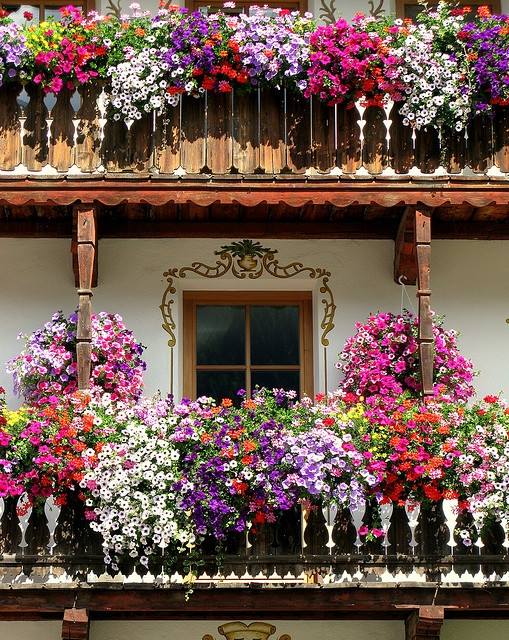
PicPost: Flower Power

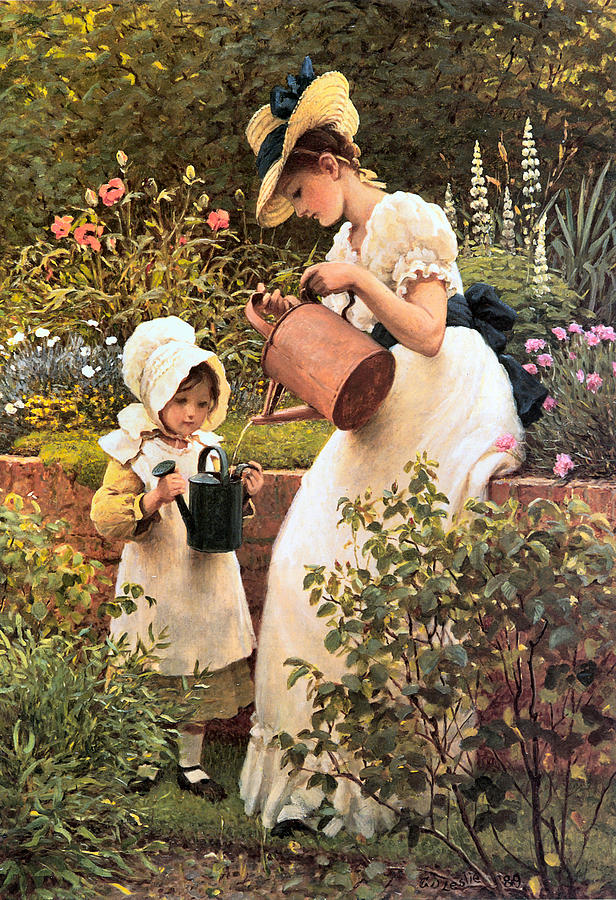
'The Young Gardener'- George Dunlop Leslie1889

‘The Young Gardener’- George Dunlop Leslie1889

‘Gardeners are good. Such vices as they have

Are like the warts and bosses in the wood

Of an old oak. They’re patient, stubborn folk,

As needs must be whose busyness it is

To tutor wildness, making war on weeds.’

Gerald Bullett

Municipal Dreams's avatarMunicipal Dreams

The Mackworth Estate in Derby is a good example of the more ambitious of the new suburban council estates built after World War Two.  Its story – from founding vision to flawed fulfilment – tells us much about the evolution of social housing in the last seventy years.

Henley Green Henley Green

Derby, an industrial town with a proud railway and engineering heritage, had a strong tradition of council house construction.  The Borough Council had announced plans for 1000 council homes in 1919 – the first 16 completed were in Victory Road, more followed in Stenson Road.   In the 1930s, new housing estates were developed beyond the city centre in Chaddesden, Sinfin and Old Normanton.  By 1940, the Council had built over 7000 homes. (1)

Derby's earliest council housing on Victory Road Derby’s earliest council housing on Victory Road

Labour won control of the council in 1928 and regained power in 1934. It would retain control until boundary changes in 1968. …

View original post 1,644 more words

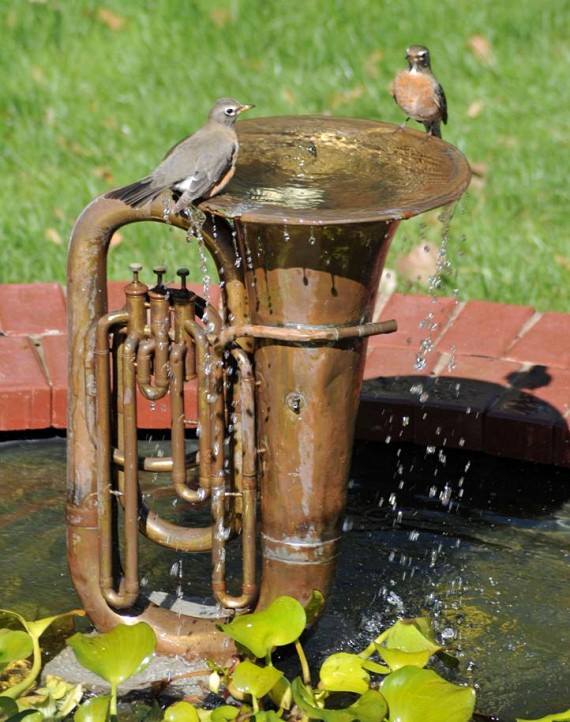
PicPost: Water Music

canwefeedtheworld's avatarOne Billion Hungry: Can We Feed the World?

indexCover Half of the world’s population is under 25. 1.8 billion people are between the ages of 10 and 24, the largest youth population the world has ever seen, 85% of which live in developing and emerging economies. In Uganda for example, 50% of the population is under the age of 15. While on the one hand such a large youth population is viewed as a challenge, of employment, of education and of population growth, this group also has significant potential to innovate and change the world for the better.

The first ever Youth Wellbeing Index, developed by the Center for Strategic and International Studies (CSIS) and the International Youth Foundation (IYF), compares how youths are faring across six key areas: citizen participation, economic opportunity, education, health, ICT and safety and security. For each area, indicators around the enabling environment in which youth live and participate, youth outcomes, and youths’…

View original post 369 more words

Some beautiful creations (man made and natural) all from wood.

‘Garden Art’?

This slideshow requires JavaScript.

Old School Gardener

PicPost: Amazing

Glendurgan- The Maze, Cornwall via National Trust

I set you a little challenge last Sunday. I photographed these two old gardening tools at Erdigg House and Gardens and asked what you thought they were used for. Thanks to those of you who had a go….

Old School Gardener

Finding Nature

Nature Connectedness Research Blog by Prof. Miles Richardson

Norfolk Green Care Network

Connecting People with Nature

Discover WordPress

A daily selection of the best content published on WordPress, collected for you by humans who love to read.

Susan Rushton

Celebrating gardens, photography and a creative life

Unlocking Landscapes

Writing, photography and more by Daniel Greenwood

Alphabet Ravine

Lydia Rae Bush Poetry

TIME GENTS

Australian Pub Project, Established 2013

Vanha Talo Suomi

The Journey from Finnish Rintamamiestalo to Arboretum & Gardens

Marigolds and Gin

Because even in chaos, there’s always gin and a good story …

Bits & Tidbits

RANDOM BITS & MORE TIDBITS

Rambling in the Garden

.....and nurturing my soul

The Interpretation Game

Cultural Heritage and the Digital Economy

pbmGarden

Sense of place, purpose, rejuvenation and joy

SISSINGHURST GARDEN

Notes from the Gardeners...

Deep Green Permaculture

Connecting People to Nature, Empowering People to Live Sustainably

BloominBootiful

A girl and her garden :)