

-
A ‘sub shrub’- Hypericum calycinum

As spring approaches it’s around now that some shrubs should be pruned. This week’s question, from Celia MacKnyff of Cutaway in Yorkshire, asks:
‘What is a sub shrub and should I treat it differently to an ordinary shrub?’
Celia, a sub shrub is a plant that is woody at the base but has annual stems like those of a herbaceous plant. These stems die back most years to the older woody growth. The ‘Rose of Sharon’ (‘Great St. John’s Wort’ or Hypericum calycinum) is a good example. The stems should be cut back every spring, not to ground level, but to the new shoots on the woodier stems at the bottom. I’ve been out in Old School Garden doing some pruning of these and other shrubs in the last few days and, not surprisingly as we’ve had such a mild winter to date, many of these stems look pretty healthy and are still carrying lots of green leaves. Nevertheless, if you want to benefit from fresh new growth, now’s the time to prune them.
-
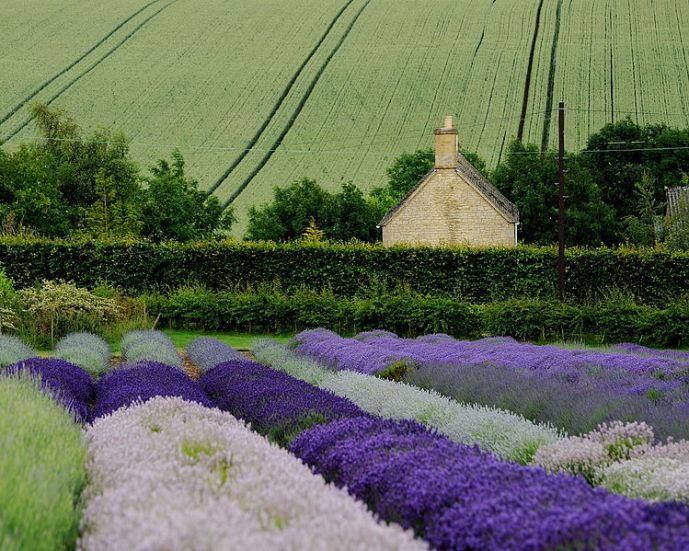
Lavenders are also treated like sub shrubs

Small, low shrubs such as Lavender, Periwinkle and Thyme, and many members of the family Ericaceae, such as Cranberries and small species of Erica, are often classed as sub shrubs. As far as pruning Lavender is concerned there are perhaps two schools of thought on this – either prune back the flowered shoots in autumn or spring. Doing this in the autumn is good in that there’s till time for new growth to be put on before winter, which helps maintain a nice compact shape to the plants over the colder months. However, if the weather is really cold you may suffer from some die back, so some people leave pruning until the spring. Nevertheless, small amounts of frosted growth can be tackled by further light pruning in the spring so that new vibrant growth is stimulated. Take your pick! In both cases pruning should be limited to the sappy top growth and should avoid cutting into the older woody stems.

-
It’s important to get the right pruning cut to avoid damaging shrubs and/or letting in disease
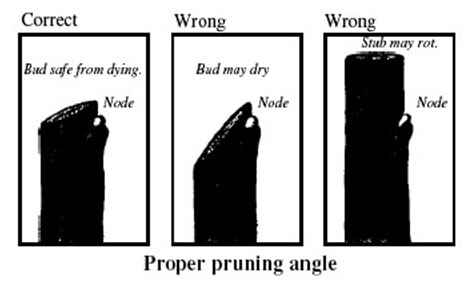
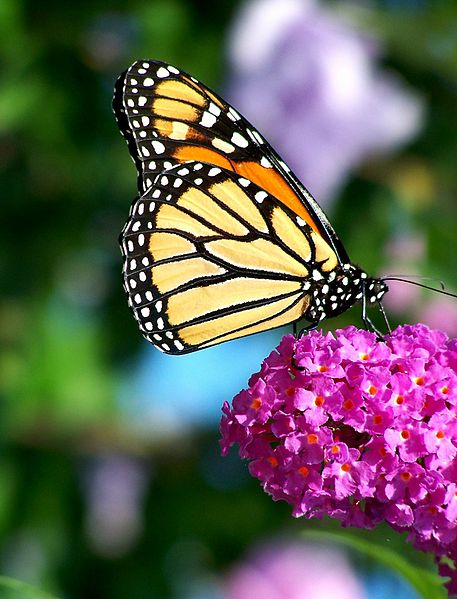
Whilst we’re talking about pruning sub shrubs it’s also worth remembering when to prune different flowering shrubs. There are two basic groups, one which flowers in summer and autumn (‘late flowerers’) on the tips of shoots that grew earlier the same season. This group includes Buddlejas, large flowered and cluster flowered Roses, Caryopteris and some later flowering Clematis hybrids (as well as sub shrubs like Hypericum). These should be pruned back hard to new buds in spring as they appear, so as to encourage development of these into strong new flowering shoots. I’ve tended to prune my Buddlejas a little later than the Hypericum, as late frosts may do damage to the new buds and therefore it’s a good insurance policy to wait until you can see healthy, strong buds to cut back to and the risk of really cold weather has passed. I’ll probaly prune mine later this month or in early March at the same time as I prune back my Dogwoods to encourage new stems that create great winter colour.
-
Buddlejas are ‘Late flowerers’ and need hard pruning in the spring

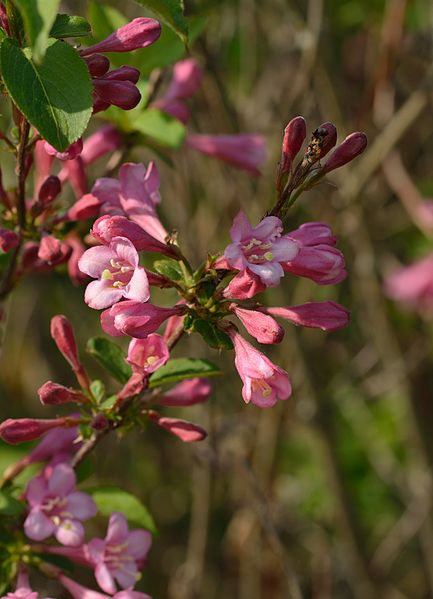
The second group (‘Early flowerers’), includes plants that flower in spring on shoots which grew the previous season and includes Philadelphus (‘Mock Orange’), Forsythias, flowering Currants (Ribes), Weigelas and the ‘Beauty Bush’ (Kolkwitzia). Though its is perhaps less important to prune these, it can be done to tidy up the shrub immediately after flowering, by removing the branches that carried the flowers. This also encourages new growth to be put on alongside other shoots that have already grown but not flowered – these shoots must be left unpruned and will carry the flowers next season.

-
‘Early flowerers’ like Weigela, should be pruned after flowering


 Old School Garden