Archive for 2013


Wisley leaves


Old School Gardener

A metal arbour with a rambling rose

A metal arbour with a rambling rose

Arbours and pergolas can be important elements in a garden, adding visual interest, especially height, and functional value as shading or seating.

Arbour used to refer to an orchard, garden or lawn, but today its use tends to be limited to  a leafy glade or bower shaded by trees, vines, shrubs, etc. – especially when trained about a trellis. More precisely ‘a shady garden alcove with the sides and roof formed by trees or climbing plants trained over a framework’ (Oxford English Dictionary).This alcove may often contain a seat.

Pergola  is the term given to a horizontal trellis or framework, supported on posts, that carries climbing plants and may form a covered walk, though sometimes it is also used to describe the same sort of structure as an arbour. Today pergolas are also used to provide an overhanging structure for an entertaining/ dining area such as a patio or terrace.

So why have these structures? 

  • Provide privacy and shade

  • Divide up areas of the garden or/and provide an interesting route along a pathway or focal point

  • Provide support for plants

  • Provide a decorative structure 

A flower-covered pergola in the Canary Islands

A flower-covered pergola in the Canary Islands

A painted wooden arbour

A painted wooden arbour

Here are seven tips to make the best use of these structures in your garden:

1. Right design the design of the structure needs to complement the overall style of the garden, whether ‘cottage’, contemporary or classical etc. The use of curves or straight lines in the design can be especially important here, with curves flowing more easily in a romantic, informal style and straight lines often better in more formal settings.

2. Right materials whether wood, metal, brick or stone or a combination of these, it is again important to complement other materials in the garden/house and reinforce and harmonise with the overall style.

3. Right construction – a solid installation as well as overall design is important to ensure the structure is stable in winds etc. Once the structure becomes laden with foliage it can act as a significant wind barrier so needs to withstand the forces this will bring.

4. Right plants – again the choice of plants to climb over your arbour or pergola is important both as a way of reinforcing the garden’s style and because of the implications for ongoing maintenance – a vigorous rambling rose like ‘Kiftsgate’ could become a night mare unless you are prepared to prune and tie it in at the right time of the year. Choose plants with the ultimate height/length that is suitable for the structure or you could find that the structure looks under planted or alternatively is overwhelmed with foliage.

A modern metal pergola

A modern metal pergola

5. Right position these structures need to be placed within the garden – possibly to provide a focal point and informal seating area away from the house (arbour), an interesting tunnel through which to walk within the garden, so ‘framing the journey’ or alternatively close to the house over a patio (pergola). They also need to be positioned to gain the right level of light and shelter for the plants you envisage growing up them. And if you have an arbour with a seat think about what view you want to be looking at from it.

Pergola- the Old Vicarage, East Ruston

Pergola- the Old Vicarage, East Ruston

6. Right flooring–  again think about the material you use underneath the structure. It should be durable and harmonise with the path/terrace/patio materials in the wider garden, though it can contrast with these to help define the space covered by the arbour or pergola.

7. Right maintenance – keep an eye on your garden structures and look after them – re-coat painted wood regularly, check screws,nuts and bolts for rust, loosening or weakening joints.

Further information:

Great Designs for a garden party

Better Homes & Gardens examples of pergolas

Pergola plans for Free

58,779 garden pergola Home Design Photos

Old School Gardener

If you’ve enjoyed reading this post and others on this blog, why not comment and join others by signing up for automatic updates via email (see side bar, above right ) or through an RSS feed (see top of page)?

sethsnap's avatarsethsnap

I recently visited the Lebanon, Ohio cemetery.  The cemetery was started in the mid 1800’s and has over 11,000 burials.  It is a peaceful place for one to rest.  The stones are situated among large trees that provide eternal shade and protection.

Visit my store.

View original post

Harold Rhenisch's avatarOkanagan Okanogan

Today, I am proud to be a guest on the website, My Botanical Garden. I hope that my explorations in knowing the land by walking it daily, camera in hand, will bring the garden’s readers at least some of the delight it has brought me for the past 18 months. Today, I’d like to share a way of looking at gardens: not in space, or in the balance of species with each other, but in time. After all, as creatures of the earth, I think we all live there.

P1010919-2

Abandoned Nlaka’pamux Church, Thompson River Grasslands, British Columbia

I think it’s time we all moved back to the Earth.

Gardens live in time. Let’s start with that. It snowed last night. Don’t worry. Here in the dry grasslands in the troughs of a volcanic plateau east of the uplifted volcanoes of the Northeast Pacific Coast, it is not winter. It is late spring…

View original post 1,372 more words

sethsnap's avatarsethsnap

Come with me along a winding trail that meanders through trees, alongside hills and next to ancient resting places.  A place where people have loved, lived and died.  Listen closely as their voices are thrown to the wind, preserved by the trees in their trunks, released only occasionally for those chosen to follow the path.  Share the experience of the sun warming your face just like it did for the explorers from the east.  Remember what was before, live what is now and imagine what will be as you wander along.

Visit my store.

View original post

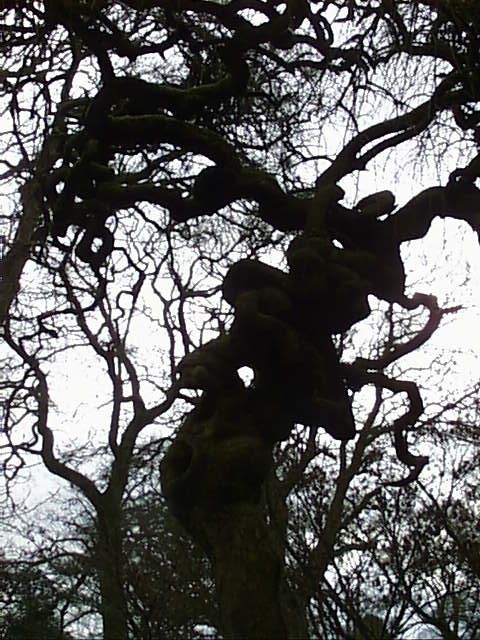
tree puzzled

Batsford Arboretum is a 55-acre arboretum and botanical park near Batsford in Gloucestershire, England… It is owned and run by the Batsford Foundation, a registered charity, and is open to the public daily throughout most of the year. The arboretum sits on the Cotswold scarp and contains around 2,900 trees, with a large collection of Japanese maples, magnolias and pines. It miantains the national collection of Prunus (sato-sakura group) – Japanese Flowering Cherry- under the National Plant Collection Scheme run by the National Council for the Conservation of Plants and Gardens (NCCPG).’

Source: Wikipedia

Anthemis tinctoria 'E.C.Buxton'

Anthemis tinctoria ‘E.C.Buxton’

There are around 100 mat or clump-forming species in the genus Anthemis.

They make very useful border plants, with a long flowering season from late spring – end of summer.

Most grow between 30 -60 cms high and have a similar spread.

Beautiful filigree, aromatic evergreen foliage when not in flower.

Smaller types suitable for rock gardens.

Flower heads are daisy-like; with white or yellow ray florets or yellow disc florets- some make good cut flowers.

Though many species are not long lived (A. tinctoria especially so), they are all easily propagated from seed or cuttings.

The plant’s life can be extended by shearing over in autumn just after flowering – this encourages new basal growth which takes the plant through the winter. Shearing also helps to prevent mildew.

They need sunny, well-drained sites and wet winters are generally not favourable.

They do not transplant well, but should anyway be divided regularly in spring.

Anthemis maritima

Anthemis maritima

The orangey- yellow varieties look well woven in and out of mixed borders, and complement warmer coloured flowers; e.g. Crocosmia ‘Lucifer’, Dahlias, Hemerocallis etc. The yellow varieties look well with blue flowers such as Nepeta or Agapanthus. The pale lemon variety ‘E.C. Buxton’ (or ‘Golden Marguerite’- one of my favourites)  works well with wispy grasses such as Stipa tenuissima and the darker Lavenders (e.g. ‘Hidcote’).

Further information:

Wikipedia

How to grow Anthemis- Telegraph article

Anthemis marschalliana– silver foliage

Quizzicals: answers to the two in the post ‘Gypsies, tramps and thieves…’

  • The scourge of female chickens – Henbane
  • Cheap goods in a pile of dung – Potato

Old School Gardener

If you’ve enjoyed reading this post and others on this blog, why not comment and join others by signing up for automatic updates via email (see side bar, above right ) or through an RSS feed (see top of page)?

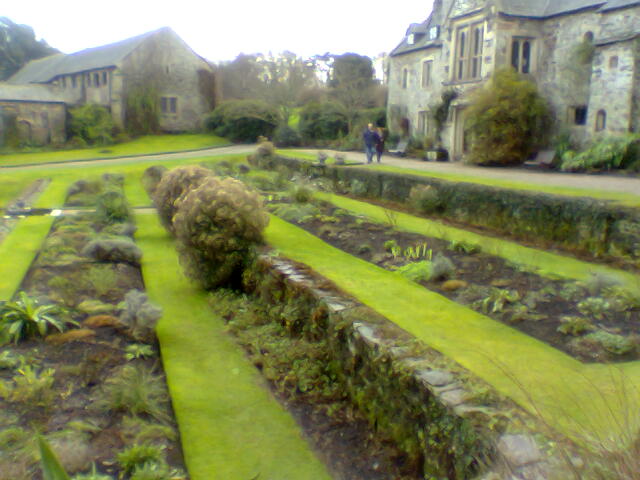
Image040

Cotehele House in Cornwall, England, is a ‘ Tudor house with many stories and legends, festooned with tapestries and adorned with textiles, arms and armour, pewter, brass and old oak furniture; a magical experience as little has changed over the years.Outside, explore the formally planted terraces, or lose yourself in the Valley Garden, which includes a medieval stewpond and dovecote. Seek tranquillity in the Upper Garden or visit the two orchards planted with local apples and cherries.Cotehele Quay is the home of the restored Tamar sailing barge ‘Shamrock’ and gateway to a wider estate. The Discovery Centre tells the story of the Tamar Valley.’

Source and further information:

National Trust Website

Wikipedia

Old School Gardener


Finding Nature

Nature Connectedness Research Blog by Prof. Miles Richardson

Norfolk Green Care Network

Connecting People with Nature

Discover WordPress

A daily selection of the best content published on WordPress, collected for you by humans who love to read.

Susan Rushton

Celebrating gardens, photography and a creative life

Unlocking Landscapes

Writing, photography and more by Daniel Greenwood

Alphabet Ravine

Lydia Rae Bush Poetry

TIME GENTS

Australian Pub Project, Established 2013

Vanha Talo Suomi

The Journey from Finnish Rintamamiestalo to Arboretum & Gardens

Marigolds and Gin

Because even in chaos, there’s always gin and a good story …

Bits & Tidbits

RANDOM BITS & MORE TIDBITS

Rambling in the Garden

.....and nurturing my soul

The Interpretation Game

Cultural Heritage and the Digital Economy

pbmGarden

Sense of place, purpose, rejuvenation and joy

SISSINGHURST GARDEN

Notes from the Gardeners...

Deep Green Permaculture

Connecting People to Nature, Empowering People to Live Sustainably

BloominBootiful

A girl and her garden :)