Archive for 2013


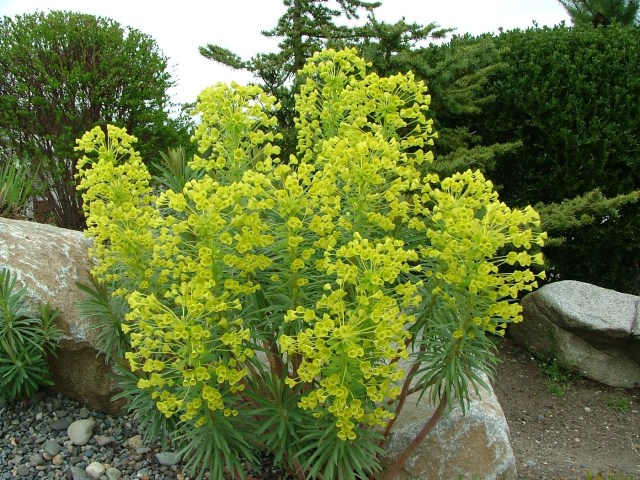
Euphorbia characias sub species 'Wulfenii'

Euphorbia characias sub species wulfenii

A bit like Marmite, gardeners  seem to either love or hate Euphorbia (Spurge) – I love them!

This is a large genus of over 2,000 species, including annuals,perennials as well as shrubs and succulents. They originate from many different parts of the world and as a result their growing requirements differ widely. They include the red-leaved species commonly seen at Christmas, Euphorbia pulcherrima (Poinsettia)

Euphorbia pulcherrima (Poinsettia)

Euphorbia pulcherrima (Poinsettia)

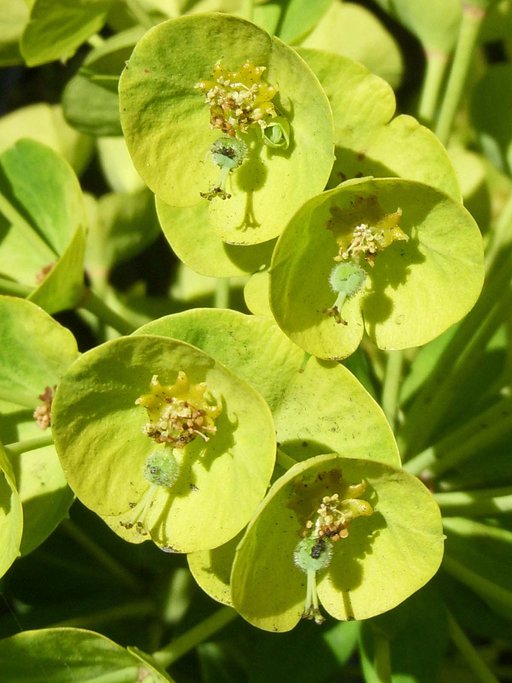
Some are evergreen and hardy, others are semi evergreen or deciduous. Nearly all species have distinctive ‘cyathia‘- small cups of long – lasting bracts that can be green, yellow, red, brown or purple. These are ‘cupping nectaries’ containing insignificant flowers with much reduced parts. In the perennials and shrubs these cyathia are carried in dense clusters. The leaves are very varied  and often are shed quite quickly.

Some species are very invasive and are not really suitable for the garden (e.g. E. cyparissias and E. pseudovirgata) others will self seed prolifically so need to be used with care (e.g. E. lathyris, E. hybernia,E.coralloides and E.wallichii). Some species can be invasive in some climates (e.g. E. myrsinites in parts of the USA) but are less problematic in milder, wetter places.

Euphorbia cyparissias (Cypress Spurge)
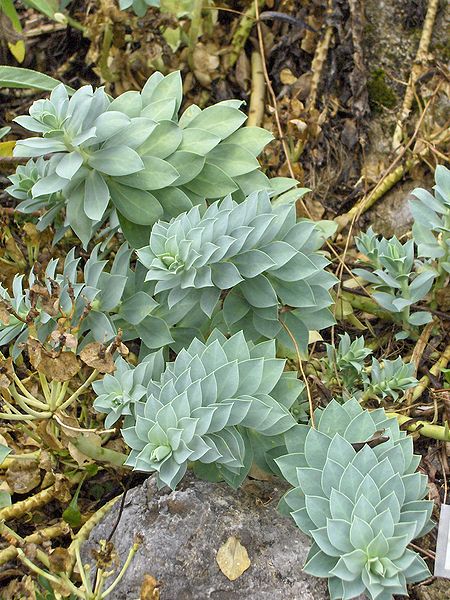
Euphorbia cyparissias (Cypress Spurge)

Euphorbia myrsinites

Euphorbia myrsinites

All Euphorbias resent disturbance, so siting them carefully from the start is important for long lasting plants. Euphorbia suit every situation from desert to bog, formal courtyard to wild woodland. With a couple of  exceptions Euphorbia are easy to grow. They are also look great in the garden, the colourful bracts lasting many weeks.

Euphorbia look best if allowed to sprawl at will, but if space is limited, you may need to support the floppier ones.

The evergreens require no routine pruning – simply tidy them up when they start to look untidy. Deciduous ones should be cut down to ground level in autumn. New shoots will emerge from the crown in spring. The biennial forms such as E. characias produce new shoots from the base each year. Cut out dead stems in winter. They are not fussy as to soil, but most prefer good drainage.

The bigger, more sculptural forms look good with architecture – against steps or walls, or in corners of courtyards. E. mellifera is a superb statement plant. E. myrsinites can be used in raised planters to sprawl over the sides. E. griffithii ‘Fireglow’ looks great beside water, with bronzy Rodgersias and red-flushed Astilbes, but will also look good in a hot border, while E. ‘Whistleberry Garnet’ associates well with ferns, Hostas and the dark-patterned leaves of Geranium phaeum.

All parts of Euphorbia are useful in flower arranging either in the fresh or dried state.

However all Euphorbia are poisonous and bleed a skin irritant milky sap, whereas the flowers are highly allergenic, so be careful when cutting or handling these wonderful plants.

Euphorbia polychroma
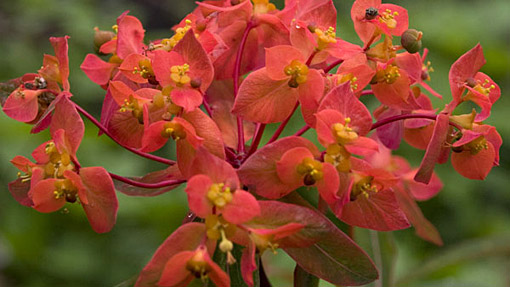
Euphorbia polychroma

Euphorbia griffithii 'Fireglow'

Euphorbia griffithii ‘Fireglow’

Euphorbia characias sub species 'Wulfenii'

Euphorbia characias sub species wulfenii

Further information:

National Collection of hardy Euphorbias

Growing Euphorbias

Euphorbia pulcherrima (Poinsettia)

Common varieties

Wikipedia

Old School Gardener

If you’ve enjoyed reading this post and others on this blog, why not comment and join others by signing up for automatic updates via email (see side bar, above right ) or through an RSS feed (see top of page)?

PicPost: Electric Fan

PicPost: Can Can

Great idea for recycled wall art in a school garden, play area perhaps?

Cool Composting

Source: ‘The Organic Way’, magazine of Garden Organic, Spring 2013

Nectar Quest: The ‘Bees and Flowers Mutual Admiration Society’ Under Threat

Bee

‘Plants and bees have a symbiotic relationship. Flowering plants depend on an outside source to ‘spread the love’ through pollination, and bees are happy to fill that need, receiving nectar (which they convert into honey) for the service they provide.

But how do bees manage to be so efficient in their quest for nectar? And is it true this delicately balanced relationship is under threat?

Scientists at Britain’s University of Bristol have spent 30 years trying to figure out exactly how bees know which flowers will give them the most bang for their buck, so to speak. The recent discovery is that bees and flowers participate in a mutually beneficial electromagnetism1 that results not only in the pollination and proliferation of the plants, but the nourishment of the bees and the hives they call home….’

gressenhallfw's avatarGressenhall Farm and Workhouse

 Over the winter months, the volunteers and the Skills for the Future Library and Archive trainee have been keeping warm by re-organising the newly decorated library at Gressenhall Farm and Workhouse Museum.

The library was originally started in 1976 as a resource to help staff identify objects and object histories donated to the Museum of Rural Life and the library now has a dedicated space in which researchers can have access to these resources.

Library

Some of the items available include:

  • Farm documents including diaries, horse remedy notebooks, stud books, invoices from Norfolk farms; books, journals and magazines relating to farming and livestock


  •  Manuals for engines and farm machinery, Government publications and posters concerning agriculture, health, war and education, retail and agricultural show catalogues


  • Photographs, objects, books and printed documents relating to Agricultural Unions and George Edwards


  • Educational books and objects used in Norfolk schools, class photographs and…

View original post 205 more words

PicPost: Scent from my Blackberry

PicPost: Bishybarnabee

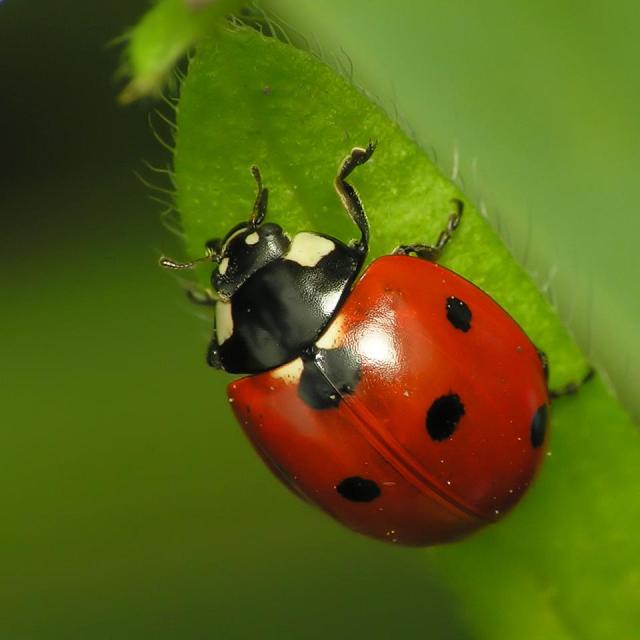
Lady birds (Coccinellids) ‘are and have been for very many years a favourite insect of children. The insects had many regional names (now mostly disused) in English, such as the lady-cows, may-bug, golden-knop, golden-bugs (Suffolk); and variations on Bishop-Barnaby (Norfolk dialect) – Barnabee, Burnabee, the Bishop-that-burneth, and bishy bishy barnabee. The etymology is unclear but it may be from St. Barnabas feast in June, when the insect appears or a corruption of “Bishop-that-burneth”, from the fiery elytra of the beetles.

The ladybird was immortalised in the still-popular children’s nursery rhyme Ladybird, Ladybird:

Ladybird, ladybird, fly away home
Your house is on fire and your children are gone
All except one, and that’s Little Anne
For she has crept under the warming pan….’

Source: Wikipedia

Financing community food: Securing money to help community food enterprises to grow

Financing community food: Securing money to help community food enterprises to grow

‘This report examines the funding needs of community food enterprises and how they can continue to use food to achieve a wide variety of important social and environmental benefits.

The report was written following a series of community food finance meetings, bringing together organisations that assist community food enterprises, with progressive funders. This process was undertaken as part of the five-year Big Lottery funded Making Local Food Work programme that has – since 2007 – supported a wide range of community-run food enterprises to help communities take control of their food and where it comes from. The community food finance meetings discussed how best to secure funds for community food enterprises in the future, to help them through the all-important start-up phase, and to obtain funds to grow and, thereby, continue work that has more charitable than commercial aims.

We hope to see the community food movement grow and thrive, hence the enterprises need improved prospects for securing the finance they need to succeed. With this report, and work evolving from it, we wish to encourage conversations between enterprises and their communities, the sector organisations that support them, the individuals and organisations that provide funds, and with government, whose policies provides the framework in which we operate….’

Finding Nature

Nature Connectedness Research Blog by Prof. Miles Richardson

Norfolk Green Care Network

Connecting People with Nature

Discover WordPress

A daily selection of the best content published on WordPress, collected for you by humans who love to read.

Susan Rushton

Celebrating gardens, photography and a creative life

Unlocking Landscapes

Writing, photography and more by Daniel Greenwood

Alphabet Ravine

Lydia Rae Bush Poetry

TIME GENTS

Australian Pub Project, Established 2013

Vanha Talo Suomi

The Journey from Finnish Rintamamiestalo to Arboretum & Gardens

Marigolds and Gin

Because even in chaos, there’s always gin and a good story …

Bits & Tidbits

RANDOM BITS & MORE TIDBITS

Rambling in the Garden

.....and nurturing my soul

The Interpretation Game

Cultural Heritage and the Digital Economy

pbmGarden

Sense of place, purpose, rejuvenation and joy

SISSINGHURST GARDEN

Notes from the Gardeners...

Deep Green Permaculture

Connecting People to Nature, Empowering People to Live Sustainably

BloominBootiful

A girl and her garden :)