Archive for 2013


PicPost: In the Net

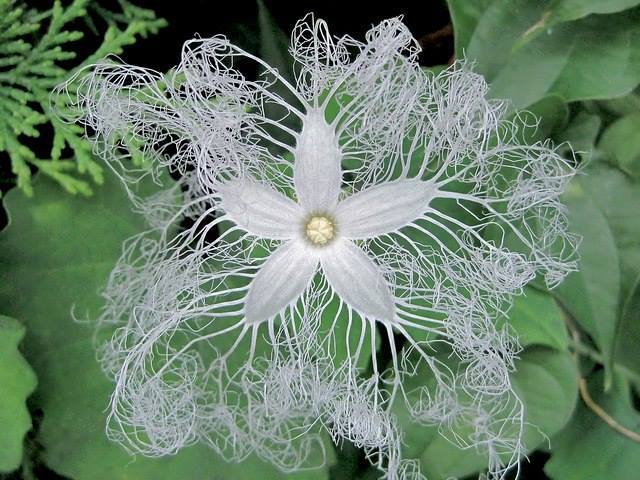
Trichosanthes cucumerina

Want to improve the attractiveness and functioning of your garden? Then read on...

Want to improve the attractiveness and functioning of your garden? Then read on…

The Reepham Learning Community, here in Norfolk, offers a range of courses in the evenings and during the day in a wide range of topics. I’m hoping to run my second course on Garden Design, commencing next Monday, 23rd September, 7pm – 9pm at Reepham High School & College.

It’s a six session programme using a mixture of discussion, presentation and surgery – type advice to individuals who want to apply some design thinking  to their own gardens. The course will help you:

  • think about what you want from your garden
  • use different ways of appraising and surveying your current plot
  • with an introduction to different garden styles
  • understand what is meant by strong garden structure and appropriate, attractive planting, and
  • how to put this all together in a scale drawing of your future plans.

It also features a garden visit to see some of the principles of garden design in practice and encourage a critical approach to assessing gardens.

The first course involved 9 participants, a good-sized group allowing for a healthy level of discussion and individual attention. I know those that took part felt better equipped to tackle their own garden development after sharing issues and ideas, seeing examples of well designed gardens and picking up some key skills and tips along the way.

The next course is close to achieving a viable number of participants, so if you or someone you know is interested in getting some help in designing their own garden then please see more information at www.reephamlearningcommunity.co.uk or call Sandie Athow on 01603 308133.

Oh, and by the way, later in the coming week I’ll be starting a new series of articles focusing on design  tips to improve your garden. The series-  called’ Design my Garden’ –  will start with a few thoughts about designing a garden for someone who has some sort of disability.

Old School Gardener

IMG_6543

This Rocky island crowned by a medieval church and castle was another of my West Country garden visits – or rather ir wasn’t. Access to the gardens was restricted to certain days during the summer (as a a conservation measure) and yes, we chose one of the closed days! So my visit was confined to aerial views from castle ramparts, glimpses through gates and over hedges. Still, I managed to get a good idea of what the gardens are like and I’ve tried to convey this in the photo montage below.

The island – a ‘twin’ with Mont St. Michel in Normandy on the other side of the English Channel – has some buildings dating from the 12th century. It’s sub-tropical Gardens feature exotic plants clinging to steep granite cliffs and terraces laid out with a mixture of formal and informal borders. These terraces are tiered close to the rocky water’s edge.

I witnessed an ‘abseiling gardener’ carrying out some ‘extreme strimming’ on the grassy slopes!

Plants that are natives of Mexico, the Canary Islands and South Africa thrive in the mild micro-climate created by the sun-warmed cliffs. As we found in many other parts of West Cornwall plants like Agapanthus, Fuchsia, Crocosmia ‘Montbretia’ and Hydrangea thrive here as well as along road – sides and more modest domestic gardens in the area.

I will revisit at some point to get the ‘up close and personal’ experience of actually being in the gardens, but from the views I managed they do seem mightily impressive.

Further information:

National Trust website

St. Michael’s Mount Garden Itinerary

Wikipedia- St. Michael’s Mount

Old School Gardener

If you’ve enjoyed reading this post and others on this blog, why not comment and join others by signing up for automatic updates via email (see side bar, above right ) or through an RSS feed (see top of page)?

PicPost: Shower Head

Lotus seed pod

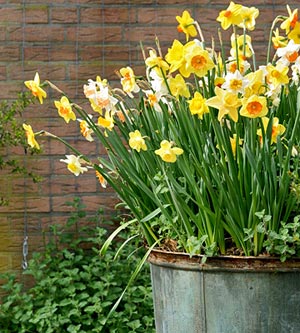
tin pot of daffodilsIt’s the time to begin planting many bulbs for flowering next spring. Narcissus, Crocus, Tulips and many more are now available in the shops and online. This week’s topical question comes from Justine Potts who lives in Bath:

“I live in the middle of town and have no garden to speak of. Can I grow bulbs in grow – bags?”

Bulbs are ‘ready – packaged’ plants that are very adaptable and so they can be used in many different ways. Growing  them in grow – bags is perfectly feasible. And just as you can have a double/treble layer of bulbs in a pot to give a longer floral effect, so you can do the same in grow-bags and other containers (though you migth be limited by the depth of the container). Among the Narcissi the old double yellow ‘Van Sion’ is early, cheerful and showy; ‘Armada’ is large, gold and scarlet; ‘Royal Orange’ is large, white and orange. among the tulips the Darwin hybrids in reds, yellows, oranges and white are very impressive.

Layering different types of bulb in a pot for long spring flowering

Layering different types of bulb in a pot for long spring flowering

As with grow bags if you grow bulbs in pots and similar containers it is important to have good drainage. So long as surplus water can soak away, bulbs should grow well in them. If you have raised containers on pedestals the plants might be blown about, so you should choose those that can put up with the wind, However even lilies are a possibility here; sturdy-stemmed types that can be tried include ‘Enchantment’ (orange flowers), L. regale (white), L. ‘Destiny’ (yellow). Daffodils in early spring and tulips a little later will give colour for weeks; in particular a double layer of daffodil bulbs planted in the autumn will give you plenty of colour. There are many suitable varieties:

  • ‘Tete a Tete’

  • ‘February Gold’

  • ‘Foresight’

  • ‘Armada’

  • ‘Rembrandt’

  • ‘Thalia’

Tulips could include:

  • ‘Red Riding Hood’

  • ‘Giuseppe Verdi’

  • ‘Toronto’

  • ‘Red Emperor’, and

  • early flowering doubles ”Electra’ and ‘Peachblossom’

Before you plant up bulbs in bowls think about what you will do with them afterwards. If you want to put them out in the garden it’s best to grow them in John Innes potting compost as this provides some nutrients that will feed the bulb and so increase their strength. If, however you discard the bulbs at the end of the flowering season you can grow them in bulb fibre which doesn’t contain these nutrients and will be cheaper. If you have your own supply of well – rotted leaf mould that would be just as good as bulb fibre – and even cheaper!

Hyacinths in pots

Hyacinths in pots

Further information:

Container gardening on Pinterest

Container growing with bulbs

Old School Gardener

If you’ve enjoyed reading this post and others on this blog, why not comment and join others by signing up for automatic updates via email (see side bar, above right ) or through an RSS feed (see top of page)?

HowardJones's avatarOuse Washes: The Heart of the Fens

Heritage Lottery Fund

This weekend sees the annual Heritage Open Days, where many heritage venues are opening their doors for free. Please check out the national website (https://www.heritageopendays.org.uk/) for ideas for your area.

We have already selected some events in and around the Ouse Washes Landscape Partnership area you might be interested in:

Ely this weekend is celebrating its rich heritage with a range of events, with its museums and local houses opening their doors for longer, giving you more time to see the local heritage.

New Picture (1)

Ely Museum, as part of Heritage Open Days, is holding an event for all ages and are staying open for longer so you can experience a night viewing: on Friday the 13th after 5 pm it is free to enter Ely Museum! This weekend at the Ely Museum is also the last chance for you to see its exhibition about the Old Goal: the last…

View original post 534 more words

PicPost: Theatre of Dreams

Pelargoniums display at Calke Abbey via Colin Garratt

I seem to be collecting examples of cunning recycling projects to add stylish features or practical items to the garden or other outside spaces. Here is my latest batch, most provided by the Facebook site 1001 Pallets – why not pay them a visit? And if you have plans for a project of your own, or even better some pictures of what you’ve achieved, I’d love to hear from you!

First some projects involving children…

Next, some seating ideas…

A few garden storage and planting projects…

Finally, some really bold creations…

Old School Gardener

If you’ve enjoyed reading this post and others on this blog, why not comment and join others by signing up for automatic updates via email (see side bar, above right ) or through an RSS feed (see top of page)?
Related articles:

More pallet projects

Recycling in the Garden: widening the net

Even more Pallet Power

Pallet Projects – more creative ideas

Polished Primary Pallet Planters

Pallets Plus –  more examples of recycled wood in the garden

Pallet Power- the sequel

Pallet Power

Raised beds on the cheap

Finding Nature

Nature Connectedness Research Blog by Prof. Miles Richardson

Norfolk Green Care Network

Connecting People with Nature

Discover WordPress

A daily selection of the best content published on WordPress, collected for you by humans who love to read.

Susan Rushton

Celebrating gardens, photography and a creative life

Unlocking Landscapes

Writing, photography and more by Daniel Greenwood

Alphabet Ravine

Lydia Rae Bush Poetry

TIME GENTS

Australian Pub Project, Established 2013

Vanha Talo Suomi

The Journey from Finnish Rintamamiestalo to Arboretum & Gardens

Marigolds and Gin

Because even in chaos, there’s always gin and a good story …

Bits & Tidbits

RANDOM BITS & MORE TIDBITS

Rambling in the Garden

.....and nurturing my soul

The Interpretation Game

Cultural Heritage and the Digital Economy

pbmGarden

Sense of place, purpose, rejuvenation and joy

SISSINGHURST GARDEN

Notes from the Gardeners...

Deep Green Permaculture

Connecting People to Nature, Empowering People to Live Sustainably

BloominBootiful

A girl and her garden :)