Archive for December, 2013


greenbenchramblings's avatargreenbenchramblings

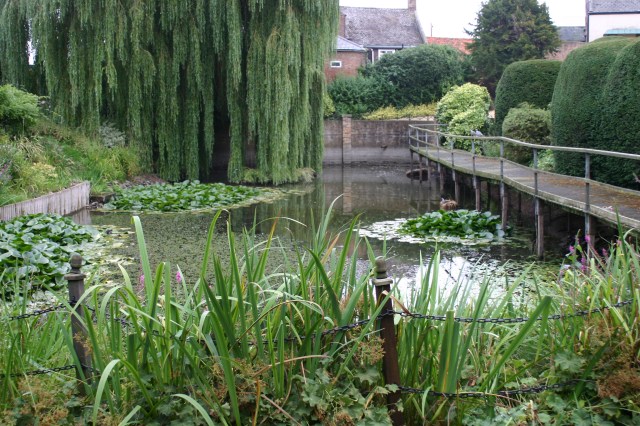
Just half an hour drive from our home is the Welsh town of Welshpool and close to it the wonderful gardens and family owned and run nursery at The Dingle. It is a garden on a slope with paths taking you on a gentle downhill journey to the bottom of the valley where a lake awaits with its colourful reflections. The Dingle is a woodland garden situated in a Welsh valley and boasts its own nursery which specialises in trees but stocks equally varied quality herbaceous plants, grasses and shrubs.

2013 11 16_5136

Whatever season you visit this gem of a garden there is so much to appreciate, especially shrubs and small trees. Around every corner the visiting gardener can find inspiration that stimulate fresh ideas to use.

2013 11 16_51122013 11 16_5113

Contrasts in foliage colour and texture are evident in the carefully chosen groupings of shrubs and small trees.

2013 11 16_51152013 11 16_5116

2013 11 16_5122 2013 11 16_5123

2013 11 16_5125

Of equal importance are the specimen…

View original post 193 more words
nWh
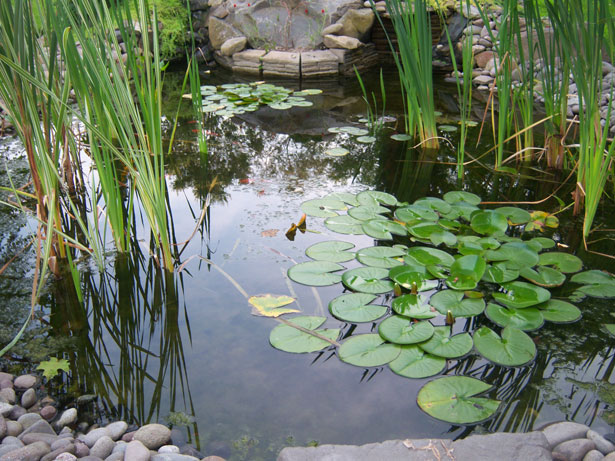
A pond is a fantastic resource for wildlife

A pond is a fantastic resource for wildlife

Most gardens play an important part in promoting biodiversity and maintaining ecosystems – vital if we are to have a sustainable planet. You might want to further enhance your garden’s ecological value, or perhaps promote wildlife to help pollinate plants (important if you want to gather your own seed and/or are growing your own food) and to help control unwanted pests.

Promoting wildlife is also a way or enriching the garden experience – just think about birdsong, the buzzing and gentle flitting of bees from flower to flower, the colourful displays of butterflies and the fascinating movements of the myriad insects and other ‘critters’ out there! So how can you ‘design’ wildlife into your garden and gardening activities?

Plant nectar- rich flowers to attract pollinators

Plant nectar- rich flowers to attract pollinators

First it’s important to recognise that you and your friends and family are also going to use the garden, so there’s no need to ‘go completely wild’ and make it unpleasant or difficult for humans to use the garden. In fact the best designed and managed gardens (and often the most beautiful) can also be the best for wildlife. These are the places where nature has not been allowed to take over.

You can ‘tip the balance in favour of wildlife’ in a number of ways. If you have a large garden you can adopt a ‘conservation’ approach and set out separate areas to attract and support different types of wildlife. If your garden is smaller, you can provide a range of features for the wildlife species you want to encourage. This approach is especially important if you want to actively harness nature to control pests.

Bird feeders need to be out of the reach of cats!

Bird feeders need to be out of the reach of cats!

So what can you do?

  • Create habitats that mimic those in nature and complement the local range outside the garden

  • Provide natural shelter, nesting, food and drink –  important as ‘stopping off’ points for temporary visitors to your garden as well as for longer term residents

  • Aim to increase diversity- and recognise that this is going to be a gradual process

  • Build in some key features, such as…..

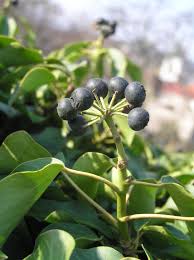
Climbign planst like Ivy provide a valuable food source for wildlife

Climbing plants like Ivy provide a valuable food source for wildlife

  1. Native plants- these act as a host to many more species than non native plants

  2. Wildflowers, grasses, weeds- these attract butterflies and many other insects. Nettles are important hosts for species that aid a healthy garden; butterflies and ladybirds. Maybe you can grow these in a container if you don’t have the space to leave patch in the garden?

  3. Nectar and pollen rich flowering plants- these  feed butterflies, bees, hoverflies etc.- which in turn attract birds

  4. Trees, flowering and fruiting shrubs- these provide food and shelter for birds

  5. Climbing plants- they provide food and cover for birds and food for insects and butterflies. Examples include Ivy, honeysuckle, quince, wisteria, clematis..

  6. Hedges- these give food and shelter for wildlife (e.g hedgehogs, voles and shrews), food and nesting for birds- where it’s practical choose to install a hedge rather than a fence

  7. Water- a pond brings masses of creatures to drink as well as attracting resident pond life

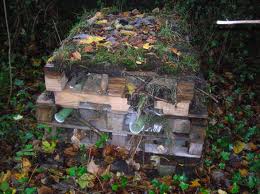
  8. Wood piles – insects colonise the decaying wood, attracting spiders and birds; beetles lay grubs; toads and hedgehogs hibernate underneath; slow worms use it as home (and these prey on slugs)

  9. Compost heap – provides both food for the soil and home for minute insects and other ‘mini beasts’ which feed birds, hedgehogs, toads. It also acts as a possible nesting place for hedgehogs, toads and slow worms.

  10. Bird and Bat boxes, tables, feeders and baths- put these up in secluded and sheltered spots out of full sun – and out of the reach of cats! Birds need extra food in winter. provide a range of foods according to the species you want to attract. Birds need to drink and bathe to keep their plumage in good order- even in winter, so keep birdbaths unfrozen

  11. Stones and walls- toads, newts and female frogs usually spend winter on land, under rockery stones (or in a log pile). Beetles, spiders, insects live in nooks and crannies

  12. Bug hotels’ can provide a ‘man made’ substitute for the above, and are good fun to make with children.

'Bug Hotels' can provide a 'Des Res' for many insects and other critters

‘Bug Hotels’ can provide a ‘Des Res’ for many insects and other critters

Further information: A range of useful wildlife gardening guides

Old School Gardener

Chinese Carvery

It all started out with a simple tree trunk...

‘One tree, four years of work and an indescribable amount of talent: that’s what it took to create this incredible masterpiece. A famous Chinese wood carver chopped down a single tree and tirelessly worked on it for over four years to make this piece. Your jaw will hit the floor when you see what he created.’

Click on the picture for the full story…

Old School Gardener

shinealightproject's avatarShine A Light

chairs pic 1

Chairs are something that we have a lot of at the superstore, as you can see from the above photo (although there are actually much more than that!). You may not think they are a very exciting topic, but if you sit (preferably on a chair) and have a read of this blog hopefully I can change your mind (or at least show you some nice pictures).

Chairs have many different shapes, sizes and functions. While their form follows a fairly simple template of a seat, back, arms and legs, the particular design of a chair is what really makes them unique.

The specific design of a chair could simply be due to creative thought, or influenced by the materials that are available or the space in which it has to fit. It may also be dependent on the type of sitter it was designed for, or the location…

View original post 694 more words

IMG_4966A year ago today I posted my first article on Old School Garden. Thank you to all those people who have taken the trouble to read that and the more than 1000 articles or other posts I’ve made since then. And a special thanks to those who are regular followers of Old School Garden.

So what have I achieved and what has been the experience?

First the ‘metrics’ for the last year:

  • 1018 posts or articles published (including re-blogs)

  • Over 40,000 ‘hits’ or ‘views’ from visitors in 129 countries with the highest dally total views being 429. The average daily views is now standing at well over 100.

  • Over 5,000 posts were shared by visitors via Facebook, Twitter and a wide range of other platforms

  • 1,653 ‘followers’ alerted to new posts via Twitter, Facebook, LinkedIn and directly via email (the latter has grown in the year to 285 followers)

  • Over 900 comments, including 300 of my own in reply to others, with recycling projects and ‘Picposts’ generating most comments

  • Not surprisingly the United Kingdom, USA, Canada and Australia account for over 80% of the hits (the U.K. alone 46%)

  • Overall, the most viewed posts seem to be about recycling projects (interest in projects in the garden using pallets and other recycled materials seem to be really popular, as have posts dealing with design, gardening techniques and play)

  • 21% of the views have been generated by internet searches using a wide range of search terms, and a further 10% via Twitter and 6% each via Facebook and Pinterest

I’m not sure if these figures are impressive or not – my guess is that they’re probably ‘middling’ when compared to the full range of numbers achieved by different blogs.

Pallet furniture and other garden recycling projects seem to have been especially popular this last year

What has been my blogging experience?

I’m pleased at the overall numbers of people who have viewed the blog and that many have ‘liked’ or commented on the articles and other material I’ve shared.

I’ve been surprised at how some posts have generated enormous interest, with views ‘spiking’ on recycling posts in particular.

I’m pleased that my efforts to inform about gardening using a range of post types seem to have been well received; examples include ‘GQT’; ‘A-Z of Perennials; ‘Plantax’; monthly ‘top tips’ and various series on design topics, climate change, school gardening etc.

I guess I’m feeling that I haven’t yet ‘found my audience’ with the blog and that I seem to have generated only a small (but nonetheless very valued) community of followers who are stimulated enough to contribute to developing ideas and knowledge via comments.This may be in part due to my eagerness to produce a relatively large number of posts only a few of which have been structured and styled to generate debate.

So, I think I need to revise my blogging strategy. Perhaps I need a combination of meatier items, more of which are focused on developing ideas and seeking opinions, but retaining a mix of other types of post (but maybe reducing the frequency of these?). To ‘educate, inform and entertain’ (a la BBC) but with ‘stimulate’ perhaps added?!

What do you think? I’d love to hear from you!

Old School Gardener

← Back

Thank you for your response. ✨

aseasyasriding's avatarAs Easy As Riding A Bike

I was struck by two details from yesterday’s blogpost by Mark Wagenbuur, about early protests for child-friendly streets in Amsterdam in the 1970s – details that highlight the importance of the quality of the physical environment for enabling cycling, over and above any prevailing national culture or attitudes.

The first instance was the contentiousness of the changes being proposed to the streets in Mark’s post. One Dutchman, surrounded by children, argued that it was ‘impossible’ to create a street without motor traffic on it. You can see this in the video, about 2:30 in.

Screen shot 2013-12-12 at 14.37.04

These were residential streets, which now have motor traffic filtered out, as Mark describes in his post. This is an almost universal treatment across residential areas in the Netherlands now, but back then, the notion of doing this was evidently completely foreign to this gentleman. These streets were for driving. (These attitudes were reflected…

View original post 790 more words

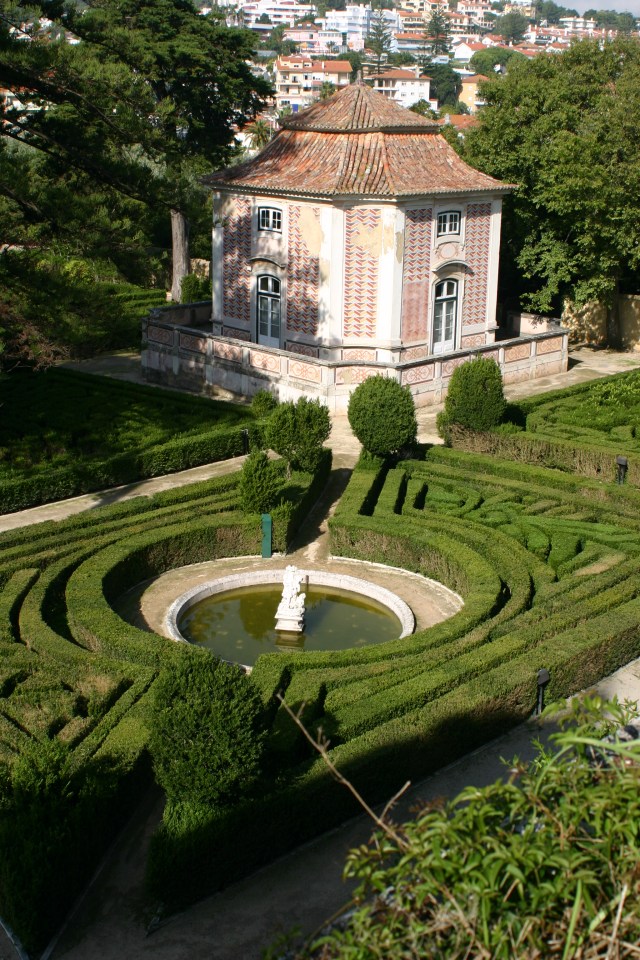
IMG_8032Our October visit to Portugal concluded with a day packed with garden visits to the west of Lisbon and in the regal suburb of Sintra to the north- home to many a splendid palace and garden.

We began at a restored baroque garden in the riverside  town of  Caxias. The Quinta Real de Caxias is located quite close to the train station (direct services to and from Lisbon). It was a leisure residence of Queen D. Maria I, as well as the home of King Luís for a few weeks, before he moved to the Ajuda Palace (which we’d visited a few days before).

Inspired by the gardens at the Palace of Versailles, the formal parterres- woven in intricate patterns – are interspersed with various water features, statuary and tall Brazilian pine trees.

The waterfall, ornamented with terracotta statues (of the Machado de Castro school), is the centre piece. Set out at the end of the principal avenue the fountain itself (made out of weather – beaten limestone), is flanked by two wings of tiered terracing, accessed by staircases at either end – the perfect spot form which to view the patterns of the box parterres.

Awarded a European Prize for the Recovery of Historical Gardens, the local Council has done a superb job in restoring much of the baroque splendour of this ‘off the beaten track’ haven. I could have spent hours here ‘chilling out’ – and it would have been even more alluring if the water features had been in operation. Maybe that’s something for the next phase of restoration?

Old School Gardener

PicPost: Triple Lock

Picture via Camsaw

IMG_7228There’s been a brewery and garden here since 1795. Perched on the north bank (or ‘brink’) of the River Nene in Wisbech, Cambridgeshire, Elgood’s Brewery remained virtually unaltered until the Second World War.

The established Victorian garden was ripped up and as much land as possible devoted to growing food for the war effort. After being turned over to grass for many years, 1993 saw the discovery of some old photographs of the original garden and it was decided to both restore some of the old spaces and features and to create new areas.

The structure of the garden today owes much to the framework of superb specimen trees which survived over the centuries; Ginkgo, Cedrus, Liriodendron and Salix to name but a few. These were mainly provided by members of Wisbech’s famous banking family, the Peckovers, who themselves established a grand Victorian garden a few paces down river at what is now called Peckover House.

Some important features such as the maze (of Thuja and Laurel and featuring old brewery and garden objects as focal points), walled garden, Japanese garden, rockery, water features, glasshouses and herb garden have been recreated. These are complemented by a modern grass and bamboo garden with contemporary water features. And there are typical Victorian ‘swags’ (ropes) over which climbing roses clamber as well as arbours featuring two varieties of hop (‘Fuggles’ and ‘Challenger’) – both of which feature in Elgood’s beers.

The modern additions have added to what is a typically eclectic mix of curiosities and attractive garden features. Well worth a visit, and can be combined for a full day’s outing with nearby Peckover House and the Georgian town of Wisbech.

Hops- ornamental and useful for brewing too!

Further information:

‘Banker’s Bonus- secret garden gem 

Oranges in the Fens

Elgood’s website

Old School Gardener

Finding Nature

Nature Connectedness Research Blog by Prof. Miles Richardson

Norfolk Green Care Network

Connecting People with Nature

Discover WordPress

A daily selection of the best content published on WordPress, collected for you by humans who love to read.

Susan Rushton

Celebrating gardens, photography and a creative life

Unlocking Landscapes

Writing, photography and more by Daniel Greenwood

Alphabet Ravine

Lydia Rae Bush Poetry

TIME GENTS

Australian Pub Project, Established 2013

Vanha Talo Suomi

The Journey from Finnish Rintamamiestalo to Arboretum & Gardens

Marigolds and Gin

Because even in chaos, there’s always gin and a good story …

Bits & Tidbits

RANDOM BITS & MORE TIDBITS

Rambling in the Garden

.....and nurturing my soul

The Interpretation Game

Cultural Heritage and the Digital Economy

pbmGarden

Sense of place, purpose, rejuvenation and joy

SISSINGHURST GARDEN

Notes from the Gardeners...

Deep Green Permaculture

Connecting People to Nature, Empowering People to Live Sustainably

BloominBootiful

A girl and her garden :)