Latest Entries »

PicPost: Floweride

IMG_6457

The ‘Cornwall Gardens Guide’ mentions 9 gardens beginning with ‘Tre’ (Cornish for ‘homestead’ or ‘town’). Having just returned from two weeks there and in Devon, I visited three of these (Trengwainton and Trelissick as well as Trerice) as well as Godolphin, Glendurgan and St. Michael’s Mount. They all share Cornwall’s mild climate and several have river valley settings and their associated semi – tropical microclimates. Despite these similarities, I found these wonderful gardens to have a range of distinctive styles or features, largely reflecting the historic interests of their owners and gardeners.

Over the coming weeks I’ll do a photo feature on each of these as well as Killerton Gardens (near Exeter, Devon) and will throw in a couple of very special places – the Barbara Hepworth Sculpture Garden in St. Ives and Chysauster Ancient Village, both in Cornwall. I begin where we began our tour, at Trerice near Newquay, a place we visited en route to our destination of St. Ives. This Elisabethan house and gardens is described by the National Trust as:

‘An intimate Elizabethan manor and a Cornish gem, Trerice remains little changed by the advances in building fashions over the centuries, thanks to long periods under absentee owners.’

The house is certainly delightful to look at, with its rust coloured granite stone, ‘dutch’ gables and ancient leaded windows – many of which are cracked from the test flights of ‘Concorde’ 50 years ago! These ‘sonic booms’ must have been especially noticeable in  what is otherwise a very quiet, peaceful place, far away from busy roads or settlements (we managed to get very lost in some frighteningly narrow country lanes trying to find our way to our next destination).

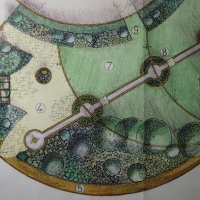
A formal approach to the house sets it off beautifully and the other garden areas include a grass labyrinth, ancient bowling alley, a woven – fenced kitchen garden and some more recent sloping borders containing a mix of food and ornamental plants – I imagine this might be something of a challenge at harvest time! Of particular interest is an Elisabethan garden in the making, based on a ceiling design in the house as a nod to the sort of layout the original might have been based on, records of what actually existed not being available. This was in the course of setting out when we visited, but a very good artist’s impression shows how this will look – a formal pattern of Box hedging enclosing lavender and roses, which will be a great addition to these lovely gardens.

And the house is of great interest too, with some very friendly and helpful guides to show you around and help you (and any younger members of your party) try on suits of chain mail and pose with a longbow!

Further information:

National Trust web site

Old School Gardener

If you’ve enjoyed reading this post and others on this blog, why not comment and join others by signing up for automatic updates via email (see side bar, above right ) or through an RSS feed (see top of page)?

gillians's avatarPlant Heritage

In Sussex they may well have done so judging by the statues on the Centurion Way.  This cycle route runs from West Dean to near the Roman Palace of Fishbourne on the outskirts of Chichester and provides a welcome alternative to the busy A roads.  On Sunday Mercy met me in Midhurst and we took this route and Salterns Way which takes the cyclist out onto the flats leading to the Witterings.  I am cycling to Amsterdam this coming weekend, so this was to be my final training ride, combined with a visit to Andrew Gaunt’s National Collection of Hedychium.

Transported to the tropics by the scent inside the huge glass house, we were able to see a huge number of cultivars in shades of the brightest orange through yellows and pinks to white.  Some are hardy enough to grow outside – I mulch mine heavily and they have survived the last…

View original post 326 more words

jessicaatousewasheslps's avatarOuse Washes: The Heart of the Fens

Heritage Lottery FundFreshwater wetlands are considered to be one of the most important natural resources. They provide food, fuel, store and filter water, buffer against flooding and, store carbon. Wetlands are also important sites of recreation, allowing people to get in touch with nature. They also preserve important archaeological records such as organic materials and paleo-environmental deposits.

Over the past 1000 years, wetland habitats have been drained, developed on or polluted leading to a 90% loss of wetland area. Over the past 50 years, more than 100,000 wetland archaeological sites have also been damaged or lost. The dramatic loss of wetlands can be seen in the below maps.

As a consequence of habitat loss, wildlife and ecosystem services have declined or been lost. The majority of fragmented and diminished wetlands currently within the UK’s are also in poor condition.

In 2008 English Heritage, the Environment Agency, Natural England, the RSPB and the…

View original post 334 more words

gressenhallfw's avatarGressenhall Farm and Workhouse

How time flies when you’re having fun! My twelve month contract as a Heritage Gardening Trainee at Gressenhall has gone in the blink of an eye. It seems barely credible that it’s a year since I started going through the formal induction process, learning how to fill in my hours sheet, file an expenses claim and keep a weekly diary, not to mention the joys of the onsite walkie-talkies and learning everyone’s names. And this is before I even got near a hand-trowel.

The gardening was what it was all about though, not least getting to know the volunteer gardening team. Working mainly in Cherry Tree Cottage garden, I quickly came to learn what a lovely space this garden is to work in, something I could only conclude was down to the effort put in by the volunteers over many years. I’ve always thought this garden space, more than any…

View original post 493 more words

PicPost: Pebble Dash

Domestic Scale Rain Garden

Rain Gardens

‘A rain garden is a planted depression or a hole that allows rainwater runoff from impervious urban areas, like roofs, driveways, walkways, parking lots, and compacted lawn areas, the opportunity to be absorbed. This reduces rain runoff by allowing stormwater to soak into the ground (as opposed to flowing into storm drains and surface waters which causes erosion, water pollution, flooding, and diminished groundwater). They can be designed for specific soils and climates. The purpose of a rain garden is to improve water quality in nearby bodies of water. Rain gardens can cut down on the amount of pollution reaching creeks and streams by up to 30%.’

Source: http://en.wikipedia.org/wiki/Rain_garden
Tutorial: seagrant

via Avantgardens

church

I came across this poem the other day. It’s written by a chap called Jack Kett, a lovely Norfolk man who was a former Head teacher at the local school and lay preacher at our local church, St. Peter’s, Haveringland. He and his wife were well known local charatcers who have both now passed on. Many of Jack’s poems describe the local Norfolk landscape.

You may recall that some of the money raised from our recent ‘Open Garden’ event is going towards the upkeep of St. Peter’s, which can be seen from our garden. This important local landmark is, sadly, no longer regularly used for church services, but it has a rich history, including having a second world war airfield plonked next to it, which has resulted in the church being a rather lonely feature in an otherwise flat landscape – the ‘Church in the Fields’.

St.  

St.   St. Peter’s Church, Haveringland

‘Lift up your eyes, and look on the fields’,

He said, ‘your lesson to learn’.

And here, in Haver’land’s fields today,

We also, in our turn,

Witness the pageant of seasons,

The ever – changing scene,

Which, where men work along with God

Turns gold, or brown, or green.


Let us remember our forbears,

Who in the years gone by

Surveyed a scene so different,

Yet under the same great sky.

The days of the Abbey, the Market,

The Manor, the Hall – all pass

Each down the road of history,

Now rubble under the grass.


Wars and rumours of wars have come

And gone, like the stately trees,

And now, where the noisy engines roared

We hear the hum of the bees.

We live in a world of changes,

Yet surely the lesson is clear –

Amidst it all, as on a rock,

St. Peter’s  stands here,


Symbol of Truths that never change,

Of a faith that never yields,

And we find the Eternal Peace of God

In His Church among the fields.


Jack Kett , 1960

Old School Gardener

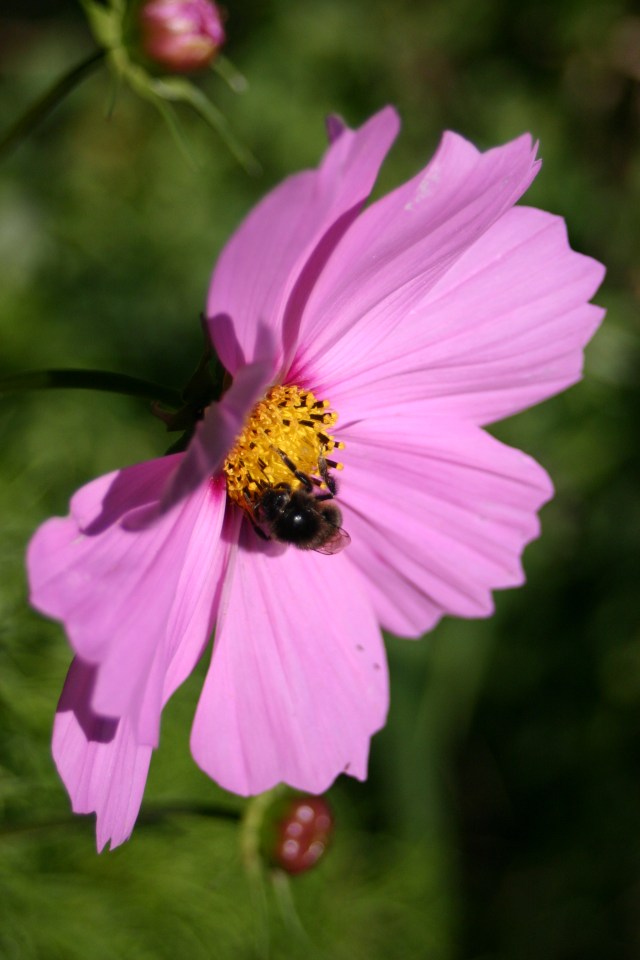
Cosmos looking good at Old School Garden

Cosmos looking good at Old School Garden


To Walter Degrasse

Dear Walter,

Sorry for the delay in this month’s letter. Having been away for a couple of weeks, I find myself playing ‘catch up’ in the garden and in many other respects too! The past month in the garden has been a relatively quiet one. The continued dry, hot weather has had a marked impact on the state of the plants, and not having been here for a fortnight has also left its mark, though I’m blessed with some very kind, helpful neighbours who have at least kept most of the vulnerable things watered – more on that later.

It was a joy seeing you and Lise at the beginning of the month, and I’m glad you enjoyed your visit and what you saw in the garden. That new crop protection netting I was telling you about arrived just before I went on holiday and this meant I was able to get it set up over a wooden and twine  frame to cover my recently – planted Purple Sprouting Broccoli and Calabrese. You remember this has a smaller mesh than the previous one I’d been using and is supposed to prevent Cabbage White butterflies getting at the brassicas? Well, it came just in time (or so I thought), as the beginning of August saw an explosion in these pretty but annoying pests that lay their eggs on the undersides of Brassica leaves leaving a legacy of a host of hungry caterpillars that destroy your best Brassica efforts!

As we departed on holiday (I’ll be doing a few posts about the various gardens we visited whilst in Devon and Cornwall), the Agapanthus was coming into flower and I had hopes that my Tithonia (‘Mexican Hat flower’) and Cleome (‘Violet Queen’) were finally putting on flower buds. The late Spring seems to have delayed their development somewhat.

What it is to have good neighbours!  Our next door neighbours Rob and Wendy were happy to water the containers and greenhouse etc. whilst we were away, though they were themselves due to go on holiday a couple of days before our return, so I was a little concerned that things might just wilt before I could get to them. I had no need to worry, for on my return – in fact the very evening I went round and started watering things – I stumbled across our next to next door neighbour, Norman, who had just finished watering the containers in the Courtyard! He had apparently been tasked by Wendy to carry on with the watering in their absence! I thanked him for this kindness and remarked on my pleasant surprise at the healthy look of most of the plants.

On closer inspection, and looking beyond the containers, greenhouse, cold frame etc., I discovered that the pests had been at play while we had been away! Moles had decided the time was right to dig up various spots in the lawn (their activity might have been prompted by one day of heavy rain) and when I inspected the brassicas I found not very much left of the Cauliflowers, Calabrese and Broccoll previously mentioned! In fact the caterpillars had been busy and stripped every last leaf! The Red Cabbages looked reasonably OK, though even here there was clear evidence of caterpillars starting to munch their way through the tightly drawn heads. So a quick harvest of those was in order (and the 4 heads i salvaged are being cut up and cooked for storage as I write). So, i can only guess that the little varmints (in egg form) had somehow been deposited on the plants before my new ‘butterfly proof’ netting was in place! Oh well, it’ll be different next year… I might just try one last sowing of Sprouting Broccoli and Calabrese, to get us some home-grown greenery in the winter months. We’ve also been harvesting courgettes (some interesting ‘patty pan’ ones  included), and the tomatoes and cucumbers as well as autumn raspberries and blackberries are looking great. The apple and plum harvest to come is also looking very promising and I’ve even found a first pear on one of the ‘super column’ fruit trees I planted a year or two ago. This year looks like a good one for fruit, as everyone is saying.

The flower garden is hanging in there. The Tithonia and Cleome have fulfilled their promise and are adding some bright colour (along with cosmos, Achillea, Phlox, Helianthus, etc.) to the late summer borders, once again complemented by the burnished stems and seed heads of the various grasses that intermingle in the main borders. I’m especially pleased with the mix of Verbena bonariensis and Nicotiana that underscores the view to St. Peter’s church. The Nicotiana’s perfume of vanilla is wonderful too.

This slideshow requires JavaScript.

Having had the late ‘bank holiday’ my mind definitely turns to autumn and so the coming month will be very much about managing a mix of harvesting (especially fruit), dead – heading and coaxing the last flowers as well as gradually clearing up those plants that have finsihed flowering and whose foliage won’t add anything to the winter garden in terms of structure or wildlife value.

Further afield I popped into Gressenhall Farm and Workhouse Museum (where you know I’m a garden volunteer). The gardens here seem to be surviving the hot dry weather pretty well. However, the sweet peas and container plants are obviously struggling with lack of water (though I was told that the Museum had had some pretty heavy showers at the weekend). I spent a couple of hours watering, dead heading and weeding and also helped contribute to a new film being produced for the museum website . This is going to ‘cameo’ some of the many volunteers here in order to provide some information for anyone thinking of joining the volunteer team. I had to say a few words about my time as a volunteer, how I’d helped to redesign and renovate some of the gardens and my time as a Heritage Gardening trainee last year. This all seemed to go well, but a few hours afterwards I received an email from one of the film crew saying that because the sun had glinted on my glasses, that this had somehow affected the focus of the whole sequence – hence the need for a rerun next week- at least I’ll have had practice at my lines!

Its back to school here next week, and so Deborah is gearing herself for the return to our local primary school. I will no doubt also be having some discussions with the Outdoor Learning Coordinator about the year ahead in the School Garden, Hopefully we can build on the progress we’ve made this year and ensure the children all get a chance to work, learn and enjoy the garden through the different seasons.

That’s about all the news from here at present. Hopefully you and Lise are enjoying  the late summer sun, as we are. It somehow seems easier to sit and view (and snooze) in the garden at this time of year, occasionally harvesting some produce, pulling up the odd weed or cutting the lawn, rather than the more frantic, continuous activity needed to cope with the surge in growth that is spring and early summer – an altogether more relaxing time!

Old School Gardener

Other posts in this series:

Dear Walter…. letter from Old School Garden 22nd July 2013

Dear Walter…. letter from Old School Garden 21st June 2013

Dear Walter….letter from Old School Garden, 20th May 2013

Dear Walter….letter from Old School Garden, 18th April May 2013

Dear Walter….letter from Old School Garden, 11th March 2013

Dear Walter… letter from Old School Garden: 15th February 2013

If you’ve enjoyed reading this post and others on this blog, why not comment and join others by signing up for automatic updates via email (see side bar, above right ) or through an RSS feed (see top of page)?

Finding Nature

Nature Connectedness Research Blog by Prof. Miles Richardson

Norfolk Green Care Network

Connecting People with Nature

Discover WordPress

A daily selection of the best content published on WordPress, collected for you by humans who love to read.

Susan Rushton

Celebrating gardens, photography and a creative life

Unlocking Landscapes

Writing, photography and more by Daniel Greenwood

Alphabet Ravine

Lydia Rae Bush Poetry

TIME GENTS

Australian Pub Project, Established 2013

Vanha Talo Suomi

The Journey from Finnish Rintamamiestalo to Arboretum & Gardens

Marigolds and Gin

Because even in chaos, there’s always gin and a good story …

Bits & Tidbits

RANDOM BITS & MORE TIDBITS

Rambling in the Garden

.....and nurturing my soul

The Interpretation Game

Cultural Heritage and the Digital Economy

pbmGarden

Sense of place, purpose, rejuvenation and joy

SISSINGHURST GARDEN

Notes from the Gardeners...

Deep Green Permaculture

Connecting People to Nature, Empowering People to Live Sustainably

BloominBootiful

A girl and her garden :)