Latest Entries »

IMG_9760I finally fulfilled a long-held ambition last week – to visit Hatfield House, Hertfordshire, especially to see the gardens. Visiting with old friends Dave and Jen, we were first blown away by the sumptuous house with its amazing range of paintings, furnishings, panelled walls and most of all the ceilings- a testament to old-fashioned craftmanship – and lots of dosh! The Hatfield House website says of the house:

‘Hatfield House is the home of the 7th Marquess and Marchioness of Salisbury and their family. The Estate has been in the Cecil family for 400 years. Superb examples of Jacobean craftsmanship can be seen throughout the House.

In 1611, Robert Cecil, 1st Earl of Salisbury built his fine Jacobean House adjoining the site of the Old Palace of Hatfield. The House was splendidly decorated for entertaining the Royal Court, with State Rooms rich in paintings, fine furniture and tapestries.

Superb examples of Jacobean craftsmanship can be seen throughout Hatfield House such as the Grand Staircase with its fine carving and the rare stained glass window in the private chapel. Displayed throughout the House are many historic mementos collected over the centuries by the Cecils, one of England’s foremost political families.’

This slideshow requires JavaScript.

The outside areas were equally enjoyable, with a range of gardens and parkland, currently home to a display of provocative, beautiful and fun sculptures.

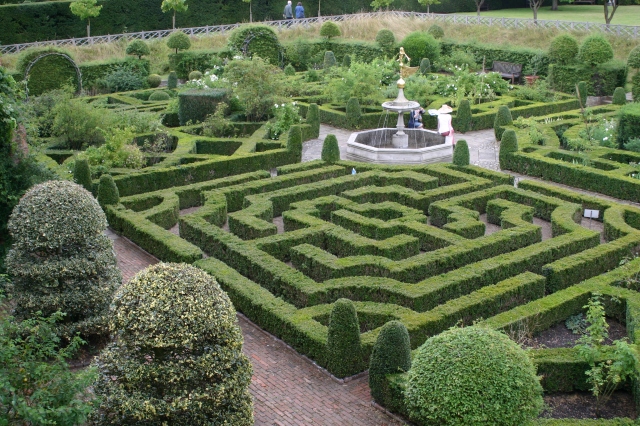
The West Garden was a little past its best when we visited, but was probably a wonderful display of colour just a few weeks earlier from the many herbaceous plants, roses and shrubs set out there. The climax, for me, was the wonderful Tudor Garden with its intricate box knots and clipped hollies. Here’s what the Hatfield House website says about the gardens:

‘The garden at Hatfield House dates from the early 17th century when Robert Cecil employed John Tradescant the Elder to collect plants for his new home. Tradescant was sent to Europe where he found and brought back trees, bulbs, plants and fruit trees, which had never previously been grown in England.

Visitors can enjoy the sundial garden and fountains, and view the famous knot garden adjoining the Tudor Old Palace where Elizabeth I spent much of her childhood. Following the fashion for landscape gardening and some neglect in the 18th century, restoration of the garden started in earnest in Victorian times. Lady Gwendolen Cecil, younger daughter of Prime Minister Salisbury, designed the West Garden as it is today.

The adjoining woodland garden is at its best in spring with masses of naturalised daffodils and bluebells.

The East Garden was laid out by the 5th Marquess of Salisbury. This part of the Garden has elegant parterres, topiary and rare plants are a delight for the gardening enthusiast and for those wishing to spend a quiet time in idyllic surroundings. Designed to be viewed from the first floor of the House, the East Garden is only open to the public on one day each week during the visitor season.

The Garden is maintained by Lady Salisbury and her small team of gardeners’

This slideshow requires JavaScript.

Further Information: Hatfield House Website

Old School Gardener

via la Bioguia

via la Bioguia

Jardin's avatarJardin

Leonardo da Vinci was already in his sixties when he was prevailed upon by King Francis I to move to the French court at Amboise in the Loire valley.

Chateau d'Amboise Chateau d’Amboise

The King provided the Château du Clos Lucé, 300 metres from the royal Château d’Amboise – “here you will be free to dream, to think and to work”, said the king, and it was here that da Vinci was to spend the remaining three years of his life, working on perfecting his inventions, his creative mind never still.

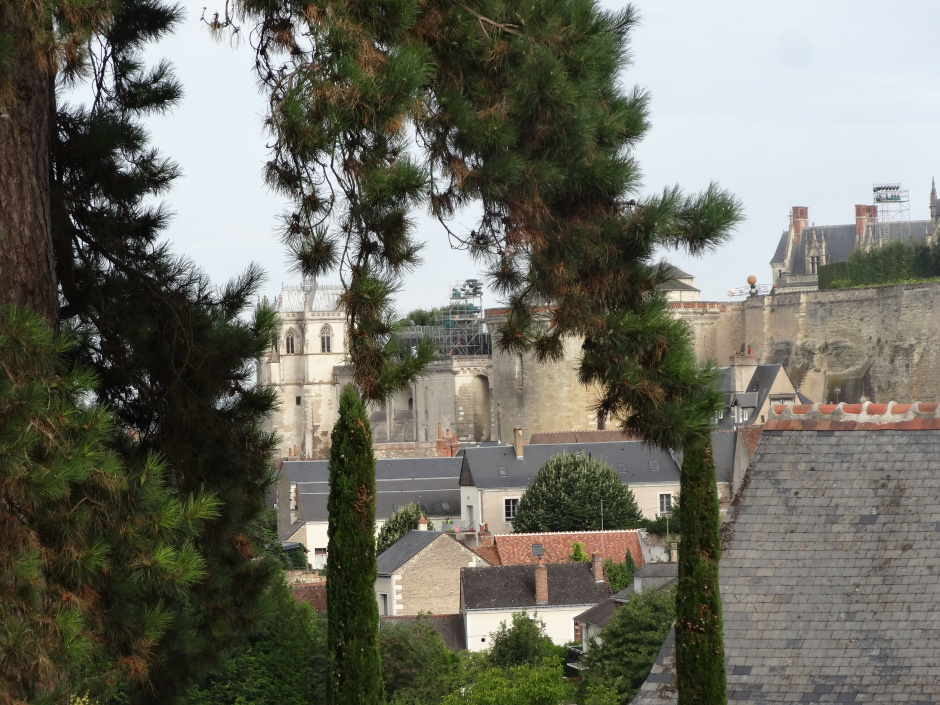
The view from da Vinci's bedroom of the Chateau d'Amboise and the Church of St Hubert, where he was buried The view from da Vinci’s bedroom of the Chateau d’Amboise and the Church of St Hubert, where he was buried.

Da Vinci was a true Renaissance man, not just the artist renowned for “The Last Supper” and “Mona Lisa”, but a sculptor, engineer, inventor, architect, anatomist, botanist and creator of lavish court festivities. At Clos Lucé today, reconstructions of…

View original post 379 more words

Brigid Jackson's avatararistonorganic

Sewefontein (1878) is a tranquil Old World farm accommodation located in the heart of Namaqualand.

The farm offers seven fresh water fountains, natural swimming pools in the river, hiking trails, waterfall and canyon, Rock Art, wild flowers, rich animal and bird life.
http://www.nieuwoudtville.com/sewefontein/

View original post

canwefeedtheworld's avatarOne Billion Hungry: Can We Feed the World?

ID-100223935New global trade deals are currently being negotiated, in part arising from the failings of the World Trade Organisation’s Doha Round. Proposals include the Trans-Pacific Partnership (TPP) and the Transatlantic Trade and Investment Partnership (TTIP). There are, however, many questions on what these agreements will include and what they will mean for those excluded, particularly poorer, developing countries.

Transatlantic Trade and Investment Partnership

The Transatlantic Trade and Investment Partnership (TTIP) is a proposed free trade agreement between the European Union and the United States that could be finalised by the end of 2014. On the one hand such an agreement could boost multilateral economic growth while on the other it could increase corporate power perhaps at the expense of public benefit.

Although the EU released a document in July entitled, State of Play of TTIP negotiations ahead of the 6th round of the negotiations, the content of negotiations…

View original post 1,192 more words

'Flight of the Swallow, via Ancient Art of Stone
‘Flight of the Swallow, via Ancient Art of Stone

ilex aquifoliumIlex, or the holly genus, is a genus of 400 to 600 species of flowering plants in the family Aquifoliaceae, and the only living genus in that family. The species are evergreen and deciduous trees, shrubs, and climbers from tropics to temperate zones worldwide. In Europe the genus is represented by a single species, the classically named holly, Ilex aquifolium.

ilex aquifolium botanicalCommon name: ‘Holly’  or ‘Common Holly’- the name “holly” in common speech refers to Ilex aquifolium, specifically stems with berries used in Christmas decoration. By extension, “holly” is also applied to the whole genus. The origin of the word “holly” is considered a reduced form of Old English hole(ġ)n, Middle English Holin, later Hollen.

Native areas: Ilex aquifolium is native to western and southern Europe, northwest Africa, and southwest Asia.

Historical notes: Ilex in Latin means the holm-oak or evergreen oak (Quercus ilex). Despite the Linnaean classification of Ilex as holly, as late as the 19th century in Britain, the term Ilex was still being applied to the oak as well as the holly – possibly due to the superficial similarity of the leaves.

Ilex aquifolium

Ilex aquifolium

Features: Holly is an evergreen, conical tree growing to 5-10 metres tall. The leaves are 5–12 cm long and 2–6 cm broad; they are evergreen, lasting about five years, and are dark green on the upper surface and lighter on the underside, oval, leathery, shiny, and about 5 to 9 cm long. In the young and in the lower limbs of mature trees, the leaves have three to five sharp spines on each side, pointing alternately upward and downward, while leaves of the upper branches in mature trees lack spines.

The flowers are white, four-lobed, and pollinated by bees. Holly is dioecious, meaning that there are male plants and female plants. The sex cannot be determined until the plants begin flowering, usually between 4 and 12 years of age. In male specimens, the flowers are yellowish and appear in axillary groups. In the female, flowers are isolated or in groups of three and are small and white or slightly pink, and consist of four petals and four sepals partially fused at the base. The ‘berry’ fruit is a red drupe, about 6–10 mm in diameter, a bright red or bright yellow, which matures around October or November.

Several varieties and clones are available with different features such as variegated foliage with creamy or pink tinged edges and different leaf shapes. Some of these are:

Ilex aquifolium ‘Alaska’– dark green foliage and bright red berries, can be grown as a standard/ specimen or screening.

Ilex aquifolium ‘Argentea Marginata’– with an Award of Garden Merit, this variety has spiny leaves edged with white and plenty of berries, young leaves tinged with pink.

Ilex aquifolium ‘J.C. Van Tol’– a self pollinating holly and possibly the best green-leaved holly available. Dark green almost sineless leaves witha good show of autumn berries. Also awarded an AGM, it is tolerant of shade.

Ilex aquifolium ‘Pyramidalis’– fast growing, self pollinating. Another AGM winner, it retains its pyramidal shape if pruned to retain it’s leader.

Ilex aquifolium ‘Silver Queen’– this is a dense small evergreen tree or shrub with purple young shoots and pink-tinged young leaves. Mature leaves spiny, dark green with a broad cream margin. Flowers small, white – this variety is, despite it’s name, a male!

Other Ilex varieties that are not part of the aquifolium species include:

Ilex castaneifolia– the ‘sweet chestnut leaved’ holly this is a fast grower, AGM awarded and produces a large tree of conical habit and has red berries in abundance.

Ilex x ‘Dragon Lady’– one of the Meserve Hybrid hollies this one has vivid green leaves and attractive spines that contrast well with the large red berries in the autumn.

Ilex x ‘Nellie Stevens’– this hybrid (of Ilex aquifolium and Ilex cornata) has smooth glossy leaves which contrast well with the orange-red berries.

Ilex x altaclarensis ‘Golden King’ – one of the best variegated hollies, this AGM winner is tolerant of coastal conditions, and is slow-growing. The opposite to the variety ‘Silver Queen’, this time, despite its name it is a female!

Uses:  One of the most evocative and best-loved of all trees; the Common holly is beautiful in its simplicity and brings cheer at the darkest time of the year. It provides year-round interest, but is particularly attractive in autumn and winter. great for gardens, it only retains its spiky leaves within the first ten – fifteen feet of height in the tree, as after this it suffers no predation so has no need of a thorny defence system! use as an under storey or edge fo woodland tree  (as here at Old School Garden), as a specimen (especially those with interesting foliage), for hedging/ screening or as a structural element in mixed borders to provide all-year round interest. Can also be topiarised to provide simple but effective shapes in formal settings.

 Growing conditions: Holly is very tolerant of shade and prefers well-drained soils.

Clipped hollies at Hatfield House, Hertfordshire

Clipped hollies at Hatfield House, Hertfordshire

Further information:

Wikipedia- Ilex

Wikipedia- Ilex aquifolium

RHS- Ilex aquifolium

RHS- Ilex aquifolium ‘Silver Queen’

Barcham trees directory- Ilex genus

7 plants for Winter Wonder

Old School Gardener

The English Walnut- creating a planting poser...

The English Walnut- creating a planting poser…

Whilst on holiday in Suffolk, recently, one of my friends, Richard (who lives in Bristol), posed an interesting question:

‘I have a Walnut Tree in the garden and have been trying to grow some plants in a raised area underneath it, against a wall. This area only gets early morning sun during the middle of the year. I believe that Walnuts deposit some sort of poison in the ground which affects the plants? Over 20 years I’ve managed to establish a small selection of plants through trial and error (mainly the latter); geraniums give some cover and with a ‘Chelsea Chop’ may give a second flowering, but only towards the lighter edge of the bed; Ivy seems to do well; I can squeeze out some summer colour by planting some annual begonias but these need a lot of watering. I’ve also tried several different ferns, but none have been a success to date. Any thoughts about planting the area, especially towards the back, would be welcome.’

Not having come across this issue before I did a bit of research and also sought some advice from the RHS Member’s Advice Service. There are two main species of Walnut tree; Black Walnut (Juglans nigra) – most common in North America (and native to eastern areas), and the English Walnut (Juglans regia), the type most often found in the U.K. Walnuts -especially Juglans nigra– contain a chemical called “juglone” which can be poisonous (or allelopathic) to other plants. Juglone appears to act as a respiration inhibitor which deprives sensitive plants of needed energy for metabolic activity.  For gardeners this means that many plants growing in the vicinity of a black walnut tree will either be killed or will struggle to live, with yellowing, wilting leaves.

Leaves and nuts on the Black Walnut

Leaves and nuts on the Black Walnut

Juglone is found in all parts of the black walnut tree, but it is most concentrated in the flower buds, nut hulls and roots. Unfortunately the roots of a black walnut can extend 3-4 times the diameter of the tree’s canopy, so the area affected is quite wide. Toxicity is further dependent on the soil’s texture and drainage. All walnuts – including the English Walnut- produce some juglone, as do the walnut relatives bitternut hickory, hickory, pecan and shagbark. However the amount of juglone produced is insignificant, compared to the black walnut, and the effect on other plants is minimal, if any.

Tomatoes seem to be the most sensitive to growing under black walnuts. However juglone sensitivity is also dependent on other growing conditions and what will or won’t grow under one black walnut tree may be fine under another. However, here is a compiled list of flowers and vegetables that are considered extremely sensitive to juglone.

Turning back to Richard’s question, Guy Barter, Chief Horticultural Adviser at the RHS, says:

‘In theory English walnuts secret Juglone and we would advise that it is not underplanted – in any case they cast such a heavy shade that few plants will thrive underneath a walnut. Of course roots spread out beyond the canopy but interestingly we seldom encounter difficulties in the UK. All the same it may be well to avoid apples and tomatoes near a walnut tree, or at least make some experimental plantings in the first instance. In the USA the light levels are very much higher and underplanting options greater and it is not surprising that problems arise.’

Not very encouraging, eh, Richard? You seem to have had some success with plants nearer the lighter edge of his planting area, and if you want to persist with trying to plant up this and the darker inner area, you might want to start by improving the growing conditions; maybe you can prune the tree a little to raise the crown and let in more light? Having a raised bed underneath is good because you can deepen the soil above the tree roots; and maybe you can also try to replace the topsoil which could over time become affected by juglone? It might also be a good idea to add organic matter each year and at the same time remove all the walnut tree leaves and litter and dispose of these – it’s probably best to avoid composting it.

As to planting, for the inner area (assuming that you can find planting pockets large enough around any tree roots), I’d try out a few small to medium – sized shrubs and other plants that tolerate heavy shade and dryish soil – in effect trying to create an ‘understorey’ with plants of varying heights and in a combination to provide something of interest all-year round. If you go down this route then try to get healthy, well-established plants (2-3 years old and/or in 3 litre pots). As Guy suggests, you’ll have to ‘trial’ these to see if they’re up to the task! My recommended ‘planting scheme’ would include, for the darkest area (and maybe including some Ivy as ground cover):

  • Lonicera pileata– spreading evergreen shrub with small creamy flowers in spring followed by purple berries; height 60cm (2ft), spread 2.5m (8ft)
  • Hypericum calycinum (‘Rose of Sharon’) – spreading shrubs with yellow flowers from mid summer. Height 60cm (2ft), spread indefinite
  • Vinca minor (lesser periwinkle) – mat-forming shrub with trailing shoots and violet-blue flowers from mid-spring to autumn. Height 10-20cm (4-8in), spread indefinite
Lonicera pileata

Lonicera pileata

If you’d like to increase the variety of your planting around the edge (and lighter) area, you could try in addition to your geraniums:

  • Cotoneatser simonsii– deciduous or semi-evergreen with good autumn leaf colour; small pink flowers in summer followed by bright orange-red fruit. Height 2.5m (8ft), spread 2m (6½ft)
  • Mahonia aquifolium– evergreen with yellow blooms in spring. Height 90cm (3ft); spread indefinite.
  • Sarcococca hookeriana var. humilis (Christmas box)- evergreen with scented flowers in winter. Height 60cm (2ft); spread 1.2m (4ft)

…and a couple of herbaceous perennials:

  • Bergenia– evergreen leaves may colour in winter; white, pink or red flowers in spring. Height 20-45cm (8-18in), spread 45-63cm (18-25in)
  • Tellima grandiflora – semi-evergreen, with greenish white flowers from spring to mid-summer. Self-seeds freely. Height 40cm (16in), spread 25cm (10in)

Tellima grandiflora

Tellima grandiflora

…and maybe one or two patches of bulbs/tubers?

  • Anemone nemorosa– white flowers from spring to early summer. Height 7.5-15cm (3-6in), spread more than 30cm (1ft)
  • Cyclamen hederifolium– attractively marked foliage and pink to maroon flowers in autumn, seeds freely. Height 10-13cm (4-5in), spread 15cm (6in)
  • Galanthus nivalis (snowdrop) – white flowers in late winter. Height and spread 10cm (4in)
  • Iris foetidissima (stinking iris) – blue flowers in late spring and orange berries in autumn/winter. Height and spread 40cm (16in)

If this all seems rather too much hassle, then you could always cover the bed with a landscape fabric and then put a layer of aggregate or other mulch- wood bark, slate chippings etc. This covering could be punctured at intervals for clumps of bulbs (see above) to give you some (simpler) interest throughout the year- and maybe end the years of heart ache trying to get things to work that just don’t stand much of a chance!

Sources and further information:

Black walnuts at About.com

RHS guide to planting under trees

Old School Gardener

If you’ve enjoyed reading this post and others on this blog, why not comment and join others by signing up for automatic updates via email (see side bar, above right ) or through an RSS feed (see top of page)?

moon gate

Old School Gardener

Finding Nature

Nature Connectedness Research Blog by Prof. Miles Richardson

Norfolk Green Care Network

Connecting People with Nature

Discover WordPress

A daily selection of the best content published on WordPress, collected for you by humans who love to read.

Susan Rushton

Celebrating gardens, photography and a creative life

Unlocking Landscapes

Writing, photography and more by Daniel Greenwood

Alphabet Ravine

Lydia Rae Bush Poetry

TIME GENTS

Australian Pub Project, Established 2013

Vanha Talo Suomi

The Journey from Finnish Rintamamiestalo to Arboretum & Gardens

Marigolds and Gin

Because even in chaos, there’s always gin and a good story …

Bits & Tidbits

RANDOM BITS & MORE TIDBITS

Rambling in the Garden

.....and nurturing my soul

The Interpretation Game

Cultural Heritage and the Digital Economy

pbmGarden

Sense of place, purpose, rejuvenation and joy

SISSINGHURST GARDEN

Notes from the Gardeners...

Deep Green Permaculture

Connecting People to Nature, Empowering People to Live Sustainably

BloominBootiful

A girl and her garden :)