Latest Entries »

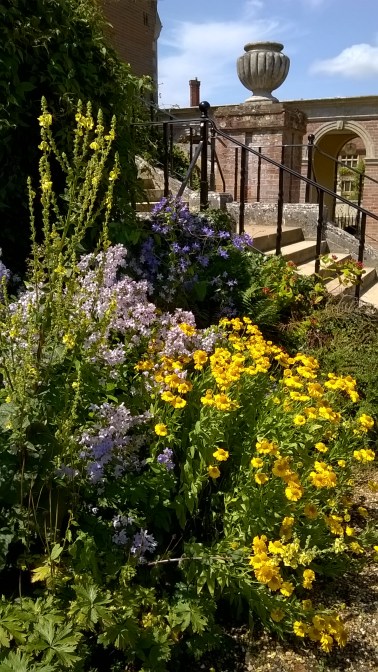
Blue Cosmos. Picture by Bonanza

Blue Cosmos. Picture by Bonanza

Lancelot Brown by Nathanial Dance, photo by dcoetzee

Lancelot Brown by Nathanial Dance, photo by dcoetzee

Throughout 2016 the work of Lancelot ‘Capability’ Brown will be marked with a festival of events celebrating his life, work and legacy – 300 years on from his birth.

Brown’s rich legacy of work ranges form Highclere Castle, the fictional home of ‘Downton Abbey’ to the well-known estates of Chatsworth, Blenheim and Stowe, to hidden gems such as Milton Abbey, Weston Park and Compton Verney. In 2016, there will be a range of events for everyone to enjoy – from the most ardent of fans, to those that know nothing of his work but simply enjoy stunning landscapes.

Some highlights include the opportunity to tour the grounds of Belvoir Castle, where a lost Brown design was recently rediscovered and implemented; his first and last known commissions; his longest commission; and some of his crowning achievements. The Capability Brown Festival 2016 has been funded by a £911,100 grant from the Heritage lottery Fund, and is managed by The Landscape Institute. Festival director Ceryl Evans said:

‘Brown’s work was groundbreaking. He blended art and engineering, and moved mountains of earth and villages, to create beautiful naturalistic landscapes which are still much admired today, 300 years after his birth.’

Brown's original plan for Blenheim

Brown’s original plan for Blenheim

A prolific landscape architect, Brown is associated with more than 250 sites across England and Wales, with many more parks and gardens around the world inspired by his work.

Audley End, Essex

Audley End, Essex

Capability Brown is a name well-known in gardening and landscaping circles, but among the general public his work and influence is less well-known. The Festival aims to address that gap as many of our best loved country houses are set as jewels in the wonderful landscapes he created, but often we recognise them for their architecture but sideline what makes them even more splendid –  their amazingly landscaped and seemingly natural settings.

Three centuries after Brown’s birth, the Festival presents a unique opportunity to take a fresh look at how the father of landscape architecture shaped the nation’s countryside.

Blenheim Palace Grand Bridge by Boddah at English Wikipedia

Blenheim Palace Grand Bridge by Boddah at English Wikipedia

Source: Landscape and Amenity Magazine, December 2015

Further information:

The Capability Brown Festival

Wikipedia- Capability Brown

Old School Gardener


PIC00103Moving to a new house with a garden that needs whipping into shape? Need help with an idea for improving part of your established garden? Or maybe you want to completely overhaul your current plot and need a masterplan for achieving your ideas over a number of years?

If you live in the Norfolk area and want to develop your ideas and design skills, in the company of like-minded people, I might be able to help.

I’ve been running a series of short courses to inform, inspire and improve the design skills of gardeners for some years, and I’m planning to kick off the next one in a few weeks time.

I’ve taken the opportunity of a new venue to review the content and programme of the course, also building on the positive feedback I’ve had from previous participants. I’m thrilled to be able to offer a course that’s based at the wonderful Blickling Hall Estate near Aylsham, and hope to take full advantage of it’s fantastic gardens to illustrate and reinforce some key ideas.

WP_20150716_12_09_50_ProAnd as well as visits to the gardens I’ll be using a combination of presentation, group discussion, one-to-one support, handouts, books to borrow and links to further information. You won’t need any special knowledge or skills in garden design or gardening; just the germ of an idea or plan for your garden, or maybe just a general interest in finding out more about garden design.

Venue: The Old School, Blickling Estate, near Aylsham, Norfolk

Times and dates: 10am -12 noon Tuesdays from 2nd February – 22nd March inclusive (excluding 16th February)

Cost: £70 (including refreshments)

For an outline of the Programme take a look here. If you want to find out more about me then take a look at the Page ‘About Me’ on this blog. If you’d like to discuss the course, how it might meet your needs or want to register, please call me on 01603 754250, or leave me a message via the contact form below.

alliums and laburnumI want participants to have the space, time and attention to address their individual needs, so places will be limited; if you’re interested, please get in touch soon!

Old School Gardener (Nigel Boldero)

← Back

Thank you for your response. ✨

dinner table

canwefeedtheworld's avatarOne Billion Hungry: Can We Feed the World?

ID-100383599Making small changes can have a big impact so this January do away with impossible-to-keep resolutions and do something that can make the planet greener, help local or distant communities and save you money. Make the change for over 66 days and, according to Lally et al (2010), it could become a new habit.

  1. Help tackle climate change

World leaders agreed the Paris Climate Deal in December, but tackling climate change will take all our efforts, not just politicians and big business. The transport sector in the EU is responsible for about one fifth of greenhouse gas emissions so help reduce this by taking public transport, combining trips and flying less (somewhat easier now with the rise of video/conference calls). The energy sector is responsible for almost 30% of emissions and so being more energy efficient is an important goal across industry and society. Learn how to make your…

View original post 578 more words

OK, this is cheating bit, I suppose. I wanted my fifth object to capture several things; but all of them involve cutting. Finally I decided on  a plant, or rather a plant treated in a particular way; topiary. In this case at Levens Hall, Cumbria.

levens hallPruning plants is a key gardening task; to stop or promote growth, to shape plants, to remove dead or diseased material, to propagate – and of course we should include grass cutting here.
I could equally have chosen a pair of secateurs or perhaps a lawnmower, but the clipped shapes of yew, box, or other species capture for me this important garden task and also symbolise what you might call the core ingredient of gardening; the conscious act of doing something to enable a plant to grow and to grow in a particular place or way.

Topiary’s clipped shapes transform the wayward beauty of nature into forms and masses which can add structure and give pleasure; when standing alone or providing a foil for swaying grasses, nodding allium heads or cottage garden favourites.

I know there is one school of thought that says this, sometimes drastic, technique seems unnatural, which is certainly true. But then again gardening is about the directing, guiding and controlling of nature. And I have to say, as a fan of topiary, it can make a garden fun. Just look at this combination of geometric shapes at Levens Hall, some of them centuries old. And when you search for topiary on the internet- which I suggest you do- you see all manner of human, animal and other forms, cleverly cultivated and maintained for our enjoyment.

One might almost say topiary puts a smile into any garden…

Old School Gardener

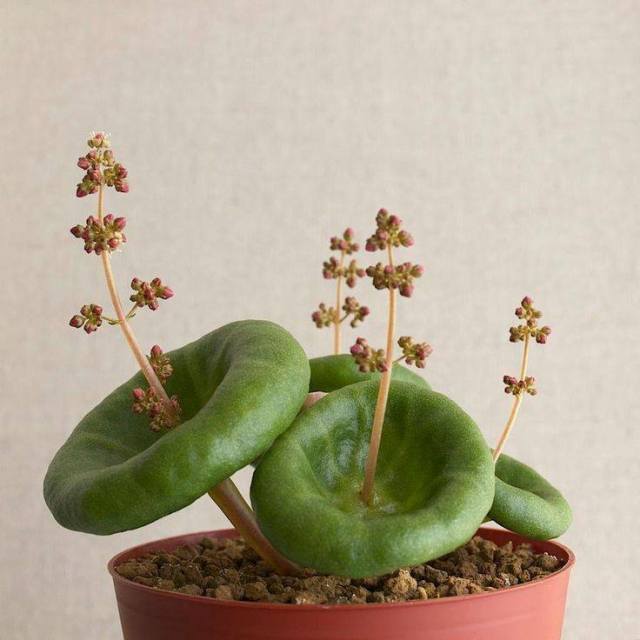
Crassula umbella

Crassula umbella

One of the nice things about having your own kitchen garden is the Gardener’s Tax. You probably haven’t heard it called that, but you know what I mean – the little tasty treats you ‘skim’ off the harvest, before it makes it into the kitchen 🙂 One of the plants I keep meaning to add…

via Gardener’s Tax — The Unconventional Gardener

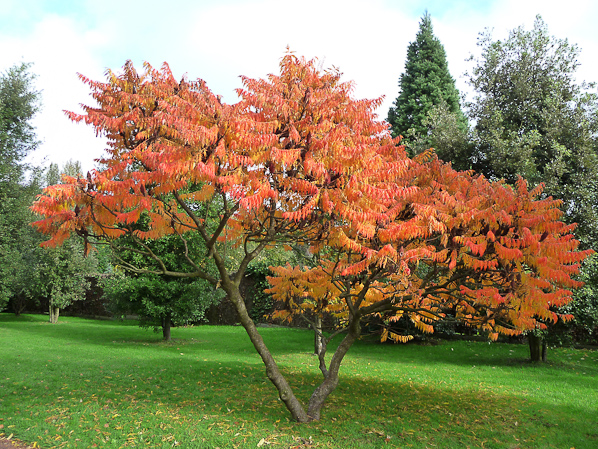
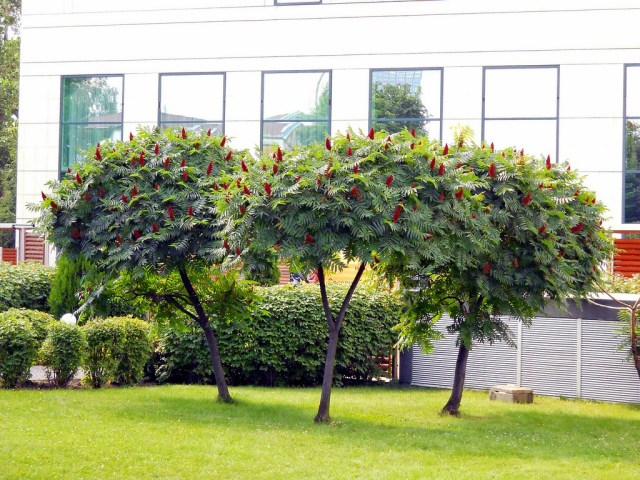
rhus typhina trio


This is a small tree (which can also be grown as a shrub) that can be a bit of a thug, as it spreads freely by root extension, but it’s lower growth is thin enough to allow other plants to live alongside it. I have a few here at Old School Garden and it is a great tree for adding an oriental feel, has interesting foliage (especially in the autumn) and some unusual flowers.

Common name: Stag’s Horn Sumac

Native areas: It is primarily found in Southeastern Canada, the Northeastern and Midwestern United States and the Appalachian Mountains, but is widely cultivated as an ornamental throughout the temperate world.

Historical notes: Introduced to the U.K. in 1620’s it won the R.H.S. Award of Garden Merit in 2002. Some beekeepers use dried sumac bobs as a source of fuel for their smokers. The fruit of sumacs can be collected, soaked and washed in cold water, strained, sweetened and made into a pink lemonade. The leaves and berries have been mixed with tobacco and other herbs and smoked by Native American tribes. All parts of the Stag’s horn Sumac, except the roots, can be used as both a natural dye and as a mordant. The plant is also rich in tannins and can be added to other dye baths to improve light fastness. In both French and German, the common name of the species (Sumac vinaigrier, Essigbaum) means “vinegar tree”.

Features: Rhus typhina is a deciduous shrub or small tree growing to 5 m (16 ft) tall by 6 m (20 ft) broad. It has alternate, pinnately compound leaves 25–55 cm (10–22 in) long, each with 9–31 serrate leaflets 6–11 cm long. The leaf petioles and the stems are densely covered in rust-colored hairs. The velvety texture and the forking pattern of the branches, reminiscent of antlers, have led to it’s common name. The Sumach is dioecious (male and female flowers produced on separate plants), with yellow-green flower clusters, followed on female plants by dense crimson fruiting heads. 

Rhus typhina 'Tiger Eyes'

Rhus typhina ‘Tiger Eyes’

Uses:  Rhus typhina provides interest throughout the year and is spectacular in autumn when its foliage turns fiery orange, gold, scarlet or purple. The effect is greater when set against the dense cones of red fruit borne by female plants. To get the best from this autumn colour plant it in a sheltered position away from strong winds; otherwise, as here in Old School Garden, you won’t see the leaves for very long! It’s vigorous, suckering habit makes it unsuitable for smaller gardens. Some landscapers remove all but the top branches to create a “crown” effect in order to resemble a small palm tree. There are about 200 species of Rhus and numerous cultivars have been developed for garden use, of which ‘Dissecta’ (syn.’Laciniata’ or Cutleaf Stag’s Horn Sumac) has deeply cut leaves. ‘Dissecta’ will survive winters as low as minus -12°C and then regain new growth the following season. 

Growing conditions:  It can grow under a wide array of conditions, but is most often found in dry and poor soil on which other plants cannot survive. Some species can be pruned hard to the ground every other year in early spring to produce handsome foliage plants. The inner sections of the trees are woody and pithy . It is advisable to wear gloves because the sap is potentially harmful.

Picture by Alain Delavie

Picture by Alain Delavie

Further information:

Wikipedia

RHS- Rhus typhina

RHS- Rhus typhina ‘Dissecta’

Horticulture Week- ~Rhus typhina

‘Thorny Problems: How can I get rid of Sumach suckers?’- Daily Telegraph

Barcham trees directory- Rhus typhina

Old School Gardener

The silver-leaved tree fern is New Zealand’s national plant. The undersides of the leaves really glow in low light and in the past they were used by Maoris to light pathways at night.

via Lighting the Way — The Enduring Gardener

Save

Finding Nature

Nature Connectedness Research Blog by Prof. Miles Richardson

Norfolk Green Care Network

Connecting People with Nature

Discover WordPress

A daily selection of the best content published on WordPress, collected for you by humans who love to read.

Susan Rushton

Celebrating gardens, photography and a creative life

Unlocking Landscapes

Writing, photography and more by Daniel Greenwood

Alphabet Ravine

Lydia Rae Bush Poetry

TIME GENTS

Australian Pub Project, Established 2013

Vanha Talo Suomi

The Journey from Finnish Rintamamiestalo to Arboretum & Gardens

Marigolds and Gin

Because even in chaos, there’s always gin and a good story …

Bits & Tidbits

RANDOM BITS & MORE TIDBITS

Rambling in the Garden

.....and nurturing my soul

The Interpretation Game

Cultural Heritage and the Digital Economy

pbmGarden

Sense of place, purpose, rejuvenation and joy

SISSINGHURST GARDEN

Notes from the Gardeners...

Deep Green Permaculture

Connecting People to Nature, Empowering People to Live Sustainably

BloominBootiful

A girl and her garden :)