
Archive for November, 2015
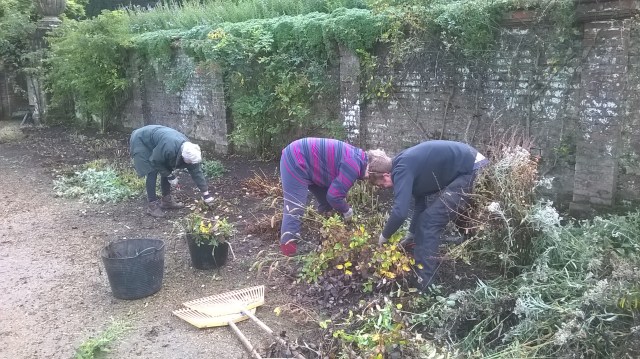 A rather dull, overcast day greeted we garden volunteers on our latest session at Blickling. The team was rather depleted, also, with a few people away on holidays.

It was to be a day of ‘stalking’- cutting down the stems of the many herbaceous plants in the long border overlooking the parterre. It was also rather busy and noisier than usual; as it’s ‘half term’ here there were lots of families around walking the gardens and enjoying some community education activities in a tent by the lake.
In the morning we continued the cutting and tidying process already begun the day before- we had about 7/8 of the border left. Apart from the occasional entanglement with the floppy stems of climbing roses, it was relatively straightforward; I dived into the borders and focused on cutting, with others doing this and collecting the cuttings and raking over the border to make it look tidy. Once this is finished (the main parterre borders had already had the treatment), the borders will be lightly dug over and then mulched with compost to provide winter cover for the soil and help to feed the plants and improve soil texture. By the end of the session we had virtuially completed the whole border- and produced several truck loads of cuttings which will be shredded and added to the Hall’s large compost heaps.
Towards the end of the morning I took a break and ‘stalked’ two people from the house and collections team who were cleaning the fountain in the middle of the parterre. They were using toothbrushes, water sprayers and hands to peel away quite a bit of muck, accumulated over a few years. It was interesting to see how the definition of the stonework dramatically improved as they worked their way across its surface. It looks like the basic structure is, in the main, pretty good, but it is also clear that there are some areas in need of repair.
 From here I ‘stalked’ Assistant Head Gardener, Steve, who was painstakingly digging over one of the four parterre borders; to both split some of the bigger herbaceous plants and at the same time try to remove bindweed which seems to be a long term problem here.

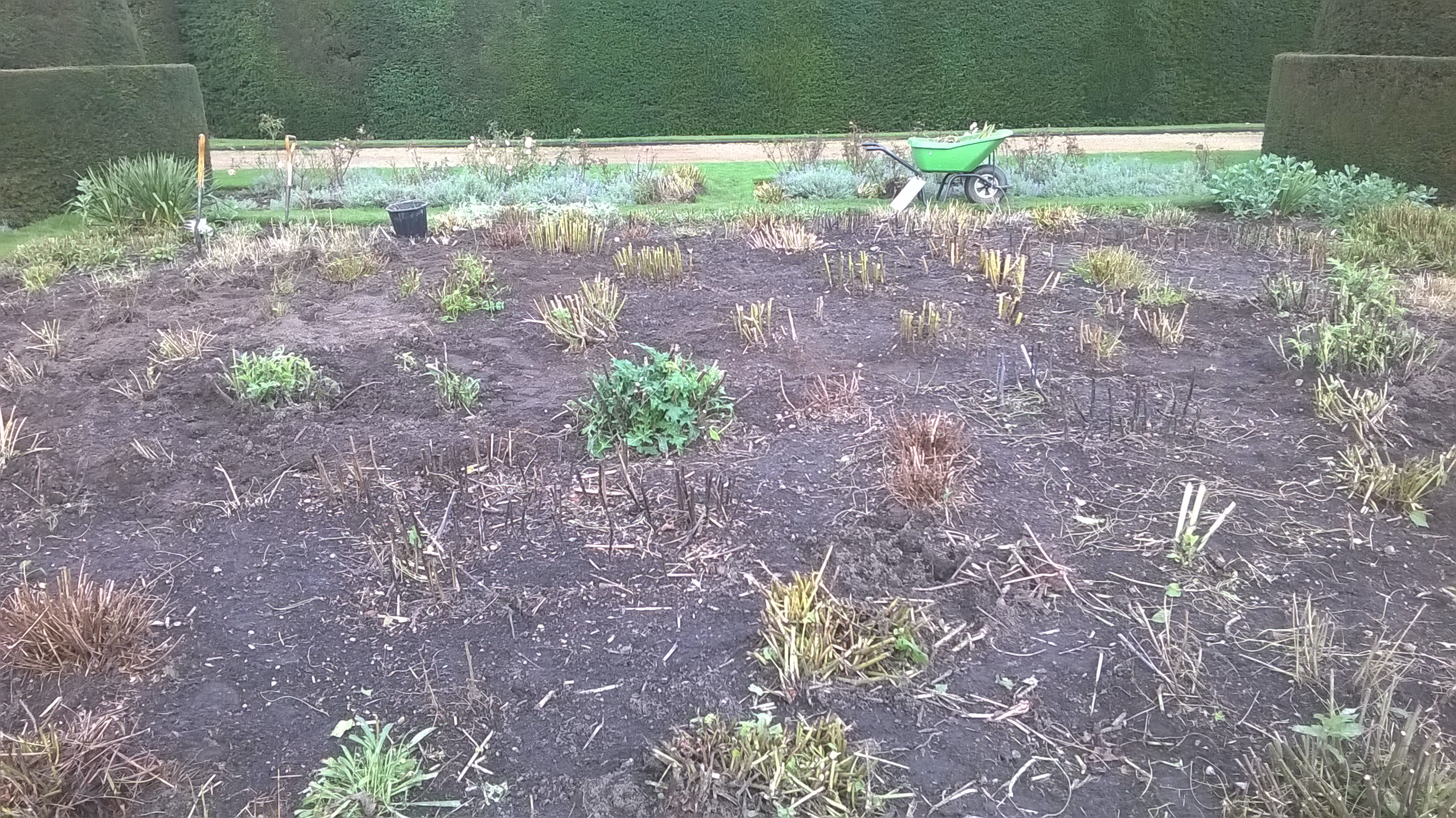
Part One of Steve’s Parterre Saga…
Steve was sanguine about the weed returning, but he was spacing out the plants so that it would be relatively easy to get in the border to remove it when it does return.

Plastic pipes being floated onto the lake- soon to be sunk and generating heat…

The way to the Hall…the heated liquid will be pumped to the bolier room along pipes to be laid in this trench and a heat exchanger will turn it into hot water for the Hall.
We talked about the new heating system being installed at Blickling, which you may have heard about. This is based on a water source heat pump which acts rather like a fridge in reverse- a coolant fluid is pumped into a long series of plastic pipes which are sunk into the lake and these are connected to a pump which draws in the warmed fluid and a heat exchanger in the house transfers this to the hot water system. Apparently there’s a gas back up boiler also being put in to cope with especially cold weather. This is set to reduce the £30,000 per annum fuel bill the Trust currently pays out for heating. Here’s a short video clip about the project.
After lunch my final ‘stalk’ was over to the Bug Village I had been working on last week, but was sorry to hear that gardener Ed -whose project this is- had seriously damaged his back trying to lift some of the large pieces of trunk he was installing in the new area- I wish him well soon.


Soon to be the back of a nice seat…


Stumpery….

The ‘Bug Village’ is starting to take shape nicely with several up turned stumps put in place and some further woven hazel fencing along with the large chunk that will provide a lovely seat back…in due course.
Further Information:
Blickling Hall website
Blickling Hall Facebook page
A 360 degree tour of Blickling Hall
Old School Gardener
On our recent trip to the Hebrides I was taken by the beautiful textures and ‘art works’ that nature can produce; in this case on the beach and featuring some very subtle effects. Here’s the first of a two part gallery of pictures I took, mainly at Calgary Bay on the Isle of Mull.
Old School Gardener
 ‘Trench & prepare ground with compost – sow as yet all sorts of greenes.’
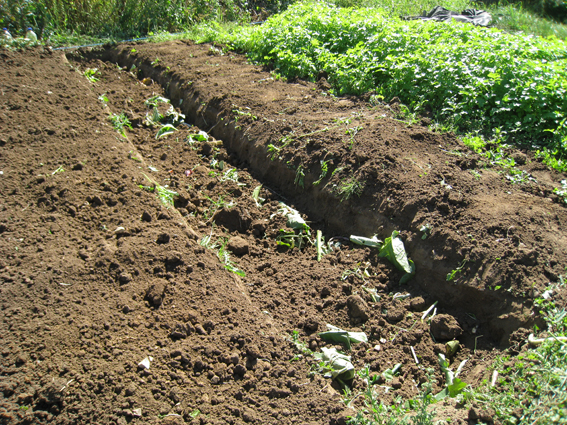
John Evelyn 1686 (published 1932)
Old School Gardener

praying angels orchids
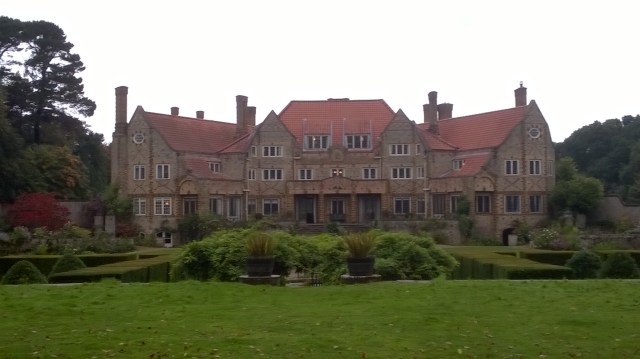 I finally got round to visiting a place I’d wanted to see for some time- Voewood, an arts and crafts masterpiece in north Norfolk.

Taking advantage of the ‘Invitation to View’ scheme we set off on a rather wet and windy day a week or two ago to High Kelling, near Holt.
Our tour of this private house was full of surprises and curiosities. Owned by a rare books and art dealer Simon Finch (who now lives in one of the coach houses) it has been decorated over the years in a very individual style with plenty of personal mementoes and artworks, many hailing from the 1960’s and 70’s. The house with its fourteen bedrooms can be hired out and it also acts as a centre piece for an arts festival.
The house was designed (1903-5) by Edward S. Prior. Voewood is perhaps one of the greatest achievements of house design of the Arts and Crafts movement. More than almost any other building of the period the house fulfils the ideals for architecture developed by William Ruskin and William Morris. In the designing and building of Voewood many of Prior’s philosophical ideas found physical expression.
Its design and construction were characterised by the use of radical planning and forms, innovative technologies, such as the use of reinforced concrete, extensive external decoration, a distinct building philosophy involving craftsmanship and the use of quality local materials and the integration of the building and its interiors with the garden and its surroundings.


The house is based on a butterfly plan. The three storey central portion of the house is flanked by splayed two-storey wings. The plan enabled Prior to maximise views out and to give the best orientation to a range of rooms. He could also relate the external spaces to the internal areas. The area contained within the splay faced the gardens, with the northern of the wings acting as the entrance, with a two storey porch and daylight basement. This wing also contained the library and billiard room at ground floor level. The wing opposite contained the kitchen and service accommodation together with the dining room. The fruit and vegetable garden lay adjacent. The entrance, through oak doors, leads into a six-sided hall up a straight flight of Hoptonwood stone stairs into an octagonal lobby.
Though never lived in by its original owners (there seem to be various theories as to why, including its proximity to a then T.B. hospital), the house was turned into an old people’s home and has also been a hotel. And despite some alterations (e.g. the closing in of two flanking loggias), it has retained most of its original features. I was especially impressed by the construction which used concrete formwork on a (then) extensive scale, resulting in nicely rounded corners to walls and window openings and some chunky concrete beams which provide an interesting, simple decorative feature to many ceilings. However, I was a little disappointed with the window and other ironmongery which, in contrast to many other houses of this style and period (see, for example my recent post on Goddards, York), was rather plain. Perhaps this is further evidence of the alterations carried out in the 1930’s.
Though visiting on a damp October afternoon when there was not much floral interest to be seen, the gardens still managed to impress. The main layout from the back of the house appears to follow its original stepped, symmetrical design, whereas the former kitchen garden to the side has been skillfully turned over to a rather more ornamental layout, though retaining many good examples of wall-trained fruit.
The original gardens were of great renown and highly regarded. Voewood was perhaps Prior’s greatest garden design. Garden making was a preoccupation of his middle period. Terraces extend from the wings of the house and end in steps leading down to the garden level. The garden is also reached from the terrace by a double flight of steps leading to two stone paths, separated by a water feature in the form of a stepped stone tank containing water-lilies, iris and forget-me-not. The central feature of the garden is a large basin. Pergolas with masonry walls lead east and west.


The garden at Voewood (then called Home Place) was admired by Gertrude Jekyll and Sir Lawrence Weaver, who described and illustrated it in their book Gardens for Small Country Houses;
“The stepped scheme at Home Place, Holt, designed by Professor E.S. Prior will be a counsel of perfection to most people”.
Further information: Voewood website
Old School Gardener
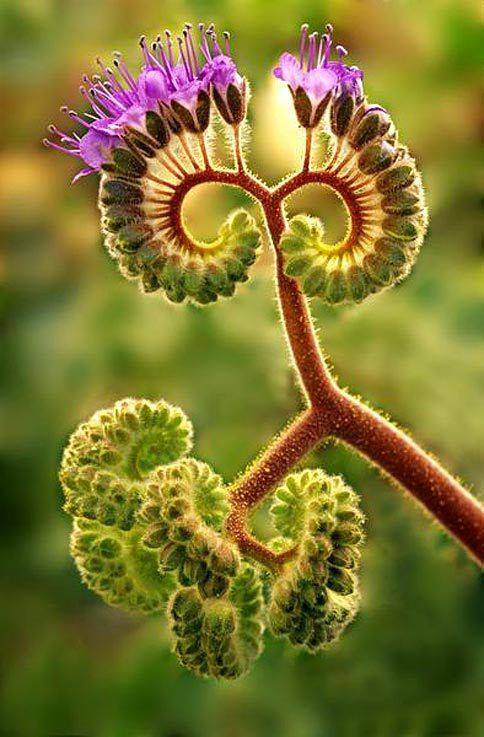
phacelia tanacetifolia





 Old School Garden