Archive for April, 2015


FB_20150407_23_21_39_Saved_Picture

gardening_hints_windy_gardens_windswept_treeHave you got an exposed garden? In these sites- especially on hillsides or in coastal areas- wind can cause more damage than frost or cold. Think about the best ways of providing some shelter.

A solid wall or fence can make wind eddy over the top and can cause strong back-drafts on the leeward side. Instead, filter the wind to slow it down with a hedge or artificial wind break, which will give useful shelter for a distance about ten times its height on the leeward side. Another option- if you have the space- is to plant a shelter belt of trees. If you have views out from the garden that you want to preserve, try creating ‘windows’ in a hedge or other barrier.

Here are four typical problems in windy sites and tips on what to do about them…

1. Growth

Problem: Wind slows plant growth by increasing water loss through evaporation. This can significantly reduce the yields of vegetables.

Tip: protect the vegetable plot with wind break netting or a natural barrier like a hedge.

2. Pollination

Problem: Pollinating insects avoid windy areas.

Tip: To get good pollination of fruit crops grow them against sheltered walls.

3. Leaves and flowers

Problem: Plants with big leaves and those that come into flower early in the season are more vulnerable to wind damage.

Tip: Avoid growing such plants or place them in sheltered spots.

4. New plants

Problem: New plants, particularly evergreens, are especially susceptible to wind damage.

Tip: Protect these plants with wind break netting until they are well establishes and keep all new plants well watered.

Windbreak fabric can be an effective method of sheltering your vegetables

Wind break netting can be an effective method of sheltering your vegetables

Further information: Gardening hints for windy and exposed gardens

Source: ‘Short Cuts to Great Gardens’- (Reader’s Digest 1999)

Old School Gardener

FB_20150402_09_59_56_Saved_Picture

Hyacinths looking good at Blickling

Hyacinths looking good at Blickling

A couple of weeks on from my last stint at Blickling, I joined the other volunteers last week, on a bright sunny day. So warm, in fact, it was the first day in a garden without the need of a fleece, and also my first bit of hoeing too.

We began by tidying up the Peony borders. I hadn’t noticed these before, but they are long and devoted entirely to Peonies, which today had just started their journey upwards, making short red stems with the beginnings of the beautiful leaves that complement the flowers so well. ‘They’re just like Asparagus’ one volunteer remarked, and they do have a resemblance to the spear-like stems that thrust upwards, albeit a bit later on, here in Norfolk.

Anyway, an hour passed and then I was called over to the Walled Garden with fellow volunteer Peter, to do a bit of construction work. Project Manager Mike had gathered some Hazel sticks and asked if we would put together a supporting wall for some runner beans and a couple of ‘Wigwams’ (or should it be ‘Teepees’?) for Sweet Peas. It was really pleasant in the sunshine doing something a little more fiddly for once – it reminded me of how much I enjoy pruning and tying in! Well, that little task, together with a bit more hoeing and earth turning in the walled garden took us to the middle of the afternoon, at which point I needed to leave to pay a visit to the local Nursery- where I bumped into Peter and his wife once more!

I’ve been holding £55 worth of Garden Centre vouchers for a while now (most given to me by my children as a Father’s Day gift last year, the balance as  a prize I won recently for giving feedback on the Norfolk Master Composter Scheme). I’ve thought about getting an Acer to put in the new Wildlife Pond area at Old School Garden and the Nursery in Aylsham has a good selection; I managed to wrestle a 2 metre example into the back of the (open top) car. I’m not sure which variety it is, but it’s young leaf buds are just bursting into a bright cerise followed by paler pink and lemony green leaves. I’ve also wanted to get hold of a Ceanothus ‘Puget’s Blue’ for some time (in the shopping trolley it goes), and they also had some lovely Magnolias in bloom, so I didn’t resist the temptation to take home a lovely example of M. x loebneri ‘Merrill’.

These three specimens plus another, smaller Acer (palmatum), a black Elder and Camellia, already in pots at home, will form the back bone of the planting scheme around the pond. I’ll tell and show you more in due course…..

 Further Information:

Blickling Hall website

Blickling Hall Facebook page

A 360 degree tour of Blickling Hall

Old School Gardener


Poppy by Rakesh  Syal

Poppy by Rakesh
Syal

One way of pruning lavender

One way of pruning lavender

Pruning-

Choose plants that will perform reliably with minimal pruning. Keep any pruning you do mas simple as possible. For instance, don’t bother following traditional pruning methods for hybrid tea and floribunda roses, just cut all the stems down to 30cm (12 inches) high using shears, secateurs or even a hedge trimmer. prepare prunings for the compost heap quickly by using a shredder or spread them on the lawn and chop them up with a rotary mower witha grass ,box or use a garden vacuum tthat mulches too.

Further information:

How to prune your plants- Gardeners’ World

Pruning Tips and Techniques

Source: ‘Short Cuts to Great Gardens’ (Reader’s Digest 1999)

Old School Gardener


WP_20150322_15_40_14_Pro

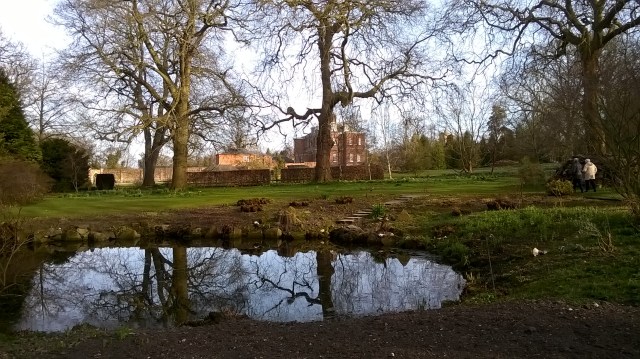
 I recently visited my first open garden of the season, the Georgian West Lodge in the nearby town of Aylsham. Recent cold weather had resulted in many bulbs not yet being open, but the overall layout and different features of this 9 acre garden were a delight to walk around.

Lawns, splendid mature trees, a rose garden, well-stocked herbaceous borders, an ornamental pond, magnificent 2.5 acre C19 walled kitchen garden (maintained as such) meant that there was plenty to look at. I hope to return in high summer to see more of these features at their best.


This slideshow requires JavaScript.

Old School Gardener

Artichokes- now's the time to plant 'slips' or suckers, says Evelyn

Artichokes- now’s the time to plant ‘slips’ or suckers, says Evelyn

‘Set Artichok-slips, transplant cabages, sow Lettuce, clip hedges, & greenes; & sow the seedes of all hot sweete-herbs & plants.’

John Evelyn 1686 (published 1932)

Old School Gardener

Finding Nature

Nature Connectedness Research Blog by Prof. Miles Richardson

Norfolk Green Care Network

Connecting People with Nature

Discover WordPress

A daily selection of the best content published on WordPress, collected for you by humans who love to read.

Susan Rushton

Celebrating gardens, photography and a creative life

Unlocking Landscapes

Writing, photography and more by Daniel Greenwood

Alphabet Ravine

Lydia Rae Bush Poetry

TIME GENTS

Australian Pub Project, Established 2013

Vanha Talo Suomi

The Journey from Finnish Rintamamiestalo to Arboretum & Gardens

Marigolds and Gin

Because even in chaos, there’s always gin and a good story …

Bits & Tidbits

RANDOM BITS & MORE TIDBITS

Rambling in the Garden

.....and nurturing my soul

The Interpretation Game

Cultural Heritage and the Digital Economy

pbmGarden

Sense of place, purpose, rejuvenation and joy

SISSINGHURST GARDEN

Notes from the Gardeners...

Deep Green Permaculture

Connecting People to Nature, Empowering People to Live Sustainably

BloominBootiful

A girl and her garden :)