
UEA research reveals four new man-made gases in the atmosphere
 ‘
‘
‘

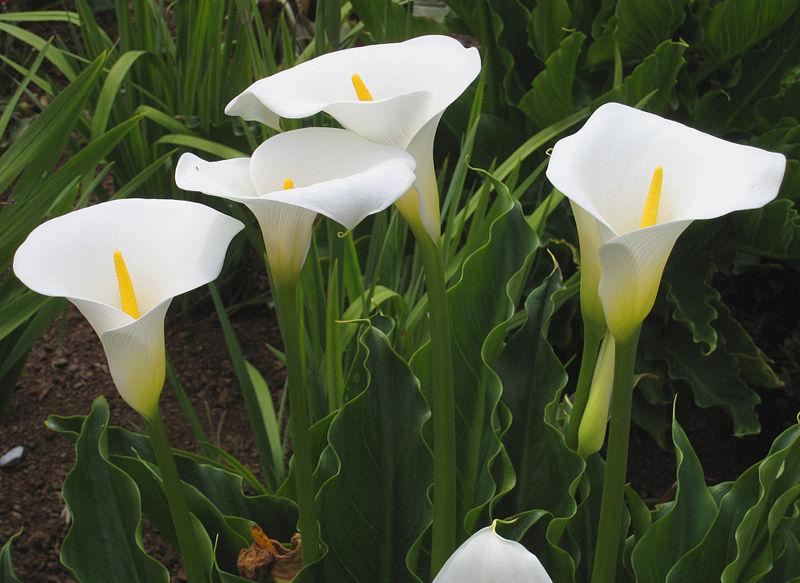
However, Zantedeschia is neither a true lily (Liliaceae) nor an Arum or a Calla!



For early flowering plants at Easter, plant the rhizomes in December. Keep in a light, cool place at a temperature of 16°C (61°F) by night and 18°C (65°F) during the day. Feed fortnightly with a high-nitrogen fertiliser when in active growth but withhold feed during flowering. A high potassium feed such as a tomato fertiliser can be given once a week after flowering.
Both types of Zantedeschia can be grown in containers. When planting, use a loam-based compost such as John Innes No. 2 and plant the rhizomes (underground stems) just showing at the surface of a container with the eyes of the rhizome uppermost.


Water freely through the summer and feed with a balanced liquid fertiliser every two weeks until the flowers have faded. Zantedeschia are generally pest and disease free, but can suffer from winter cold unless protected.
Last week a wild wind phenomenon hit our allotments and left a trail of destruction in its wake. A “funnel” tore its way across the plots and it flattened sheds in its path. It moved sheds from their bases. It took the roofs off others. Anything light was scattered about, compost bins, water butts and cold-frames.
In the first pair of pictures half of the felt from the shed roofs had been torn off typical of the minor damage to many sheds. Others like the one in the third photo had been blown from off its base and it collapsed in a heap, with the contents crushed inside. See if you can see which bit is which.
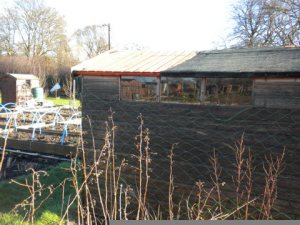
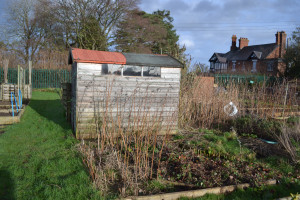
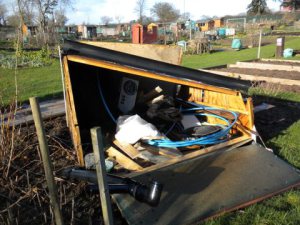
Others fell off their bases and landed on their sides remaining almost intact while others lost their roofs which took off like kites.
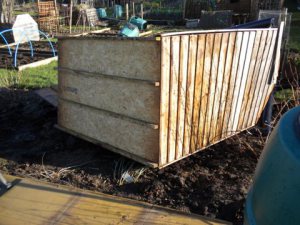

On our own plot there was little damage. We…
View original post 475 more words
In 1978 the chair of Manchester City Council’s Housing Committee described the Hulme Crescents development as an ‘absolute disaster – it shouldn’t have been planned, it shouldn’t have been built’. (1) By that time, the estate was already a byword for the failure – worse, the inhumanity – of sixties’ mass public housing. That reputation has lingered long after the demolition of the Crescents in 1994.
This won’t be a revisionist piece but let’s at least look a little more closely at what went wrong.
 The Crescents
As we saw when we looked at the city’s early municipal housing in Ancoats, Manchester was the ‘shock city’ of the Industrial Revolution. Hulme was also the home of many of those first industrial workers. In 1914, a Special Committee of the City Council reported a population of 63,177 living there in just 13,137 homes, 11,506 of which lacked baths or any laundry…
View original post 1,315 more words

As I’m coming to the end of my traineeship this will be my final blog entry! Over the past 17 months I have had such a fantastic time here at Gressenhall Farm and Workhouse and I can’t put a figure on the amount of brilliant moments and opportunities that I have been part of. Everything that I have done and all the wonderful people that I have met will always stay with me.
Out of all of the experiences and projects I have been part of the one that I am most proud of is the Centenary Wood Rejuvenation Project. The woodland, located behind the main building at Gressenhall Farm and Workhouse, was planted in 1989 to celebrate the Centenary of the County Council. But since then not much has been done to it in terms of management, and so it was far too linear and close together to be…
View original post 671 more words
Nigel Boldero aka 'Old School Gardener'
 | Nigel Boldero on Fighting to Reduce Climate Cha… |
 | Anonymous on Fighting to Reduce Climate Cha… |
| Anonymous on PicPost: Carrot, my foot! |
| 18 Surprising Hydran… on Plantax 16: Hydrangea the wate… | |
| Nigel Boldero on Poppyland: A Victorian romance… |
| Anonymous on Poppyland: A Victorian romance… |
| Anonymous on Plants to die for… |
 | Isabella Childress on PicPost: Forest, but not as we… |
 | Happiness Factor on Is child-friendly planning a l… |
 | zidane on Top Tip: On a Pedestal- make m… |


Nature Connectedness Research Blog by Prof. Miles Richardson
Connecting People with Nature
A daily selection of the best content published on WordPress, collected for you by humans who love to read.
Celebrating gardens, photography and a creative life
Writing, photography and more by Daniel Greenwood
Lydia Rae Bush Poetry
Australian Pub Project, Established 2013
The Journey from Finnish Rintamamiestalo to Arboretum & Gardens
Because even in chaos, there’s always gin and a good story …
RANDOM BITS & MORE TIDBITS
.....and nurturing my soul
Cultural Heritage and the Digital Economy
Sense of place, purpose, rejuvenation and joy
Notes from the Gardeners...
Connecting People to Nature, Empowering People to Live Sustainably
A girl and her garden :)


 Old School Garden