Archive for December, 2014


It’s been a while since I featured some interesting architectural detailing, but I was blown away by what I saw ‘over my head’ in Bruges, so feast your eyes…(I’ve thrown in a few other shots of this wonderful town).

This slideshow requires JavaScript.

 Old School Gardener

deltagardener's avatarThat Bloomin' Garden

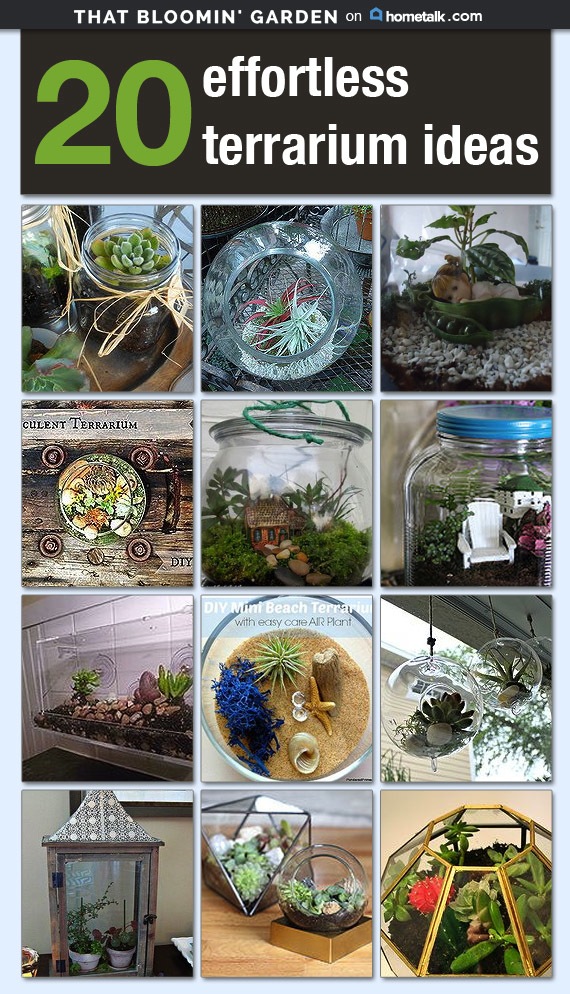
20 Effortless Terrarium Ideas

Are you looking for a quick and easy project? Why not try creating a terrarium? All you need are a few supplies. If I can do it, so can you. I love to create terrariums. It probably comes from my love for miniature gardening. You see, a terrarium is like a miniature garden under glass. All you need are some of your favourite plants, a glass container, soil, charcoal  and small rocks and you are set to go. I like to use succulents as they are easy to care for and very slow-growing. You want to try to find small indoor plants or succulents. I like to buy my plants in 2″ pots for ease of handling. There are so many great terrarium ideas on Hometalk. Above is a board I clipped to show you just a few ideas to get you started. I love the mason jar idea…

View original post 557 more words

FB_20141114_22_41_47_Saved_Picture

Old School Gardener

North York Moors National Park's avatarThe official blog for the North York Moors National Park

Graham Lee – Senior Archaeological Conservation Officer

Working in archaeology probably consists of a lot more desk work than most people imagine. There are site visits which are necessary from time to time in order to gain specific or detailed knowledge about a site – required for the provision of information or advice. Excavations are actually quite rare and generally undertaken by outside contractors since they are immensely time-consuming both in terms of the time on-site but more so in writing up the final report. Excavation also tends to destroy the features that are being investigated – so it tends to be an option of last resort.

So in terms of desk work one of the most important activities that we carry out is the maintenance and development of the archaeological index for the National Park area, on which we base most of our decisions and which we use to…

View original post 626 more words

Municipal Dreams's avatarMunicipal Dreams

We left the Low Hill Estate last week in 1939 very largely complete.  It was never a model development – it was too marked by the social and economic pressures and constraints that have always shaped council housing to be that – but, having escaped the Second World War virtually unscathed, it could face the future with some confidence.  In practice, however, by the 1970s the woes that afflicted so much of our council housing of this period had left it bloodied…but ultimately unbowed.

Fifth Avenue Fifth Avenue

It’s true that back in 1946 its then residents weren’t exactly effusive.   A contemporary survey found 69 per cent of residents thought the Estate ‘nice’ or ‘all right (no enthusiasm)’ but there were grumbles about some of the homes in which cost-saving measures had left concrete floors and unplastered kitchen walls.  More significantly, there were many – one in six – who thought the Estate ‘too…

View original post 1,340 more words

WP_20141124_12_22_31_ProOn our recent trip to Bruges, Belgium we did a lot of walking and the weather was kind, with some bright, sunny, crisp mornings to explore the beautiful medieval town centre. One wonderful discovery was the Beguinage (Begijnhof). Wikipedia tells us more…

‘The word béguinage is a French term that refers to a semi-monastic community of women called Beguines, religious women who sought to serve God without retiring from the world, as well as to the architectural complex that housed such a community. The word has been absorbed into English, where it is typically written without an accent. There are two types of beguinages: small, informal, and often poor communities that emerged across Europe from the twelfth century on, and the Court Beguinages (begijnhof (Dutch)), a much larger and more stable type of community that emerged only in the region of the Low Countries in the first decades of the thirteenth century.

While a small beguinage usually constituted just one house where women lived together, a Low Countries Court Beguinage typically comprised one or more courtyards surrounded by houses, and also included a church, an infirmary complex, and a number of communal houses or ‘convents’. From the twelfth century through the eighteenth, every city and large town in the Low Countries had at least one Court Beguinage (they shut down, one by one, in the nineteenth and twentieth centuries). They were encircled by walls and separated from the town proper by several gates which were closed at night. During the day the Beguines could come and go as they pleased. Beguines came from a wide range of social classes, though truly poor women were only admitted if they had a wealthy benefactor who pledged to provide for their needs.

Our understanding of women’s motivations for joining the Beguinages has changed dramatically in recent decades. The development of these communities is clearly linked to a preponderance of women in urban centers in the Middle Ages, but while earlier scholars like the Belgian historian Henri Pirenne believed that this “surplus” of women was caused by men dying in war, that theory has been debunked. Since the groundbreaking work of John Hajnal, who demonstrated that, for much of Europe, marriage occurred later in life and at a lower frequency than had previously been believed, historians have established that single women moved to the newly developed cities because those cities offered them work opportunities. Walter Simons has shown how the smaller beguinages as well as the Court Beguinages answered those women’s social and economic needs, in addition to offering them a religious life coupled with personal independence, which was a difficult thing to have for a woman.’

The Beguinage residences here in Bruges are clustered around a green space which was full of mature Lime Trees- they cast beautiful shadows in the low sun..

It was about a year ago that we visited Amsterdam and discovered another Beguinage there. See Young Women and the gutters of Amsterdam

Old School Gardener

Global soils

canwefeedtheworld's avatarOne Billion Hungry: Can We Feed the World?

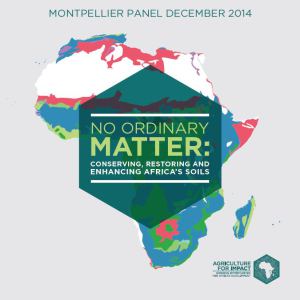
Soil is a declining resource for a variety of reasons such as conventional agricultural practices and overexploitation of forests. Soil loss and erosion – half of the topsoil on the planet has been lost in the last 150 years – has a huge impact on our ability to produce food and, due to erosion, around 30% of the world’s arable land has become unproductive in the last 40 years. Tipped as an environmental problem second only to population growth, sustainably managing our soils should be a global priority.

CoverOnly Click here to download a copy of the report

On the 4th of December, the Montpellier Panel published its latest report ‘No Ordinary Matter: Conserving, restoring and enhancing Africa’s soils’, this time focusing on the importance of soils to global food security. The report explains the contribution of soil to alleviating many of today’s pressing challenges is overlooked…

View original post 783 more words

chestnuts-by-Marc-Lagneau-via-flickr-e1417006664193

‘How sweet the woods were! Not a redbreast whistled

To mark the end of a mild autumn day.

Under the trees the chestnut-cases lay,

Looking like small green hedgehogs softly bristled.

Plumply they lay, each with its fruit packed tight;

For when we rolled them gently with our feet,

The outer shells burst wide apart and split,

Showing the chestnuts brown and creamy-white.

Quickly we kindled a bright fire of wood,

And placed them in the ashes. There we sat,

Listening how all our chestnuts popped and spat.

And then, the smell how rich, the taste how good!’

John Walsh

Finding Nature

Nature Connectedness Research Blog by Prof. Miles Richardson

Norfolk Green Care Network

Connecting People with Nature

Discover WordPress

A daily selection of the best content published on WordPress, collected for you by humans who love to read.

Susan Rushton

Celebrating gardens, photography and a creative life

Unlocking Landscapes

Writing, photography and more by Daniel Greenwood

Alphabet Ravine

Lydia Rae Bush Poetry

TIME GENTS

Australian Pub Project, Established 2013

Vanha Talo Suomi

The Journey from Finnish Rintamamiestalo to Arboretum & Gardens

Marigolds and Gin

Because even in chaos, there’s always gin and a good story …

Bits & Tidbits

RANDOM BITS & MORE TIDBITS

Rambling in the Garden

.....and nurturing my soul

The Interpretation Game

Cultural Heritage and the Digital Economy

pbmGarden

Sense of place, purpose, rejuvenation and joy

SISSINGHURST GARDEN

Notes from the Gardeners...

Deep Green Permaculture

Connecting People to Nature, Empowering People to Live Sustainably

BloominBootiful

A girl and her garden :)