Archive for July, 2014


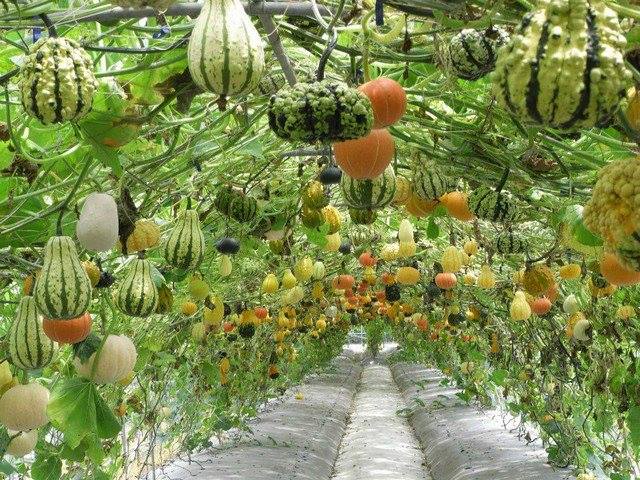
gourd heavens

Old School Gardener

Contemplation/ garden of Gethsemane- by Jenny Meehan
Contemplation/ Garden of Gethsemane by Jenny Meehan

‘..Gardening has always been regarded as a peculiarly English activity: indeed, it has assumed a key role in English identity. There are two main reasons for this..first…the weather….But there are also cultural reasons why gardening became the favoured activity of the English….English Gardens were seen as having curative powers for the English malady of melancholy….English people, unlike their continental counterparts, for whom it was a place for parade and social intercourse, went into the garden for a very different purpose- contemplation. I believe it was the Reformation which gave Englishmen their green fingers. In Catholic countries meditation took place in churches, monasteries and nunneries. In England the setting for contemplation became the garden….’

Sir Roy Strong: ‘Visions of England’ (Random House, 2011)

Old School Gardener

headliners

Old School Gardener

Hamamelis_flowersOK, a bit of a stretch with this entrant, as Hamamelis is more often a shrub rather than a tree, but there don’t seem to be any garden trees with a botanical name beginning with ‘H’ (go on, prove me wrong)!

Common name: ‘Witch – Hazel’ and occasionally for the North American species, ‘Winterbloom’

Native areas: A native of North America (3 species- ovalis, virginiana and vernalis) Japan (japonica) and China (mollis).

Historical notes: The name ‘Witch’ in witch-hazel has its origins in the middle english word ‘wiche’, from the Old English ‘wice’, meaning “pliant” or “bendable”. “Witch hazel” was used in England as a synonym for Wych Elm (Ulmus glabra) American colonists seem to have simply extended the familiar name to the new shrub they found in their new home. The use of the twigs as divining rods, just as hazel twigs were used in England, may also have influenced the “witch” part of the name. The plant-hunter Charles Maries collected Hamamelis mollis for Veitch Nurseries from China  in 1879. It languished in nursery rows for years until it was noticed, propagated and put on the market in 1902.

Hamamelis in Colonial Park Arboretum and Gardens

Features: The witch-hazels are deciduous shrubs or (rarely) small trees growing to 3–8 metres tall, rarely to 12 metres tall. The leaves are alternately arranged, oval, with a smooth or wavy margin. The genus name, Hamamelis, means “together with fruit”, referring to the simultaneous occurrence of flowers with the maturing fruit from the previous year. H. virginiana blooms in September-November while the other species bloom from January-March. Each flower has four slender strap-shaped petals 1–2 centimetres long, pale to dark yellow, orange, or red. The fruit is a two-part capsule 1 centimetre long.

Uses:  Witch Hazels are popular ornamental shrubs, grown for their clusters of rich yellow to orange-red flowers which begin to expand in the autumn as or slightly before the leaves fall, and continue throughout the winter. Hamamelis virginiana is rarely seen in the nursery trade except for woodland/wildlife restoration projects and native plant enthusiasts. Much more common is H. mollis, which has bright red flowers that bloom in late winter instead of the yellow blossoms of H. virginiana which tend to be lost among the plant’s autumnal foliage. Numerous cultivars have been selected for use as garden shrubs, many of them derived from the hybrid H. x intermedia ‘Rehder’ (H. japonica × H. mollis). Jelena and Robert de Belder of Arboretum Kalmthout, selecting for red cultivars, found three: the first, with bronze flowers, was named ‘Jelena’; the next, with red flowers, was named ‘Diane’ (the name of their daughter); the last, with deep red flowers, was called ‘Livia’ (the name of their granddaughter). The cultivar ‘Arnold Promise’ (mature height 3- 5 metres) is recognised as one of the best yellow-flowering Witch – Hazels, with magnificent yellow flowers that contrast with the red inners, which sometimes last as long as two months without fading.

This slideshow requires JavaScript.

Growing conditions: An open, sunny position is best, as plants become straggly in shade, although they do tolerate partial shade. Avoid exposed and windy positions. Young witch hazels can be damaged by hard frosts, so avoid frost pockets, or be prepared to protect plants with a couple of layers of horticultural fleece in their first few years if there is a hard winter or late spring frost. Witch hazels need free-draining soil conditions with an adequate supply of moisture. A light soil with plenty of added organic matter, such as well-rotted manure or compost, is best. They will tolerate heavy or clay soils if they are improved by digging in organic matter and by ensuring good drainage. Acid to neutral soil pH is preferred (pH 4.5-6.5). Witch hazels may tolerate deep soils over chalk, with plenty of added organic matter. If they become chlorotic (yellow) because of the high pH, then treatment with a chelated (sequestrated) iron fertiliser, ideally one that also contains manganese, can help. They are unlikely to tolerate shallow chalky soils.

Hamamelis virginiana

Further information:

Wikipedia- Witch – Hazel

RHS- Hamamelis

Barcham trees directory- Hamamelis x intermedia ‘Arnold Promise’

7 plants for Winter Wonder

Old School Gardener

abbyousewashes's avatarOuse Washes: The Heart of the Fens

Logos

Opportunities to view the 45 minute film called “Rich soil, rich heritage” all about the district and how it has been shaped by the many different people who have come here over the past 350 years.

Leaflet HLF

Enjoy!

View original post

Picture via 1001 Gardens

Old School Gardener

Municipal Dreams's avatarMunicipal Dreams

Municipal Dreams travels abroad for the first time this week, thanks to this fascinating account by Ben Austwick of pioneering social housing in Amsterdam.  A follow-up post will appear next week. You can read Ben’s other writings on art and architecture at his blog: http://doilum.blogspot.co.uk/

The Amsterdam School is a little celebrated offshoot of German Expressionist architecture, active for a short period between 1910 and 1925 but nevertheless defining large areas of the city’s inner suburbs. While its municipal buildings offer little in the way of innovation, the period coincided with an extraordinary boom in early social housing and its communal ideals laid blueprints for the modernist estates of the twentieth century.

Het Schip Het Schip © Ben Austwick

Expressionist architecture followed the romantic ideals of the neo-Gothic and even the neo-Medieval, merged with the new shapes and forms of the modern movement. The most famous examples are probably Gaudi’s Barcelona Cathedral and Mendelsohn’s Einstein…

View original post 941 more words

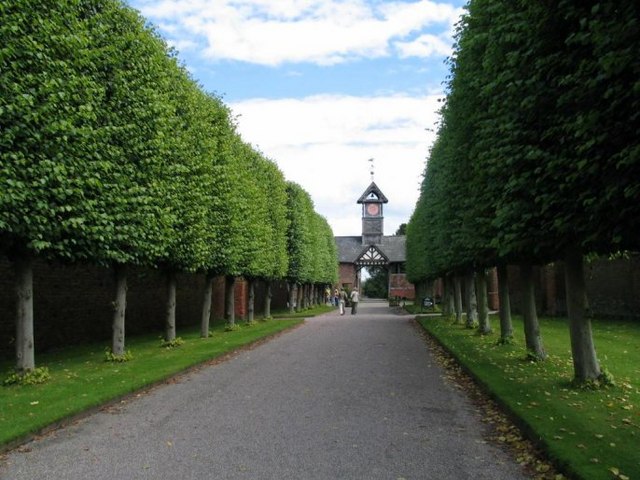
The Lime Walk at Arley Hall, Cheshire, an example of pleaching

It’s that time of year when the summer growth of hedges – at least those that need to be kept in trim- is being cut back. Joe Sloley from Hintlesham has an interesting opportunity with one of his hedges:

‘I have a row of overgrown lime trees which originally formed a screen and which I want to cut back and pleach. Are limes suitable for this kind of training and what are the details of the method?’

Pleaching or plashing (an early synonym) was common in gardens from late medieval times to the early eighteenth century. It means the interweaving of growing branches of trees and shrubs to form a hedge, living fence or arbour which provides a strong barrier, shaded paths or garden features.  The word ‘plexus’ derives from the same Latin root word ‘plecto’, meaning to weave or twist together. This craft had originally been developed by European farmers who used it to make their hedgerows more secure.

 "Walking in a thick pleached alley in mine orchard" - William Shakespeare, 'Much Ado About Nothing'

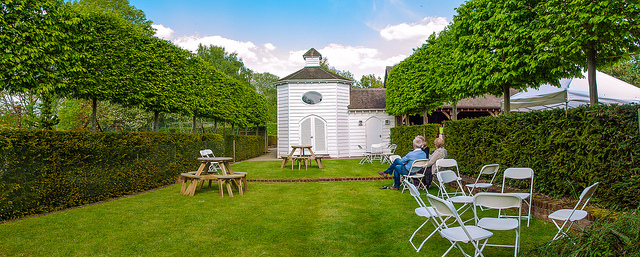
Pleached Trees and an underlying Yew hedge ay Dipley Mill, Hampshire, via  Angus Kirk

Pleached Trees and an underlying Yew hedge ay Dipley Mill, Hampshire, via
Angus Kirk

Today the term tends to be used to refer to what might be called the process of creating a ‘hedge on stilts’ where (usually smooth-barked) trees have their lower side growth removed and the higher growth is pruned and trained to form a continuous, elevated hedge.

Limes can certainly be pleached: they have pliable growth, and the shoots rapidly grow long enough to be woven in and out. Once the trees have been cut back to the height you require, the lower part of the trunks should be cleared of side growths. Then attach horizontal canes or wires to the trunks and across the gaps between the trees. Allow new shoots to grow out sideways; any which grow forwards or backwards should be pruned out completely. The side shoots are tied to the canes/ wires and when plentiful enough are interwoven with one another. As the shoots mature into branches, the canes or wires can be dispensed with and new growth trained amongst the old.

Pleaching in process

Pleaching in process

Tilia (lime) is the most commonly used tree for pleached walks; usually the red-twigged lime (Tilia platyphyllos ‘Rubra’).  Ash, beech, chestnut, hornbeam and plane can also be pleached, as can apples and pears. These can often be obtained ready trained.

Laburnum and Wisteria are favoured for pleached arbours and covered walks, especially tunnels, which show off the attractive flowers perfectly.  Use Wisteria grown from cuttings or raised by grafting, as it will flower more reliably and uniformly than seed-raised plants, and Laburnum x watereri ‘Vossii’ is a better choice than seed-raised L. anagyroides.

If you want to start a pleached hedge, select young, whippy plants that are more easily trained. Plant these out in winter and during the early years also prune in the winter when the plants are leafless and dormant. Train and tie new shoots in over the summer. Once pleached trees have reached their full extent, prune in the summer, pruning to shape the new growth and reduce the tree’s vigour.

Here’s a fascinating example of how pleaching could be used to ‘grow homes’!

fab-tree-hab

Further information:

Wikipedia

RHS guide to pleaching

Pleaching- the art of taming nature by Jardin Design

See through boundaries

Healthy Hedges with Crisp Edges

Old School Gardener

house of flowers

Old School Gardener

Finding Nature

Nature Connectedness Research Blog by Prof. Miles Richardson

Norfolk Green Care Network

Connecting People with Nature

Discover WordPress

A daily selection of the best content published on WordPress, collected for you by humans who love to read.

Susan Rushton

Celebrating gardens, photography and a creative life

Unlocking Landscapes

Writing, photography and more by Daniel Greenwood

Alphabet Ravine

Lydia Rae Bush Poetry

TIME GENTS

Australian Pub Project, Established 2013

Vanha Talo Suomi

The Journey from Finnish Rintamamiestalo to Arboretum & Gardens

Marigolds and Gin

Because even in chaos, there’s always gin and a good story …

Bits & Tidbits

RANDOM BITS & MORE TIDBITS

Rambling in the Garden

.....and nurturing my soul

The Interpretation Game

Cultural Heritage and the Digital Economy

pbmGarden

Sense of place, purpose, rejuvenation and joy

SISSINGHURST GARDEN

Notes from the Gardeners...

Deep Green Permaculture

Connecting People to Nature, Empowering People to Live Sustainably

BloominBootiful

A girl and her garden :)