Archive for 2013


Why do children need play?

Cath Prisk's avatarLove Outdoor Play

Take 3 minutes today and listen to the wisdom of Bob Hughes, a very well known thinker and author of books about play and playwork on the evolutionary necessity of play, especially play outdoors, for children.

“Fundamental building blocks for humanness and humanity….requires children have diverse experiences that are hands on…”

“it’s the flexibility you need, not the specific skills”

And the environment? If we don’t have that sort of interaction with it as a child… we won’t care about it…

Enjoy! And Share!

This clip was shot by the crew behind the film Project Wild Thing  which will be showing at your local Picturehouse cinema on 27th October! Please note they aren’t advertising it yet, but rest assured it will be there. Mark it in your diaries. And tell all your friends.

So do you agree? And why do you think outdoor play is important?

View original post

Jekka at Jekka's Herb Farm's avatarJekka's Herb Farm

As summer draws to a close,  not only is it the time to harvest seeds, it is also the ideal time to sow seeds as the soil is  beautifully warm.  By sowing now, either direct into a prepared space in the garden or into a pot,  which is positioned against south facing wall or in a cold green house,  you will have herbs that you can harvest throughout the winter months that will help you transform a meal into a feast .

One of the best is Parsley, both Curly, Petroselinum crispum  and Flat leaved French, Petroselinum cripsum French

PP25 Petroselinum crispum-2By sowing now it will germinate in approximately 10-14 days.  The seedlings will not be hassled by carrot fly and, once established, the plants will withstand frosts. After  a frost they do look rather sad, but very quickly they perk back ready for use in the kitchen.

Another…

View original post 206 more words

PicPost: Designer Stubble

Chateau de Hautefort, Dordogne, France – via Richard Wright

David Marsden's avatarThe Anxious Gardener

I was delighted when Jessica at Aurum Publishing offered me a copy of ‘The New English Garden’ by Tim Richardson to review.  But then I thought, “no David!  Don’t be so selfish – think of your readers.”  And so, I have decided to forgo my copy in order that you might win one.  Just how giving am I?

New English GardenHere’s what Jessica has to say about the book.

“In The New English Garden distinguished garden writer Tim Richardson discusses twenty-five significant English gardens made or remade over the past decade.  Together these represent a coherent overview of what remains probably the most inventive garden culture in the world. 

With stunning photography from Andrew Lawson, The New English Garden presents all that is most interesting and arresting about garden making in England at the start of the twenty-first century.”

The gardens include Christopher Lloyd’s and Fergus Garrett’s Great Dixter, Dan Pearson’s

View original post 188 more words

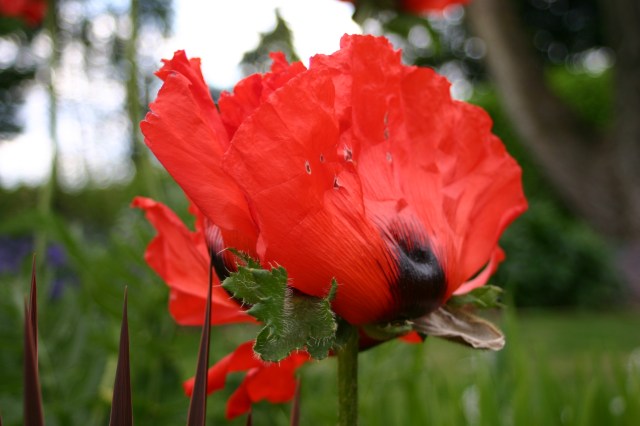
Papapver orientale at Old School Garden

Papaver orientale at Old School Garden

Papaver (poppy) is a genus of 70 species of annuals, biennials and perennials native to many parts of the world. The perennials include Papaver orientale (Oriental poppy), which is native to the Caucasus, northeastern Turkey, and northern Iran.

Perennial poppies are easy to grow – all are sun lovers and will grow well as long as they are in the sun and the soil is not waterlogged. They do best in poor but deeply cultivated, well-drained soil, (on the calcareous side) or even sharply drained in the case of Papaver alpinum and its forms. Apart from Papaver orientale other perennial poppies tend to be short-lived.

Poppies are tap rooted and do not transplant well, so should be sited carefully when first planted. Propagation is mainly from seed.

The flowers (which open from late spring into mid summer), are short-lived but beautiful – I particularly love the way a lowish sun can light up the garden as it shines through the large, brightly coloured, silky petals of the flowers. The flowers are followed by distinctive ‘pepper pot’ shaped seed capsules – best removed if you want to avoid abundant self seeding, but if this is not a concern, leave them to ripen on the plant –  they also provide a striking feature amidst other early summer flowering plants.

The flowers are low in allergens and are good for arrangements. However, they need to be picked at night before the bud opens; the bottom of the stem dipped in very hot water; kept cool overnight; then arranged in the morning. The seed pods are also good for arrangements, either fresh or dried.

The only drawbacks to poppies are that they often need to be staked; are prone to downy mildew; and the foliage can become untidy after flowering, This should be removed and another flush of leaves (and sometimes a second flowering) will follow. Alternatively, make sure the foliage, once removed does not leave a gap in your border by having other plants nearby that mature a bit later and take up the space left behind.

Further information:

Papaver orientale – Kew Gardens

Papaver orientale – RHS

Papaver orientale ‘Ladybird’

Nastional collection of Papaver orientale

Papaver alpinum

Papaver nudicaule

Poppyland: A Victorian romance and the birth of Norfolk tourism

Old School Gardener

If you’ve enjoyed reading this post and others on this blog, why not comment and join others by signing up for automatic updates via email (see side bar, above right ) or through an RSS feed (see top of page)?

greenbenchramblings's avatargreenbenchramblings

Early September sees the light values changing in subtle ways. As the sun dips against a blue sky and evening takes over from the day, light comes into the garden from much lower down. This angle has a magical effect on the prairie planting in our Beth Chatto Garden.

2013 09 02_3301

I couldn’t resist taking my camera with long lens out the first time I was lucky enough to spot these first signs of Autumn. Please let me know what you think of these photos. I have included every shot I fired off in a brief ten minutes of special light. Catch the moment!

So here is the gallery warts and all, no interference from Photoshop. As usual click on any photo to get going and then click on the arrow.

View original post

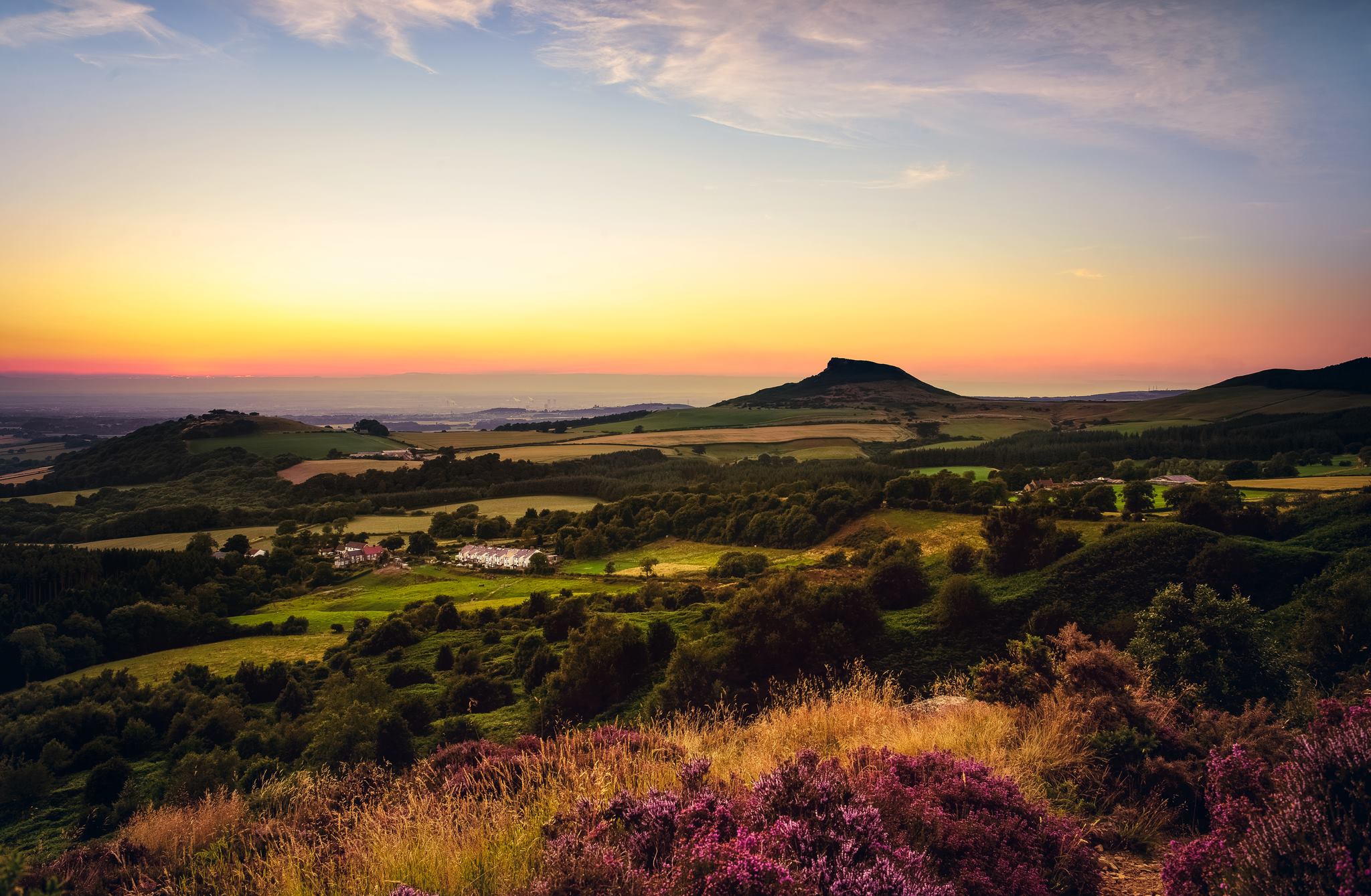
Rosemary Topping and Teeside from Gribdale via Andrea Brown

Roseberry Topping and Teeside from Gribdale via Andrea Brown

IMG_6568

On my recent West Country holiday I had the pleasure or revisiting the Minack Open Air Theatre, perched on a clifftop on the Cornish coast. It must be thirty years since I was last here and it’s certainly been developed, with new visitor facilities and altogether a more organised feel to things.

The play, which told the tale of 19th century Australian convicts acting out a play, was entertaining, but of greater impact were the sub tropical gardens that weave themselves in and out of the amphitheatre planned, financed and created between 1931 and 1983 by one determined woman – Rowena Cade. And of course, the setting. This overlooks the English Channel, and as we were there for an evening performance, one of the fullest moons ever came to dominate the scene as darkness fell.

Oh, and towards the end a large, speeding helicopter suddenly emerged from behind the bluff on which the theatre sits – congratulations to the actors who seemed unmoved by this sudden intrusion!

Here are a few shots of the evening to give you a sense of the gardens, setting and the occasion.

Further information:

Minack theatre website

Old School Gardener

If you’ve enjoyed reading this post and others on this blog, why not comment and join others by signing up for automatic updates via email (see side bar, above right ) or through an RSS feed (see top of page)?

dying dahlias 4This week’s question concerns some rather sad looking Dahlias (see picture), and comes from Jen Reteaj of Loughton, Essex. The plants are flowering, but the leaves have yellowed and then turned brown. It appears that some other nearby plants are also affected. Jen says:

‘It’s got quite serious as you can see from the pictures. I have sprayed, fed and watered them but still they die! Is it a virus?’

Dahlias can be prone to a number of diseases (and that’s what this is, I think). The pictures you’ve sent suggest that the stems are still green and looking healthy, so I’d rule out over – watering and consequently rot setting in. As you say you’ve been watering and feeding them so we can also probably rule out mineral deficiency of some sort. The browning of the leaves (if it’s occurred from the bottom and moved up the plant) sounds like a disease, probably fungal. The recent hot, and sometimes humid weather we’ve had is perfect for such problems. The only safe remedy is to remove the affected leaves for burning or disposal (not to compost). If there are some uninfected leaves left you might try to save the plant by watering only in the morning, so leaving the leaves dry into the night time. If the disease has spread throughout the plant (and your pictures suggest it has), I’d remove everything (including the tuberous roots and stems) and dispose as above.

The Dahlia was named after Anders Dahl (a swedish botanist), born on 17th March, 1751

For the future you might like to be aware of some common Dahlia disease and pest problems:

Ringspot- large, yellow circles appear on the leaves. This viral disease is transmitted by insects called thrips. it infects the dahlia’s roots and spreads throughout the plant. Gradually the rings on the leaves grow larger and brown spots may develop in the middle of each ring. It is not usually possible to treat the sick plant.

Dahlia Mosaic- this is another root-based viral disease. It gets its name from the alternating light and dark green patches that appear on leaves. These appear because the virus causes an imbalance in the plant’s chlorophyll. Yellow leaf spots and veining are also symptoms. The infection is usually spread by aphids and once infected it is usually very difficult to treat, so once gain you need to remove the plant and burn it.

Powdery Mildew – grey, fuzzy leaves that fall off is the symptom of powdery mildew. This is a fungal disease that infects dahlias when it is very humid, but it may also strike in dry weather. It is also more common in plants that are planted close together (restricting airflow). The disease can be treated with wettable sulphur once a week.

Insects- thrips are small flying insects that can destroy dahlia flowers by sucking out their juice as well as brining Ringspot. They can be controlled by placing sticky traps around the plant and spraying the plant with insecticidal soap (this also works well on controlling aphids). Leaf borers can also be a problem for dahlias. These tiny worms burrow into the stem and this kills the plant. The problem can be dealt with through applying a bacteria called Bacillus thuringiensis when watering – this kills the borers, but is safe for the plant.

‘The Dahlia you brought to our isle

Your praises forever shall speak

‘Mid gardens as sweet as your smile

And colour as bright as your cheek.’

            Lord Holland (1773–1840)


Further information:

Dahlia diseases

Dahlia Care

Old School Gardener

If you’ve enjoyed reading this post and others on this blog, why not comment and join others by signing up for automatic updates via email (see side bar, above right ) or through an RSS feed (see top of page)?

Finding Nature

Nature Connectedness Research Blog by Prof. Miles Richardson

Norfolk Green Care Network

Connecting People with Nature

Discover WordPress

A daily selection of the best content published on WordPress, collected for you by humans who love to read.

Susan Rushton

Celebrating gardens, photography and a creative life

Unlocking Landscapes

Writing, photography and more by Daniel Greenwood

Alphabet Ravine

Lydia Rae Bush Poetry

TIME GENTS

Australian Pub Project, Established 2013

Vanha Talo Suomi

The Journey from Finnish Rintamamiestalo to Arboretum & Gardens

Marigolds and Gin

Because even in chaos, there’s always gin and a good story …

Bits & Tidbits

RANDOM BITS & MORE TIDBITS

Rambling in the Garden

.....and nurturing my soul

The Interpretation Game

Cultural Heritage and the Digital Economy

pbmGarden

Sense of place, purpose, rejuvenation and joy

SISSINGHURST GARDEN

Notes from the Gardeners...

Deep Green Permaculture

Connecting People to Nature, Empowering People to Live Sustainably

BloominBootiful

A girl and her garden :)