Archive for 2013


A rose trained along a rope 'swag' between posts provides a permeable divider in the garden

A rose trained along a rope ‘swag’ between posts provides a permeable divider in the garden

Regular readers may recall that I recently mentioned my plans to run a second Garden Design course at Reepham, here in Norfolk. I’m pleased to say that this has now begun and I’m looking forward to working with the 8 enthusiastic participants over the next few weeks to come up with designs and ideas for their gardens.

Coincidentally, I was also contacted recently by one of the students on the first course, Angela, who lives in a village nearby. She updated me on what she’s done in her garden since the course and was trying to arrange a meeting with her fellow students to share progress and ideas. She also asked for some advice. As this raised an interesting issue, I thought I’d share it with you as this week’s ‘GQT’. Her question is:

‘We took out a hedge last year between our vegetable garden and the lawn.  Most of the hedge area plus a bit of lawn is now a border, and we’d like to put in some sort of screen where the hedge was.  We don’t want a solid screen and were thinking of espalier fruit trees.  However, we do not need any more fruit trees and I think something of winter interest would be better.  Thoughts so far include Pyracantha or maybe Cotoneaster.  Do you think Pyracantha would work?’
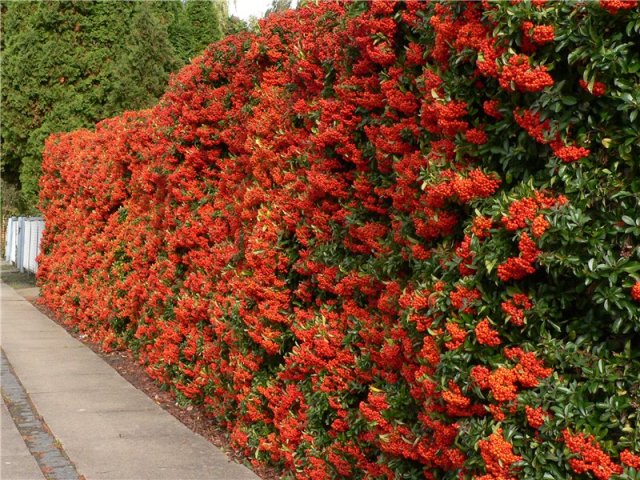
A Pyracantha hedge

A Pyracantha hedge

Well Angela, Pyracantha makes a lovely informal hedge, with spring flowers and autumn berries as well as evergreen foliage (see the picture above).

However the ones suitable for hedging can grow to 2 – 3 metres high (and can also be quite wide), so unless you keep it cut back it will provide a pretty dense and high screen, perhaps not what you were looking for? The Cotoneasters suitable for a hedge (e.g C. lacteus) have similar range of interest to Pyracantha and are also pretty dense and tall, unless kept in trim. But doing this rather defeats the object of an ‘informal’ hedge, unless you keep trimming to a minimal tidy up of loose ends!

If a more permeable screen is what you’re after, you could go for a backdrop of grasses that would add a lovely golden colour to a border at this time of year.

If they are in a sheltered spot they will stand tall and provide some winter interest (cut them to ground level in the spring); an example is Calamagrostis x acutiflora ‘Karl Foerster’. You could of course mix these along the line of the old hedge with evergreen shrubs (themselves with a variety of interest through the seasons). This would once again define the back of the border in an informal way, leaving ‘peep holes’ through the grasses into the garden beyond.

If you’re looking for something to provide a strong linear backdrop to your border but still give views through to the next garden, another idea might be to go for some sort of post and rail/rope structure (the latter is known as a ‘swag’- see the picture at the top of the article), or even a series of wide – opening trellis panels.

This then gives you the option of climbers to train up and along the wood/rope, but gives you views/glimpses through to what lies beyond. You could go for a mixture of climbers to give you a range of seasonal interest. Clematis of different varieties will give you flowers throughout the year, including winter flowers (e.g C. cirrhosa and its cultivars have winter flowers in creamy/ freckled shades and evergreen leaves). And some varieites give you other sorts of Autumn/winter interest. For example C. tangutica and it’s cultivars have some lovely ‘hairy’ seed heads that last into winter. Rambling/ climbing roses would also provide summer/early autumn flowers, followed by hips on some varieties. However, some of the Clematis (e.g cirrhosa) can get quite bushy so will need to be kept in check if you want to have views through – and the roses will also need pruning. Another option is to train a Pyracantha along a post and rail barrier to give you that ‘espalier’ effect you mentioned (see picture below).

Pyracantha coccinea trained along post and rails

Pyracantha coccinea trained along post and rails

Alternatively try one of the above options, but additionally introduce some winter interest directly into your border – e.g colourful stems from the various Cornus (Dogwoods), or foliage, flower and fragrance from any number of shrubs; e.g Daphne, Winter Jasmine, Eleagnus, Euonymus, various Viburnums etc.

Further information:

Hedge selector

10 AGM variegated evergreen shrubs- RHS

Hedge planting- RHS

All about Pyracantha

Related article:

GQT: Climbers as clothing… and as heighteners and dividers

Old School Gardener

If you’ve enjoyed reading this post and others on this blog, why not comment and join others by signing up for automatic updates via email (see side bar, above right ) or through an RSS feed (see top of page)?

 gressenhall wildlife garden

The ‘Garden Party’ on BBC Radio Norfolk (28th September) went off to Gressenhall Farm and Workhouse for a look at a garden, designed (by me) with wildlife in mind. Plus your questions to the expert panel – Alan Gray, Ian Roofe and Joe Whitehead. Hosted by Thordis Fridriksson. Listen to the programme on iplayer until 5th October – the pieces about the gardens are 25 minutes and 1 hour 35 minutes into the whole programme.

Old School Gardener

Old School Gardener

chrisatousewasheslps's avatarOuse Washes: The Heart of the Fens

Heritage Lottery FundIf you thought that there was only one River Ouse in the UK you are going to need to read this article as I think you may be surprised to learn of all the different ‘Ouses’ around. To understand the reason why there are so many rivers called Ouse, it is the name that gives it away: the name Ouse is thought to have Celtic origins, meaning ‘water’; therefore when saying the River Ouse or the Great River Ouse you are actually saying the ‘river water’ or ‘great water river’.

There are 5 ‘Ouses’ around the UK, from high up in Orkney to the Ouse River down in Sussex; from north to south, these are:

  • The Ouse Orkney
  • The Yorkshire Ouse
  • The Great Ouse
  • The Little Ouse
  • The Sussex Ouse

The Sussex Ouse itself is 42 miles long, but with all its tributaries runs over 140 miles long…

View original post 569 more words

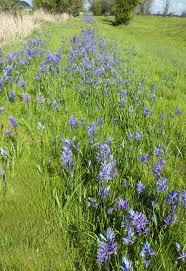
Camassia quamash via Charles S. Peterson

Camassia quamash via Charles S. Peterson

Quamash, the common name for Camassia, is a genus of 5 or 6 species of bulbous perennials native to damp, fertile meadowland in north America. They have large, ovoid bulbs which give rise to narrow, erect, linear leaves at the base. The flowers form in racemes on the top of the otherwise bare stems. These are showy flowers, star or cup shaped in blues, purples and white, appearing in mid- late spring.

Camassia leichtlinii via Gentry George

Camassia leichtlinii via Gentry George

 The bulbs of the species Camassia quamash were once an important food source for native American indians.

Camassias are great in borders or wildflower meadows and make good cut flowers. They are fully hardy to frost hardy and should be planted in the autumn about 10cm deep in moist but well drained soil in sun or partial shade. The soil should not be allowed to become waterlogged. They should be mulched over winter in areas with persistent frosts.

New plants can be grown from seed, which should be sown in containers in a cold frame as soon as it is ripe. Offsets can be removed in summer when the plants are dormant. There are no major pests or diseases affecting Camassia.


To get the best from Camassia flowers plant them against a background that will allow the pale flowers to stand out:  e.g. Berberis thunbergii ‘Rose Glow’ – a good foil because the leaves are purple, splashed pink and white; Photinia x fraseri ‘Red Robin’ – blood-red young leaves; and Choisya ternata (Mexican orange blossom).

In borders, Camassias associate well, in light shade, with forget-me-nots, Dicentra spectabilis (bleeding hearts), Lunaria rediviva, Leucojum aestivum (spring snowflake) and Polygonatum x hybridum (Solomon’s seal), and in sun with early-flowering Geraniums and Aquilegia. If naturalised in a meadow, they look good with buttercups, cowslips and the late-flowering pheasant’s eye (Narcissus poeticus var. recurvus).

I have some purple flowered Camassias here in Old School Garden, planted in a mixed border and close by to an orange Tulip ‘Ballerina’ which flowers at about the same time – the colour combination works really well.

Camassias growing in the wild via Oregon State University

Camassias growing in the wild via Oregon State University

Sources and further information:

Wikipedia

How to grow Camassias

Camssia leichtlinii – RHS

Old School Gardener

If you’ve enjoyed reading this post and others on this blog, why not comment and join others by signing up for automatic updates via email (see side bar, above right ) or through an RSS feed (see top of page)?

934746_10151676747891970_1023613447_n“A different point of view”- tools to help you assess and get more from your garden.

13 October 2013, 10.00 – 4.00

Gressenhall Farm and Workhouse, Norfolk

Is your garden in need of a revamp or complete makeover, but you don’t know where or how to start? This workshop will help you assess your garden and what you want from it, grasp some of the basics of garden design and how to apply these to your own space.

I’ll be leading the workshop, which will be a mix of presentation, practical exercises and group discussion. Examples and case studies, together with the gardens at Gressenhall Farm and Workhouse, will be used to illustrate key points and inspire you to develop ideas for your garden.“A different point of view”- tools to help you assess and get more from your garden. 13 October 2013 10am - 4pm<br />

£32 per person / £28.50 for Museums Pass holders (including tea and coffee)

For more information and a booking form go to Gressenhall Adult Learning

Old School Gardener

If you’ve enjoyed reading this post and others on this blog, why not comment and join others by signing up for automatic updates via email (see side bar, above right ) or through an RSS feed (see top of page)?

deltagardener's avatarThat Bloomin' Garden

This weeks garden class with the grade three students was a lot of fun. We learned about how seeds travel and where the seeds are on the plant. To start the day they had to spend ten minutes observing in the garden. This way they can see how the seasons change and the effect it has on the plants. They soon noticed that the sunflowers had dropped their heads. When I asked them why this had happened, they were quick to say that the flowers was preparing to drop its seeds. Once we had our discussion about what they had observed I asked if they had noticed anything else that wasn’t a plant. One little girl piped up and said, ” I saw that there are sticks around the garden.” I chuckled at this as she was referring to our new fence as sticks.

lesson about seeds

To learn about the different seed…

View original post 617 more words

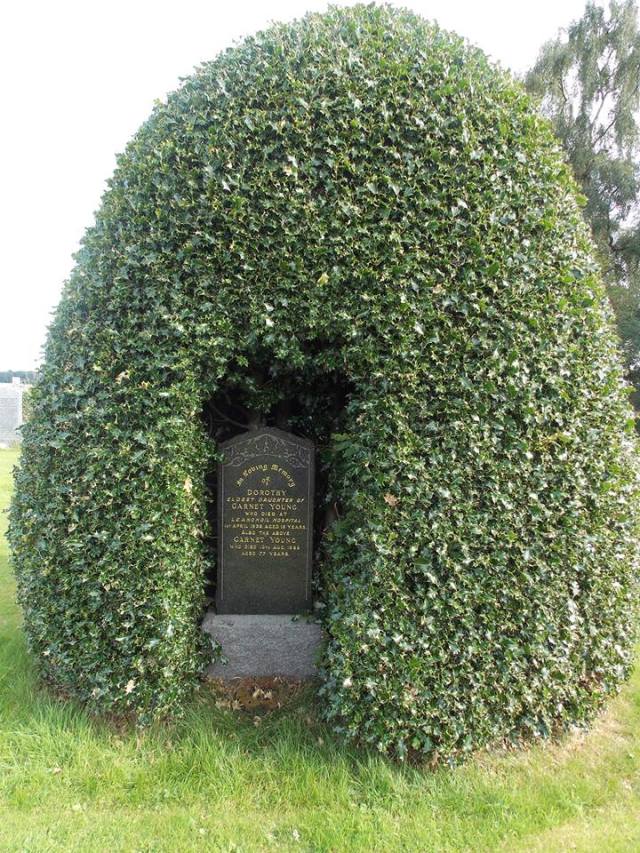
PicPost: Prickly End

Photo of a grave in Norfolk by Kelly Boldero

shinealightproject's avatarShine A Light

By Ann-Marie Peckham

Heritage Open Day (Sunday 15th September 2013) saw the Shine a Light team opening up the Superstore at Gressenhall Farm & Workhouse to the first ever public tours.

Our tours, which ran twice every hour (from 11am – 4pm) gave visitors the chance to look around the store, see inside some of the packed crates and view a wide range of objects including the ‘Norwich Snap Dragons’, an eclectic selection of furniture (including a gout stool!), 19th century fire ladders and a 20th century Archimedes screw.  The half hour tours were very much a ‘taster’ session, letting the public see our working environment now and informing them on the future look and function of the store planned for March 2014.

With the success of this day (nearly all of our 10 ‘taster’ tours were full!) I thought it would be interesting to let you…

View original post 661 more words

Finding Nature

Nature Connectedness Research Blog by Prof. Miles Richardson

Norfolk Green Care Network

Connecting People with Nature

Discover WordPress

A daily selection of the best content published on WordPress, collected for you by humans who love to read.

Susan Rushton

Celebrating gardens, photography and a creative life

Unlocking Landscapes

Writing, photography and more by Daniel Greenwood

Alphabet Ravine

Lydia Rae Bush Poetry

TIME GENTS

Australian Pub Project, Established 2013

Vanha Talo Suomi

The Journey from Finnish Rintamamiestalo to Arboretum & Gardens

Marigolds and Gin

Because even in chaos, there’s always gin and a good story …

Bits & Tidbits

RANDOM BITS & MORE TIDBITS

Rambling in the Garden

.....and nurturing my soul

The Interpretation Game

Cultural Heritage and the Digital Economy

pbmGarden

Sense of place, purpose, rejuvenation and joy

SISSINGHURST GARDEN

Notes from the Gardeners...

Deep Green Permaculture

Connecting People to Nature, Empowering People to Live Sustainably

BloominBootiful

A girl and her garden :)