Archive for November, 2013


With the first real ‘icy blast’ due in the UK this week, here’s a useful video reminder of some key jobs to do before winter really takes hold! (Thanks to Grow Veg)

Old School Gardener

greenbenchramblings's avatargreenbenchramblings

At last a half day of dry weather allowed us a window in which to cut our last meadow on the allotments. This meadow is situated close to our very mature oak tree and within the grasses we grow wildflowers and cultivated plants that we know attract bees, butterflies and moths, hoverflies and all sorts of beneficial insects. It is home too to amphibians, small mammals and even grasshoppers and crickets. The flowering plants here this year just have not stopped flowering their hearts out so we have left cutting the meadow down until last.

So early in November four of us set to with strimmers, mowers and rakes and we made sure we had our water proof clothes at the ready. An hour into our work and we needed them. But we persevered and got the job done. Beautiful rainbows came out to wish us luck.

2013 10 28_48512013 10 28_4852

20131101_10292720131101_102901

A few weeks…

View original post 231 more words
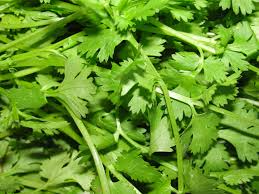
coriander leavesNote: This is the first of a series of articles on how to grow and use different food plants. It’s one of a number produced recently by particpants in a ‘Grow Your Own’ course I’ve been running in the village of Foulsham, Norfolk. I thought the work deserved a wider audience and hope that you find it useful. I’ll post other articles in coming weeks.

Guest blog by Jacqui Carr

Coriander (Coriandrum sativum), is an annual herb in the family Apiaceae. It is native to regions spanning from southern Europe and North Africa to southwestern Asia. It is a soft plant growing to 50 cm (20 in) tall. The leaves are variable in shape, broadly lobed at the base of the plant, and slender and feathery higher on the flowering stems. The flowers are borne in small umbels, white or very pale pink, asymmetrical, with the petals pointing away from the centre of the umbel longer (5–6 mm) than those pointing toward it (only 1–3 mm long). The seeds are often used as a spice or an added ingredient in other foods.

How to Grow Coriander

Coriander enjoys a sunny position but appreciates a little shade during the hottest part of the day. Coriander has a tendency to run to seed if stressed. This is fine if the plant is grown for its seeds, but not if it is grown for its leaves.

Coriander is best grown from seed directly into the soil. This is because it is quite a sensitive plant; transplanting young plants can shock them and cause them to bolt (run to seed). Prepare the soil thoroughly by digging it over, removing any weeds and incorporating organic matter, such as well-rotted manure or compost. Rake the soil so it’s level and sow seeds 4cm apart in drills 1cm deep.

Germination of coriander takes up to 3 weeks. Young plants should be thinned to 20cm apart to allow them to grow to their full size. The soil should never dry out. If flowers develop they should be removed immediately to ensure the plants focus their energy on growing new leaves. Coriander should be re-sown every three weeks to ensure a continual supply during the summer. It is not normally necessary to feed coriander if the soil is well nourished. However, if the plants appear to be suffering they can be given a liquid organic feed to perk them up.

Coriander does well in containers and can be grown on a sunny windowsill or balcony. The container must be quite deep as coriander has a long taproot. Scatter seeds on the surface of the compost and cover with soil, watering well. They may need more frequent watering as pots dry quickly.

Coriandrum sativum from the Medizinal Pflanzen

Coriandrum sativum from the Medizinal Pflanzen

Harvesting Coriander

Harvest the leaves when the plant is big and robust enough to cope. Pluck or cut each leaf off the stem or snip whole stems if necessary. Both the leaves and the stalks can be used.

If grown for its seeds, wait until the flowers have died off before harvesting. Cut the stems and place the heads of the coriander in a paper bag, with the stems slicking out. Tie the stems and the bag together in a bunch and hang upside down in a cool, dry place. Wait for three weeks and then shake the bag. The dry seeds will fall out from the flowers and be ready in the bottom of the bag. Keep them in a dry place and re-sow the following spring.

Coriander pests and diseases

Coriander can suffer from root rot.  Coriander doesn’t like its roots to be too wet so make sure the soil is well draining and don’t over water the plants.  Water during the day and avoid watering in the evening. Coriander is a very aromatic plant, and as such it is usually free from pests, although slugs may have a chomp at the seedlings. In the UK, there are no serious diseases affecting coriander.

Storing

The best way of storing coriander leaves is to freeze them.  Freeze the tender stalks as well as the leaves.  Try not to wash the coriander before freezing. .  If you do wash it, then dry it as much as possible before freezing.  Freeze only healthy green leaves – remove any that are yellow.  Put the leaves and stalks in a plastic bag, seal it and put it in the freezer.  When you want to use it, just take out as much as you need, and chop whilst still frozen.  Then add it to your cooking. A slightly more labour-intensive method is to freeze the coriander in ice cube trays.  Chop the coriander, and pack it into ice cube trays.  Add a little water to just cover the coriander, and then freeze.  Once it’s frozen, remove from the trays and seal in a plastic bag.  Use the cubes straight from frozen.

Cooking with Coriander

Coriander is a delicious and versatile herb, used in a variety of dishes including Indian and Thai dishes and salsas and salads. Both the leaves and the seeds are commonly used and have distinct flavours and uses. The leaves are best eaten fresh and the seeds are best eaten dried, toasted and ground into a fine powder to use as a spice.

Recipe: Tomato, Cucumber and Coriander Salad

Ingredients:

·         6 ripe vine tomatoes, deseeded and chopped

·         1 small cucumber, diced

·         1 red onion, very finely chopped

·         6 tbsp fresh coriander, chopped

Method: mix together the tomatoes, cucumber, red onion, and chopped coriander, but don’t season until just before serving.

Coriander Seeds

Coriander Seeds

Summary

  • Sow seed every 2-3 weeks to have a constant supply of leaves

  • Do not transplant the seedlings – coriander doesn’t like to be moved

  • Keep the soil moist, but do not over water

  • Don’t water in the evening – coriander doesn’t like to “go to bed with wet feet”

  • Pick leaves regularly once they are 10cm (4in) high

  • Use the stems as well as the leaves, and allow some plants to flower so you can collect the seed

  • Freeze any excess coriander in a plastic bag, and use from frozen

  • Don’t grow in a confined space indoors as the plant has an unpleasant smell

  • Avoid planting near fennel, as they just don’t like one another!

PicPost: Time for Sleep

Hazel Dormice via Somerset Wildlife Trust

PicPost: Amazing

Maze Gardens at Ruspoli Castle Northern Lazio, Italy

Gardening With Children's avatarGardening with Children

This year has been a good year for conkers, as well as most other fruits and nuts, when we visited our local Horse Chestnut trees in October there was an abundance of spikey green shells hanging on tightly in the chilly north easterly wind, we collected about thirty beautiful, shiny brown nuggets that had fallen on the ground, enough for Thomas to play conkers with and some to plant as well.

The first record of the game of conkers is from the Isle of Wight in 1848, they originally played with snail shells! Click here to learn how to play the game of conkers.

Horse Chestnut trees were introduced from the Balkans in the late 16th Century, in the UK we have over two million trees, even though this year has been a good year for conkers the Horse Chestnut tree is under threat.

Nearly a million of our trees are infected…

View original post 237 more words

PicPost: Hay Bale Garden

Flower and Hay Bale Garden by Carol Leigh Thomas

bike flowersOne of many, many bicycles in Amsterdam, The Netherlands

Old School Gardener

Rosa rubiginosa- a wild or species rose that needs minimal pruning

This week’s gardener’s question comes from a Miss Flora Dunmore of Argyll, and focuses on roses:

‘I’ve just inherited a big garden with lots of different roses, icncuding bush, climbers and ramblers. Can you tell me why, when and how to prune these, please?’

Flora, what a lovely inheritance! First why do you prune:

  • to remove weak, spindly and diseased shoots

  • to encourage strong new shoots to grow from the base of the plant each year (these bear the best flowers)

  • to open out the centre of the bush to increase air circulation (this helps to check disease)

  • to create a pleasing (usually symmetrical) outline to the plant.

When to prune depends on the types of roses you have:

  • For large-flowered bush roses the traditional months are March in the south and April in the north of England (and possibly even later in Scotland), when growth is just beginning- but pruning can be done safely any time from November  onwards in the south, provided you are prepared, if necessary to remove some frost damaged growth in spring. Most importantly never prune during a frosty spell.

  • For ramblers the best time to prune is after flowering, probably late August (you can dead head throughout the flowering season to achieve much the same result)

  • For climbers, the best time is October, when the recurrently flowering types have finished their show, but it can be done later if the weather is mild.

The techniques for pruning vary according to the type of rose:

For large flowered, bush roses cut away completely any diseased,weak and spindly shoots as well as removing all dead stumps from earlier pruning (use a fine toothed saw if they are particularly woody and thick). If there are many canes criss-crossing in the centre then remove a few to open out the bush. If two shoots are growing so that they rub each other, remove one. Finally, cut the remaining shoots back to about 200-250mm long. Harder pruning than this will produce larger, but probably fewer flowers – but it won’t harm the rose.

For smaller, cluster-flowered roses do the same as for larger flowered varieties but leave  the main shoots 300-350mm long. If the main shoots have side shoots, the latter don’t need to be removed, provided they are fairly thick (say about a pencil thickness), but they should be cut back by about two-thirds of their length.

Climbers should be pruned to establish a permanent framework of significant branches from which flowering stems are produced. To achieve this cut back side shoots to one or two buds from the point where they branch out from the main shoots. If the plant has become bare at the base, cut one of it’s main shoots hard back to encourage new growth from ground level.

Ramblers need to be pruned to encourage flowering on young shoots that grow from the base of the plant each year. To achieve this cut out completely the side shoots that have finished flowering and tie in the new shoots in their place. If in some years there are only a few of these, some of the old shoots (which can still produce flowers) may be left in place, but their side shoots should be shortened by about two-thirds.

Rambling roses need a framework of stems establishing with selctive removal of the oldest to encourage new growth form the base and flowering shoots pruned after flowering

Rambling roses need a framework of stems establishing, with selective removal of the oldest to encourage new growth from the base and flowering shoots pruned after flowering

Miniature Roses which produce a thick tangle of tiny, wiry shoots, require these to be thinned out. Remove dead or diseased shoots and trim back the rest by about two-thirds. It may be difficult to find a bud to cut back to, so just clip them over so that they look neat.

Shrub roses vary enormously in size and type, so it’s difficult to give a general guide to pruning. Wild (species) roses should not be pruned at all, other than for removal of dead or diseased branches. Most of the old garden roses such as Gallicas, Damasks, Albas, Centifolias and Bourbons will give more flowers if they have their side shoots shortened by about two-thirds in winter. Modern shrub roses that are in fact like giant versions of the smaller cluster types should be pruned in a similar way to those – but reduce their height by only about two-thirds. The Rugosa family needs little if any pruning, although for the less dense kinds,  a few older canes cut back every two-three years will encourage bushiness.

If you have newly planted roses then you should prune them even harder than established plants so that a strong framework of new shoots will be built up for the beginning. Leave their shoots only about 50-75mm long. Prune autumn planted roses when you do your established ones and spring planted ones at planting time. But, don’t prune climbers at all in their first year, as they take longer to establish.

Pruning cuts are easiest with secateurs. Ensure that a clean cut is made with clean blades (these should be sterilised with surgical spirit/alcohol to avoid passing on diseases from plant to plant). Cuts should be made about 6mm above a bud on a shoot; the cut should slope down towards the side away from the bud. Cutting to an outward- facing bud encourages the bush to spread outwards, but don’t worry if you can’t find one exactly where you want to cut- often a bud lower down will grow away more vigourously in the direction you want, and you can always trim it back later.

Clean secateurs with surgical spirit or alcohol before pruning each rose plant

Old School Gardener

PicPost: Woodman

Finding Nature

Nature Connectedness Research Blog by Prof. Miles Richardson

Norfolk Green Care Network

Connecting People with Nature

Discover WordPress

A daily selection of the best content published on WordPress, collected for you by humans who love to read.

Susan Rushton

Celebrating gardens, photography and a creative life

Unlocking Landscapes

Writing, photography and more by Daniel Greenwood

Alphabet Ravine

Lydia Rae Bush Poetry

TIME GENTS

Australian Pub Project, Established 2013

Vanha Talo Suomi

The Journey from Finnish Rintamamiestalo to Arboretum & Gardens

Marigolds and Gin

Because even in chaos, there’s always gin and a good story …

Bits & Tidbits

RANDOM BITS & MORE TIDBITS

Rambling in the Garden

.....and nurturing my soul

The Interpretation Game

Cultural Heritage and the Digital Economy

pbmGarden

Sense of place, purpose, rejuvenation and joy

SISSINGHURST GARDEN

Notes from the Gardeners...

Deep Green Permaculture

Connecting People to Nature, Empowering People to Live Sustainably

BloominBootiful

A girl and her garden :)