Archive for September, 2013


greenbenchramblings's avatargreenbenchramblings

Early September sees the light values changing in subtle ways. As the sun dips against a blue sky and evening takes over from the day, light comes into the garden from much lower down. This angle has a magical effect on the prairie planting in our Beth Chatto Garden.

2013 09 02_3301

I couldn’t resist taking my camera with long lens out the first time I was lucky enough to spot these first signs of Autumn. Please let me know what you think of these photos. I have included every shot I fired off in a brief ten minutes of special light. Catch the moment!

So here is the gallery warts and all, no interference from Photoshop. As usual click on any photo to get going and then click on the arrow.

View original post

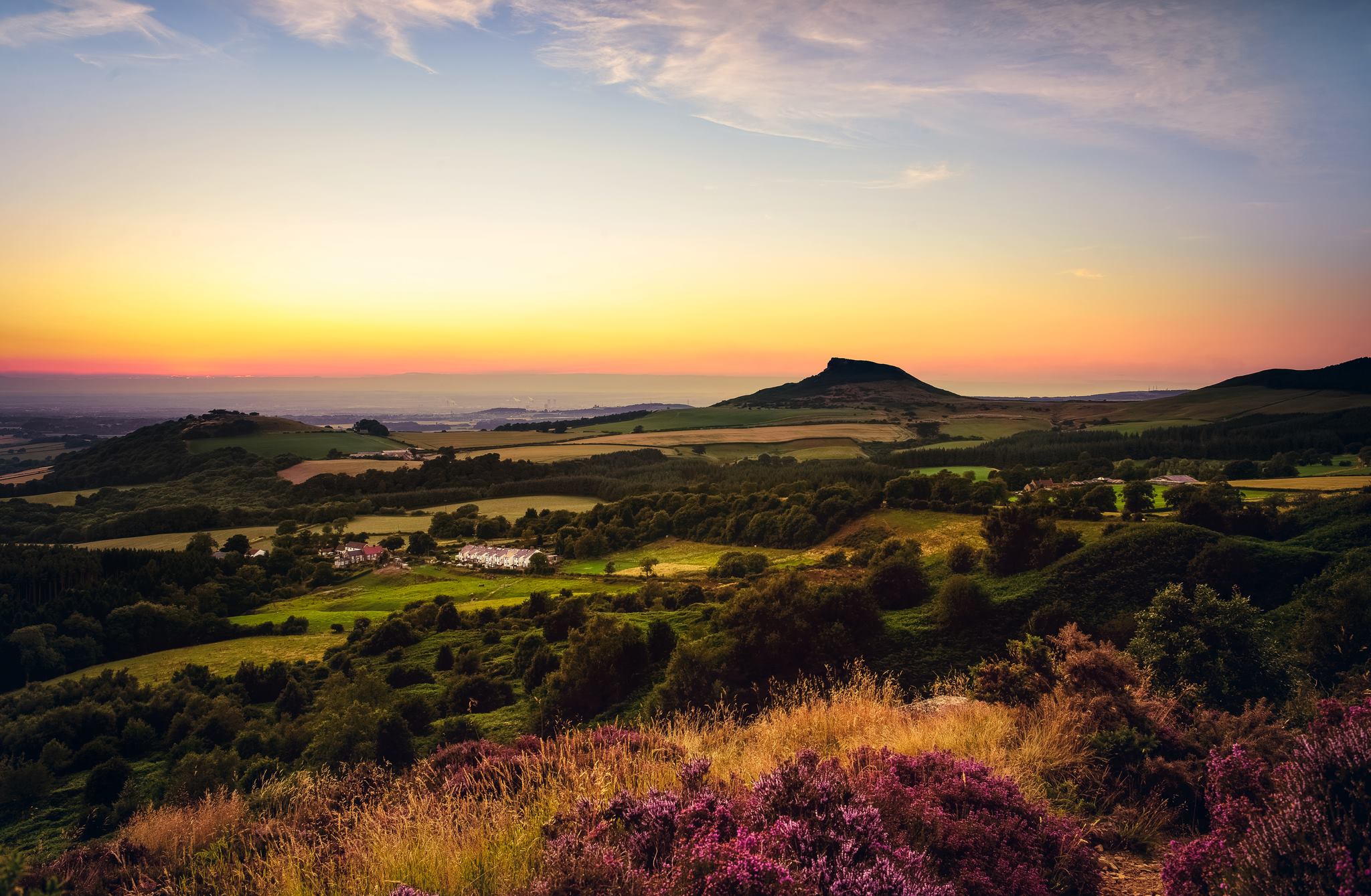
Rosemary Topping and Teeside from Gribdale via Andrea Brown

Roseberry Topping and Teeside from Gribdale via Andrea Brown

IMG_6568

On my recent West Country holiday I had the pleasure or revisiting the Minack Open Air Theatre, perched on a clifftop on the Cornish coast. It must be thirty years since I was last here and it’s certainly been developed, with new visitor facilities and altogether a more organised feel to things.

The play, which told the tale of 19th century Australian convicts acting out a play, was entertaining, but of greater impact were the sub tropical gardens that weave themselves in and out of the amphitheatre planned, financed and created between 1931 and 1983 by one determined woman – Rowena Cade. And of course, the setting. This overlooks the English Channel, and as we were there for an evening performance, one of the fullest moons ever came to dominate the scene as darkness fell.

Oh, and towards the end a large, speeding helicopter suddenly emerged from behind the bluff on which the theatre sits – congratulations to the actors who seemed unmoved by this sudden intrusion!

Here are a few shots of the evening to give you a sense of the gardens, setting and the occasion.

Further information:

Minack theatre website

Old School Gardener

If you’ve enjoyed reading this post and others on this blog, why not comment and join others by signing up for automatic updates via email (see side bar, above right ) or through an RSS feed (see top of page)?

dying dahlias 4This week’s question concerns some rather sad looking Dahlias (see picture), and comes from Jen Reteaj of Loughton, Essex. The plants are flowering, but the leaves have yellowed and then turned brown. It appears that some other nearby plants are also affected. Jen says:

‘It’s got quite serious as you can see from the pictures. I have sprayed, fed and watered them but still they die! Is it a virus?’

Dahlias can be prone to a number of diseases (and that’s what this is, I think). The pictures you’ve sent suggest that the stems are still green and looking healthy, so I’d rule out over – watering and consequently rot setting in. As you say you’ve been watering and feeding them so we can also probably rule out mineral deficiency of some sort. The browning of the leaves (if it’s occurred from the bottom and moved up the plant) sounds like a disease, probably fungal. The recent hot, and sometimes humid weather we’ve had is perfect for such problems. The only safe remedy is to remove the affected leaves for burning or disposal (not to compost). If there are some uninfected leaves left you might try to save the plant by watering only in the morning, so leaving the leaves dry into the night time. If the disease has spread throughout the plant (and your pictures suggest it has), I’d remove everything (including the tuberous roots and stems) and dispose as above.

The Dahlia was named after Anders Dahl (a swedish botanist), born on 17th March, 1751

For the future you might like to be aware of some common Dahlia disease and pest problems:

Ringspot- large, yellow circles appear on the leaves. This viral disease is transmitted by insects called thrips. it infects the dahlia’s roots and spreads throughout the plant. Gradually the rings on the leaves grow larger and brown spots may develop in the middle of each ring. It is not usually possible to treat the sick plant.

Dahlia Mosaic- this is another root-based viral disease. It gets its name from the alternating light and dark green patches that appear on leaves. These appear because the virus causes an imbalance in the plant’s chlorophyll. Yellow leaf spots and veining are also symptoms. The infection is usually spread by aphids and once infected it is usually very difficult to treat, so once gain you need to remove the plant and burn it.

Powdery Mildew – grey, fuzzy leaves that fall off is the symptom of powdery mildew. This is a fungal disease that infects dahlias when it is very humid, but it may also strike in dry weather. It is also more common in plants that are planted close together (restricting airflow). The disease can be treated with wettable sulphur once a week.

Insects- thrips are small flying insects that can destroy dahlia flowers by sucking out their juice as well as brining Ringspot. They can be controlled by placing sticky traps around the plant and spraying the plant with insecticidal soap (this also works well on controlling aphids). Leaf borers can also be a problem for dahlias. These tiny worms burrow into the stem and this kills the plant. The problem can be dealt with through applying a bacteria called Bacillus thuringiensis when watering – this kills the borers, but is safe for the plant.

‘The Dahlia you brought to our isle

Your praises forever shall speak

‘Mid gardens as sweet as your smile

And colour as bright as your cheek.’

            Lord Holland (1773–1840)


Further information:

Dahlia diseases

Dahlia Care

Old School Gardener

If you’ve enjoyed reading this post and others on this blog, why not comment and join others by signing up for automatic updates via email (see side bar, above right ) or through an RSS feed (see top of page)?

WORDLESS WEDNESDAY

PicPost: Floweride

IMG_6457

The ‘Cornwall Gardens Guide’ mentions 9 gardens beginning with ‘Tre’ (Cornish for ‘homestead’ or ‘town’). Having just returned from two weeks there and in Devon, I visited three of these (Trengwainton and Trelissick as well as Trerice) as well as Godolphin, Glendurgan and St. Michael’s Mount. They all share Cornwall’s mild climate and several have river valley settings and their associated semi – tropical microclimates. Despite these similarities, I found these wonderful gardens to have a range of distinctive styles or features, largely reflecting the historic interests of their owners and gardeners.

Over the coming weeks I’ll do a photo feature on each of these as well as Killerton Gardens (near Exeter, Devon) and will throw in a couple of very special places – the Barbara Hepworth Sculpture Garden in St. Ives and Chysauster Ancient Village, both in Cornwall. I begin where we began our tour, at Trerice near Newquay, a place we visited en route to our destination of St. Ives. This Elisabethan house and gardens is described by the National Trust as:

‘An intimate Elizabethan manor and a Cornish gem, Trerice remains little changed by the advances in building fashions over the centuries, thanks to long periods under absentee owners.’

The house is certainly delightful to look at, with its rust coloured granite stone, ‘dutch’ gables and ancient leaded windows – many of which are cracked from the test flights of ‘Concorde’ 50 years ago! These ‘sonic booms’ must have been especially noticeable in  what is otherwise a very quiet, peaceful place, far away from busy roads or settlements (we managed to get very lost in some frighteningly narrow country lanes trying to find our way to our next destination).

A formal approach to the house sets it off beautifully and the other garden areas include a grass labyrinth, ancient bowling alley, a woven – fenced kitchen garden and some more recent sloping borders containing a mix of food and ornamental plants – I imagine this might be something of a challenge at harvest time! Of particular interest is an Elisabethan garden in the making, based on a ceiling design in the house as a nod to the sort of layout the original might have been based on, records of what actually existed not being available. This was in the course of setting out when we visited, but a very good artist’s impression shows how this will look – a formal pattern of Box hedging enclosing lavender and roses, which will be a great addition to these lovely gardens.

And the house is of great interest too, with some very friendly and helpful guides to show you around and help you (and any younger members of your party) try on suits of chain mail and pose with a longbow!

Further information:

National Trust web site

Old School Gardener

If you’ve enjoyed reading this post and others on this blog, why not comment and join others by signing up for automatic updates via email (see side bar, above right ) or through an RSS feed (see top of page)?

gillians's avatarPlant Heritage

In Sussex they may well have done so judging by the statues on the Centurion Way.  This cycle route runs from West Dean to near the Roman Palace of Fishbourne on the outskirts of Chichester and provides a welcome alternative to the busy A roads.  On Sunday Mercy met me in Midhurst and we took this route and Salterns Way which takes the cyclist out onto the flats leading to the Witterings.  I am cycling to Amsterdam this coming weekend, so this was to be my final training ride, combined with a visit to Andrew Gaunt’s National Collection of Hedychium.

Transported to the tropics by the scent inside the huge glass house, we were able to see a huge number of cultivars in shades of the brightest orange through yellows and pinks to white.  Some are hardy enough to grow outside – I mulch mine heavily and they have survived the last…

View original post 326 more words

jessicaatousewasheslps's avatarOuse Washes: The Heart of the Fens

Heritage Lottery FundFreshwater wetlands are considered to be one of the most important natural resources. They provide food, fuel, store and filter water, buffer against flooding and, store carbon. Wetlands are also important sites of recreation, allowing people to get in touch with nature. They also preserve important archaeological records such as organic materials and paleo-environmental deposits.

Over the past 1000 years, wetland habitats have been drained, developed on or polluted leading to a 90% loss of wetland area. Over the past 50 years, more than 100,000 wetland archaeological sites have also been damaged or lost. The dramatic loss of wetlands can be seen in the below maps.

As a consequence of habitat loss, wildlife and ecosystem services have declined or been lost. The majority of fragmented and diminished wetlands currently within the UK’s are also in poor condition.

In 2008 English Heritage, the Environment Agency, Natural England, the RSPB and the…

View original post 334 more words

Finding Nature

Nature Connectedness Research Blog by Prof. Miles Richardson

Norfolk Green Care Network

Connecting People with Nature

Discover WordPress

A daily selection of the best content published on WordPress, collected for you by humans who love to read.

Susan Rushton

Celebrating gardens, photography and a creative life

Unlocking Landscapes

Writing, photography and more by Daniel Greenwood

Alphabet Ravine

Lydia Rae Bush Poetry

TIME GENTS

Australian Pub Project, Established 2013

Vanha Talo Suomi

The Journey from Finnish Rintamamiestalo to Arboretum & Gardens

Marigolds and Gin

Because even in chaos, there’s always gin and a good story …

Bits & Tidbits

RANDOM BITS & MORE TIDBITS

Rambling in the Garden

.....and nurturing my soul

The Interpretation Game

Cultural Heritage and the Digital Economy

pbmGarden

Sense of place, purpose, rejuvenation and joy

SISSINGHURST GARDEN

Notes from the Gardeners...

Deep Green Permaculture

Connecting People to Nature, Empowering People to Live Sustainably

BloominBootiful

A girl and her garden :)