Archive for August, 2013


purple_heather_pot

Topiarised Heather in a container

This week’s question is from Ivor Smallplot in Suffolk:

‘I have a small courtyard garden and wish to grow some shrubs in pots. What are the best varieties for this purpose, please?’

Heathers do well in pots, Ivor – even if your soil is rather limey (alkaline), you can provide an acid soil in the containers and so grow the summer flowering varieties. All the Hebes (shrubby Veronicas) are happy in pots, as are the less vigorous Berberis – but mind the thorns!

For winter colour plant the evergreen Euonymus, especially the delightfully variegated ones such as ‘Emerald Gaiety’, ‘Aureopictus’ and ‘Silver Queen’. New Zealand Flax (Phormium tenax) is also a good looker with its long, narrow leaves in many colours, as are Yuccas, with their rosettes of long needle-pointed leaves.

Further afield in the garden, you might want to grow shrubs that are especially attractive to bees. If so try flowering currants (Ribes) and goat willow (Salix caprea) for early flowering. Later in the year there are many shrubs to choose from including the ever popular ‘Butterfly Bush’ (Buddleja davidii), Californian Lilac (Ceanothus), Firethorn (Pyracantha), Lilac (Syringa), Gorse (Ulex) and Daisy Bush (Olearia).

Ceanothus jepsonii

Ceanothus jepsonii

Old School Gardener

If you’ve enjoyed reading this post and others on this blog, why not comment and join others by signing up for automatic updates via email (see side bar, above right ) or through an RSS feed (see top of page)?

annaatousewasheslps's avatarOuse Washes: The Heart of the Fens

Heritage Lottery FundThe Fens Waterways Link is one of the most significant waterway projects to take place in the UK for two centuries.  It will connect the Cathedral cities of Lincoln, Peterborough and Ely, opening up 240km of new and existing waterways.  It is hoped the project will put the Fens on the map as a nationally recognised destination, as well known as the Norfolk Broads.

The map below outlines the sections of waterway that will be improved/created by the scheme.  The Ouse Washes come into this area, as can be seen on the map.  Not only are the Fens Waterways Link and the Ouse Washes Landscape Partnership Scheme closely related geographically, they also share common goals, aiming to promote heritage, conservation and community engagement.  (See here for the aims of the Ouse Washes LPS.)

Fens Waterways Link Map

In detail, the aims of the Fens Waterways Link are to:

  • Create opportunities for…

View original post 515 more words

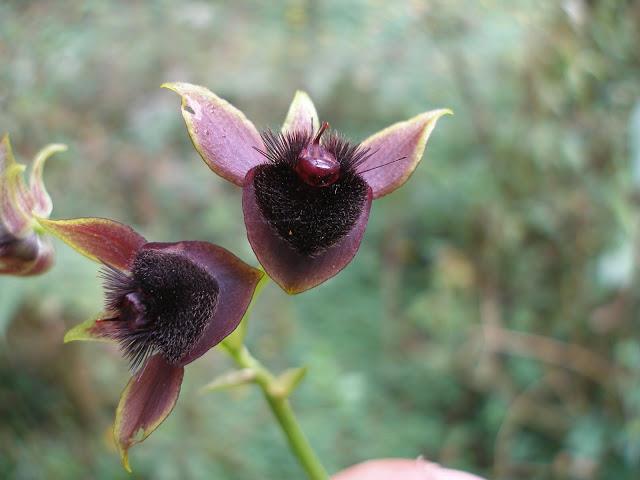
PicPost: Orchid

Lonicera sempervirens

Lonicera sempervirens

Lonicera (synonym Caprifolium and common names Honeysuckle or Woodbine), is a genus of arching shrubs or twining vines native to the Northern Hemisphere. There are about 180 species of honeysuckle, 100 of which occur in China, Europe, India and North America, with about 20 native species in each area.

The name Lonicera stems from Adam Lonicer, a Renaissance German botanist (1528 – 1586). He was noted for his 1557 revised version of Eucharius Rosslin’s herbal. Lonicer was born in Marburg and studied here and at the University of Mainz, and obtained his Magister degree at sixteen years of age. He became professor of Mathematics and Doctor of Medicine, becoming the town physician in Frankfurt am Main. His true interest though was herbs and the study of botany. His first important work on herbs, the Kräuterbuch, was published in 1557, a large part dealing with distillation.

Adam Lonicer

Adam Lonicer

Some species names of Lonicera include:

L. aureo – reticulata = golden veined, a variety of L. japonica

L. caprifolium = a herbalist name for a plant that climbs like a goat

L. fragrantissima = most fragrant

L. nitida = shining- the glossy leaves

L. periclymenum = to twine around, the true ‘Woodbine’ or ‘Honeysuckle’

L. pileata = having a cap, the berry being topped by a curious outgrowth of the calyx

L. sempervirens = always green

l. syringantha = the flowers resembling Syringa (Lilac)

L. xylosteum = a disused generic name from the greek xylon (wood) – the woody stems

The common honeysuckle (L. periclymenum) is a vigorous twining plant with large cartwheel-shaped flower-heads made up of rings of curved, almost tubular shaped individual flowers, which open white, but often red-flushed, for most of the summer. The plants climb rapidly up trellis or over arches, where they associate well with climbing roses or other varieties of honeysuckle. They are also superb trained up into trees or covering old tree stumps.

Sources and further information:

Wikipedia

RHS- growing honeysuckles

BBC- Common honeysuckle

Quizzicals: answers to the two clues given in Plantax 14 …

  • Cold yearning = Chile Pine
  • How Jack Charlton refers to brother Bobby = Orchid

Old School Gardener

If you’ve enjoyed reading this post and others on this blog, why not comment and join others by signing up for automatic updates via email (see side bar, above right ) or through an RSS feed (see top of page)?

shinealightproject's avatarShine A Light

By Wayne Kett

An object or group of objects have different meanings attached to them by different people, when I look at an object I know my response probably differs from that of the person stood next to me. As an example, consider these washing machines we recently unpacked from Box 21.

There are some who would dismiss them as a load of old junk, others might be old enough to remember using them, or at least conjure up memories of parents using them, in this instance it is about reminiscence. Those of a more mechanical persuasion might be fascinated with how these machines worked, and how they help explain the development of modern machinery. There are some who look at these machines as something aesthetically pleasing, objects that fit in with a particular retro style they like. Of course in reality this list could be infinite.

Whilst I understand the…

View original post 975 more words

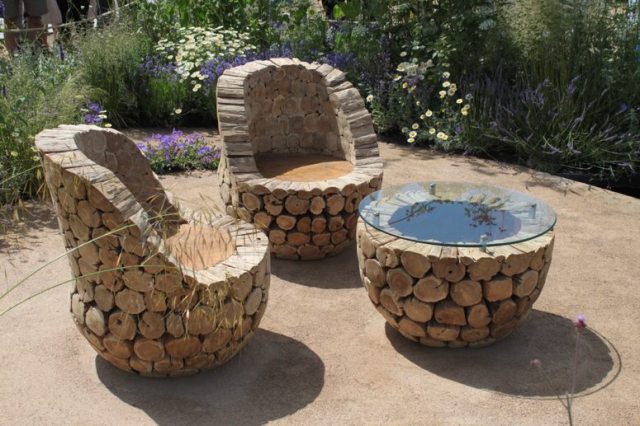
PicPost: Rock solid

holiday garden

Just click on the picture for a link to this useful article from Grow Veg.

Talking of holidays, I’ll be on holiday myself for a couple of weeks so will reduce my postings a bit during that time. I hope you still enjoy them and I’ll see you again at the end of August (hopefully with some tales of great gardens visited!)

Old School Gardener

Finding Nature

Nature Connectedness Research Blog by Prof. Miles Richardson

Norfolk Green Care Network

Connecting People with Nature

Discover WordPress

A daily selection of the best content published on WordPress, collected for you by humans who love to read.

Susan Rushton

Celebrating gardens, photography and a creative life

Unlocking Landscapes

Writing, photography and more by Daniel Greenwood

Alphabet Ravine

Lydia Rae Bush Poetry

TIME GENTS

Australian Pub Project, Established 2013

Vanha Talo Suomi

The Journey from Finnish Rintamamiestalo to Arboretum & Gardens

Marigolds and Gin

Because even in chaos, there’s always gin and a good story …

Bits & Tidbits

RANDOM BITS & MORE TIDBITS

Rambling in the Garden

.....and nurturing my soul

The Interpretation Game

Cultural Heritage and the Digital Economy

pbmGarden

Sense of place, purpose, rejuvenation and joy

SISSINGHURST GARDEN

Notes from the Gardeners...

Deep Green Permaculture

Connecting People to Nature, Empowering People to Live Sustainably

BloominBootiful

A girl and her garden :)