Archive for July, 2013


PicPost: Prayer Hothouse

Lupins are useful green manures in light acid soils

Lupins are useful green manures in light acid soils

I’ve written a couple of articles about green manures and today I thought I’d set out a handy guide to some of the commonest types and their pros and cons.

When choosing a green manure it’s important to check:

  • Your soil – some green manures prefer heavy soil, and others lighter soil, some alkaline, some need more acidic conditions.
  • Hardiness of the green manure – not all green manures are winter hardy.
  • Growing period– choose a green manure that will fit in with what you want to grow next. it must be able to germinate and mature to fit in with your growing plans.
  • Crop rotation– choose a green manure that is compatible with your crop rotation. For example Mustard is a Brassica so should be moved around in rotation with that sort of crop. Most of the others listed below are Legumes (peas/beans), but Buckwheat, Phacelia and Hungarian Grazing Rye can be used more flexibly as they aren’t members of one of the main vegetable groups.
  • Sowing time– success depends on sowing the green manure at the right time.
  • Following crop – some green manures, once turned into the soil, can inhibit seed germination for following crops. Avoid growing green manures in areas where you’ll be sowing crops with small seeds like carrots.
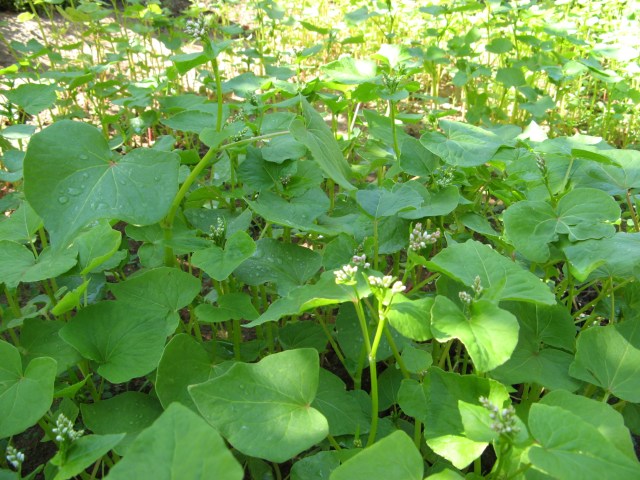
Buckwheat has flowers that are attractive to beneficial insects

Buckwheat has flowers that are attractive to beneficial insects

Sow green manures from spring to autumn depending on the variety, and sow broadcast if they are small, or in rows if larger. Rake the ground to a fine level tilth – prepare a good seed bed as you would for other crops. Leave the green manure to grow until three or four weeks before you want the ground for something else, or until the green manure approaches maturity, whichever comes sooner. Green manures vary in their time to reach maturity; e.g. Mustard goes over rapidly as it flowers, so it’s best dug in once the first flower buds show. Other annuals can be dug in at or just before flowering. Clovers and other perennials can be cut down after six months or so to encourage re – growth.
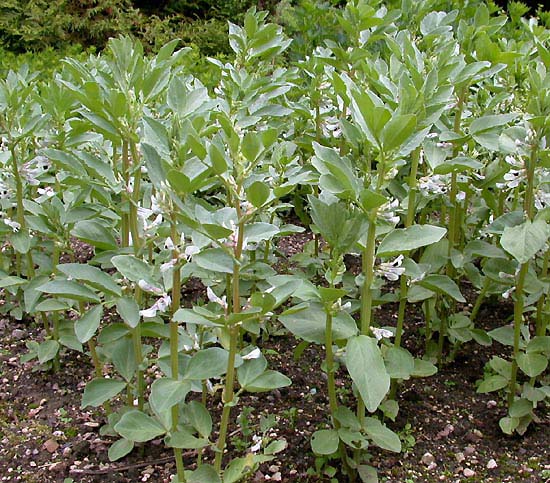
Field Beans prefer heavy soils and can be over wintered

Field Beans prefer heavy soils and can be over wintered

What to plant?

Alfalfa Sow April – July. Grows 1 year plus. Avoid acid and wet soils. Nitrogen fixer*. Deep rooting and can be grown for several years, using cut foliage as a mulch.

Buckwheat – Sow April – August. Grows 1-3 months. Thrives on poor soils. Not a nitrogen fixer. Attractive pink flowers attractive to beneficial insects.

Crimson Clover – Sow March- August. Grows for 2-3 months, may over winter. Prefers lighter soils. Nitrogen fixer. Dramatic crimson flowers, attractive to bees.

Essex Red Clover – Sow April – August. Grows 3 – 18 months. Sow in good loam. Nitrogen fixer.

Fenugreek – Sow March – August.  Grows 2-3 months. Well drained soil. Unlikely to fix Nitrogen in the Uk due to lack of suitable bacteria.

Field Beans – Sow September – November. Grows over winter. Prefers heavy soil. Nitrogen fixer. Sow alternate rows with grazing rye to improve weed control.

Hungarian Grazing Rye – Sow August – November. Grows over winter. Likes most soils. Not a Nitrogen fixer. The best for soil improvement, especially on clay soils – but will inhibit small seed germination after digging in.

Lupin – Sow March – June. Grows 2-4 months. Light, acid soils. nitrogen fixer.

Mustard – Sow March – mid September. Grows 1-2 months. Prefers fertile soil. Not a Nitrogen fixer.

Phacelia – Sow March – mid September. Grows 1-3 months, may over winter. Most soil types. Not a Nitrogen fixer. Scented lavender flowers attract bees and beneficial insects.

Winter Tares – Sow either March – May or July – September. Grows 2-3 months, over winter. Avoid acid and dry soils. Nitrogen fixer, and this is quickly available to new plants after digging in.

Trefoil – Sow March – August. Grows 3 months+ . Will stand light dry soils, preferably not acid. Nitrogen fixer. Good for under sowing, e.g. with Sweet Corn.

*Some plants have the ability to gather Nitrogen from the air and ‘fix’ this in nodules on their roots- this supply of Nitrogen is very beneficial to the plants following on.

Mustard is a Brassica and grows very fast, but doesn't do well in very dry weather

Mustard is a Brassica and grows very fast, but doesn’t do well in very dry weather

My final ‘Green Gold’ article will give some tips on making the most of these valuable plants.

Source: ‘Green Manures’- Garden Organic Guide. September 2010

Other articles in this series:

Green Gold- 7 reasons to use green manures

Green Gold: Where and when to use Green Manures

Old School Gardener

If you’ve enjoyed reading this post and others on this blog, why not comment and join others by signing up for automatic updates via email (see side bar, above right ) or through an RSS feed (see top of page)?

gwenniesworld's avatargwenniesgarden

WORDLESS WEDNESDAY


2009_0506aug09vrijbroekpark0024


View original post

PicPost: Strings but no fretting

Brigid Jackson's avatararistonorganic

ESSENTIAL OIL NATURAL PEST REPELLENTS
Insect Essential Oil
Ants – peppermint, garlic, citronella
Aphids – peppermint, cedarwood, hyssop
Black Fly – lavender, tagetes
Caterpillars – peppermint
Fleas – lemongrass, citronella, lavender
Flies – lavender, citronella, peppermint, basil
Gnats – citronella, patchouli
Lice – peppermint, cedarwood
Mosquitoes – lavender, citronella, lemongrass
Slugs – garlic, cedar wood, pine
Snails – cedarwood, pine, garlic, hyssop
Ticks – thyme, citronella, sage
Weevils – sandalwood, citronella, sage

OLYMPUS DIGITAL CAMERA

GOOD COMPANIONS
Vegetable Essential Oil
Asparagus basil
Green beans lavender, basil
Beetroot marjoram
Broccoli basil, thyme
Cabbage peppermint, sage, thyme
Cauliflower thyme
Celery geranium
Cucumber sage
Leeks hyssop
Lettuce tagetes
Onions chamomile
Peas geranium
Potatoes basil, sage
Tomatoes basil

View original post

Tim Gill's avatarRethinking Childhood

I am pleased to say that I will be returning to Australia this July and August for another series of talks and workshops, visiting Melbourne, Perth, Adelaide and Brisbane. There is a full itinerary at the end of this post. My diary on this trip is very full, so I will have limited opportunities for additional visits and meetings. However, I will try to share some of my thoughts and experiences here, as on previous trips. One question has been on my mind for a while: are Aussies more well-disposed towards children as a group than we are in the UK? Does Australia as a nation care more about the freedoms it allows its children than we do here in the old country?

View original post 669 more words

IMG_6053” ‘T was a hot afternoon, the last day of June and the sun was a demon….”

Remember the tune? I’ll give you the title and artist at the end of this article….

Well Sunday afternoon was certainly hot (the hottest day of the year so far) and whilst some may have headed for the beach, hundreds found their way to Gressenhall Farm & Workhouse Museum, Norfolk.

One of the Museum’s ‘Days with a difference’, the event saw a range of stalls selling, advising and demonstrating garden – related topics. I was there for the afternoon as a Master Gardener, offering advice on growing your own food, composting and just enjoying a chat or two with some seasoned garden folk. I particularly liked the ornamental ironwork display with some large pieces that would look good as eye catchers in the garden. And there was a very interesting vegetable stall selling plug plants of some unusual varieties – if I had more space in my kitchen garden I’d have bought some! Here’s a gallery of some of the stalls and their offerings.

And the gardens at the museum (you may recall that I’m a volunteer gardener here), also drew many positive comments and questions about the plans looking good at present – especially the ranks of Salvia sylvestris ‘Mainacht’ fronted by a low hedge of Lavandula angustifolia ‘Little Lady’ just coming into flower. The other gardens also looked good – the ‘Rambling Rector’ rose a colleague and I carefully pruned and tied in earlier in the year is particularly floriferous , tumbling over the metal arbour in the Wildlife Garden as well as draping one of the museum’s walls. Anmd the veg in cherry tree Cottage is starting to fill up the beds well. The Cafe Garden, looked after by volunteer Sue, is superb this year with a varied display of shrubs and perennials witha good mixtures of height, form and colour. Here are some pictures of some of the gardens and the newly reopenend ‘Seed Merchant’s Shop’ on the day.

…and the song?  ‘Summer (the first time)’ by Bobby Goldsboro (1973) – a classic summer song!

Relive it here:

Old School Gardener

If you’ve enjoyed reading this post and others on this blog, why not comment and join others by signing up for automatic updates via email (see side bar, above right ) or through an RSS feed (see top of page)?

PicPost: Tulip Mania

ilandscape.com

Finding Nature

Nature Connectedness Research Blog by Prof. Miles Richardson

Norfolk Green Care Network

Connecting People with Nature

Discover WordPress

A daily selection of the best content published on WordPress, collected for you by humans who love to read.

Susan Rushton

Celebrating gardens, photography and a creative life

Unlocking Landscapes

Writing, photography and more by Daniel Greenwood

Alphabet Ravine

Lydia Rae Bush Poetry

TIME GENTS

Australian Pub Project, Established 2013

Vanha Talo Suomi

The Journey from Finnish Rintamamiestalo to Arboretum & Gardens

Marigolds and Gin

Because even in chaos, there’s always gin and a good story …

Bits & Tidbits

RANDOM BITS & MORE TIDBITS

Rambling in the Garden

.....and nurturing my soul

The Interpretation Game

Cultural Heritage and the Digital Economy

pbmGarden

Sense of place, purpose, rejuvenation and joy

SISSINGHURST GARDEN

Notes from the Gardeners...

Deep Green Permaculture

Connecting People to Nature, Empowering People to Live Sustainably

BloominBootiful

A girl and her garden :)